Govt. Tourism License 3195/080/81







US$ 2499 per person For a group of 7-12 pax.
- 1 personUS$ 2699
- 2 - 2 personUS$ 2599
- 3 - 6 personUS$ 2549
- 7 over 9999 US$ 2499
- Best Price Guarantee
- Secure Online Booking
- Flexible booking dates
- Owner operated company
- Decades of experience
- Dedicated sherpa team
- 100% success rate
- 5/5 ratings by travelers


Highlights of Mera Peak Climbing With Zatra La Pass 18 Days
- Summit the highest trekking peak in Nepal
- Trek through gorgeous hilly tracks and mountain gorges
- Trek to Mera Glacier and return via Chhatra La Pass
- Travel through the beautiful Hinku Valley
- Experience the Sherpa culture
- Highest and non-technical Mera Peak 6,476 m.
- Live among the Sherpas in their villages
- Visit different monasteries and Mani walls
- Enjoy the gorgeous view of the Himalayas from multiple viewpoints throughout the trek.
- Hill Sherpa Trek designed 18 Days Best Itinerary of Mera Peak via Chhatra La Pass 4620 m.
Trip Overview
The Mera Peak trek (6461 m) is the highest trekking peak in Nepal. From the top, you will gaze into the silent and mighty highest Himalayas of the world, including Everest. With such an incredible view and high-elevation trek route, if you think this Mera Peak Climbing 18 Days is only for seasoned trekkers, you are wrong.
We are presenting you with an opportunity to let your first-ever Himalayan trekking destination be the world’s highest, a feat that you can boast about. There are a lot of beginner-friendly trekking destinations in Nepal, but this Mera Peak trek is a special one. Located on the eastern side of the Khumbu region, Mera Peak Climbing 18 Days offers an intimate experience as it is one of the least crowded Himalayan trekking destinations.
This trek has two major routes: one includes passing the (Chhatra La Pass) and Zatra La Pass, and the other passes by the Hinku Valley. For our special adventure, we will be trekking through the valley of Hinku as this route offers more scenic views and is the less traveled one. In addition to aesthetics, this route also works just in line with the standard acclimatizing practices.
One of the best things about this trek is the route itself; you will walk through lush green hills, Rhododendron and bamboo forests, pasture land for Yaks, and more. You will be traveling through and living in Sherpa villages among the Sherpa people, learning their culture in the process.
Our Mera Peak Climbing 18 Days has been designed to let the trekkers have the most adventure and an unforgettable experience overall. While we take care of every little aspect of this one-of-a-kind trek, you just have to take in the beauty of the trek, appreciate the Himalayan nature, and befriend the Sherpa locals.
You might be unsure whether to take this trek or not. Hopefully, this detailed package breakdown will help you decide on that. We will break down the itinerary, logistics, and everything else you need to know to get started.
Trekking Mera Peak takes 18 days and is more than summiting the peak; it is enjoying an incredible journey across some of Nepal’s most beautiful and natural places. The Hinku Valley route presents you with an opportunity to see nothing other than the magnificent Himalayan mountains, where Mera Peak stands tall.
This trek boasts quietness due to its remoteness and originality of the valley, unlike many other popular trekking sites in Nepal. For instance, this hike is organized so that you can slowly acclimatize at higher altitudes, making even beginners capable of reaching their goal.
The trek’s daily program includes recovery periods enabling your body to get used to higher altitudes thus lowering chances of altitude sickness. In addition, this trail rewards you with enough time for sightseeing while putting your body through tough physical activities.
At higher altitudes, the scenery changes dramatically to form snow-covered wilderness with shining glaciers and towering icefalls that add excitement to the adventure. The feeling of being within such a huge and lonely region makes you feel good after every step.
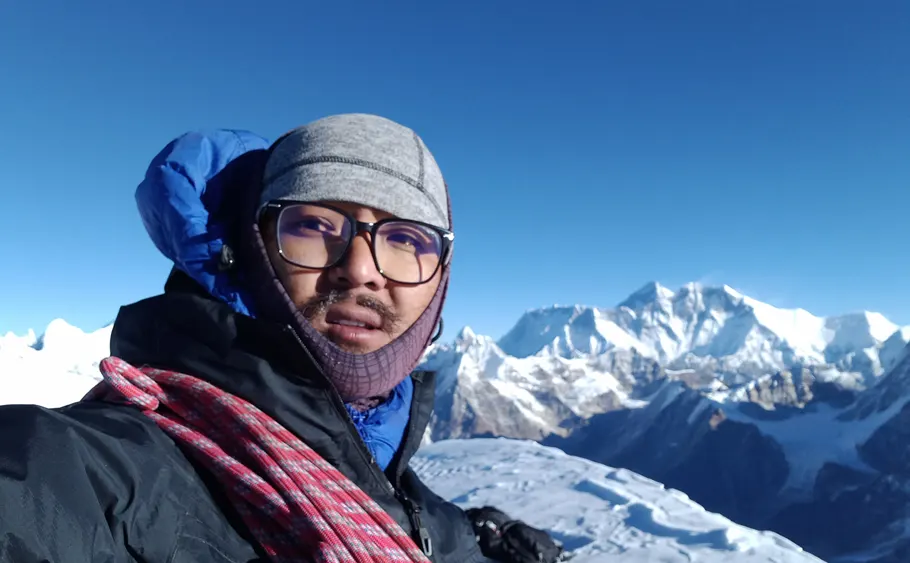
Upon finally arriving at the peak of Mera peak one will witness breathtaking views of Everest, Lhotse, Makalu, and Kangchenjunga which would be enough reward after all that hard work making you feel humble.
One of the highlights of this trek is experiencing Sherpa culture. Staying in traditional tea houses and meeting local Sherpa people help you to sense their affectionate nature and hospitality, and how they have close relations with the mountains.
This cultural experience adds an important component to the trek, turning it into more than simply a physical journey; it becomes an exciting odyssey rich in meaning.
Video Testimonials: Highlighting Memorable Moments
Mera Peak Climbing With Zatra La Pass 18 Days Itinerary
01
Day 01: Arrival in Kathmandu
On your first day of the Mera Peak Climbing 18 Days, you will arrive at the Tribhuvan International Airport, where we will be waiting for you at the terminal. We will introduce ourselves, welcome you, and drop you off at your designated hotel.
We understand that the flight might have tired you out, so we will just let you rest for day 1.
After you have landed, you will have to work out your tourist visa application before the officials let you leave the premises. As per your duration of stay, you are required to pay a certain fee. Your visa expenses are not a part of this Mera Peak Climbing 18 days package, so we will not be covering any of them.
However, as a part of the package, we will be responsible for all the land transportation required by our proposed itinerary. You will not have to pay anything for it.

Duration
30 minutes By Drive To Hotel
Max Altitude
1,350 m
Meals
Excluded
Accommodation
Tourist Standard Hotel 02
Day 02: Kathmandu Sightseeing and Preparation
Kathmandu has a lot to offer both local and foreign travelers, including attractions, ancient structures, religious sites, and beautiful markets. After a hearty breakfast, you’ll meet our trekking team, who will be with you on the 18 days Mera Peak Climbing expedition.
You will meet the hike guide, who is an experienced, licensed guide who can speak English. You will also meet our porters, who will carry your bags for the whole hike.
The normal rule is that each person can only bring 10 to 15 kilos of luggage. As a general rule, you will have to pay more if your luggage is too heavy.
If you are a group of six, you need a guide and an assistant guide to go on the journey. If your group has 8 or more people, on the other hand, you will need two assistant guides. This is done to make sure that everyone on the Mera Peak Climbing 18 days expedition gets ample help, support, and attention.
Our guide will take you around to view the attractions and tell you a little bit about the history of each place you visit. The majority of the places we view on the sightseeing tour will be important to Hindus and Buddhists, as well as several historical buildings that are hundreds of years old.
We suggest that you bring a camera with you because you will be taking a lot of images on the second day of the journey. We will only be in charge of your breakfast today because you will be out of the house for the rest of the day. You have to spend on your foods/drinks for lunch, dinner, and any additional.
Our guide will go over the gear and itinerary for this trip with you at the end of the sightseeing tour. You should get ready for the trek in advance. We will give each person in the party trekking poles, warm down jackets, and sleeping bags as part of the Mera Peak Climbing 18 Days package. After the 18 days Mera Peak Climbing trip is over, these things need to be sent back to us.
Max Altitude
1,350 m
Activity
preparationMeals
BreakfastAccommodation
Tourist Standard Hotel 03
Day 03: Fly to Lukla - Trek to Chutok
On the 3rd day of the Mera Peak Climbing 18 Days, you will finally see some action. Lukla is the gateway to every trekking destination in the Khumbu region. Apart from that, it’s also a beautiful village with one of the most scenic airports and flight experiences you can imagine. The plane will literally be landing in the middle of hills on a runaway that’s carved upon a hilltop.
We will take a little break in Lukla, view the surrounding scenery, and prepare ourselves for the trek. Shortly after landing, we will begin our trek to Chutok, a small Sherpa village and a popular resting spot for travelers.
Our team will help you get your Mera Peak Climbing permit in Kathmandu from Nepal Mountain Associations (costs US$ 250 in spring). Also will get Makalu Barun National Park permit in a village named Kothe. These permits are enforced by the government to raise funds for the development and conservation of these remote Himalayan regions.
Every traveler is legally required to get these permits, which costs US$ 30.Our guide will take care of all this hassle while you wait for a couple of minutes. You do not have to pay for these permits yourself; our Mera Peak Climbing 18 Days package will cover this expense.
We will cross the Handi Khola bridge and trek through a forest. We will eventually reach the village of Surkhe, where we will rest for a bit and have lunch. After a short break at Surkhe, we will move towards Chutok. It will take about 4 to 5 hours of trekking to reach Chutok village which is also known as Paiya.
For the entire duration of the trekking days, we will be responsible for providing you with 3 meals each day (breakfast, lunch, and dinner), tea, and fresh fruits every night after dinner.
Duration
4 to 5 hoursMax Altitude
2,800 mActivity
trekkingMeals
Breakfast, Lunch, DinnerAccommodation
Local Teahouse 04
Day 04: Trek to Panggom
On the fourth day of our Mera Peak Climbing 18 Days journey, we will wake up to a beautiful sunrise and have our breakfast with a scenic view. We will begin our trek shortly after as we have to cover a greater distance than we did on the previous day.
After descending for a bit, we will reach a small crossing bridge, which will be the starting point of a slippery trail. This trail lasts until Kari La pass, and we recommend you trek firmly following the guide’s footsteps.
On the way to Panggom, we will trek through the beautiful Rhododendron forest and also get to view the lush Dudh Koshi Valley from a scenic viewpoint. After about 6 to 7 hours of trekking, we will reach the village of Panggom.
Duration
6 to 7 hoursMax Altitude
2,846 mActivity
trekkingMeals
Breakfast, Lunch, DinnerAccommodation
Local Teahouse 05
Day 05: Trek To Ramailo Danda
On the 5th day of your Mera Peak Climbing 18 Days, we will trek for 5 to 6 hours, covering a total distance of 9 km to reach Ramailo Danda. Out of the 9 km, we will have to go on an uphill trek of about 1300 meters.
Starting off, we will trek to Ningsow. The road to Ningsow is pretty plain and simple, and we will pass through lengthy Mani walls, stones engraved with Buddhist chants and mantras that are supposed to bring good luck to travelers.
We will have our lunch at Ningsow and continue our trek to Ramailo Danda, which will follow a steep climb right as we leave Ningsow. We will be spending the night at Ramailo Danda.
Duration
5 to 6 hoursMax Altitude
3,276 mActivity
trekkingMeals
Breakfast, Lunch, DinnerAccommodation
Local Teahouse 06
Day 06: Trek To Chetra Khola
On this day, you will be trekking through the most beautiful Rhododendron forest you will see during this entire Mera Peak Climbing 18 days. This forest starts right outside Ramailo Danda, and if you are traveling during the spring season, you will trek on a trail that feels like something out of imagination.
The bright red Rhododendron flowers add a touch of vibrancy to the moss-covered trees, and the greens all over add a sense of tranquility. If you are lucky enough, you might even spot a red panda. These pandas are rare and about the size of a normal pug.
Duration
6 to 7 hoursMax Altitude
3,150 mActivity
trekkingMeals
Breakfast, Lunch, DinnerAccommodation
Local Teahouse 07
Day 07: Trek To Kothe
Kothe is a beautiful Sherpa village that’s also a part of the Zatr La Pass route, also known as the main route of Mera Peak Trek. Following the Majang Khole up north, we will head on the road to Tashing Ongma, where you will find many tea houses. Thaktok village will be our lunch spot for the day from where we continue the trek following the Hunku Khola river.
After 5 to 6 hours of trekking, we will have to cross the Sanu Khola before entering the premises of Kothe village.
Duration
5 to 6 hoursMax Altitude
3,600 mActivity
trekkingMeals
Breakfast, LunchAccommodation
Local Teahouse 08
Day 08: Trek To Thangnak
After spending the night in Kothe, we will wake up to a beautiful morning in the Himalayas, have a delicious breakfast, and move on to the next destination of our trek. To reach Kothe, we will have to travel to Thangnak village first. On the way, we will get to see the Mera Peak range from afar and also visit a 200-year-old monastery.
This day will be relatively easy as the trail itself is easy and we will trek for only 4 hours at maximum, probably reaching the village at lunchtime. The distance we will cover is 7 km, with an slightly uphill trek of 800 meters.
Duration
3 to 4 hoursMax Altitude
4,350 mActivity
trekkingMeals
Breakfast, Lunch, DinnerAccommodation
Local Teahouse 09
Day 09: Trek To Khare
Day 9th of the Mera Peak Climbing 18 days will be the easiest so far as we will only be trekking for 3 hours. It’s a 700m uphill trek that is not very steep. The fact that the oxygen percentage at the level of 4500m is down to 60% makes it time-consuming to trek even the easy routes, as your body needs oxygen to function.
If you need motivation to trek this route, just remember that there is a German bakery up in Khare where you can find all kinds of baked goods.
Duration
2 to 3 hoursMax Altitude
5,045 mActivity
trekkingMeals
Breakfast, Lunch, DinnerAccommodation
Local Teahouse 10
Day 10: Rest Day in Khare / Acclimatization
The most crucial safety practice while trekking in the Himalayas is to follow the standard acclimatization practices. Since you are already above the 5000-meter level, the oxygen percentage decreases to 55%, and you have to give yourself ample time to adapt to the changing atmosphere.
Since you have a day to spare, you should probably explore the area. The best option is to climb a nearby hill that has a viewpoint of the surrounding Himalayas. It should take you around an hour to reach the top, and it’s only a couple hundred meters in height, which makes it good for acclimatization. Today you will gain the same elevation as your following day trek.
Most seasoned trekkers trek a couple hundred meters above their stop, spend some time there, and descend back to their stop. This tricks your body into being more relaxed at your night camp since you were at a higher altitude beforehand.
Duration
2-3 hrs Hike Around 5,200mMax Altitude
5200 mActivity
hikingMeals
Breakfast, Lunch, DinnerAccommodation
Local Teahouse 11
Day 11: Trek To Mera Base Camp
Unlike most other itinerary, we will not be traveling to the high camp on day 11. It is possible to reach the High Camp from Khare in about 7 to 8 hours, but we are not going to do that. Your body needs to slowly adapt to the changes in oxygen percentage.
At the High Camp, you only have 50% oxygen in the air. Imagine trekking for 8 hours in the snow, climbing a steep trail covered in snow to your night camp with even less oxygen level. Your body will obviously be tired after such long hours of trekking, and you will need more oxygen to recover.
Let’s not invite altitude sickness and hurry our way to the High Camp. It’s always best to take preventive measures as these remote regions do not have medical health posts nearby, and you have to wait for the emergency services to rescue you.
It will take us just 3 to 4 hours to reach the Mera Base Camp.
Duration
3 to 4 hoursMax Altitude
5,200 mActivity
trekkingMeals
Breakfast, Lunch, DinnerAccommodation
Tent 12
Day 12: Trek To High Camp
The following day, we will trek for 5 hours to reach high camp. This place is very cold, and you should wear layers of clothing with a thermal layer on the base. To battle the cold, we will be providing unlimited food along with tea/coffee and hot water.
It will be white all around, but you can still see some great views.
Duration
4 to 5 hoursMax Altitude
5800 mActivity
glacier climbingMeals
Breakfast, Lunch, DinnerAccommodation
Tent 13
Day 13: Push To Summit Mera Peak And Back To Khare
The main day of your Mera Peak Climbing 18 days has finally come. You will be climbing the Mera Peak and descending back to Khare all in one day.
For our main event, we will have to wake up super early, probably around 1 AM in the morning, as we will be climbing for 8 to 9 hours, and we will also have quite a few breaks along the way. Another reason for super early trekking is to view the rising sun from the top of the peak.
The way to the top is pretty straightforward, with a bit of steep climbing here and there. Once you reach the top of the peak, you will be able to view a broad view of the highest Himalayas of the world including Mount Everest (8,848m), Kangchenjunga (8586m), Lhotse (8516m), Makalu (8481m), Cho-Oyu (8210m), Nuptse (7861m), Baruntse (7129m), Ama Dablam (6812m), and several other peaks.
After spending a brief moment at the top, we will start descending as the oxygen percent there is 46. We do not want to risk any altitude sickness even though we have been extra careful when acclimatizing.
Upon returning to the base camp, we will have our lunch/breakfast and get back on the road to Khare via high camp and base camp.
Duration
8 to 9 hoursMax Altitude
6,461 mActivity
ClimbingMeals
BreakfastAccommodation
Local Teahouse 14
Day 14: Trek To Kothe
Following the same route we ascended, we will descend to Kothe and reach the village in about 5 hours. Descending down is faster than ascending, so we will be covering more distance and returning faster to Lukla. Also, ascending fast is a risky thing, so do not hurry to ascend under any circumstance.
Duration
4 to 5 hoursMax Altitude
3,600mActivity
trekkingMeals
Breakfast, Lunch, DinnerAccommodation
Local Teahouse 15
Day 15: Trek To Thuli Kharka
As we descend down, the air thickens, and we start feeling more energetic and capable. Kothe to Thuli Kharka starts with an hour of easy trek but follows a steep ascent till Thuli Kharka.
An important aspect of this trek is your mentality to keep moving forward. You must prepare yourself mentally as much as you prepare physically. You will be traveling for hours every day, living along the Sherpas, in lodges and tea houses with only basic amenities, and trekking in cold and extreme temperatures. You must have a strong mentality to undergo such a long and consistent trekking experience.
After 5 to 6 hours of trekking over uneven rocks, we will reach Thuli Kharka.
Duration
5 to 6 hoursMax Altitude
4,230mActivity
trekkingMeals
Breakfast, Lunch, DinnerAccommodation
Local Teahouse 16
Day 16: Trek To Lukla via Zatra La Pass
The following day, we would be moving back to Lukla; we would have to trek for 7 hours to reach the Lukla village, which was the starting point of our trek.
For our last day of trekking, we will first travel the steep uphill path to the Zatra La tea shop. Then, we follow a rocky slope path and reach Zatra La pass (4260 m) after 1.5 hours of steep uphill trek followed by a 40-minute slope walk.
From there, the path descends steeply for about 3 hours and it can get slippery if it snows. Upon reaching Lukla, your trekking days have ended; this is the last trek of the Mera Peak Climbing 18 days journey.
Duration
6 to 7 hoursMax Altitude
2,800mActivity
trekkingMeals
Breakfast, Lunch, DinnerAccommodation
Local Teahouse 17
Day 17: Fly To Kathmandu - Farewell Dinner / Nepalese Cultural Meals And Live Show.
On the 17th day, you will be flying back to the city of Kathmandu, where a farewell party awaits you. We will fly out of Lukla after lunch, and it will take 35 minutes to reach Kathmandu Regional Airport.
We will prepare a farewell dinner for you, specializing in Nepalese cultural meals such as the Thakali khana. After dinner, we will also put up a show for you to enjoy; this live show will include Nepalese cultural dance and other live performances.
Duration
35 Minute flightMax Altitude
1350mMeals
Farewell DinnerAccommodation
Local Teahouse 18
Day 18: Final Departure
After everything has been said and done, we will drop you off at the airport at your requested time. You can buy some souvenirs while in Kathmandu or Lukla to keep your memories of Nepal as fresh as they can be.
Max Altitude
1350 mMeals
BreakfastAccommodation
GuesthouseIncludes & Excludes
What is included?
- Free airport pick up/drop off private car
- Flight from Kathmandu to Lukla to Kathmandu
- Tourist standard hotel in Kathmandu, twin sharing room, 3 nights with breakfast)
- All meals during the trek (breakfast, lunch, dinner, and any kind of tea, coffee)
- All camping set tents, kitchen, dining, food, and main rope
- Mera Peak climbing permit
- Makalu Barun National Park permit.
- Climbing guide salary
- Complementary fresh fruit after dinner.
- Accommodation, tea house during the trek.
- Government-licensed holder and good English-speaking climbing guide.
- All staff’s wages, food, drinks, accommodations, transportation, and Insurance.
- One strong sherpa helper for carrying your baggage (1 porter for 2 clients)
- Hill Sherpa Trekking first aid kit with guide.
- Water purification tablets for tap water.
- Helicopter service will be covered by your travel insurance, in incase of an Emergency.
- All government taxes and official expenses.
- A sleeping bag, down jacket, duffel bag, and trekking poles are provided by the company but should be returned after the trek ( if needed )
- Oxy meter for checking pulse, level (AMS) acute mountain sickness,
- The assistant guide provides for groups size of 8 people,
- Achievement certificate by Nepal Mountaineering Association (after summit peak)
- The company provides trip certificates ( after completing the trip)
- Farewell dinner Nepalese cultural meals
What is excluded?
- International airfare tickets
- Nepal entry visa fee, visa obtains on arrival at the international airport in Kathmandu)
- Additional accommodations, food, and drinks in Kathmandu ( if stays extra day)
- Your personal medical & travel insurance,
- Desserts, sweet items like chocolate, cake, pie, pudding, any extra expenses
- Excess baggage luggage weight is 10-15 kg maximum,
- During the trek hot showers, mobile, camera, power bank any batteries charging, Wi-Fi internet,
- Kathmandu sightseeing and entrance fees ($ 25-30 USD per person)
- Your personal climbing gears ( for Mera Peak if you spent USD 125 -140 you Can take on rent All Kind Climbing Gears)
- Personal Traveling First Aid kit
- Tips for Guide & Porters (most expect)
Note:
We also operate private trips.
Trip Information of Mera Peak Climbing With Zatra La Pass 18 Days
Can a beginner join this trip?
Yes, our Mera Peak Climbing 18 days is a beginner-friendly trip, and the itinerary we have chosen for this trek is one of the easiest trails you can take. To give you an idea, the Zatr La Pass is a shorter, difficult route, but we will be traveling through Hinku Valley instead, which is a longer route and a lot simpler.
Being a longer route, it also gives us more time to acclimatize to the depleting oxygen levels and the cold temperature.
Best Time to Mera Peak Climbing
The Mera Peak Climbing 18 Day journey is best suited in March, April, and May during spring and from September to November during the autumn season.
In the spring, it is pleasantly warm during the day and cools down to around zero degrees at night. This period is especially for those of you who also enjoy seeing flourishing valleys with huge rhododendron forests and other wildflowers.
In autumn, it is quite mild during the day, even pleasantly warm when the weather is sunny, and there is no wind, but it gets cold at night, with temperatures down to minus 10 degrees possible. This period offers fresh air with crystal clear views. The forests are in beautiful greenery, and there are many nice and exciting festivals during the autumn.
In the winter months (December to February) temperatures of around minus 20 degrees are possible- a little too cold to be enjoyable in the Himalayas.
The summer/monsoon months (June to August) bring heavy rainfall with the risk of avalanches in the higher regions and landslides in the lowlands.
Altitude Sickness of Mera Peak Climbing
Trekkers can get altitude sickness during this trek but to prevent such mishappening, we will be ascending slowly and staying at stops frequently. From your side, you should keep yourself hydrated throughout the trek.
Accommodation, Food, and Drink
We will be spending our nights in lodges and tea houses during the trekking days. While in Kathmandu, we will be providing a two-night stay in a hotel as a part of the Mera Peak Climbing 18 days package. We will only be providing breakfast for those two days, but we will be providing breakfast, lunch, dinner, tea, and fresh fruits after dinner during the trekking days.
This trekking package does not cover your drink expenses, including water.
Transportation for Mera Peak Climbing
As required by our proposed itinerary, we will be responsible for managing all the necessary transportation, whether it is land transport or air transport, and you will not have to pay anything extra for it. This includes picking up and dropping off at the international airport, flight expenses to and from Lukla, and picking up and dropping off at the regional airport.
Our Mera Peak Climbing 18 days package will not cover any of your other transportation expenses, including your flight back home or to Nepal.
Permit for Mera Peak Climbing
To trek the conserved region of Mera Peak, you are required to have a bunch of permits, namely: Local area permit, Makalu Barun National Park Permit, NMA Mera Peak Climbing Permit, and Trekkers’ Information Management System (TIMS) Card.
These permits are legally issued by the government of Nepal, and they are a way of collecting funds for the development and conservation of these precious places. Altogether, these permits cost thousands of Nepalese Rupees, but your Mera Peak Climbing 18 days package will cover all of it.
For the Mera Peak Climbing preparation and fitness
The trail that you will trek during this trip is not difficult at all. But given the fact that you have to trek for hours every day for weeks, and the level of oxygen in the air also decreases with every ascending day, you feel tired and out of breath doing the simplest of things like walking.
To counter that, we recommend you train for endurance weeks before the trek starts.
Cost & Budget for this Mera Peak Climbing 18 Days
This Mera Peak Climbing 18 days package costs $2299, which is a fair price as we will be providing a bunch of facilities and covering a lot of trek expenditures. Our trek package covers all the necessary transport (land and air), wages for the porters and guide, along with their travel insurance, all the essential permits, government and local taxes, an oxygen meter, food and lodging, trekking equipment, first-aid, water purification tablet, and a grand farewell dinner.
You will also get a breakdown of the expenses to ensure transparency.
Gadgets charging & Internet
Since we will be traveling on a less-crowded path, the establishments there will not be well-facilitated. Some lodges and tea shops offer WiFi at a cost, but most of them do not have it. If you are really worried about your internet connection, you can get a Nepalese sim card and connect to the internet through your cellular device.
Those lodes might charge a couple of dollars for you to use the WiFi, in such case, we will not be covering those expenses as they are your personal expense. The same goes for gadget charging; we are not responsible for the expenses related to gadget charging.
Your Extra expenses for Mera Peak Climbing
Our Mera Peak Climbing 18 days package is priced affordably, which means that it can not cover all of your expenses. There are things that the package cannot cover; these things include your visa fees, hot shower, device charging, WiFi expenses at lodges, your international flight to and from Kathmandu, your travel/medical insurance, emergency services, additional accommodations, and tips for the crew members.
What to Expect For the Mera Peak Climbing
This Mera Peak Climbing 18 days journey is a simple journey overall, is you are mentally and physically well-prepared, this trip will be the best 18 days of your life as you will be traveling a region of the world only that is remote and full of wilderness. One of the best things about this trekking destination is that even beginners can join in, and seasoned trekkers can challenge themselves as well.
You can expect to trek through beautiful villages, forests, scenic views, and rugged paths. You will be living far away from the cities and away from your daily lives, just enjoying the natural gifts of those mountains and hills of Nepal.
Altitude Chart of Mera Peak Climbing With Zatra La Pass 18 Days
Equipment List

General Information
- Company provides feather sleeping bag but should be refund after the trek.
- Feather down Jacket but should be refund after the trek.
- Hill Sherpa Trekking provides duffle bag during the trek but should be refund after the trek.
- Mostly recommend for morning and evening, The windproof and waterproof thin layered jacket above 3450m.
- Mostly recommend for Daypack bag 35-45 ltr.
- Headlamp & extra batteries during the trek

Daily Use Essentials
- A Sun Black Cap & warm hat
- Sunglasses 100% snow uv protection
- A muffle (full cover mask)
- Sunscreen (30+ to 60 SPF depends on age)
- A pair of thin & warm gloves
- A pair Trekking poles
- Water bottle & filter
- Water purified tablets
- lips guard

Upper Body Essentials
- Fleece hat
- A pair of t-shirts
- Thermal tops
- Sports bras for ladies
- windproof & fleece jacket
- waterproof jacket

All Lower Body
- waterproof trouser
- warmer & fleece trouser
- A pair of Comfortable trekking pants
- Extra comfortable sport pants
- A pair of sport shoe
- Thermal underwear
- A pair of comfortable waterproof trekking boots
- Pair of light sandals
- Some Thick (woolen) socks
- Sock liners
- Light shoes

Essential Climbing Gears
- Helmet
- Harness
- Ascender
- Descender
- Carabiners 4 locks, 2 unlocks
- Tape Celling – 120 cm
- Alpine Boot good condition & fit side
- Crampon good condition for alpine boot
- Ice-axe Normal
All the climbing equipment is available in Khare village before moving to Mera peak high camp, but equipment owner will charge minimum $ 120 – 140 USD if you need for rent)

Personal Medical and First Aid Kits
- Diamox (125mg to 250mg tablets for AMS)
- Adhesive bandages and pocket masks
- Non-stick pad W/ Adhesive
- ibuprofen & paracetamol tablets IP
- Some Assorted adhesive bandages
- Warps, splints, and wound coverings butterfly bandage
- Blister treatment cream or similar
- Insect / anti-itch ointment
- Moves incase sprain any body
- pain-relief medication
- Sinex, & Eye Drops etc.
- Gauze sponge
- Saline solution
(Note: first aid kits & medicine will carrying with our company’s guide during the trekking However, we recommend you to bring your personal first-aid kit)

Important Things
- Passport-size photo
- Passport and visa detail
- Travel and medical insurance
- Your passport and visa detail
- Emergency contact detail
- Credit or debit card
- International flight details

Extra Essential Things
- Energy gel or dry foods (that’s your desire)
- Power bank is most important for backup device (if you have)
- Camera, chargers, extra batteries, memory card)
- Most important for ladies essentials things (if you are ladies)
Addons & Options for Mera Peak Climbing With Zatra La Pass 18 Days
Addons
Price
Upgrade to 4* star hotel in Kathmandu
US$
260
Upgrade to 5* star hotel in Kathmandu
US$
380
Extra climbing guide
US$
600
Extra porter for whole trip
US$
450
Kathmandu to Lukla Helicopter sharing
US$
500
Lukla to Kathmandu helicopter sharing
US$
500
Frequently Asked Questions
What is the porter ratio?
As per the standard rules, every two members of the group will have to share one porter during the Mera Peak Climbing 18 days journey. The maximum weight of luggage per person is 10 kg.
How many guides will be present?
Your group will have one guide only; a group of 6 to 8 members will be provided with an assistant guide, while groups larger than that will be provided with 2 additional assistant guides. These assistant guides will help you the same way a guide would.
Are emergency medical services available?
Yes, if you need to be evacuated immediately, we will contact emergency services, and they will rescue you via a helicopter. If you do not have travel insurance, you will have to pay for the emergency service yourself, so make sure that you insure yourself.
Can the itinerary be changed?
Yes, based on your choice, we can try to work out a new itinerary, but there are many things to consider when one place is changed to another. We need to make sure that accommodations are available and that they provide the basic facilities. We also need to keep track of acclimatization, the trail leading to and out of certain places, etc. So, if we refuse any of your preferred changes, know that it is done for a reason.
Reviews on Mera Peak Climbing With Zatra La Pass 18 Days


Solberg K
 Verified Buyer
Unforgettable High Adventure with Hill Sherpa Trekking, A Journey Led by Experts guide pasang Sherpa.
Our first trip to Nepal was nothing short of amazing, and it was all thanks to our incredible guide Pasang Sherpa. With a wealth of experience having summited Mt. Everest, 2 times Ama Dablam, Summited Mera Peak 7 times, and countless other six thousand peaks in Nepal. Pasang sherpa's expertise was unmatched and his constant smile and unwavering support made every moment of our Mera peak adventure unforgettable. If you are looking for safe adventures, seamless, and epic trek in Nepal? Hill Sherpa Trekking is the only choice a huge thank you to guide Pasang Sherpa and our porter, Ngma Sherpa for your professionalism, warmth, and dedication. This was truly a once in a lifetime experience, and promise to make the ext trip soon, we highly recommend it to anyone looking for the Himalayan adventure. US$ 2499 per person For a group of 7-12 pax.
- 1 personUS$ 2699
- 2 - 2 personUS$ 2599
- 3 - 6 personUS$ 2549
- 7 over 9999 US$ 2499
US$ 2499

Talk to Trip Expert
+977 9704823980 (Whatsapp)
✖
Free Travel GuideGet Expert Guidance from Experienced Sherpas