Are you considering climbing a peak while trekking in Nepal, but finding it difficult to choose which mountain to take on?
There are countless towering and majestic mountains to take on in the Himalayas, and it can be confusing deciding which one suits your experience and expectations the best. This guide attempts to simplify that choice by describing some of the 10 best peak climbing in Nepal. Here you will find a climb that matches your skills, fitness level, and sense of adventure. If you are considering a trekking vacation, the information in this guide will also benefit you since these peaks are located along popular trekking routes.
These peaks are identified by the Nepal Mountaineering Association (NMA) as trekking peaks. These peaks are typically between 5,000 and 7,000 meters and are a great starting point for trekkers looking to take their mountaineering experience to the next level. Nepal has 15 trekking peaks under 7,000 meters that can all be climbed while on a normal trekking journey. Summiting these mountains does, however, require some additional climbing permits, which are separate from the standard trekking ones.
While most trekking peaks are classified as non-technical, meaning that advanced climbing skills are not required, we do recommend that trekkers possess good fitness, strong determination, and a comfort with high altitudes. If you want to enjoy a challenge and experience the Himalayas from a higher perspective, then peak climbing is a rewarding step forward. To help you plan with confidence, we have listed the best peak climbing destinations in Nepal.
Island Peak (6,189 m/20,306 ft)
Island Peak Climbing is a prime choice for beginner climbers visiting Nepal, and it is very easy to see why. This peak is located in a very popular destination for trekkers and climbers, located in the Khumbu region, which is home to numerous Sherpa villages that embody the culture of the region and the surrounding mountains. This region is home to the world’s highest peaks, including Mount Everest and the other 8000ers, Lhotse, Cho Oyu, and Makalu.
Island Peak is known for its mix of both trekking and climbing in one experience, which is why it is preferred among beginner climbers. Most climbers climb Island Peak in conjunction with the Everest Base Camp trek, which makes the experience even better. It is also popular for trekkers to climb Kala Patthar to see the breathtaking sunrises above Everest.
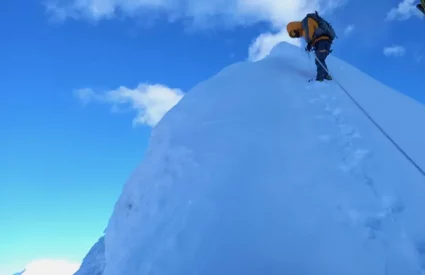
This peak is known for being a non-technical climb, meaning it is quite reasonable for trekkers and climbers who are fit. The biggest challenge is the final section before the summit, which is a vertical wall that is often described as being a fun and exciting challenge for climbers.
Island Peak is a very accessible trekking peak that offers stunning views of the region, making it a very popular trekking peak for beginner climbers visiting Nepal.
Mera Peak (6,476 m/21,247 ft)
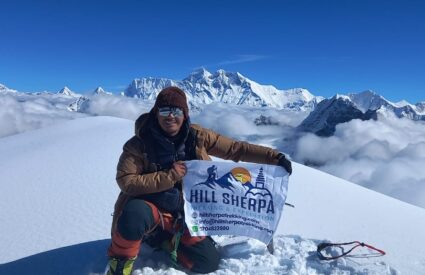
Mera Peak is a first-time climbers favorite, as it is considered a good introduction to the world of mountaineering. As the highest trekking peak in Nepal, it has a reputation for being the most intimidating, but it is one of the easiest to achieve. Because of the slope of the mountain, as well as it being a non-technical trek, it is ideal for beginners to scale with the proper preparation, as well as a good level of fitness.
Most climbers target Mera Central as it is considered to be the easiest of the three summits. In the earlier seasons, mountaineering weather can be highly variable, and therefore, climbers need to be prepared for the increase in the difficulty of the trek, as there is no climbing. Even with the described challenges, climbers can expect world-class vistas at the peak of Mera, with one of the most impressive panoramas in Everest region.
Expect to see Everest, Lhotse, Makalu, Cho Oyu, and Kanchenjunga in all of their towering glory. Along with the great difficulty to success ratio and top-notch scenery, Mera Peak Climbing is a great starting point for Himalayan mountaineering.
Lobuche peak 6,119 m/20,076ft
Lobuche East Peak is one of the most difficult trekking peaks to be summited in the Everest region because of how technical it is. It is more difficult than other nearby peaks such as Mera Peak and Island Peak, garnering attention due to the necessary climbing experience required to summit. It is one of the more popular peaks to summit, but because it is very technical, it is best suited for climbers with some prior experience.
Within the Lobuche massif, there are two distinct summits, Lobuche Far East and Lobuche East. Lobuche East is the most commonly climbed summit of the duo because it is the most popular trekking peak. It offers an adventurous and exhilarating itinerary with its steep sections. The technical climbing nature is present with the exposed ridges, use of fixed ropes, and the added adventurous nature of the climb with multiple rounded summits. The experience with fixed lines, crampons, and ice axes is very beneficial and will alter the experience of the climber.
Combining summits with Lobuche East, climbers can push their boundaries with an Island Peak climb as well, so an Island Peak climb is included in the same expedition. The demanding summit climb of Lobuche East is complemented and rewarded with breathtaking panoramic views stretching across the summits of Everest, Lhotse, Nuptse, Ama Dablam, and other towering Himalayan peaks.
Lobuche East Peak is an excellent option for people wanting to move beyond beginner climbs and experience true high-altitude Himalayan mountaineering.
Yala Peak Climbing (5,700m / 18,700 ft)
Yala Peak is one of the most straightforward and accessible trekking peaks in Nepal. Located near Kathmandu in the gorgeous Langtang area, it is great for those who do not have much climbing or trekking experience, although you do need to have good general fitness. Yala Peak is less popular than the Everest region peaks, but it has no technical difficulty and is high enough to give you a taste of altitude.
The trek to Yala Peak takes you through the beautiful Langtang Valley, noted for high snowy mountains and Tibetan culture. You will also trek past the lovely village of Kyanjin Gompa, which is surrounded by huge towering snow and glacier covered mountains. The views from the top of Yala Peak are some of the best you can get in the Langtang region, and you will see Mount Shishapangma (8,013 m). Shishapangma is the highest peak in Tibet, and its views are especially enjoyable on clear days because there are not many mountains of that height to see.
If you have additional time available, you can extend your adventure by trekking to Gosaikunda Lake or to the Helambu region, known for its monasteries, apple orchards, and tranquil villages in the mountains. For those looking for an easy yet remarkable climb in the Himalayas, you can consider Yala Peak Climbing.
Pisang Peak Climbing (6,091 m/19,978 ft)
Pisang Peak stands gloriously above the Pisang village in the northern part of the Manang Valley, situated in the eastern part of the Annapurna range. This climb is often done together with the popular Annapurna Circuit Trek, which is why it is an excellent option for trekkers who wish to take on an additional real mountaineering challenge. On the way, you will also have the opportunity to traverse the renowned Thorong La Pass (5,416 m), which is among the highest trekking passes in the world.
The trail to the peak follows a well-trodden and well-marked ridge which slowly ascends to an awesome summit pyramid. It is not too difficult, though it is not that easy and some prior knowledge in the field of mountaineering would be better to have a safe and more pleasant time. A user is advised to have a little practice with the crampons, the ice axes, and the rope techniques, particularly the climbing parts that are a bit steeper as one approaches the summit.
The views of the summit are quite spectacular. On the north, it provides a wide panoramic sight of the whole Annapurna, Himlung Himal, and Tibetan Plateau. On the north east, there is Manaslu; On the south, Annapurna II and IV, Gangapurna and Annapurna III to the west. The successful climb of the Pisang Peak is a perfect combination of the classic trekking experience with high altitude adventure.
Chulu West Peak Climbing (6,419 m/21,055 ft)
The Chulu West Peak of the Manang Valley is quite near the famous Thorong La Pass of the famous Annapurna Circuit. Chulu West is slightly harder than Pisang Peak. It is more difficult and lengthy in ascending, thus being more serious to the real trekkers seeking to challenge themselves. The ascent normally occupies two high camps until the final push to the summit, which also contributes to the expedition style feeling.
Trekkers in good physical shape, along with a decent amount of mountaineering experience, will get the most out of this climb. Knowing how to use crampons, ice axes, and basic rope techniques will make the climb easier and will make for a more enjoyable experience.
There is a lot of hard work that goes into this climb, and the work you will put in will reward you immensely. The summit will provide you with incredible 360-degree views of the Annapurna and Dhaulagiri ranges, as well as views of Tibet and China to the north. This climb is a premier trek to take in the wondrous and huge Himalayas.
Dhampus Peak (6,012m / 19,719ft)
Dhampus Peak, located northeast of the Dhaulagiri massif, is one of the less crowded climbing peaks on the Dhaulagiri Circuit Trek. Besides climbing the peak, the trek is famous for some other highlights, most notably its stunning views and the passes that must be crossed, the French Pass (5,360m) and the Dhampus Pass (5,240m). Even for trekker who do not have advanced mountaineering skills, climbing Dhampus Peak is, for most, included without too much challenge in their Dhaulagiri Circuit, particularly with the addition of a couple of days to the itinerary.
The trek traverses the myriad of remote western landscapes of Nepal, featuring deep valleys, rugged high country, scattered classic villages, and plenty of rich diversity in the Kali Gandaki River Valley. From its summit, Dhampus Peak provides a particularly rewarding experience since it offers extensive panoramic views of the Dhualagiri and Annapurna ranges including a stunning close up view of Dhaulagiri and Tukuche Peak and is satisfying as it provides an opportunity to summit more than 30 peaks in the Himalayas.
Of the Dhaulagiri trekking peaks, Dhampus Peak is probably the best choice for those wanting to do their first peak climbing experience in Nepal. It has high altitude challenges combined with spectacular views, making it a great introductory trek to the summit climbing experience in the Himalayas.
Tent Peak Climbing (5,663m / 18,575ft)
Tent Peak (Tharpu Chuli) offers one of the most incredible summits in the entire region. The view from the top is breathtaking, surrounded by the highest peaks in the world, including the Annapurna Sanctuary, parts of the Annapurna massif, and also some 8,000m+ peaks like Annapurna I (8,091m), Annapurna South, and Annapurna III. Definitely one of the most rewarding summit views in the whole world.
Because of its moderate height and one of the most straightforward routes in the region, Tent Peak is one of the most climbed peaks of the Annapurna region, and after Island and Mera peaks, it is the 3rd most popular trekking peak in Nepal. The hike is also overall very gentle, making it great for trekkers who want to try their hand at some mountaineering.
This trek combines the classic trek to Annapurna Base Camp with some exciting days of peak climbing. Tent Peak climbing is a great introduction to high-altitude adventuring, allowing you to go beyond trekking and summit a Himalayan peak without excessive technical challenges.
Pokalde Peak (5806m / 19,049 ft)
Pokalde Peak is also known as Dolma Ri and is 12 km Southwest of Mount Everest in the Everest region of Nepal. The Trekking Peak is one of the less complicated and shorter ones, making it the go to for climbers looking to do their first trekking peak without the complicated and technical challenges most peaks include. From Pokalde Base Camp, trekkers are able to do a summit climb of about 650m and in most cases, do not need to bring additional tools like crampons or ice axes.
Although Pokalde Peak is one of the easier peaks to climb, the summit views are nothing to ignore. Gamers are treated to views of Mount Everest, Makalu, Ama Dablam, and Pumori. Because of the summit views and gentle ascent along the Everest trekking route, the peaks popularity among trekkers and climbers is on the rise.
Climbing companies, along with the Pokalde Peak climb, often do climbs of Island Peak and Lobuche East as well. This gives the climbers a well rounded and fully immersive experience in the Himalayas. Pokalde Peak offers climbers looking to experience the Everest region for the first time, a fabulous introduction to peak climbing.
Pachermo Peak 6,187m / 20,298ft
Pharchamo Peak is a wonderful way to enjoy the authentic Sherpa culture in the Everest area, prior to commencing the ascents up the more prominent and crowded peaks, before moving to the more popular and heavily congested trekking peaks.
The Rolwaling Valley provides the perfect tranquil trekking experience for Sherpa culture and for trekking along a more isolated valley. Rolwaling is the valley located west of the ever so popular Khumbu, and even during trekking season, the valley and cultural experience provide solitude. The area provides trekking options throughout its biotic and cultural ties to the local highlanders and its various topographical trekking options. The area is comprised of remote villages, dense forests, and a variety of landscapes.
Beginning your trek into the Rolwaling Valley is the ascent to Pharchamo Peak. The Pharchamo Peak provides trekkers with the ascent along a well maintained and easily followed north – northwest ridge, allowing trekkers of varying abilities to succeed. The stunning view offered at the pinnacle includes Mount Gauri Shankar, Pharchamo Peak, and numerous other impressive summits from the Everest and Langtang regions. The view along with the overwhelming sense of wilderness, isolation, and stunning view of the summits, provides a path to the top.
The area is also surrounded by creative local lore and wild, elusive, and snow covered creatures known in the west as the Abominable Snowman and in the east as Yeti. The area is shrouded in mystery with continuously flowing, invigorating stories. Pharchamo Peak is a stunning peak with a breathtaking view of the Himalayas, providing top of the world trekking, with wilderness, culture, and the Himalayas rolled into one.