Govt. Tourism License 3195/080/81





Annapurna Circuit Trek 12 Days

- Best Price Guarantee
- Secure Online Booking
- Flexible booking dates
- Owner operated company
- Decades of experience
- Dedicated sherpa team
- 100% success rate
- 5/5 ratings by travelers


Highlights of Annapurna Circuit Trek 12 Days
- Driving in Kathmandu to the Himalayan foothills.
- Travel through various regions, forests, valleys, alpine meadows and deserts.
- Cross Thorong La Pass (5,416m), one of the highest trekking passes around the world.
- See the holy Muktinath Temple that is shared by Buddhists and Hindus.
- Get a feel of the village life in Nepal and Tibet in their mountain villages.
- Lodge in comfortable teahouses in the conventional trekking path.
- Stroll through beautiful towns such as Manang, Pisang and Chame.
- Take a post trek in natural hot springs at Tatopani.
- Stunning scenes of Annapurna, Dhaulagiri and Machapuchare.
- First complete in part of the adventure center of Pokhara, Nepal, by the lakeside.
Trip Overview
Experience the Thorang La Pass. Among Nepal’s many short duration trek offerings, the Annapurna Circuit trek in 12 Days boasts the best variety of landscapes, culture, and high-altitude trekking juxtaposed with the greatest array of challenge levels within trek offerings. The Annapurna Circuit trek is one of the best short-duration trekking options for people interested in high-altitude treks who are short on time. It showcases the best sections of the notoriously well-travelled Annapurna Circuit. The trek remains an intentional trek with purpose.
The trek is launched by an overland drive from Kathmandu to the peaceful lower Annapurna region village of Dharapani. For a substantial portion of the trek, trekkers ascend gradually through Chame, lower or upper Pisang, and Manang. Along the way, they experience the subtropical forests, towering river canyons, terraced fields, and steep rocky cliffs. One of the major highlights of the Annapurna Circuit Trek 12 days is the acclimatization stop at Manang. It is a traditional Tibetan-influenced village hidden in a breathtaking canvas of towering Himalayas and glacial lakes. This stop allows trekkers to explore the glacial lakes, ancient Tibetan monasteries, and panoramic viewpoints.
Your journey continues on to Yak Kharka and Thorong Phedi, which is the last stop before crossing the formidable Thorong La Pass, which is the highest pass in the world at 5,416 meters. Thorong La is the highest trekking pass in the world and has great views of the Annapurna and the Dhaulagiri ranges. The views and the great feeling of the accomplishment of crossing the pass add to the memories of the trek. The feeling is a great combination of emotional and physical.
Descent from Thorong La takes you to the town of Muktinath, which is a sacred town and has great religious significance to both Hindus and Buddhists. Muktinath temple has an eternal flame and also has 108 water spouts. The town is also a last stop before descending further into the Kali Gandaki valley, which is also known for its apple orchards and the Thakali culture. The journey takes you to a scenic town called Tatopani, which has great views, and you can enjoy the natural hot springs. The last stop is the vibrant city of Pokhara, where you return to Kathmandu to complete the trek.
Annapurna Circuit Trek 12 Days offers a condensed trek of the Annapurna Circuit with an emphasis on those with trekking experience and those who may enjoy a less traditional travel experience. This trek of the Annapurna Circuit is filled with a number of geographical marvels, cultural splendours, and personal challenges.
After completing this 5,416 meters adventure without any high-altitude problems, if you are thinking of targeting any 6,000 thousand meters peaks, we highly recommend the most popular Island Peak, Lobuche Peak, or Mera Peak climbing.
Annapurna Circuit Trek 12 Days Itinerary
01
Day 01: Drive from Kathmandu to Besisahar (845m), then to Dharapani
Your journey starts with an early morning drive from Kathmandu to Besisahar. There are views of terraced fields, rivers, and local villages along the Prithvi Highway.
From Besisahar, you get on a jeep and take an off road journey for a long time on twisting mountain roads to get to the waterfalls and cliffs, then on to Dharapani. It is one of the villages of Marsyangdi Valley. It is a long day of travel and gets one prepared to the highlands to the Annapurna region.

Max Altitude
1,860 m
Meals
Breakfast, Lunch, Dinner
Accommodation
Local Teahouse
02
Day 02: Drive from Dharapani to Chame
After breakfast, you continue the drive from Dharapani to Chame, the administrative headquarters of the Manang district. The road winds through dense forests of pine and fir, the Marsyangdi River and the startling views of Lamjung Himal and Annapurna II. Chame is a charming village, but is mostly surrounded with Land of emptying the drama of the rocks and fallen trees.
It has a system of Natural springs as well of the village of Moho, St. the area as a pleasant village.

Duration
5-6 hours
Max Altitude
2,610 m
Activity
trekking
Meals
Breakfast, Lunch, Dinner
Accommodation
Local Teahouse
03
Day 03: Trek from Chame to Pisang
Today, you get to start your actual trek. The journey from Chame to Pisang is rich with forests, narrow valleys, and Tibetan-style settlements. With each step, you will feel a change in the environment; you will experience cooler temperatures and a better view of the phyrnologists. After several hours, you will reach the beautiful village of Pisang. From the village, you will enjoy great views of Annapurna II and Pisang Peak.
Duration
5-6 hours
Max Altitude
3,115 m
Activity
trekking
Meals
Breakfast, Lunch, Dinner
Accommodation
Local Teahouse
04
Day 04: Trek from Pisang to Manang
When trekking from Pisang to Manang, you get to choose between the lower and the upper route. The upper route is longer and more difficult, but it provide great panoramic views of the Annapurna range. You get to pass through culturally rich villages with amazing Tibetan-style architecture, Ghyaru and Ngawal. Manang is a lively village and a major acclimatization stop. You will find many teahouses, bakeries, and shops there.
Duration
5-6 hours
Max Altitude
3,540 m
Activity
trekking
Meals
Breakfast, Lunch, Dinner
Accommodation
Local Teahouse
05
Day 05: Acclimatization Day
Get used to it (hiking up Ice Lake)
Side trips where you rest low and climb high are a good way to get used to the weather. We have two choices today: go to the Ice Lake or the Milarepa cave. The Ice Lake is a beautiful place to visit, and the Milarepa cave is a historic landmark.
We shall talk about the Ice Lake here since most people choose to go there. The Ice Lake might be the best part of any trip around the Annapurna Circuit, in addition to being a great place to get used to the weather.
Starting early is very important since this hike will take all day. As you go toward the monastery and village, you will see blue and white flags that mark the Ice Lake side trip on the Annapurna Circuit.
Going back the way you came is an easy way to get down. From the lower ice lake, there is a shortcut to Manang that goes up the mountain.
You might also go to Milarepa cave, which isn’t as well-known. Milarepa spent years in these caverns a long time ago, when this section of the Himalayas was part of the Kingdom of Tibet. This happened in the 11th century.
To go to Milarepa cave, we will first walk for around 100 meters toward Braga Village. After there, we’ll take a well-marked route. You can see the signage for the way on the right side of the path. To go to Milarepa cave, you need to cross a bridge, turn right, and then climb a hard hill.
Duration
5-6 hours
Max Altitude
4620 m
Activity
hiking
Meals
Breakfast, Lunch, Dinner
Accommodation
Local Teahouse
06
Day 06: Trek from Manang to Yak Kharka
From Manang the trail steadily moves higher through the alpine terrain. You will cross tiny streams and wooden bridges, and get panoramic views of the mountains. It also starts getting thinner Yak Kharka, a small settlement and your next stop. It is used by local herders and you will be able to see the herders. The day is of moderate hiking but is needed for gradual ascent to help prevent altitude sickness.
Duration
3-4 hours
Max Altitude
4,050 m.
Activity
trekking
Meals
Breakfast, Lunch, Dinner
Accommodation
Local Teahouse
07
Day 07: Trek from Yak Kharka to Thorong Phedi
Today the focus is on reaching Thorong Phedi, the base camp for crossing Thorong La Pass. You will hike for a shorter time but this will be a steeper hike. The trail climbs more evenly but some steeper sections of your hike will be near the landslide-prone areas. After your hike you will want to rest in your simple teahouse accommodation and the stunning high-altitude scenery will be an added benefit.
Duration
4 hours
Max Altitude
4,600 m.
Activity
trekking
Meals
Breakfast, Lunch, Dinner
Accommodation
Local Teahouse
08
Day 08: Trek to Muktinath (3,760m) via Thorong La Pass
We are going to have breakfast ready and pack it up before we go in the morning. It will take around an hour to go reach High Camp from Phedi. After that, we’ll walk for another hour to go to a guest house. After a short stop at a tea shop, our next stop will be Thorong La (5416 m). It usually takes about an hour to go to Thorong La from the tea house where we will stop.
We’re going to stop at the Thorang Top Teashop for a brief picture op and a cup of tea or coffee. After there, it should take us around four hours to go to Muktinath. To get into the specifics, we’ll be driving for around three hours from Thorang La to YakleBhatti for lunch, and then another hour as so to Muktinath.
Duration
8-9 hours
Max Altitude
5,416 m.
Activity
high pass trekking
Meals
Breakfast, Lunch, Dinner
Accommodation
Local Teahouse
09
Day 09: Trek from Muktinath to Jomsom
After the temple complex at Muktinath, the descent is through the dry, rugged and Mustang region. The Tibetan influenced villages of Jharkot and Kagbeni (optional detour) are passed. The trail ends at Jomsom, a town located in the Kali Gandaki Valley, known for its distinct apple orchards and unique geological features, as well as being quite windy.
Max Altitude
2,743 m.
Activity
trekking
Meals
Breakfast, Lunch, Dinner
Accommodation
Local Teahouse
10
Day 10: Drive from Jomsom to Tatopani
A jeep ride will get you from Jomsom to Tatopani. From here you will enjoy views of the Dhaulagiri and Annapurna ranges and the large waterfalls and gorges. This area is also the warmest to enjoy the hot springs after days of trekking. After several days of trekking, hot spring should recharge after several days of trekking.
Duration
3-4 hours drive
Max Altitude
1900 m
Activity
drive
Meals
Breakfast, Lunch, Dinner
Accommodation
Local Teahouse
11
Day 11: Drive from Tatopani to Pokhara
Driving lower the valleys, you reach Pokhara. Settle down by the lake, partake in a warm shower, and perhaps enjoy snacks to celebrate the successful trek. With the hot and calm weather of Pokhara you will enjoy your vacation here after the stressful activities of the Himalayas.
Duration
6-7 hours
Max Altitude
830 m
Activity
drive
Meals
Breakfast, Lunch, Dinner
Accommodation
Local Teahouse
12
Day 12: Drive from Pokhara to Kathmandu
Go back to Kathmandu at the end of your trip. You go back down the hills and valleys of central Nepal. here is where you will get your last views from the Annapurna Circuit Trek. Once in Kathmandu you can rest and get to known the area. You can then go back the in the day and the busy parts of the city for the night
Duration
8-9 hours
Max Altitude
1300 m
Activity
drive
Meals
Breakfast
Accommodation
Local TeahouseIncludes & Excludes
What is included?
- Airport pick up / drop off is by private car.
- Accommodation standard tourist hotel twin sharing room ( 2 nights in Kathmandu with breakfast.
- Accommodation standard tourist hotel twin sharing room 1 night in Pokhara with breakfast.
- Kathmandu to Besi Sahar by Hiace then drive to Syage by local Jeep.
- Jomsome to Tatopani and Pokhara by sharing bus.
- Pokhara to Kathmandu by Luxury Tourist Bus.
- All meals during the trek (Breakfast, Lunch, Dinner) are chosen from the menu.
- Accommodations, Tea house twin sharing room during the trek.
- Annapurna Conservation Area Permit (ACAP) & Tourist Information Management System. (TIMS)
- Government licensed holder, Good speaking English, great experience guide.
- All staff’s wages, food, drinks, accommodations, transportation, and insurance.
- Down jackets, duffel bags, sleeping bags, and trekking poles are provided by Hill Sherpa
- Trekking but should be returned after the trek (if you need them)
- One strong sherpa helper for carrying your baggage & 1 porter for 2 trekkers.
- Hill Sherpa Trekking first aid kit carrying by Guide.
- Water Purification Tablets for tap water.
- Helicopter service will covered by your travel insurance in case of Emergency.
- All Government taxes and official expenses & ground transportation.
- Oxy meter for checking pulse, level (AMS) Acute Mountain Sickness.
- Hill Sherpa Trekking provides a complementary sunblock Cap.
- Trip Certificate provides by Hill Sherpa Trekking.
What is excluded?
- International airfare tickets.
- Nepal entry visa fee, visa obtains on arrival at the international airport in Kathmandu.
- Additional accommodations, food, and drinks in Kathmandu if stay extra day.
- Your personal medical & travel insurance.
- Dessert, sweet items like chocolate, cake, pie, pudding, Tea, and coffee for any extra expenses.
- Excess baggage including luggage weight is 15 kg maximum.
- During the trek Hot showers, Mobile, Camera, Power bank any Batteries charging, Wi-Fi Internet.
- Kathmandu Sightseeing entrance fees ($ 25-30 USD per person.)
- Personal first aid kit.
- Tips for guide & porter. ( tips is most expected)
Note:
We also operate private trips.
Trip Information of Annapurna Circuit Trek 12 Days
Annapurna Circuit Trek Difficulty
Annapurna Circuit Trek 12 Days has a moderate to challenging difficulty level. It reaches the maximum altitude of the trek at Thorong La Pass, 5,416 meters (17,756 ft). The trekking activity entails 5 to 8 hours of walking the steep trails. These paths are well maintained, but require physical conditioning to cope with the altitude, long walking hours, and climatic variations, not to mention that mental endurance and acclimatization are needed. The long walk is not technical, but it does require mental endurance.
Best Seasons for Annapurna Circuit Trek 12 days
The best seasons for the Annapurna Circuit Trek 12 days are during the spring (March to May) and autumn (September to November) months. These times of the year deliver nearly stable weather, with the opportunity for clear views of both the Annapurna and Dhaulagiri ranges. The spring season is particularly beautiful with blooming rhododendrons.
On the other hand, autumn is post-monsoon, delivering superbly clear views of the mountains, with the season’s most refreshing and crisp air. It is possible to trek during winter (December to February), but trekkers need to be experienced. The Thorong La Pass is also likely to be snowed in and therefore closed. Monsoon (June to August) is not recommended due to the risk of leeches, muddy trails, and landslides.
Can a beginner join the Annapurna Circuit trek 12 days?
Of course, people new to trekking can do the Annapurna Circuit trek 12 days, but some basic level of preparation in both the mental and physical aspects is needed. Especially with the help of a guided trek and a porter, many beginners do complete this trek, especially the shortened 12 days version. To help improve fitness, novices should do cardio, hiking, and leg strengthening exercises for at least 4-6 weeks in preparation for the trek. Proper gear, effective acclimatization, and a slow, steady pace on the trek are crucial.
A guide’s assistance can enhance safety, help with navigation, offer cultural perspectives, and manage emergencies.
Altitude Sickness
Altitude sickness Altitude sickness or Acute Mountain Sickness (AMS) is a real hazard in the Annapurna Circuit, due to the high rates of increase in altitude more than 2,500 meters. The frequent symptoms are headache, dizziness, nausea, excessive fatigue, and shortness of breath. The risk is especially high when heading to Thorong La Pass.
The best course of action to avoid AMS is ascend very slowly, drink a lot of water, avoid alcohol and cigarettes, and include rest and acclimatization days, particularly in Manang. Carry AMS medication, and especially know the symptoms of severe AMS to act on descent or evacuation.
Accommodation, Food, and Drink
The Annapurna Circuit Trek is home to inexpensive lodges and teahouses, which turn into little hotels as the trekker traffic increases. Each of them offers simple and cozy rooms and shares the use of a bathroom. As you get to a higher incline, the spas and amenities drastically decrease. Food is surprisingly plentiful and divers. The local Nepali lodges most definitely serve dal bhat, but you will most likely find dishes like pasta, soup, Tibetan bread, and pancakes. Additionally, lodges serve momos and, in some locations, even pizza.
What is most important is that these dishes are prepared freshly, however, to avoid the unsightly stomachaches that come from high elevation, it is best to stick to vegetarian options. As for hydration, while you will find bottled waters, is best to use water purification tablets or some other methods to collect water from streams or taps as the trek will provide you plenty of opportunities to refill.
Transportation for Annapurna Circuit Trek
Transportation to the route and within the circuit is a mix of private jeeps, local or tourist buses. Most travel plans will have a bus leg from Kathmandu to Besisahar and then a jeep to Dharapani or Chame to bypass a section of the lower circuit. After the trek, shared jeeps or local buses are used for the other leg of the transport from Jomsom to Tatopani and Pokhara. From Pokhara, it is standard to return to Kathmandu via a tourist bus or for convenience, a domestic flight.
Permits for Annapurna Circuit Trek
There are two official permits to be acquired for Annapurna Circuit Trek, Annapurna Conservation Area Permit (ACAP) and Trekkers’ Information Management System (TIMS) Card. These are ACAP and TIMS are Nepal Tourism Board’s offices located in Annapurna and Pokhara. While the ACAP permits access to the conservation area, the TIMS tracks trekkers for safety. Remember to bring passport photocopies and passport photos. These permits are required and will be checked on the Annapurna trail at various locations.
Trip Preparation and Fitness for Annapurna Circuit Trek
The most important element for the Circuit Annapurna trek is trip preparation and personal fitness. Physical preparation should start at least 4-6 weeks in advance. Your workout regime should include cardiovascular exercises, leg and endurance workouts, and long hikes with a pack to build back leg strength. Prior trekking experience is certainly advantageous, although it is not necessary.
The right gear is also important. Your pack should include comfortable worn hiking boots, moisture wicking layers, a good quality down jacket, and a reliable day pack. Mentally prepare yourself for long days of walking, basic living conditions, and weather changes. Prior to the trek, it is advisable that you check all necessary gear and documents and your physical fitness.
Gadgets charging & Internet
Electricity is mostly available in the lower villages and along the Annapurna Circuit Trek, but becomes limited and mostly solar-powered at higher altitudes (2,500 m and 3,500 m). After Manang, charging phones, cameras, and power banks become more prevalent. Charges come for gadgets.
Do pack a universal adapter and extra power banks. Most teahouses (usually paid) offer Wi-Fi, but the higher you get, the slower and more unreliable your internet connectivity, and solar-powered internet becomes useless. SIM cards with data (NCELL or NTC) work, but NTC usually performs better in remote areas. There is limited internet connectivity during the trek, so don’t plan around it.
Extra Expenses during the Annapurna Circuit Trek
Extra expenses to consider on your trek include snacks, bottled drinks, charging fees, hot showers, Wi-Fi, laundry, tip guides/porters, and souvenirs. The price for everything goes up with altitude, and even basic stuff like toilet paper, boiled water, and waste will cost you. Budget on the lower altitudes for treats like coffee, baked goods, and alcohol. It is wise to carry small denominations of NEP rupees as ATMs are almost non-existent on the trail.
Expect the Journey of a Lifetime.
Look forward to a life transformation experience in the form of various sceneries, friendly mountain folk, and amazing sights of the Annapurna Circuit Trek. It is a journey that takes you through beautiful Buddhist monasteries, waterfalls, and mountain passes, of subtropical and alpine nature. You will be looking at simple lodgings, early mornings, weather variations, physical fatigue, but you will also have the opportunity to experience memorable sunsets, experience the culture, and establish a strong connection with nature.
It is not only a physical, but also a spiritual and emotional journey in which the majority of individuals ended up returning humbled, rejuvenated and inspired.
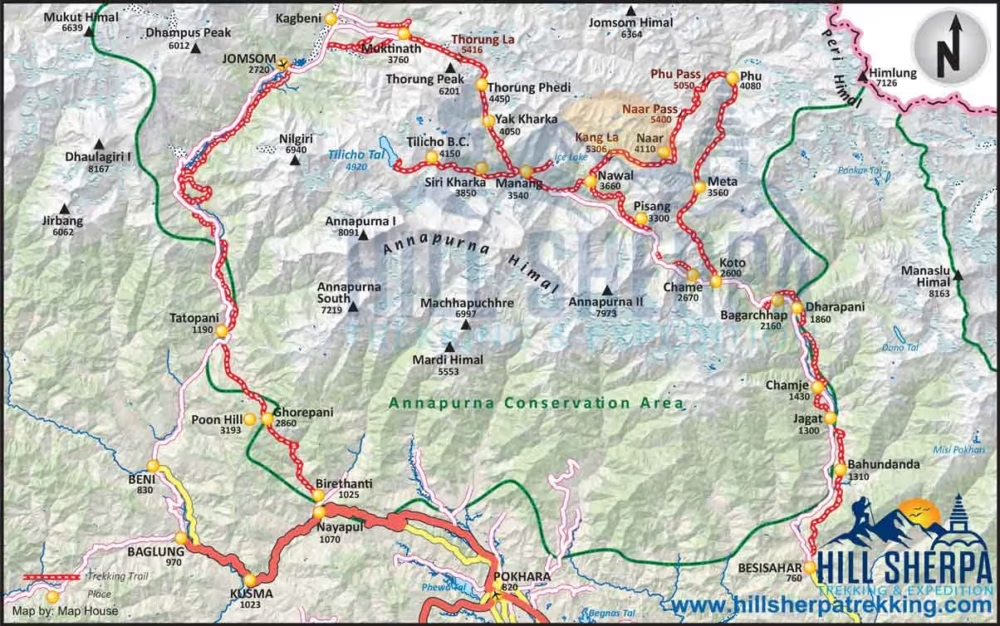
Trip Map of Annapurna Circuit Trek 12 Days
Altitude Chart of Annapurna Circuit Trek 12 Days
Equipment List

General Information
Personal Wearing Gear List & Recommendations by Hill Sherpa Trekking
- The company provides a feather sleeping bag and, feather down Jacket, but they should be returned after the trek.
- Hill Sherpa Trekking provides a duffle bag & trekking poles during the trek, but they should be refunded after the trek.
- mostly recommended for morning and evening, the windproof and waterproof thin-layered jacket above 3450m.
- mostly recommend for a Daypack bag 35-45 ltr.
- Headlamp & extra batteries during the trek

Daily Use Essentials
- A Sun Black Cap & Fleece hat
- Sunglasses with 100% snow UV protection
- A muffle (full-cover mask)
- Sunscreen (30+ to 60 SPF, depending on age)
- A pair of thin & warm gloves
- A pair of Trekking poles
- Water bottle & filter
- Water-purified tablets
- lips guard

Upper Body Essentials
- warm hat
- A pair of t-shirts
- Thermal tops
- Sports bras for ladies
- windproof & fleece jacket
- waterproof jacket

All Lower Body
- waterproof trouser
- warmer & fleece trousers
- A pair of Comfortable trekking pants
- Extra casual sports pants
- A pair of sports shoes
- Thermal underwear
- A pair of comfortable waterproof trekking boots
- A pair of light sandals
- Some Thick (woolen) socks and Sock liners
- Light shoes

Personal Medical and First Aid Kits
- Diamox (125mg to 250mg tablets for AMS)
- ibuprofen & paracetamol tablets IP
- Some Assorted adhesive bandages
- Warps, splints, wound coverings, butterfly bandages
- Blister treatment cream or similar
- Insect / anti-itch ointment
- Moves in case sprain anybody
- pain-relief medication
- Sinex, Eye Drops, etc
(Note: first aid kits & medicine will be carried with our company’s guide during the trekking. However, Hill Sherpa Trekking recommends you bring your personal first-aid kit.

Important Things
- passport-size photos and original passport copy scan
- Flight details (to pick you up & transfer to the hotel)
- Travel and Medical insurances

Extra Essential Things
- Quality energy dry foods (up to you)
- A power bank is most important (if you have one)
- Camera (memory card, chargers, and extra batteries)
- Toilet Paper and important ladies’ things (if you are ladies)
Frequently Asked Questions
How difficult is the Annapurna Circuit Trek?
Annapurna Circuit Trek is of moderate to challenging difficulty. Although it is true there are no technical climbing skills required, there are a few aspects of the trek that need to be considered. These include many hours of walking, considerable steep climbs, extended descents, possible high altitude sickness, and prolonged exposure to high altitudes. At a maximum altitude of 5416 meters, Thorong La Pass the trek will demand some level of cardiac endurance and mental fortitude. For the unaccustomed, multiple days of high altitude trekking is a considerable bodily challenge, but first time trekkers can do it, if there is a reasonable acclimatization schedule, proper pacing, and good overall prep. Completing the trek is possible for first time trekkers provided there is reasonable prep.
Do I need prior trekking experience?
No, prior trekking experience is not a requirement to complete Annapurna Circuit. Fitness, a solid prep, and some level of stamina are however essential. Many beginners take the trek and do well as it is their first high altitude adventure. This is possible due to the time taken and support from experienced guides and porters. To prepare, one should do some cardio, hill walking, or short hikes to boost strength and endurance. The will to complete the trek is required for the stamina front. An overall reasonable pace will offset any possible lack of experience.
What is the highest point of the trek?
Thorong La Pass is the highest point of the Annapurna Circuit. At an altitude of 5,416 meters (or 17,756 feet), it is one of the highest trekking passes in the world. It is certainly a high point of this journey, both emotionally as well as physically. The steep ascent is, of course, a challenge due to the altitude and the cold the early morning brings, but the challenge is worth it when one gets to enjoy the incredible views of the snow-capped peaks, as well as the feeling of accomplishment that comes from crossing the pass.
What is the best time to do the trek?
For best views of the Annapurna Circuit, the recommended times are in the spring (March to May) and in the autumn (September to November). During these periods, the weather is stable, temperatures are mild, and there are spectacular views of the mountains due to the clear skies. In spring, the landscape is also pretty as the rhododendrons are in bloom. After the monsoons, the landscape is clear, and visibility is excellent. High winter months provide the trek with spectacular views, but also, the trek becomes colder and the snow at higher altitudes becomes heavy. The monsoon season is not recommended due to the heavy rains, leeches, and slippery trails.
Is there a chance I will get altitude sickness?
There is a risk of altitude sickness on the Annapurna Circuit, especially above 2,500 meters. The primary symptoms to be concerned about include headache, dizziness, nausea, and fatigue. The most rapid elevation gain on the circuit occurs as you approach and pass Thorong La Pass. To mitigate this risk, take a gradual ascent while ensuring you are hydrated, not consuming any alcohol, and taking at least one acclimatization day in Manang. While Diamox will assist in the acclimatization process, one should be aware of the signs of altitude sickness and the need to descend to a lower altitude.
What accomodation will I be offered?
Accommodation on the circuit is from locally run teahouses. Each one provides the basics with a simple room comprising twin beds a mattress, a pillow and blankets and in most places, you will be charged a fee for a hot shower. Shared bathrooms are the norm. They become progressively more basic and rustic as you advance. While the first few may not offer all the comforts and facilities bodies need and the sentiment might be negative, one would be positively embraced with a hearty meal in the room, and the beauty of the mountains surrounding the teahouses during the trek.
What food can you get?
Food provided during the trek is healthy, and there is a surprising range of food available as well. Each teahouse presents a set menu with options that may include dal bhat (rice, lentils vegetables), noodles, fried rice, and soup, as well as pancakes, pasta, and momos. You can get a good amount of food with a vegetarian option. It is recommended that you stick to vegetarian food during the trek because it is a little lighter and will reduce stomach issues which helps the trek. The food prices do go up as all the food variety is good and you should still find good quality food with a variety.
Is drinking water safe on the trek?
Drinking water straight from the tap or a stream is not safe. You can stay hydrated by using purification tablets, a water filter, or UV sterilizers (like SteriPEN). Boiled water is provided at teahouses for a small fee. It is not environmentally friendly, but you can buy bottled water which is a waste. The best option is to carry refillable water bottles with purification systems. It is the best way to stay safe and reduce plastic waste that is produced on the trek.
Do I need permits? Yes, two permits must be carried by every trekker on the Annapurna Circuit: ACAP (Annapurna Conservation Area Permit) and the TIMS (Trekkers’ Information Management System) card. These can be secured by the National Tourism Board office in either Kathmandu and Pokhara. During the trek, permits are required for legal trekking and safe monitoring at various check points. For the application, be sure to carry a copy of the passport and passport-size photographs.
Is there internet and electricity?
Most villages have electricity, and at higher elevations, solar-electricity may be provided. The teahouses offer charging for a small fee for phones, cameras, and other gadgets. It is possible to find Wi-Fi in the lower villages, but it is often too slow, and a fee or slow Wi-Fi is the case for most. A local SIM card (recommended NTC) with a data package may be used for internet access, but coverage is uneven and not guaranteed along the entire route.
What kind of gear should I bring?
A successful trek is mostly determined by good gear. These will consist of hiking boots of the well-broken-in variety, sun protection, good-quality backpack, down jacket, layered clothes to suit the changing weather, sleeping bag with a -10 degrees Celsius or lower rating, and trekking poles. Due to the warm days and the freezing nights, especially in and around the pass, an elaborate packing list is to be developed. Finally, there must be a water purification technique and a personal first aid kit.
What are the transportation options?
There is a combination of overland transport for the trek. It usually starts with a drive to Besisahar from Kathmandu, then a jeep ride to Dharapani or Chame. After the trek, there is a jeep or local bus from Jomsom to Tatopani and then to Pokhara. From Pokhara to Kathmandu, there is a choice of a quick domestic flight or a road drive. Because of the rough mountain roads, 4WD jeeps are usually used.
Are guides and porters available?
Yes. It’s definitely best to hire a licensed guide and/or porter. Guides assist with navigation and help with cultural interactions while ensuring your safety. In an emergency, guides are a significant help. Porters are a great help as they carry your heavy backpack (20-25kg) while you trek. They help you trek much more comfortably. Engaging with local staff also adds to your experience, and they provide support to the local economy. If you do decide to trek solo, it will be at your own risk due to altitude, trail divergence, and other potential health issues.
How much money should I carry?
It is very important that you bring cash as there will be no ATMs after Besisahar and you will need to pay in Nepali Rupees. You will also need extra cash for personal items and activities such as hot showers, Wi-Fi, charging your devices, snacks, beverages, and tips. You may want to budget for these items about $20-30 USD a day, though this will depend on your personal spending. Remember, statement pieces like large denomination bills will not be useful as teahouses and shops do not accept cards. Make sure you bring cash in small denominations.
What to Expect?
Anticipate a journey of physical challenges, but at the same time, rewarding. You shall also explore many ecosystems of subtropical forests to high alpine desert as you experience the breathtaking scenery and culture of the Gurung, Thakali and Tibetan peoples. Note that the facilities will get simple as you climb up the mountain, the weather is unpredictable, and the path will challenge your endurance. But you will be paid off with breathtaking views, warm hospitality and a feeling of strong accomplishment. The Annapurna Circuit is another trek of its kind. It is journey to the satisfaction of the mind, body and soul.
Reviews on Annapurna Circuit Trek 12 Days







✖
Free Travel Guide
Get Expert Guidance from Experienced Sherpas