Govt. Tourism License 3195/080/81





Annapurna Circuit Trek 7 Days


US$ 790 per person
For a group of 7-12 pax.
-
1 -
1 person
US$ 960
-
2 -
2 person
US$ 860
-
3 -
6 person
US$ 810
-
7 over
9999
US$ 790
- Best Price Guarantee
- Secure Online Booking
- Flexible booking dates
- Owner operated company
- Decades of experience
- Dedicated sherpa team
- 100% success rate
- 5/5 ratings by travelers


Highlights of Annapurna Circuit Trek 7 Days
- A Legendary Himalayan Journey in 7 Days
- Investigating Muktinath Sacred Pilgrimage Site
- Crossing the Mighty Thorong La Pass (5,419 m)
- Stunning Scenery & Changing Terrain
- Views of the Himalayas in Panorama
- Cultural Exchanges with Communities in the Mountains
- Buddhist Traditions & Old Monasteries
- Under the Direction of Local Experts.
- Full Service Trekking Experience with the Hill Sherpa
- After a thrilling adventure, arrive in beautiful Pokhara.
Trip Overview
Short Annapurna Circuit Trek – A Quick Adventurous Version in Nepal
Annapurna Circuit Trek 7 Days is designed to give trekkers on a time constraint a taste of one of Nepal’s iconic trekking routes. Each section of this trek, designed by the Hill Sherpa Trekking team, offers a combination of stunning, dramatic, and challenging crossings of the famous Thorong La Pass (5,416 m / 17,769 ft), authentic Himalayan culture, and mountainous landscape. This trek is also suitable for those who are high-altitude trekkers and who are less likely to take the traditional 2-3 weeks trekking route.
The short trek to Annapurna Circuit begins with the scenic drive from Kathmandu to Chame, the entrance to the upper Annapurna region. The trekking trail follows the beautiful Marsyangdi River, passing through ancient pine forests, deep gorges, cascading waterfalls, suspension bridges, and the Himalayan Villages. Trekkers will begin to notice the change of landscape when they reach the villages of Pisang and further on to Manang, Yak Kharka, and Thorong Phedi.
One of the greatest moments on the Short Annapurna Circuit Trek 7 Days is the challenge of trekking the Thorong La Pass, one of the highest trekking passes on the globe. The views from the Pass are a trekker’s dream and reward them for their efforts in crossing the Annapurna and Dhaulagiri ranges. Reaching the Pass is also one of the greatest achievements of the short Annapurna Circuit trek.
When the pass is crossed, the pathway reaches the rain-shadow area of Lower Mustang, where the landscape consists of multi-colored cliffs, desert valleys, and Tibetan-influenced villages. The trail leads to Muktinath Temple, a sacred site for both Buddhists and Hindus. After Muktinath, the trek continues to Pokhara, a beautiful city by a lake where you can rest after your trek through the Himalayas.
The hike presents a spectacular opportunity to view a variety of the world’s tallest mountains, including Annapurna I (8,091 m), Dhaulagiri (8,167 m), the entire Annapurna range, Gangapurna, Tilicho, Nilgiri, Manaslu, Lamjung Himal, Hiunchuli, and Tukuche Peak. You will also see the majestic Kali Gandaki Gorge. Between Annapurna and Dhaulagiri, the gorge is recognized as the deepest in the world.
Short Annapurna Circuit Trek offers a variety of cultural experiences in addition to the indescribable scenic beauty. The trek passes through many traditional villages including the Gurungs, Thakalis, Manangis, and various Tibetan-influenced communities, as well as the Chhetri and Brahmin people. Along the trail are monasteries, prayer flags, mani stones and walls, prayer wheels, chortens, and colourful local customs and traditions, which all display the rich culture of the Himalayas in Nepal.
Hill Sherpa Trekking cares about your safety as much as we do and chooses local guides familiar with the landscape. You’ll receive personalized assistance during your entire trek from our professional English-speaking guides and porters. Included in the package are the Annapurna Conservation Area Permit (ACAP), TIMS Card, a cozy teahouse to rest, three hearty meals a day, travel, and comprehensive altitude safety.
Naturally, trekking the Annapurna Circuit says it all, for gorgeous views of the Himalayas, tough trekking challenges, and a look into Nepali culture. The Annapurna Circuit Trek 7 Days is the total package. This trek is a total must. You will have the opportunity to cross Thorong La Pass, one of the tallest trekking passes in the world, pay your respects to Muktinath, a sacred site, and see for yourself one of the most beautiful trekking spots in the world.
Also, we highly recommend the Annapurna Circuit trek 18 days which includes many things to visit, like Melaripa Cave, Ice Lake, the natural hot spring (Tatopani) and Ghorepani poon hill trek, if you have more time.
Annapurna Circuit Trek 7 Days Itinerary
01
Day 01: Drive from Kathmandu to Chame
Journey to Chame from Kathmandu via Besisahar
Today, we take a picturesque first-day drive from Kathmandu to Chame, the entry point to the Annapurna Circuit 7 days. Our trip initially drives overland to Besisahar, a bustling town that is the starting point for so many Himalayan adventures. As you continue on, the landscape alters incredibly, green hills give way to mighty river gorges, and you’ll begin to get breathtaking views of snow-clad giants like Annapurna and Manaslu.
From Besisahar, we move to a jeep ride on rough terrain that is approximately 3 to 4 hours, along narrow mountain roads and suspension bridges spanning rushing rivers. Along the way, we pass through a series of charming hillside villages, each unique in character and cultural flavor: Sange, Bhulbhule, Nagdi, Chamche, Tal, Dharapani, Bagarchhap, Dankya, Timang, Thanchowk, and finally Chame, a charming village at 2,650 meters, surrounded by stunning pine forest and massive peaks.
Enjoy constantly changing vistas, terracing carved into slopes of high hills, waterfalls cascading down mountain ridges, and glimpses of rural everyday life in the Himalayas. The trip is your first introduction to the depths of Nepal’s mountain culture; it’s more than just a simple transfer.

Duration
8-9 hours drive
Max Altitude
2650 m
Activity
driving
Meals
Breakfast, Lunch, Dinner
Accommodation
Local Teahouse
02
Day 02: Trek to Lower or Upper Pisang
Trekking from Chame village to Lower Pisang village or Upper Pisang, following via Bratang, Chemyau Kharka, Dhikur Pokhari.
Today, Annapurna Circuit trek starts our journey deeper into Annapurna’s interior along the Marsyangdi River. The trail meanders slowly along through pine and fir forests, with outstanding views of high rock walls and snow-clad peaks that tower above us.
Our destination is Bratang (2,850 m), the ex-apple orchard village and army post. The atmosphere becomes cooler and more refreshing as we make our way to Chemyau Kharka, where there is a poignant memorial to Akira Ochiai, a Japanese mountaineer who died during an expedition within the area. This location is serene and reflective, a good place to stop and enjoy the scenery of the mountains.
Further on along very pretty alpine forests, we come to Dhukur Pokhari (3,240 m), a small village with a few tea houses and stunning views of Annapurna II and Pisang Peak. The scenery now spreads out and deserts here, as we enter the rain shadow of the Annapurna range.
We then arrive at Lower Pisang (3,200 m), but instead of resting, we keep climbing higher for Upper Pisang (3,300 m) acclimatization. This old Tibetan village with a stunning panoramic view of the Annapurna massif and a chance to visit ancient monasteries draped in prayer flags is a plus.
We spend time in Upper Pisang acclimatizing our bodies to the high altitude before heading back to Lower Pisang for an overnight stay in readiness for the next phase of our journey.
Duration
5-6 hours
Max Altitude
3,300 m
Activity
Trekking
Meals
Breakfast, Lunch, Dinner
Accommodation
Local Teahouse
03
Day 03: Trek to Manang
Walk from Upper Pisang to Manang via Gyaru, Ngawal, and Braga. Today, the hike is one of the most stunningly scenic and culturally enriching sections of the Annapurna Circuit as we take the high trail from Upper Pisang (3,300 m) to Manang (3,540 m). It provides us with amazing views of the mountains, authentic Tibetan culture, and excellent acclimatization.
We begin with a keen ascent to the hilltop village of Gyaru (3,670 m). Though the ascent is long, the reward is instantaneous, breathtaking views of Annapurna II, III, IV, and Pisangkang Guru rise regally above Marsyangdi Valley. Gyaru is a peaceful village of old stone village houses and ancient chortens, where Himalayan tranquility is palpable.
From Gyaru, the trail is leveled and runs over a scenic ridge to Ngawal (3,660 m). The high altitude village is larger than Gyaru and equally fascinating, with beautiful monasteries, prayer walls, and dominant views of the surrounding mountains. The trail from Gyaru to Ngawal is relatively straightforward, and one can take an easy walk with unobstructed views and minimal tourists.
We gradually descend from Ngawal over alpine grasslands and juniper forest to Braga (3,470 m). Braga houses the oldest and most significant Gompa of the Manang valley, located at the top of a cliff with spectacular views into the valley below. Indigenous monks continue to reside in the historic monastery, which is a spiritual and cultural treasure.
From Braga, it’s a short walk to Manang (3,540 m), where our day ends. Manang is a well liked location for rest and acclimatization, tucked away beneath lofty mountains like Gangapurna and Chulu East. With several teahouses, bakeries, and mountain clinics, it provides comfort and much needed altitude adaptation before ascending higher into the Himalayas.
We overnight in Manang, drinking in the raw beauty of the high country and preparing for what is to come.
Duration
6-8 hurs
Max Altitude
3540 m
Activity
Trekking
Meals
Breakfast, Lunch, Dinner
Accommodation
Local Teahouse
04
Day 04: Acclimatization
Successful acclimatization days are side trips when you climb up high and stay low. You have two options today. That means to see the Ice Lake or visit the Milarepa cave. The Ice Lake is a tourist attraction, while the Milarepa cave is a historical site.
Since most visitors opt to break at the Ice Lake, we’ll discuss it here. In addition to providing a wonderful acclimatization sidewalk, the Ice Lake could very well be the pinnacle of any Annapurna Circuit 7 days trip.
You should start early because this trek will take the entire day. Blue and white markers for the Ice Lake side trek on the Annapurna Circuit 7 days will be visible as you are heading towards the monastery and the settlement.
Retracing your route down is an easy way to go down. There is also a short cut to Manang which curves around the mountain from the lower ice lake.
Or, you can also go to the off-beat site of Milarepa cave too. Thousands of years ago, when this part of Himalayas was under the Kingdom of Tibet, Milarepa lived for years inside these caves. This was in the 11th century.
To arrive at Milarepa cave, we will start by proceeding towards Braga Village for about 100 meters. Then, we will follow a marked trail, you can see the trail marks on the right side of the trail. We have to cross a small bridge and turn right, then follow it up by climbing steeply to until you arrive at Milarepa cave.
Duration
5-6 hours
Max Altitude
4620 m
Activity
Acclimatization/explore
Meals
Breakfast, Lunch, Dinner
Accommodation
Local Teahouse
05
Day 05: Trek to Phedi
After a well deserved night’s sleep and acclimatization at Manang (3,540 m), we trek onwards to the higher Himalayas with Yak Kharka (4,050 m) as our destination. We begin the trek with an easy ascent out of the Marsyangdi Valley, and with each step upwards, the landscape turns increasingly barren and alpine.
The vegetation thins out, and the terrain disintegrates into boulder ridges and grassy pastures with occasional sightings of blue sheep and grazing yaks, for whom Yak Kharka is named. On the trek trail, we pass through Gunsang (3,930 m), a cluster of a few lodges, which is a good resting place to rehydrate and absorb views of Annapurna III, Tilicho Peak, and Chulu West.
Annapurna Circuit Journey is gradual and steady as we ascend to a large altitude and allow our bodies time to acclimatize. The sound of the river below and the soft footsteps on the gravel road are the only sounds disturbing the tranquility of the high-altitude trail as the prayer flags flap in the wind.
We reach Yak Kharka, a tiny, charming village perched atop a hill with grazing grounds all around and expansive views.
After reaching Yak Kharka, the journey to Jarsang Khola is easy. However, the trip uphill from Jarsang Khola to a restaurant takes about ten minutes. Beyond the restaurant, about half an hour away, is an area where rocks could fall, so it’s crucial to walk carefully and with the tour guide’s assistance to ensure your safety. We will spend an hour walking from the restaurant to Thorong Phedi, where we will sleep the overnight.
Duration
6-7 hors walk
Max Altitude
4600 m
Activity
Trekking
Meals
Breakfast, Lunch, Dinner
Accommodation
Local Teahouse
06
Day 06: Trek to Muktinath crossing via Thorang La pass 5,416 m
After a well deserved night’s sleep and acclimatization at Manang (3,540 m), we trek onwards to the higher Himalayas with Yak Kharka (4,050 m) as our destination. We begin the trek with an easy ascent out of the Marsyangdi Valley, and with each step upwards, the landscape turns increasingly barren and alpine.
The vegetation thins out, and the terrain disintegrates into boulder ridges and grassy pastures with occasional sightings of blue sheep and grazing yaks, for whom Yak Kharka is named. On the trek trail, we pass through Gunsang (3,930 m), a cluster of a few lodges, which is a good resting place to rehydrate and absorb views of Annapurna III, Tilicho Peak, and Chulu West.
Annapurna Circuit Journey is gradual and steady as we ascend to a large altitude and allow our bodies time to acclimatize. The sound of the river below and the soft footsteps on the gravel road are the only sounds disturbing the tranquility of the high-altitude trail as the prayer flags flap in the wind.
We reach Yak Kharka, a tiny, charming village perched atop a hill with grazing grounds all around and expansive views.
The journey towards Jharsing tea shop via the steel bridge is easy from Yak Kharka. However, the trip uphill from Jarsang Khola to a restaurant takes about ten minutes. Beyond the restaurant, about half an hour away, is an area where rocks could fall, so it’s crucial to walk carefully and with the tour guide’s assistance to ensure your safety. We will spend 1 hour walking from the small motel to Thorong Phedi, where we will stop for the night, being ready for the Thorang La Pass.
Duration
8-9 hours walk at high
Max Altitude
5,416 m
Activity
Trekking
Meals
Breakfast, Lunch, Dinner
Accommodation
Local Teahouse
07
Day 07: Drive to Pohkara from Muktinath village
Local Bus Drive from Muktinath to Pokhara
We have the morning viewing holy Muktinath Temple (3,800 m), a key pilgrimage site for both Hindus and Buddhists, before we make our way back to Pokhara. Renowned for its eternally burning flame and 108 water spouts believed to cleanse the soul, Muktinath rests beneath the spectacular Thorong La Pass.
We also make a short visit to the nearby Jwala Mai Temple, or the Temple of Fire, where a burning fire of natural gas constantly burns from within a stream, a miraculous natural phenomenon that the pilgrims hold sacred.
After our trek, we descend to Jomsom (2,720 m), the district administrative capital of Mustang. We take a local bus in Jomsom for the lengthy but picturesque journey back to Pokhara (820 m). We descend into the world’s deepest gorge, the Kali Gandaki Gorge, during the 8-10 hour ride, depending on the weather and road conditions.
The road winds through historic villages, terracing covered hillsides, and stunning mountains, providing a last look at rural high Himalayan life. It’s a memorable overland journey through some most varied landscapes of Nepal, despite the road’s occasional unevenness.
Our trekking adventure ends when we arrive in Pokhara. In this charming and friendly lakeside town, unwind and take in the breathtaking Annapurna trek.
Duration
7-8 hours
Max Altitude
830 m
Activity
driving
Meals
Breakfast, Lunch
Accommodation
Local TeahouseIncludes & Excludes
What is included?
- International airport pick-up/drop-off by private car.
- Accommodation standard tourist hotel twin-sharing room (2 nights in Kathmandu with breakfast).
- Accommodation, standard tourist hotel twin-sharing room for 1 night in Pokhara with breakfast.
- Kathmandu to Besi Sahar by Hiace, then drive to Chame by local Jeep.
- Muktinath to Pokhara transportation by a local shared bus.
- All three meals on trekking (Breakfast, Lunch, Dinner) are chosen from the menu.
- Accommodation: tea-house twin-sharing room.
- Annapurna Conservation Area Permit (ACAP)
- Government-licensed holder, good-speaking English, excellent experience guide.
- All staff wages, food, drinks, accommodations, transportation, and insurance.
- Down jackets, duffel bags, sleeping bags, and trekking poles are provided by Hill Sherpa Trekking but should be returned after the trek (if you need them)
- One experienced sherpa helper to transport your luggage & 1 porter for 2 trekkers.
- Hill Sherpa Trekking first aid kit bag carried by the Guide.
- Fresh fruits daily after dinner
- Helicopter service will be provided by your travel insurance in case of an Emergency.
- All Government taxes and official expenses & and ground transportation.
- Oximeter for pulse checking, level (AMS) Acute Mountain Sickness.
- Trip Certificate provided by Hill Sherpa Trekking.
What is excluded?
- International airfare tickets.
- Nepal entry visa fee; visa obtained on arrival at the international airport in Kathmandu.
- Additional accommodations, food, and drinks in Kathmandu if you stay extra day.
- Your personal medical & travel insurance.
- Dessert, sweet items like chocolate, cake, pie, pudding, Tea, and coffee for any extra expenses.
- During the trek: hot showers, Mobile, Camera, Power bank, battery charging, Wi-Fi Internet.
- Kathmandu Sightseeing entrance fees (25-30 USD per person in a group size of 4)
- Personal first aid kit.
- Tips for guide & porter. (Tips are expected)
Note:
We also operate private trips.
Trip Information of Annapurna Circuit Trek 7 Days
Difficulty of Annapurna Circuit Trek
Short Annapurna Circuit trek. Your experience, level of fitness, attitude, and schedule will determine how difficult the seven days are. With the introduction of rough roads, more hikers are starting to cut their journey down by days. A place that would have taken many days of hiking can now be reached by taking a 4×4.
As an alternative to walking the entire mountain trek, there are often chances to use quicker dirt roads that still offer stunning views. Our trek guides will make sure you get all the views you want rather than relying solely on the dirt roads.
Best time to Trek Annapurna Circuit
Timing for your Annapurna region trek is crucial to your safety, comfort, and enjoyment. For the 7 days short Annapurna Circuit Trek, the ideal trekking seasons are April to May (spring) and October to November (autumn). These seasons typically offer stable, dry, and clear weather with great mountain vistas, pleasant daytime temperatures, and safer trail conditions, especially at high altitudes like Thorong La Pass (5,419 m).
Spring sees rhododendrons in bloom and greenery on the lower slopes and open views of the Annapurna and Dhaulagiri ranges on the upper country. Autumn, following the monsoon, is one of the optimum periods and most picturesque, with crystal clear skies, excellent visibility, and pleasant temperatures.
Although winter (December to February) can offer deserted trails and stunning snowy landscapes, it also comes with significant risks, most prominently the frequent closure of Thorong La Pass due to heavy snowfall that can cause schedule disruptions and last for several days. Only experienced high-altitude trekkers acclimatized to extreme cold should try trekking during this period.
On the other hand, the monsoon season (June to September) is not recommended, as trails get muddy and slippery, leeches thrive in lower elevations, and cloud cover is more likely to hide mountain views.
For safety and maximum enjoyment, we recommend planning your trek for spring or fall, the golden windows of Himalayan trekking.
Can a beginner join this trip?
No, we don’t recommend the Annapurna Circuit Trek 7 days for beginners. Both the mental and physical aspects would be difficult for beginners. This tour requires trekkers to walk five to seven hours a day for seven days, which is challenging on its own and necessitates mental preparation that most beginners cannot handle. We can recommend at least 12 days annapurna circuit trek itinerary, or 18 days annapurna circuit trek is the 100% best options for beginners.
Altitude Sickness on short Annapurna Circuit Trek
During the Annapurna Circuit Trek, where the trek passes through Thorong La Pass (5,416 m), it is expected that altitude sickness will occur at high elevations, with serious concern. It is still a concern for those of any age, fitness level, and irrespective of prior trekking experience. Sickness from altitude occurs as the oxygen level decreases and as the elevation increases. The body needs time to adjust to the change.
Acute Mountain Sickness is the most prevalent form of altitude sickness. Symptoms of this sickness at its mild stage are even termed as annoyances and include headaches, tiredness and/or dizziness, nausea, and loss of appetite with difficulty sleeping. This trek may need to be halted if the symptoms worsen in order to commence a descent to a safer altitude.
Altitude sickness is best avoided if the trek is taken slowly while properly hydrated, with good nutrition, and with acclimatization observed. The trek was designed with a gradual increase in altitude with an acclimatization day in Manang (3,500 m) so that the trekkers may be adequately prepared for the subsequent sections of the trek, including Yak Kharka, Thorong Phedi, and the strenuous crossing of Thorong La Pass.
During the trek, you may be adequately prepared by trekking at a comfortable pace, with good nutrition, and abstaining from the use of alcohol, with good communication with your guide if any of the listed symptoms are present. Our local guides at Hill Sherpa Trekking are adequately prepared by being knowledgeable and trained to guide the trekkers by monitoring their health along the trek.
Most trekkers are able to complete the short trek to annapurna Circuit with proper acclimatization and with good preparation and trekking within responsible limits for the trekkers to enjoy the gorgeous views of the Nepal Himalayas.
Accommodation, Food and Drink
We will spend the majority of our nights at tea houses during the 7 days Annapurna Circuit Trek. You can expect a certain level of comfort because they are small hotels. In contrast, comfort is a relative concept in this remote, mountainous region. Tea houses are comfortable because they offer a place to stay and scrumptious, freshly made food. Families from the village have taken in passing hikers and are in charge of them.
Transportation for Annapurna Circuit Trek
All of the transportation requirements specified by the itinerary will be met by our Annapurna Circuit Trek 7 days short package. This covers transportation to and from Kathmandu’s international airport, bus travel to and from Pokhara, transportation to the trek’s beginning and finishing locations, and more.
Permits
Annapurna Circuit Trek 7 days. To enter this area, you must have a Tourism Information Management System (TIMS) card and an Annapurna Conservation Area permit (ACAP). The permit is required for anyone wishing to hike any of the hiking trails in the Annapurna region. Protecting and maintaining the region’s biodiversity and ecological integrity is the primary goal of the National Trust for Nature, which is in charge of it. The funds collected under this permit are used to fund conservation projects.
Fitness and trip planning
You have to believe that you can hike every day for almost two weeks. You will be carrying a light bag with food, water, snacks, and rain gear on your shoulders the entire time, while a porter will carry your main luggage.
With no lengthy or taxing climbs in the first few days and a gradual ascent to a difficult but moderate elevation, the Annapurna acclimates hikers gradually. The Thorong La Pass, however, is a difficult one. At an elevation of over 4,000 meters (with a peak of 5,416 meters), you will spend three days there. It will take you nine to eleven hours to climb and descend the pass.
Gadget charging & Internet
While internet and electricity are being built out during the Annapurna Circuit Trek 7 Days, staying connected is possible. Most major teahouses in Chame, Pisang, Manang, Yak Kharka, Thorong Phedi, Muktinath and Jomsom provide Wi-Fi and charging, though at a cost.
Due to a local hydroelectric station, electricity in the higher and more remote villages is more consistent, though not as reliable. During the peak trekking season and especially in a high-pressure weather system, charging is first-come, first-served. The extreme cold, especially at altitude, will also hasten the draining of your battery compared to normal conditions.
The larger villages provide Wi-Fi, though at slower than desirable speeds. Local NCELL and Nepal Telecom (NTC) mobile networks provide the bulk of coverage along the trail, though in more remote areas it will be non-existent.
To make sure you have all your devices for a pleasant trek along the Annapurna Circuit Trek, we recommend a high-capacity power bank with a 10,000-20,000 mAh capacity, extra batteries, and charging cables along with a universal travel adapter. With limited internet and electricity, these preparations will help manage the remaining power of your devices along the trek.
Extra Expenses
Expenses such as airfare, visa, lunch and dinner and drinks in Kathmandu, additional meals and overnight stays, travel insurance, medical insurance, tips to crew members, emergency rescue (charged by your travel insurance), and anything outside of the package.
What to expect
Although it doesn’t share the same grandiose nickname as the Everest Base Camp Trek, the Annapurna Circuit is the most popular trekking destination in Nepal. Annapurna Circuit offers trekkers arguably Nepal’s most diverse landscape and environment of all the great excursions, and it’s by far the longest as well. Trekkers trek from green rice paddies of the lower Himalayas to barren high-altitude landscapes, through massive valleys of glaciers and across strange swaying floating bridges. The path is lined at all times by the towering snow-white peaks of the world’s highest mountain range, the Annapurna massif.
Travel Insurance for Annapurna Circuit Trek
Travel insurance is mandatory for the Annapurna Circuit Trek 7 Days for a number of reasons. This trek goes through high-altitude and remote environments. Although this trail is well-established and assisted by teahouses, the weather and altitude can change rapidly, so the need for comprehensive insurance can not be overstated.
Your travel insurance should cover at least trekking up to 5,500 meters, medical evacuations by helicopter, medical treatment and hospitalization, cancellation and interruption of the trip, and loss or delay of your baggage. Since the highest point of this trek is Thorong La Pass (5,416 m (17,769 ft), it is insurance that is crucial for high-altitude trekking.
Before the start of the trek, a copy of your insurance details will be collected by our team. In the case of altitude sickness and injury, our team of experienced Sherpa guides will carry out the rescue, evacuate you by helicopter and will negotiate with your insurance company for the evacuation on your behalf. Your safety is our main concern.
Packing List for Annapurna Circuit Trek 7 Days
Annapurna Circuit trek 7 days, the perfect gear will offer a good balance of warmth and comfort. Weather can change along the trek, which passes through multiple climate zones, from warm lower valleys to cold, high altitudes, like Thorong La Pass (5,416 m), where weather is unpredictable.
Clothing and Personal Gear
The best way to tackle the changing weather along the trek is to layer your clothing. The following clothing items should be included in your packing.
- Moisture-wicking base layers
- Thermal underwear
- Fleece jacket
- Warm down jacket
- Waterproof and windproof jacket
- Trekking pants and comfortable hiking trousers
- Warm gloves and lightweight inner gloves
- Wool or fleece hat
- Sun hat or cap
- Neck gaiter or buff
- Trekking socks (several pairs)
- Comfortable underwear
- Waterproof, high-ankle trekking boots
- Lightweight camp shoes or sandals
Daypack Essentials
Each trekker should have a lightweight (5-7kg) daypack. The following items should all be included.
- Water bottle or hydration bladder
- Sunglasses with UV protection
- Trekking poles
- Headlamp with extra batteries
- Power bank
- Personal first-aid kit
- Personal medications
- Sunscreen and lip balm
- Toiletries and quick-dry towel
- Energy snacks
- Rain cover for backpack
- Camera or personal electronics
For the Annapurna Circuit Trek 7 day, Hill Sherpa Trekking provides a durable duffel bag for your main luggage. The porter team will be responsible for carrying this bag. It is important to keep your daypack lightweight and only carry the essentials. A good packing list gives you minimal bulk to carry and will help make your trek to the Annapurna Circuit pleasant even at difficult times such as the climb to Thorong Phedi and crossing Thorong La Pass.
Our trekking team is experienced and equipped with the right tools to make the breathtaking panoramic views, beautiful mountain ranges, and rich culture of the Annapurna region completely accessible.
Electricity, Drinking Water, and Internet
All but a few of the teahouses on the Annapurna Circuit Trek 7 Days provide electric charging for at least one electronic device. Charging options along the route are plentiful, but are usually a paid service at higher elevations where solar power and local hydroelectric power provide electricity. A cold-weather, high-capacity power bank is a must because batteries drain faster in the cold.
Drinking water is available along the trekking route. Please carry a water bottle or hydration bladder to be refilled during the trek and help reduce waste. While bottled mineral water is available in most villages, it comes at a higher cost at higher altitudes. A cost-effective and less damaging option is to fill your water bottle at teahouses after they offer boiled or filtered water. Water purification tablets or a portable water filter are also a good option.
Wi-Fi is offered in many villages, including Chame, Manang, and Muktinath. The speed of the connection is dependent on your location and the current weather. Mobile network coverage is available in many areas, but may become limited or unavailable at higher altitudes.
Solo Trekking Rules in the Annapurna Region
According to the latest trekking regulations in Nepal, independent solo trekking is no longer permitted in the Annapurna Conservation Area. All international trekkers are required to trek with a licensed trekking guide through a registered Nepali trekking company.
These rules were enacted for the safety of trekkers and to be responsive to emergency situations. They also promote the sustainable tourism model in the trek areas of the Nepal mountains. Employing the services of a trek guide not only supports compliance with the law, but also supports the local economy, assists with cultural awareness, and provides navigation and extra support for altitude sickness and adverse weather.
Hill Sherpa Trekking employs only fully licensed Sherpa guides who are government certified and trained in trekking safety and first aid, and have knowledge and experience with trekking at high altitudes. Regardless of whether you book the trek solo, bring friends, or join a group, we make sure your trek is the right mix of safe, fun, memorable, and of course, legal.
Why Choose Hill Sherpa Trekking?
Your Himalayan experience should be booked with a trekking company that you can trust. Hill Sherpa Trekking knows that trust is built over time. That’s why, as a 100% Nepali, locally owned, and Sherpa-led business, we promise that our customers will benefit from our professional and personal experience. Having spent many years both living and working on the trails, we know that it is our duty to ensure the safety of those who trek with us. We will do whatever we can to ensure that your trek with us is the adventure of a lifetime.
Your safety is our primary concern. Our guides are English-speaking and licensed. Our itineraries include proper acclimatization, and you are escorted with a 24 hours emergency support team. Proper trekking also includes portering, and we provide this, along with transportation, permit arrangements, and assistance tailored to you from when you land in Nepal.
Most large trekking companies lose their nimbleness in the wilderness. Small scale operations like ours are able to focus on the individual and the group, and adjust our style to yours. Relationships with our communities allow us to further the goal of tourism, which supports the families living along the routes.
Whether you dream of crossing the legendary Thorong La Pass (5,416 m), witnessing breathtaking views of the Annapurna and Dhaulagiri ranges, or experiencing the warm hospitality of the Himalayan people, Hill Sherpa Trekking is dedicated to making your Annapurna Circuit Trek 7 Days safe, rewarding, and unforgettable. From the moment you arrive in Nepal until your journey comes to an end, our team will be with you every step of the way.
Trip Map of Annapurna Circuit Trek 7 Days
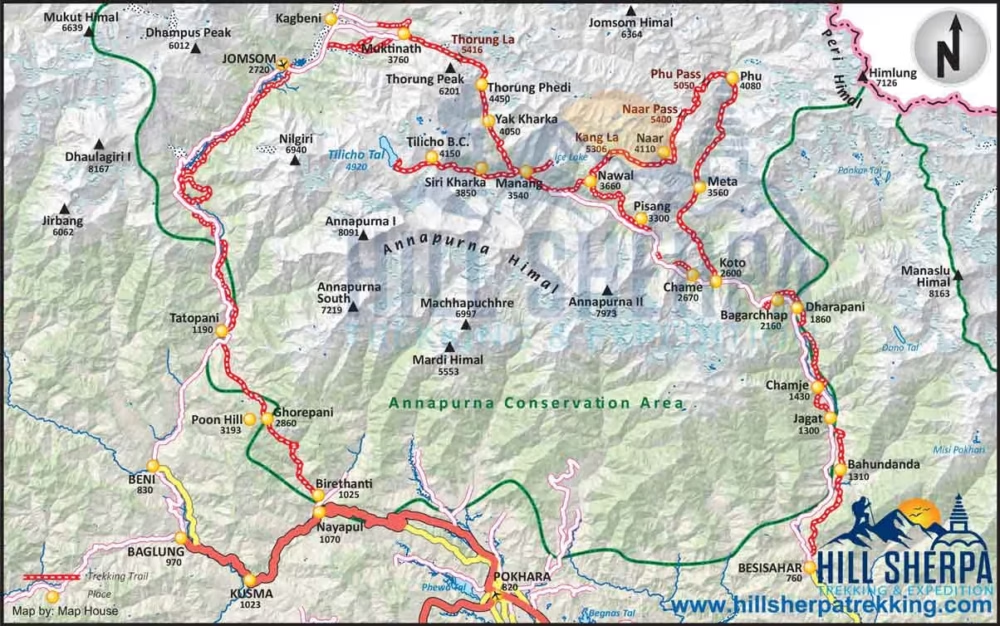
Altitude Chart of Annapurna Circuit Trek 7 Days
Reviews on Annapurna Circuit Trek 7 Days






US$ 790 per person
For a group of 7-12 pax.
-
1 -
1 person
US$ 960
-
2 -
2 person
US$ 860
-
3 -
6 person
US$ 810
-
7 over
9999
US$ 790
US$ 790

Talk to Trip Expert
+977 9704823980 (Whatsapp)
✖
Free Travel Guide
Get Expert Guidance from Experienced Sherpas