Latest Posts

Talk to Trip Expert
+977 9704823980 (Whatsapp)


Talk to Trip Expert
+977 9704823980 (Whatsapp)Mera Peak Climbing 14 Days is one of the most rewarding and easiest to access journeys in Nepal. The country is known for its many treks and tall mountains to climb, and the Mera Peak, standing tallest at 6,476 m, is the most popular mountain in Nepal for beginners and experienced climbers. The Nepal Mountaineering Association defines this peak as one of the `trekking peaks` in the country, a mountain that contains the thrill of climbing to high altitudes without needing the extreme technical precautions that come with the likes of Everest and Cho Oyu.
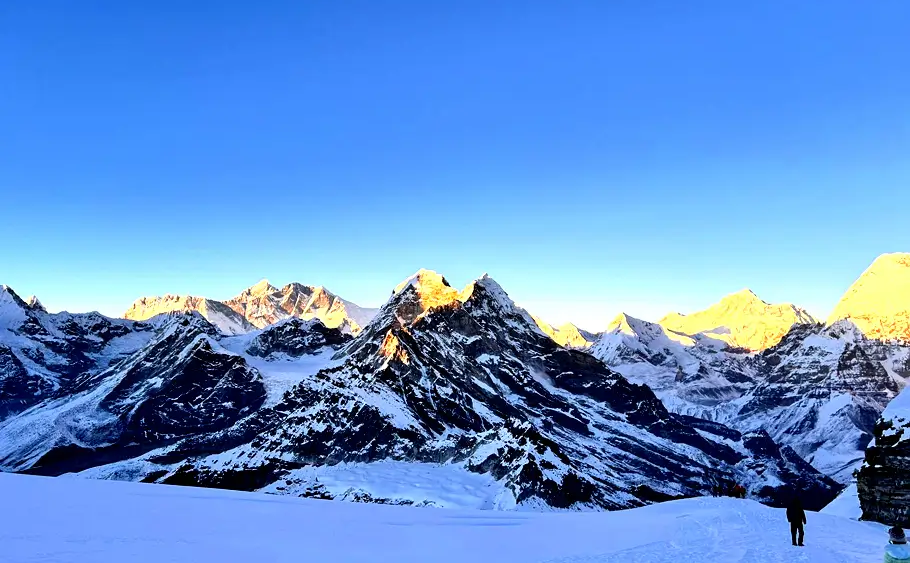
Mera Peak Climbing 14 Days is the perfect combination of walking alpine valleys, crossing high-altitude glaciers, and getting to know the Sherpa culture of Nepal, all while standing at the top of one of the many massive mountains in the Himalayas. The trip is nothing short of astounding, crossing the ablation valley to the summit with breathtaking views of Everest, Makalu, Lhotse, Cho Oyu, and Kanchenjunga.
Both beginners and thrill-seekers alike adore scaling the Mera Peak and trekking through the Himalayan mountains. No other trekking peak, besides the Mera Peak, can offer the right combination of accessibility, scenic views, and adventure. Most trekking peaks are much more challenging and require years of climbing training. For Mera Peak, professional guidance is available, and basic climbing equipment can be used, such as crampons, ice axes, and climbing ropes.
During a fourteen-day trek, visitors and travelers will pass through alpine meadows, hill terraces, and dense forests. Moraines and glaciers can be found at the base of the mountain. The peak of the mountain is one of a kind, featuring a 360 view of the tallest peaks in the world so all the effort spent on the trek will be worth it. Secluded Sherpa villages and calming Hinku Valley are part of the trek as well so you will be offered a different cultural experience as well, unlike many other trekking peaks in Nepal.
For a safe and enjoyable experience while climbing, a lot of consideration must be taken to get the timing right, and in this respect, the climbing season for the Mera Peak is the best, and Mera Peak Climbing is best identified as climbing as of.
In spring, the temperatures are much more enjoyable for hiking, while the skies tend to be clear and blue, allowing for more breathtaking views. In addition, this is the time when lower sunshine valleys bloom with gorgeous pink and red rhododendron flowers. Thus, it allows for a more scenic and enjoyable climb, and is the best asMera Peak Climbing Season.
The timespan from September to November is considered autumn. This is a great time of year to hike and climb as the weather is even and allows for great visibility. This season tends to be the most popular for expeditions as the temperature is mild.
The winter months bring a heavy chill and a lot of snow covering the paths and routes, making them harder and more dangerous to pass. The monsoon months of June to August also add to this as they bring heavy, torrential rains that can lead to dangerous landslides.
Yes, as long as they are beginner physically as well. The climb is considered non-technical, but does involve a lot of long, high treks at extreme altitude, staying in hanging tent camps, and climbing over and crossing glaciers.
Guides on the mountain are trained professionals who focus on the safety of the climbers, and frequently provide lessons on how to use ice axes, ropes, and crampons in order to make climbing easier. This allows even the most inexperienced climbers to make it to the summit safely. In order to make it to the summit, the climber needs to be mentally prepared as well as in good physical condition due to the high altitude, it is very cold, and they will have to focus on the climb.
Regardless of the time of the year, acclimatization is one of the key elements of the 14 days Mera Peak Climbing. An acclimatization schedule protects novice climbers from altitude sickness, which can lead to symptoms of sickness and make climbers much less comfortable.
While climbing and trekking at high elevations, there is always the risk of altitude sickness, and Mera Peak is no exception. With a summit of 6476 meters, going up too quickly can cause sickness in climbers. Some of the common symptoms include:
To minimize these risks on the Mera Peak climbing 14 days, climbers are encouraged to:
Daily, professional guides on Mera Peak monitor the wellbeing of climbers and take necessary precautions to keep climbers safe and in good health. In the absolute worst conditions, descending to a lower altitude is the best option.
There are both tented camps and teahouses available for accommodation right on the Mera Peak trekking route.
Mane or teahouses are simple lodgings located in the villages alongside the route. It has double occupancy rooms with bedding, meals, and warm meals are offered in winter for a small fee.
Tented Camps are located right next to the Mera Base Camp and High Camp. These camps are managed by the climbing team and offer sleep and dine tents.
The menu through the climb is simple and high in calories to endure the trek. Meals typically include dal bhat, various noodles, and other soups. Fried rice with optional eggs is served. Ensure you have safe drinking water as altitude sickness is more common above the higher camps and boiling/ filtering is highly recommended.
Getting to Mera Peak starts off with a flight to Lukla from the capital, Kathmandu. It is known to be one of the most beautiful and exhilarating flights.
To climb Mera Peak, you require the following government permissions
Most trekking companies take care of these permits beforehand, and that makes it easier for the climbers.
Preparation and Training
To scale Mera Peak within 14 days requires a modicum of mental and physical preparedness. For this, the climbers need to
The climbers get a rare opportunity to experience something new, admire nature, and learn about a new culture
Scenic wonders: Gorgeous views from the greenery, various forests and rivers, and the high meadows with glaciers.
Sherpas: The small villages that you come across portray and explain what lifestyle with the Sherpas of Nepal was like.
Long and steep climbs: Prepare yourself for high altitud trekking weekends with long days of climbing and steep inclines; it’s all for the long and steep climbs.
Summit experience: The most rewarding part of climbing Mera Peak for 14 days is enjoying the view of the magnificent Himalayas from the Summit.
This combination of challenge and reward is what makes Mera Peak a fantastic peak for all trekkers.
The 14-day Mera Peak climbing costs differ due to the services offered, the agency, and individual costs. The essentials include
Extras include snacks, beverages, Wi-Fi, tips, gear rental, powered charging (if available), Kathmandu optional tours, and Kathmandu Wi-Fi. Reasonable estimates suggest that guided Mera Peak climbing is priced in the range of $2500-3500 per individual, depending on the season and the services included.
Charging: The teahouses up to Khare offer some charges for a small fee. Base Camp and High Camp often do not have places to charge your phone so we recommend power banks or solar chargers.
Internet and Mobile: During the trip, there is little mobile network connectivity (NCELL/Nepal Telecom). Some tea houses have Wi-Fi, but the vast majority of places at high altitude do not.
Mera Peak Climbing over the course of 14 days is the ultimate experience in the Himalayas for both beginners and seasoned trekkers. Without the extreme perils posed by some of the larger mountains, climbers can experience high-altitude mountaineering. In addition, they receive skilled assistance and can take in the magnificent views.
The trip will include difficult walks, multicultural experiences, and magnificent scenery. The final attraction is the summit, which gives the trekkers a view of the highest mountains on earth. It is an experience of a lifetime, whether one is moving to a personal goal, an epic adventure, or just to see the grandeur of the Himalayas, 14 Days Mera Peak climbing.