Latest Posts

Talk to Trip Expert
+977 9704823980 (Whatsapp)


Talk to Trip Expert
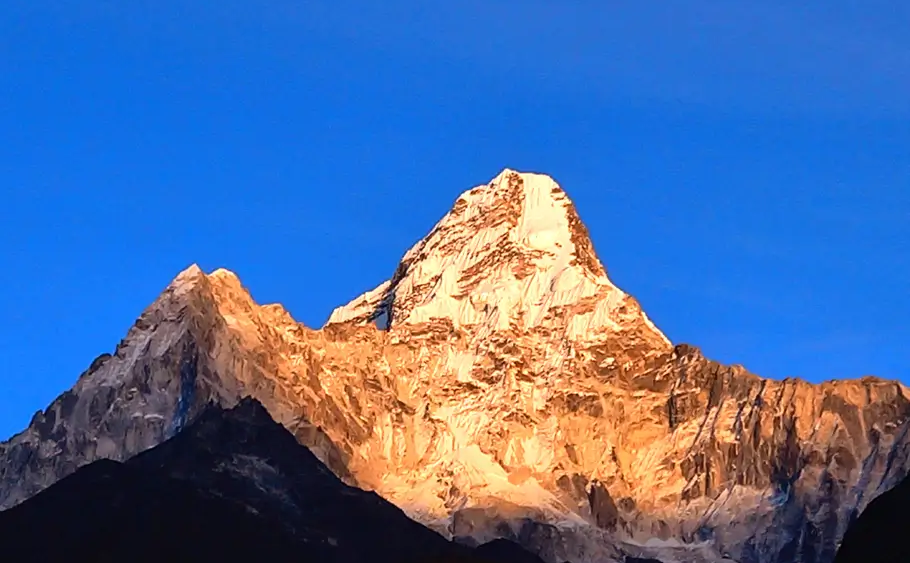
+977 9704823980 (Whatsapp)Among the multitude of climbs that one can embark upon in Nepal, the Ama Dablam Expedition is the one that stands out most in regard to its aesthetic value. Famed for its elegance, the Ama Dablam mountain towers over the Everest region at a height of 6,812 meters. It is said to be the Matterhorn of the Himalayas. The pyramid like shape of the mountain resembles that of the famous Matterhorn in Switzerland. The name of the mountain, Mother’s Necklace, is a testament to the Sherpa’s dedication to the mother Himalayas. The expedition is a perfect combination of technical climbing, rich Sherpa culture, and magnificent views of the Himalayas, a perfect adventure for men onaineers.
Due to the combination of technical difficulty and beauty, the Ama Dablam climb is often highly regarded. The expedition offers diverse trekking routes through Sherpa villages, the opportunity to see Everest, Lhotse, and Makalu up close, and the pride that comes with summiting one of the most stunning mountain peaks in the world. It is widely considered to be a preparatory climb for the 8000 meter peaks as the route provides ample opportunity to hone mixed climbing techniques. The memories that are formed at each segment of the climb are unique and varied; from trekking through a forest of rhododendrons to standing on a peak, covered in snow, and looking down on a sea of clouds.
Ama Dablam is located in Nepal’s Khumbu region in Sagarmatha National Park, a UNESCO World Heritage Site. For the Sherpa people, Ama Dablam is culturally and spiritually significant due to its unique shape; a motherly peak with cascading glaciers in the form of a pendant. The peak was first climbed in 1961 by a western team, and since then, it has become a classic climb in the Himalayas. The peak has maintained its reputation for the technical aspects of the climb and is considered one of the best in the world.
Ama Dablam has an elevation of 6,812 meters (22,349 ft) above sea level. The Lukla to Base Camp round trip trek is about 120 to 130 kilometers, with able acclimatization villages located along the way. The climbers will move to higher camps on the mountain after Base Camp at 4,600 m. Lukla is located at 2,860 m, and there is a long march of gradual elevation gain to help with the acclimatization for the summit.
The Southwest Ridge Route is undoubtedly the standard and most popular route to the summit. Climbers at Base Camp (4,600 m), set up three higher camps before proceeding to the summit. This route entails a mix of rocky ridges, steep ice slopes, and assorted other topographies. This diverse combination translates to an excellent all round technical challenge. The climb requires advanced skills in rope handling, crampons, and ice axes, but is incredibly rewarding due to the magnificent ridge climbing the Himalayas have to offer.
For more experienced climbers seeking a bit more difficulty, the North Ridge and Lowe Route are alternatives, though they are more difficult and less popular. These routes are steeper, more exposed, and require advanced alpine skills. The Southwest Ridge, however, due to its safety, remains the most preferred route, with established camps and fixed ropes, making it perfect for guided expeditions.
An Ama Dablam expedition takes 15-25 days, and is determined by weather patterns and your acclimatization. After briefing and preparation in Kathmandu, you take a scenic flight to Lukla. From Lukla, trekkers hike through Namche Bazaar, Tengboche and Pangboche, to Base Camp. For the next two weeks, climbers do rotations to acclimatize and get ready for the summit. The last part is descending safely back to Kathmandu for a celebration of the successful ascent.
Climbers prefer spring (April May) and autumn (October November) the most when climbing Ama Dablam. The weather is also predictable and the skies are clear, and the temperatures are moderate and hence conducive to the high altitude climbing. In the spring the rhododendron woods are in full blast and the trail in the woods is vibrant and bustling. Autumn months are also the months that give the best views of the mountains without any obstructions. It is possible to climb during the months, but it will be far harder due to very low temperatures or because of monsoons.
Difficulty and Acclimatization
Ama Dablam is viewed as a technical and difficult peak. Prior to climbing, one must have rock and ice climbing experience, as well as a few ascents over 6,000 meters. Acclimatization is crucial as a portion of the itinerary is designed to include rest days and rotation climbs. The steep ridges, exposed segments, and ice slopes of the peak require as much psychological strength and endurance as physical, and that is why it is designed suited to experienced mountaineers who want to test the extreme challenges of the sport.
In order to ensure the expedition to Ama Dablam is safe and effective, the training must start in the months prior to the peak, preferably three to six of them. In this stage of the expedition training, the focus must be put on the fundamentals of climber preparation: endurance, strength, and the specifics of climbing technique. In addition to the core and leg exercises required to strengthen the climber, other workouts must be designed to increase the cardiovascular system, which can be achieved through hiking, running, and cycling. The other, more technical skills, such as fixed rope practice, ice axe technique, and crevasse rescue practice, will increase expedition safety and reinforce personal confidence.
During Himalayan excursions, altitude sickness remains a primary concern. The adverse effects of ascending too rapidly, such as headaches, nausea, and breathlessness, are manifestations of the body’s inability to compensate for the reduced oxygen availability. Thus, to avoid such ailments, hikers are encouraged to ascend slowly, drink plenty of fluids, and utilize rest days. Although Diamox can be used as one form of medication, slow acclimatization remains the most vital strategy, along with constant oversight of the group by guides.
Each day of the trek, participants are expected to walk between 4 and 7 hours, with the total dependent on altitude gain and terrain for the day. After the trekking portion of the tour is complete, participants can expect to spend between 6 and 10 hours on technical climbing sections of the mountain, with the lower sections and summit rotations also being included. To ensure the climbers are healthy and strong for the summit attempt, acclimatization and rest days are built into the schedule.
Permits
All necessary permits to climb Ama Dablam, which are booked through Hill Sherpa Trekking, are
All permits are legal requirements for the climb and aid in the conservation and community development of the Everest region.
The adventurous first step of the expedition is a mountain flight from Kathmandu to Lukla, which is followed by trekkimg on beautiful trails. Each day of the trek and expedition is provided with nutritionally adequate meals to ensure the trekkers maintain the needed energy. Offered meals comprise Nepali dal bhat, pasta, soups, and mixed vegetables. At Base Camp and the higher camps, warm, calorie-dense meals supplemented with hot beverages are provided to the climbers. Safe and hydrating water, boiled and filter, is provided at altitude to aid in climbers hydration.
Communication, Wi-Fi, and mobile networks (Ncell or Nepal Telecom) are available in most of the route villages. At Base Camp, solar panels and generator charging systems are provided to allow the climbers to recharge their electronic devices. Above Base Camp, the expedition staff has satellite phones, radios, and specialized GPS devices for expedition coordination and safe emergency communication, which allows for communication and safety of climbers during the entire expedition.
The foremost concern on the Ama Dablam Expedition is safety. All ascents are conducted with the guidance of trained and certified Sherpa guides, and each of whom has successfully summited Ama Dablam multiple times. The trek includes medical kits and health monitoring equipment, including oxygen cylinders and pulse oximeters. In emergencies, helicopter evacuation from Base Camp is possible. The Hill Sherpa Trekking team trained to ensure all participants receive individual care and attention.
Climbers are required to have a complete set of technical mountaineering equipment, including, but not limited to, harnesses, helmets, crampons, ice axes, carabiners, ascenders, and ropes. In the extreme cold, down suits, insulated and layered clothing, gloves, and boots are necessary. Hill Sherpa Trekking provides high quality tents, fixed ropes, and other group equipment for comfort and safety during the climb.
Wear long hiking days, challenging climbing, and beautiful sceneries. It is a trying journey, yet a journey that is compensated a thousand times over. In the morning the new views provide a great panorama where there are a row of snow-capped mountains, and evenings at Base Camp are relaxing and filled with the calming sound of the wilderness. It is memorable in every bit of Ama Dablam including the vibrant essence of the Tengboche Monastery to the accomplishment of reaching the peak.
The Ama Dablam Trek is in full bolted within the Sherpa region of the Sherpa. Coloured villages of Namche Bazaar, Tengboche and Pangboche is an authentic trekking experience, which includes cultural experience; Buddhist monasteries, prayer flags and famous Sherpa hospitality. Natural area in which the hike is hiked, its pine trees, glacial streams, and mountains of mountains bring about wonderful scope to cultural and mountain trips which interpenetrate with spiritual and adventurous dimensions.
Having 15 years of experience as an adventure company, Hill Sherpa Trekking has built strong trust as a professional climbing agency in Nepal. Our Sherpa guides are highly trained, with many years of experience as leaders of successful Ama Dablam and endless other Himlayan expeditions. We consider safety of our climbers as our highest priority, and provide personal attention to every climber. We work with small, sustainable travel groups in order to provide eco-friendly climbing. When you work with us, you can expect climbing to be as confident, and comfortable as the true Sherpa spirit provides.
Ama Dablam Expedition is not just a mountain to be climbed, it is an embracing of the extraordinary, a tether to the great Himalayas and the memories to be cherished for a lifetime. Ama Dablam is a warm Sherpa culture that reminds us of the adventurous spirit of the Himalayas. Take pride in the increased awareness as you focus to the peak of you next journey with Hill Sherpa Trekking, where the beauty of Nepal awaits.
Ama Dablam is located in the Khumbu Valley of the eastern part of Nepal; the same area as Mount Everest. It is a mountain situated in the south of Everest and Lhotse, and near the Sherpa village of Pangboche.
The height of Ama Dablam is 6812 meters (22,349 feet) and it is one of the most beautiful mountains on the planet. It is also characterized by its sharp ridges and by the spectacular pyramidal shape.
The Ama Dablam Expedition takes around 15 to 25 days. This is dependent on the weather, acclimatization, and the progress of the team. This encompasses the trek to Base Camp, the climbing rotations, summit attempts, and the trek back to Lukla.
Best seasons for the Ama Dablam Expedition are
The best conditions are these times when it is best to climb, and the sight is also magnificent.
Ama Dablam is a difficult climb which is considered to be a difficulty of Alpine AD+/D. It requires high mountaineering skills. This involves rock and ice climbing, high-level use of fixed rope, as well as, a lot of previous experience in high-altitude (preferably above 6000m) trekking.
Definitely. Ama Dablam is definitely not for novices. Prior to attempting, climbers must have technical experience in climbing rock, ice, or mixed routes, and must be adept in using climbing equipment in crampons, climbing ascenders, and ice axes. Required as well is a strong disposition and mental stamina to undergo challenging situations.
Preparing for the climb must begin 3-6 months in advance and must include the following areas
Three primary permits are needed, the Ama Dablam climbing permit (which is issued by the Nepal Mountaineering Association), the Sagarmatha National Park entry permit, and the Khumbu Pasang Lhamu Rural Municipality permit.
Prior to the start of your expedition, Hill Sherpa Trekking will ensure that all your permits are cleared.
During the trek to Base Camp, we will be accommodated in comfortable teahouses or lodges run by the local Sherpa families. At Ama Dablam Base Camp, we will be provided with dining and kitchen facility expedition style tents. For the high-altitude camps (Camp 1, 2, 3), we will be using lightweight mountain tents.
During the trek, we will have meals that consist of Nepali and other international foods like rice, pasta, soups, veggies, and eggs. At Base Camp, we offer freshly prepared and substantive meals which are high in calories and praise to the Base Camp. For drinking water, we provide clean water which has been boiled or filtered. For hot drinks, we provide tea, coffee, and soup daily.
Yes. Almost all the villages and settlements have Wi-Fi or mobile network (Ncell/Nepal Telecom). For Base Camp, there is solar charging and satellite communication. For safety during the climb, guides have radios with satellite phones.
Yes, altitude sickness is a risk above 3,000 meters, which is why the expedition keeps a steady ascent and acclimatization schedule to mitigate this risk. Guides keep a watchful eye on your health daily and if the mountaineer requires oxygen and other medical kits, they will be provided to them. Evacuation will also be offered if the situation requires.
You start with a Kathmandu to Lukla (2,860m) flight and spend the next 6–8 days walking through Namche Bazaar, Tengboche, and Pangboche, to reach the Ama Dablam Base Camp at 4,600 meters.
Safety is always the first priority. The Sherpa climbing guides are thoroughly experienced and backed by a full support team, fixed ropes, first aid kits, oxygen cylinders, and communication systems.
If severe illness or injury occurs, Base Camp has helicopter evacuation.
Himalayan snow weather always has the final say. The schedule includes flexible days meant for acclimatization or weather.
If the conditions are deemed unsafe, the attempt to summit is postponed. Safeguards are the primary concern.
Yes there is need of travelling insurance. It must be complete travel insurance with the high altitude climbing (up to 7,000m) and emergency evacuation with helicopter in Nepal. This will be to take care of you in case of unforeseen health complications.
Ama Dablam is special because of its breathtaking beauty, climbing challenge, and its spiritual significance. It is emblematic of the true alpine-style climbing experience, featuring exposed ridges, glorious summit scenery, and the captivating Sherpa culture. This makes it one of the most gratifying climbs in the Himalayas.
Yes. Solo climbers can seamlessly join a group expedition organized by Hill Sherpa Trekking, which is the standard procedure. For safety and to enhance the experience of all climbers, we do form small, cohesive teams.
Hill Sherpa Trekking is one of the most trusted Nepal-based agencies and has organized over 15,000 climbing and trekking programs. Our Sherpa guides are certified guides, and we have a notable record of safe ascents of Ama Dablam and other major peaks. We place a high value on your safety and we are delighted to tailor your adventure to be as positive as possible.