Latest Posts

Talk to Trip Expert
+977 9704823980 (Whatsapp)


Talk to Trip Expert
+977 9704823980 (Whatsapp)Nepal is the best place for anyone who love mountains. It offers a fantastic experience for trekkers, climbers, and adventurers. It is located in the core of Himalayas and it harbors eight out of ten greatest mountains in the world with its exquisite mountain Everest. Nepal is particularly unique because of its 8,000-meter-high mountains and the many hiking and climbing peaks that are between 5,000 and 7,000 meters high. These are great for both beginners and experienced climbers who want to take on high-altitude tasks without the hazards that come with full-scale trips. Nepal has the most beautiful, diverse, and culturally rich landscapes you’ll find anywhere, whether you’re trying to reach a challenging peak or a beginner-friendly one.
Based on how tall and hard they are, peaks in Nepal are usually put into three main groups. The Nepal Mountaineering Association (NMA) is in charge of trekking peaks, which are between 5,500 and 6,600 meters high and are great for beginners and intermediate climbers. They need to know some fundamental mountaineering abilities, such how to use crampons and ice axes, but they don’t normally need a lot of technical expertise. Intermediate or challenging summits are between 6,000 and 7,000 meters high and may have steep ice cliffs, narrow ridges, and rock climbing, which requires adequate alpine training. Finally, expedition peaks like Everest, Makalu, or Dhaulagiri are above 7,000 meters high and need a lot of planning, getting used to the high altitude, and climbing expertise. Experienced climbers usually go to these summits.
Mera Peak is 6,476 meters high.
The peak of all trekking peaks in Nepal, Mera Peak is one of the most preferable ones among the climbers because it is non technical and offers amazing panoramic views. The climb takes you through lush forests, traditional Sherpa villages, and alpine glaciers in the remote Hinku Valley of the Everest region. The climb is not too hard, but it is physically challenging because of the high altitude. This makes it a good choice for anyone who have basic mountaineering training. Climbers get to see one of the greatest views of the Himalayas from the top, which includes Everest, Lhotse, Makalu, Cho Oyu, and even Kanchenjunga on a clear day.
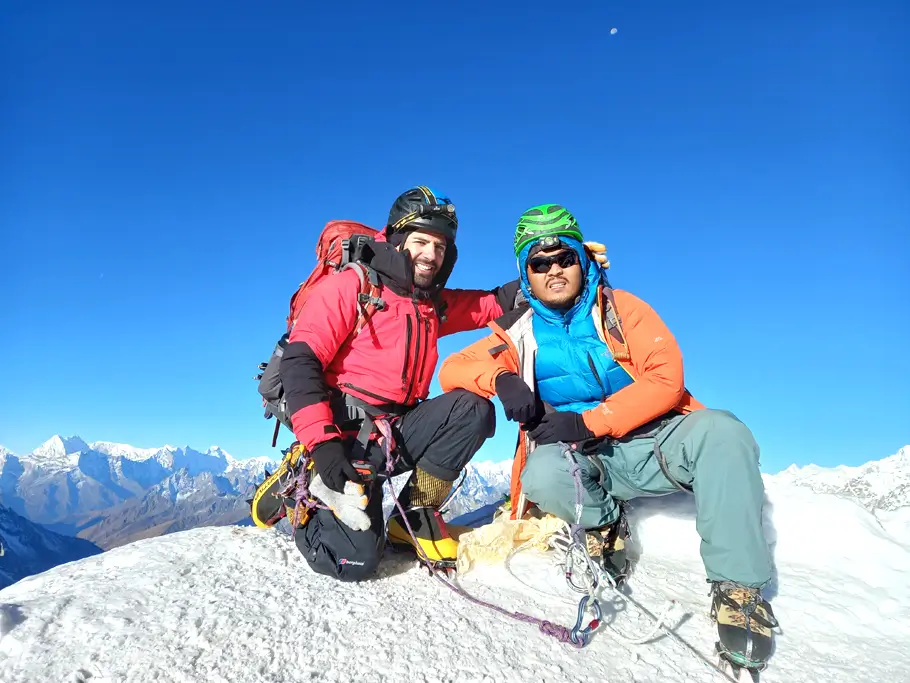
Imja Tse, also called Island Peak, is one of the most popular hiking mountains in Nepal that is located close to the base of Everest. Early explorers gave the mountain its nickname because they thought it looked like an island in a sea of ice. The climb is not too hard, although it does include walking on glaciers, climbing across crevasses using ladders, and finally climbing a high snow headwall that needs fixed rope methods. those often utilize it as a warm-up climb before going on bigger trips, and it’s a great next step for those who are already undertaking the Everest Base Camp journey. Even though it’s popular, it gives you a real experience of climbing in the Himalayas.
Lobuche East is close to the Everest Base Camp path and has sharper ridges and harder approaches than Mera or Island Peak. The first part of the climb is quite simple but the final ridge to the peak is steep and open and needs rope work and crampons. It’s best for climbers who have been to high altitudes or the Alps before. You can see Everest, Nuptse, Lhotse, and Ama Dablam up close from the summit.
Pisang Peak is a great climb for those who are walking the Annapurna Circuit. It lies in the Annapurna area. The way up goes through a variety of landscapes, from lush valleys to high alpine areas. The hike itself is an amalgamation of glacier and ridges. It doesn’t involve a lot of technical skills, but you do need to know how to utilize a rope and an ice axe. Pisang Peak is a great way to get started with climbing in the Himalayas, and it may be a fun addition to the famed Annapurna journey.
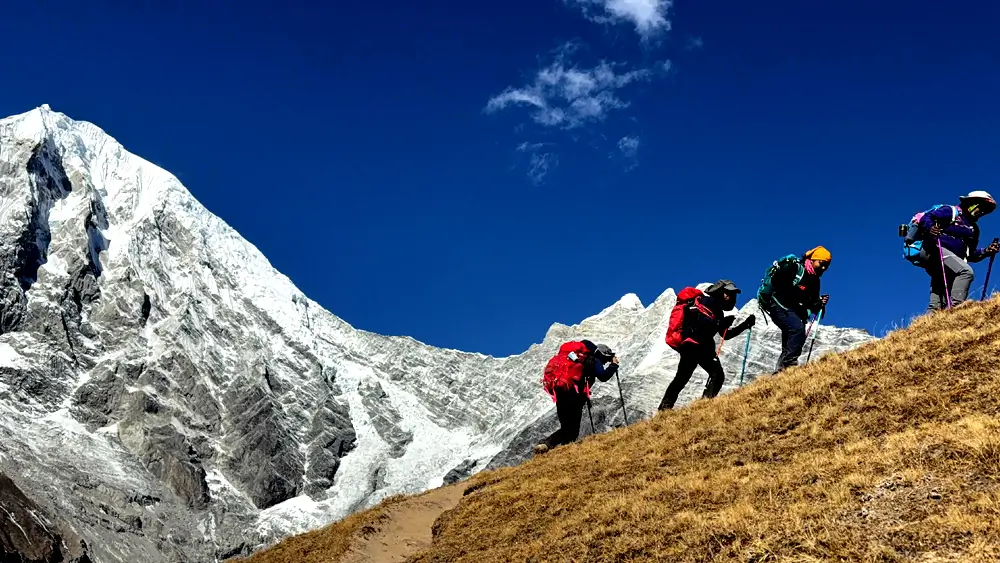
Yala Peak is a great option for those who are new to climbing or trekking and want to add a summit that isn’t too difficult to their trip. The mountain is in the Langtang Valley, which is just a few days’ walk from Kathmandu. You don’t need a special permission from the NMA to climb it, and you can do it with simple gear. The trail is short, the ascent is easy, and the views are stunning, with Langtang Lirung, Shishapangma (in Tibet), and other Himalayan peaks in the distance. People also use it a lot for acclimatization climbs.
To the people who want to get past simple hiking peaks, Nepal has other more challenging options that require technical skills, and physical endurance. The mid-range peaks within the Annapurna range are the so called Chulu East and Chulu West. Chulu East is not as technical and it normally goes along with the Annapurna Circuit. Chulu West on the other requires high formations and crossing of icy and open mountains which it is/was preferable to be an expert mountaineer. The other attraction is the Kyajo Ri which is found between the Everest and Gokyo valleys. Its ice and rocky walks are steep thus it can be categorized as a technical peak and requires proper training, thus making it a secret peak among the experienced alpinists who want to have a less crowded peak.
Climbing peaks are very diverse in Nepal, and some of those are not as popular and yet fascinating. One of the Annapurna Range is Hiunchuli, which is a technically challenging peak plagued by loose rocks and challenging pathways. It is rarely climbed, but is beautiful and challenging, which make it appealing to experienced climbers. The second scenic peak in the Annapurna range is the Fluted Peak or the Singu Churi, which lies above the Annapurna Sanctuary. Its rugged mountains and snow-banks demand professional competencies such as the ability to use the ropes and to traverse deep snow. A great climbing spot in the Langtang region is Naya Kanga, a spot to escape the more tourist-friendly means. Although they are not over 6,000 meters high, these are exciting and satisfying mountains to climb in the Himalayas.
In Nepal, there are eight summits out of the 14 in the world which ascend to an altitude above 8,000 meters. Everest, Lhotse, Makalu, Kanchenjunga, Cho Oyu, Dhaulagiri, Annapurna and Manaslu. Thou hast musty That doth brashly climb on these mountaines. They need months of planning, permission costs (which may be anywhere from $1,800 to $22,000), logistical assistance, Sherpa teams, and time to become used to the extreme altitude. Mount Everest, the tallest of them all at 8,848.86 meters, welcomes hundreds of climbers each spring, but the trip is difficult owing to weather, altitude, and overpopulation. Others, like Annapurna I and Dhaulagiri, are less climbed but more lethal owing to avalanche risk and complicated terrain. Only experienced climbers who are used to being at high altitudes should try these big trips.
It’s necessary to think about a number of personal and practical things before choosing a mountain to climb in Nepal. Skill level is very important. Beginners should start with peaks like Yala or Mera, while climbers with the right training should only attempt more demanding routes like Lobuche East or Chulu West. The region and accessibility is also very vital; peaks in the Everest region have good supply of guides and lodges whereas isolated areas such as Rolwaling or Langtang might require one to camp and be self-reliant. The season is essential in terms of safety and success, spring (March-May) and fall (September-November) offer the best conditions. Climbers ought to also research on the cost of permits, gear that they require and area regulations. Lastly, knowing your purpose in climbing it, whether it is as a training tool, to explore or achieve self-fulfilment, or to acclimatize you will make a good choice of the peak.
Visitors of Nepal can enjoy once in a lifetime experience as a climber. The country has a mountain to anyone, be it a first time traveler attempting to scale the Yala Peak or an expert who attempts to scale the Everest mountain. Peak climbing in Nepal is not only an adventure when you plan ahead, train and find respect to the culture and the environment. It can change your life. The diversity of the land, friendly cities, and spectacular Himalayan scenery ensure that each mountain experience is full of self-growth and spectacular experiences.