Latest Posts

Talk to Trip Expert
+977 9704823980 (Whatsapp)


Talk to Trip Expert
+977 9704823980 (Whatsapp)The Annapurna Base Camp trek is substantially considered by international trekkers in Nepal. The best time for Annapurna Base Camp Trek is spring, which falls between March and May, and Autumn (September to November).
In spring, the weather is mild while blossoms of rhododendrons on the trails give stunning views. The temperature is all right thus allowing trekkers to have fun during the trip. Spring also ensures that skylines are visible so that tourists can get great views of the Annapurna-Dhaulagiri peaks.
Autumn is another best time for Annapurna Base Camp Trek. After the monsoon, the air becomes fresh resulting in cool weather. During autumn, temperatures are reasonable, and the chance of rain is low. This period provides unexcelled visibility of lofty mountain panoramas that photographers love most at such times of the year.
Whatever it may be, winter (December – February), as well as summer (June – August), are additional options but they have certain difficulties. It might be freezing and snowy for winter hiking while summer means monsoon rains hence slippery paths and obscured views due to clouds’ presence.
For better climate conditions and amazing landscapes in memory forever visit ABC only in the spring or autumn seasons.
When is the Best Time for Annapurna Base Camp Trek: A Detailed Guide
When to do Annapurna Base Camp Trek matters greatly to your experience. For those who plan for ABC, it’s advisable to go during spring (March–May) or autumn (Sept–Nov). Here are detailed reasons why such times are considered ideal with added information about trekking during different seasons.
a. Weather
Spring has moderate temperature conditions making it one of the favorable seasons for mountain hiking at Annapurna Base Camp. Daytime temperatures range from 10°C – 20°C (50°F – 68°F), which allows hikers to comfortably hike during daylight hours.
This means that trekkers can hike without extreme hotness or extreme coldness. At higher altitudes, nights can be colder with temperatures dropping as low as around 0°C (32°F), but they are manageable provided there is appropriate clothing.
b. Scenery
Rhododendrons in full bloom create an alluring yet beautiful ambiance around the ABC Trek. The ABC trek is made even more attractive by the dense vegetation and variety of blooming flowers, which expose trekkers to the beauty of nature in its entirety.
c. Visibility
It is worth noting that during the spring season extreme cold weather like snowfalls does not happen frequently in these regions and this period could be ideal for good photography or panoramic views of the surrounding mountains such as the Annapurna and Dhaulagiri ranges. This is a great time for photographers and those who love panoramas. Blue skies make it easy for hikers to see the Himalayas at their peak.
d. Wildlife and Natural Beauty
Wildlife can also be observed during spring. Forests and trails are alive with birds, butterflies and sometimes even wildlife may be glimpsed by passing trekkers. Natural beauty never looked better: melting snow causes waterfalls to flow heavily thus enhancing the overall attraction associated with Annapurna trekking season.
e. Festivities and Cultural Experiences
Nepal has many festivals in its spring season. During their journey, travelers can experience local traditions and culture. For instance, Nepali New Year and Buddha Jayanti (Buddha’s birthday) occur during this time when hikers get an opportunity to witness and take part in local festivities adding cultural aspects to their hiking experience.
a. Weather
Autumn is still the best time for Annapurna Base Camp Trekking. The weather becomes stable and dry after the monsoon season. It has similar daytime temperatures as in spring which make it convenient for trekking.
With this sort of temperature that ranges between 10°C and 20°C (50°F to 68°F) during the day, long hikes are possible with no hindrance by any means at all. It does get colder in the night but can be managed; at higher altitudes, the temperature may drop to -5°C (23°F).
b. Scenery
Post-monsoon season leaves the terrain green and refreshed. Clean air and visibility at its best. There are clear uninterrupted views of majestic mountains and scenery around you. The greenery is fresh and bright making it refreshing to walk through forests or fields along the way of trekking. Autumn enhances nature, river streams flowing with clean water, and the earthy smell of wet soil and leaves fills up the air.
c. Crowds
During autumn, more trekkers populate Nepal’s trails since it is peak trekking season there. At the same time, larger numbers of fellow trekkers mean that you can communicate your experiences while on this hike as well as take pleasure in the social components of trekking itself.
When you meet people from different parts of the globe who have traveled here for adventures like yours, tell stories together, and walk along paths then a sense of communitas occurs among all such beings. The numerous hikes that happen at that time may make it busier but the camaraderie of trekkers makes up for it giving a lively and energetic environment.
d. Festivals and Cultural Experiences
In Nepal, autumn is also a season of celebrations. This is when some of the major festivals like Dashain and Tihar (Nepali equivalent to Diwali) take place. These events are marked with great zealotry and act as an opportunity for trekkers to experience Nepal’s rich cultural heritage. The atmosphere changes during these festivals as houses are decorated, traditional dances are performed, and local music is played making the trekking experience unique in its way.
e. Flora and Fauna
Annapurna region has a diverse range of flora and fauna which one should experience during the autumn season. Thickly forested along with several wildlife species that can be seen by anyone taking part in trekking. When monsoons vanish away there is an outburst of life thereby transforming trekking trails into vivid and naturally beautiful places.
a. Weather
Trekking through winter is possible though tough. The temperature drops significantly especially at higher altitudes where there can also be heavy snowfall. During the day, temperatures may fluctuate between 0°C-10°C (32°F – 50°F) whereas night temperatures can drop as low as -10°C (14°F) and below in high altitudes. It’s cold weather but trekkers must prepare well with appropriate winter clothing for extreme coldness.
b. Scenery
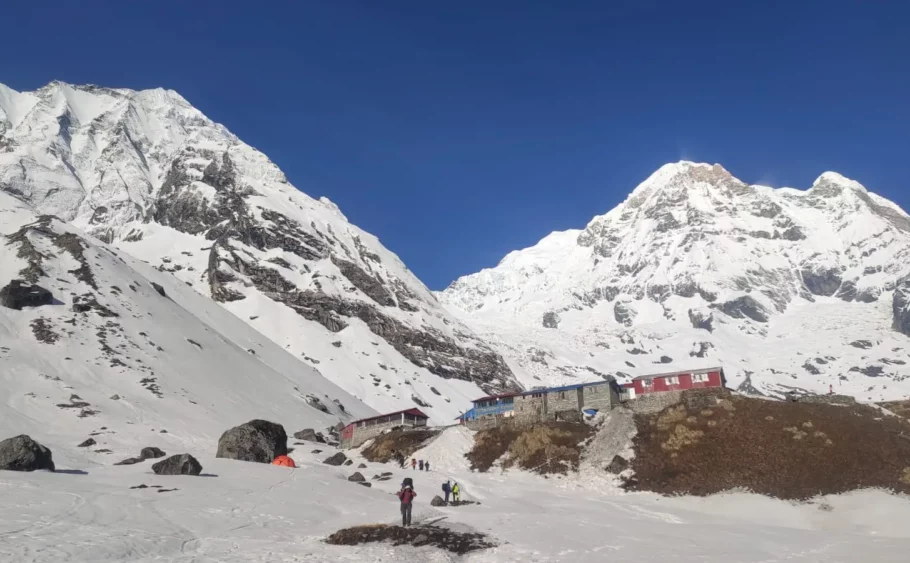
A trekking experience in winter is different because the landscapes are covered with snow. The mountains and trails are filled with snow, making it a more serene and clean place. Winter landscape is amazing with snowy peaks and frozen waterfalls that make the journey magical. Nevertheless, the tracks become difficult to navigate due to heavy falls of snow which also leads to some parts becoming impassable.
c. Solitude and Peace
Winter trekking could be an extraordinary experience if you love seclusion and are fully clothed for freezing temperatures. There is little crowding on these paths creating an environment for peaceful and quiet trekking. Being alone enables trekkers to connect deeply with nature as they bask in peace in the Himalayas wilderness.
a. Climate
This is the best time for Annapurna Base Camp Trek when trails get slippery and muddy due to heavy rain. The monsoon brings abundant rainfall and heavy showers of rain that make trekking difficult as it gets wet. During the day, temperatures range between 15°C to 25°C (59°F to 77°F) while at night they are relatively higher compared to other seasons.
b. Scenery
Monsoon rains make the landscape lush green. Forests and fields are alive with rivers and waterfalls in full flow. The view after a rain wash is beautiful but frequently covered by clouds hiding mountains from sight. Some of these challenges include continuous rain and fog that decrease visibility for viewing panoramic vistas.
c. Difficulties
Another challenge comes in the form of landslides and leeches during monsoons. Unsafe conditions might arise along the tracks due to rockslides or soil erosion. Leeches, which are blood-sucking worms found mostly in lower altitudes during wet seasons, can be quite uncomfortable for trekkers.
d. Lesser Crowds
Nevertheless, if you don’t mind the rain and prefer less crowded places, it is still an option. The monsoon season attracts very few trekkers hence guaranteeing a quieter and more private trekking experience. In the monsoons’ wet quietness, trekkers who love to be alone can still find beauty and adventure.
The best time for Annapurna Base Camp trekking is spring or autumn. These times have the most pleasant weather, beautiful natural scenery, and clear views of mountains. Perfect temperatures, sunny skies, and full greenness of landscapes are the ideal conditions for trekking in Spring and Autumn.
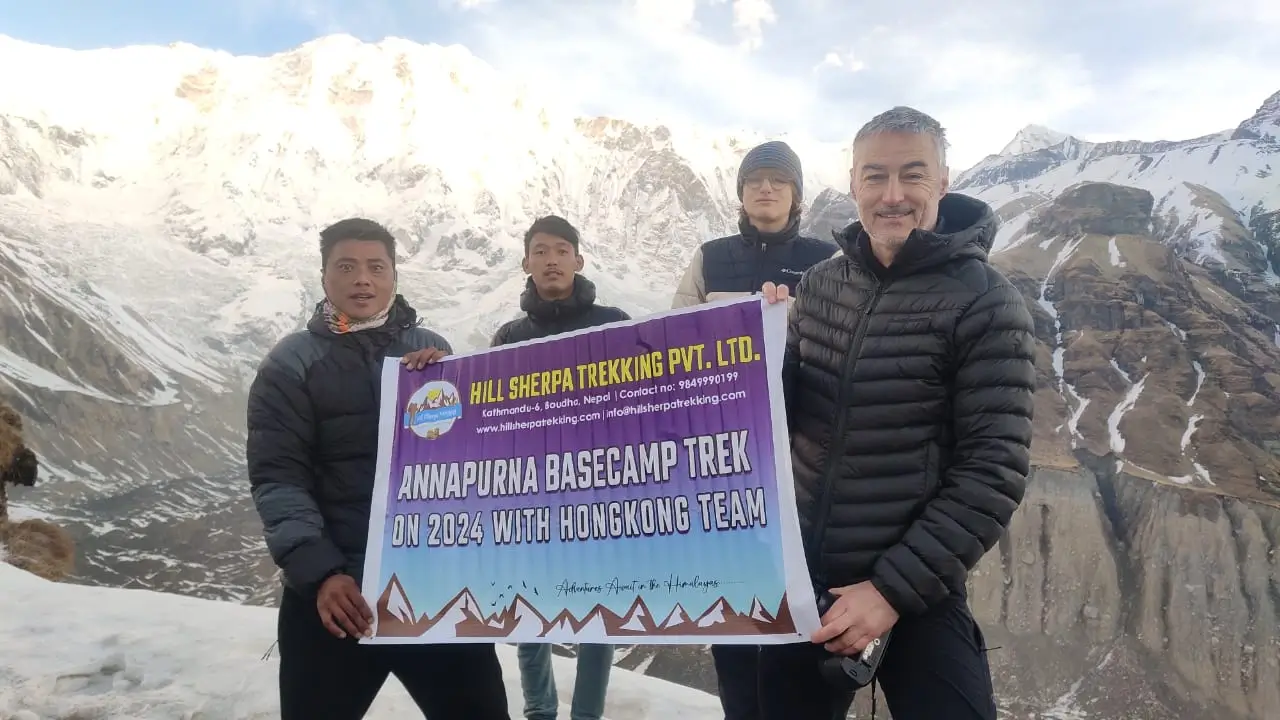 The Best Time for Annapurna Base Camp Trek: A Guide by Season
In the Spring season, blooming landscapes are decorated with colorful rhododendron forests and green vegetation. Moderate temperature and clear skies make it an ideal period for trekking as well as photography. The Spring hike is very pleasant and rewarding because of the cultural diversity that comes along with it, turning into a festive mood.
On the other hand, if you prefer autumn, which is characterized by cool, clear air and refreshing monsoonal landscapes turning green again. The mild weather conditions and the best panoramic views in the world offer stunning sights of lofty mountains. The Annapurna Trekking Season has a festive mood and social life which make it a memorable journey as well.
Whilst winter and monsoon treks have their challenges; they also provide opportunities to have unique experiences. Winter trekking suits people who prefer seclusion amidst coldness as well as tranquility that only snowy terrain can give. Monsoon trekkers don’t mind rain but rather choose when there are fewer crowds thus getting to observe the beauty of the wet season.
No matter what time of year one goes for the Annapurna Base Camp trek, it will be an unforgettable thrilling adventure. Each Annapurna Trekking Season offers its distinctiveness integrated with unique adventures to enable every hiker to match his choice with personal preference or readiness.
There is no doubt basing your trip in the beautiful Annapurna region gives warmth that comes from local culture while undertaking a variety of landscapes associated with this for all mountaineering enthusiasts.
How does the weather change during spring and autumn?
During Spring (March-May), the daytime temperature reaches around 10°C to 20°C (50°F-68°F) while at night it falls depending on altitude like about 0°C (32°F) in higher altitudes. The climate is usually mild and pleasant thus well suited for trekking.
Conversely, in autumn (September-November), daytimes remain very comfortable but nights become colder with temperatures dropping to -5°C (23°F) at higher elevations. This season has stable, dry weather after monsoon hence creating excellent conditions for trekkers.
Yes, you can do ABC treks in winter. Winter treks are more difficult because of the low temperatures and heavy snowfall that require proper gear for cold weather. The monsoons make trails wet and slippery due to heavy rainfall making landslides more probable, leeches may also be found on these trails whereas clouds may shroud mountain views.
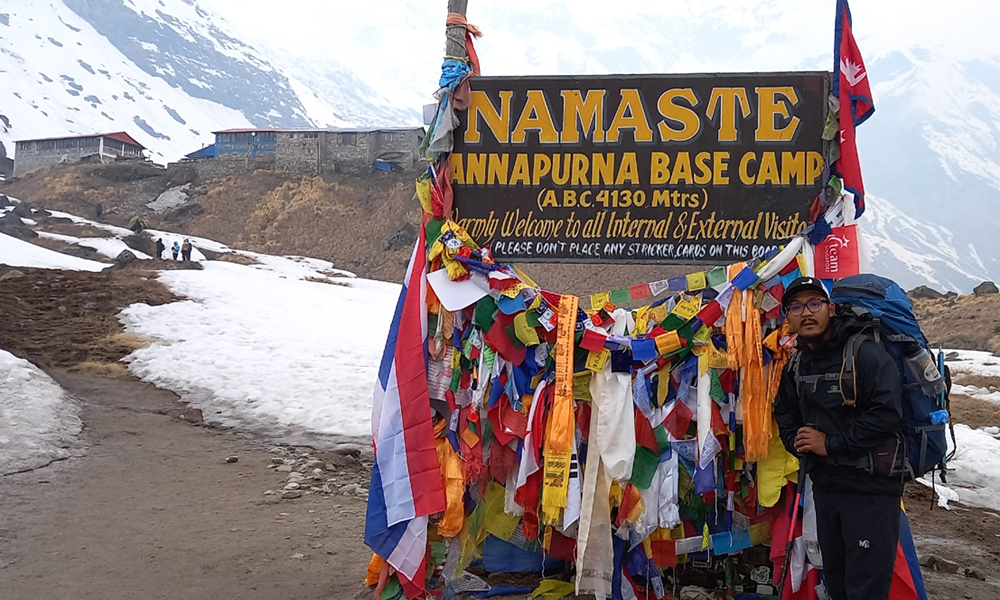
During spring flowers like rhododendrons bloom in many colors, giving a picturesque image of the trail with a green environment and clear skies above it. The festive mood makes wildlife appear frequently on the way through this gives the cultural richness of the track through this festive period and adds cultural wealth to the track.
The weather is stable and dry after the monsoon, which makes it the best time for Annapurna Base Camp Trekking during autumn. A clean atmosphere together with the best visibility allows one to get an unblocked view of beautiful mountains. This festive season coincides with trekking in Nepal which adds fun and enjoyment to the entire experience.
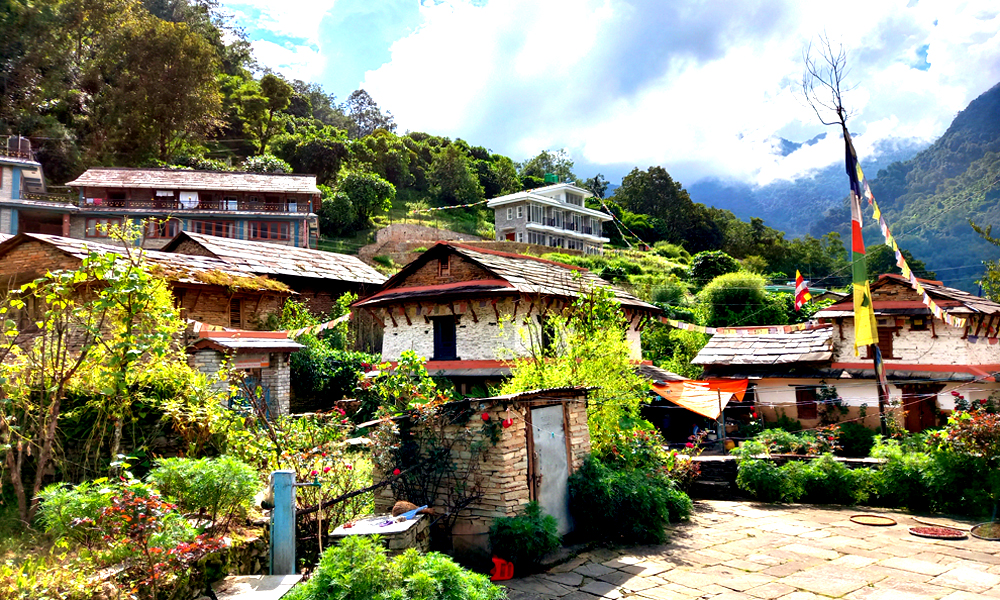
Spring and autumn are the key best season for Annapurna Base Camp Trek when the weather is perfect for walking to Annapurna Base Camp. These two seasons are marked by a large number of trekkers, who come to enjoy beautiful landscapes and favorable conditions.
This proves the Best Time for Annapurna Base Camp Trek in this regard as it offers opportunities for interaction among climbers. Be that as it may, the most popular teahouses and campsites can get quite crowded which is a good reason for ordering accommodations in advance to secure oneself a comfortable stay.
These are lightweight moisture-wicking clothes, insulating layers such as fleece or down jackets, waterproof coats and pants, tough hiking boots, caps, gloves, and shades. Also, you should remember the sunscreen cream; sleeping bag appropriate for the season; walking poles; and essential medicines if any.
Experiencing lively Nepalese festivals is possible when trekking in spring and autumn. Springtime festivals like Holi and Nepali New Year ensure that your trek is full of culture. On the other side of the coin, autumn comes with big festivities like Dashain and Tihar which are celebrated so much but also add cultural value to the journey at large.
Altitude influences trekkers regardless of the time of year. Altitude sickness symptoms such as headaches, nausea, and dizziness can easily manifest without proper acclimatization. Go up slowly, eat well on high altitudes for at least 5 days’ rest time water too much, and descend when symptoms worsen towards reducing risk.
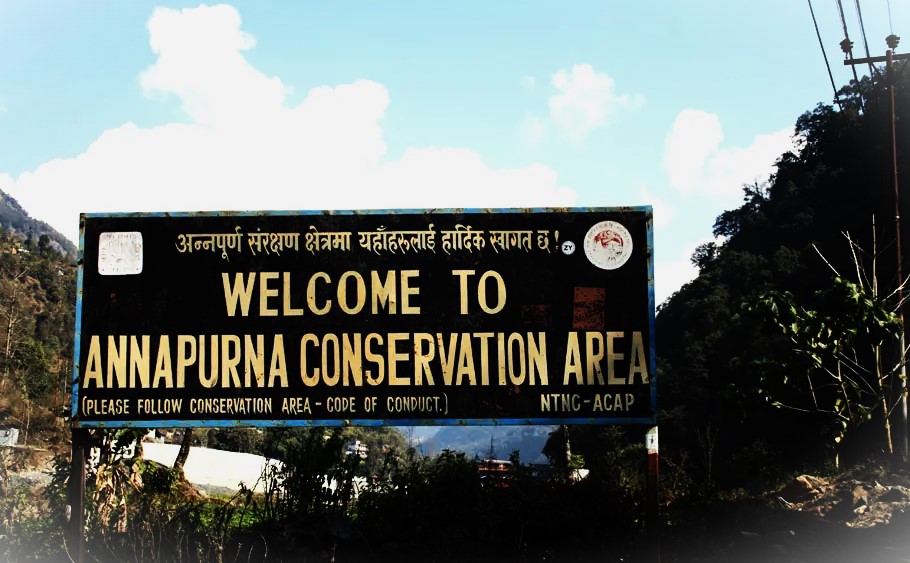
For every season in a year, there must be some kind of permit imposed at Annapurna Base Camp Trek. You need to have an Annapurna Conservation Area Permit (ACAP) for safety reasons and a Trekkers’ Information Management System (TIMS) card for guiding purposes throughout your journey within the area described above.
To get the best experience while trekking to Annapurna Base Camp, you should plan your trip well. The best time for the Annapurna Base Camp Trek adventure is spring (mid-March to May) and autumn (mid-September to November). In spring, there is good weather, blooming rhododendron flowers, and clear skies that make a lively and vibrant expedition.
During autumn, it is dry and sunny with lush green vegetation right after monsoons which offers excellent opportunities for photography as well as 180-degree panorama views of the Himalayas. Even though winter (December through February) can be cold with heavy snow places like these become very peaceful and create scenic beauty when one comes prepared.
The rainy season (June – August) comes with a lot of different green trees but it also brings in heavy downpours making most areas slippery and obscuring their vision. This season is suitable for those who wish to avoid crowds and do not mind getting wet all the time.
Ultimately, spring and autumn have the best weather conditions, stunning landscapes, and clear vistas of mountains that will guarantee an unforgettable journey. No matter whether you prefer the flowering landscapes of spring or the cold bright days of autumn; trekking along Annapurna Base Camp is an unerasable memory in one of Nepal’s most striking regions.