Latest Posts

Talk to Trip Expert
+977 9704823980 (Whatsapp)


Talk to Trip Expert
+977 9704823980 (Whatsapp)Limi Valley Trek – New Hidden Himalayan Trek in Nepal
The Limi Valley Trek is a new trek with remote locations. It is one of the least visited treks that have a lot to offer. It is located in the far western Humla district of Nepal and borders Tibet. It is far from the crowded treks like the Everest and Annapurna treks. It is a great and rare trek to see a lot of untouched wilderness and an amazing living Tibetan culture. Trekking in the Limi Valley is not a luxurious and comfortable trek. It is an authentic trek where the hiker has the opportunity to be immersed in the vast and preserved trans-Himalayan landscapes.
The first settlers in the valley were tibetan communities from the Tibetan plateau. They were the first Tibetan communities to settle down in the Limi Valley. They chose the valley because of its strategic location towards ancient trade and pilgrimage routes connecting Tibet, Nepal, and India. It worked as a significant trade corridor for salt, wool, skinned sheep, grains, and religious artifacts for a very long time. The Limi Valley shaped itself in a self sustaining manner, with its surrounding isolation, high altitudes, and strong Tibetan Buddhist and Bon religious beliefs.
Strong traditions and close community bonds define life in Limi Valley today. Families construct stone homes with flat roofs to endure the heavy wind and snow. Villages are socially integrated; mutual labor and collaboration are vital for survival in the isolated community. The minimal modern amenities, such as few roads, limited power access, and a lack of digital connectivity, allow for a vintage lifestyle.
Agriculture in Limi Valley, similar to other regions, is characterized by high altitudes and a limited growing period. Most locals practice subsistence farming of barley, buckwheat, and potatoes, as well as mustard, to and utilize traditional systems for irrigation, and the community actively tends to the glacier-fed streams. The economic basis of the community is yak herding which provides the community with yaks and yak products as well as pack animals. Laine-based seasonal long-distance trade with Tibet is supplemented by transhumance in which families move livestock between seasonal pastures.
In Limi Valley, celebrations have a strong element of community and spirituality. The biggest of such events is organized in collaboration with the calendar of Tibetan Buddhism. Some of the events are organized at the Rinchen Ling monastery in Halji. Other important components of these events are the preparation of food, community participation in the making of the food, and the gathering of community members. The events reinforce the cultural identity of the people of the valley, strengthen the social ties, and provide joy to the participants.
Limi Valley is located in the northwestern corner of the Humla district of Nepal, which borders the Tibetan Autonomous Region of China. The valley is located in a region with a trans-Himalayan rain-shadow, which is the reason the valley has a dry, cold climate. The climate is similar to that of Tibet and is a contrast to the central low hills of Nepal, which are quite lush. There is a strong spiritual association with the valley due to its geographical positioning, which is also connected to the Mount Kailash sacred landscape.
Limi Valley is completely surrounded with mountains. Travelers have to take a journey that involves a couple flights and a long hike to reach Limi Valley. First, they have to fly to Nepalgunj from Kathmandu and then take a small plane to Simikot. Simikot is the entry point for the Humla region. However, from Simikot, the travelers have to continue the journey on foot as there are no roads. They have to walk on ancient roads and go through very high passes. They have to walk through many remote valleys. Special permits and a licensed guide are needed to trek through the Limi Valley as it is a restricted area.
The Limi Valley trek is a very new trek for Nepal. It only opened for trekkers at the very end, unlike many of the other treks in Nepal which are now very popular. Not very many trekkers are allowed to go through the valley because of the sensitive culture and the close proximity to the Tibetan border. Because of the limited access to the valley, it has remained very well preserved. It is a very special trek because only a very limited number of trekkers go through it each year.
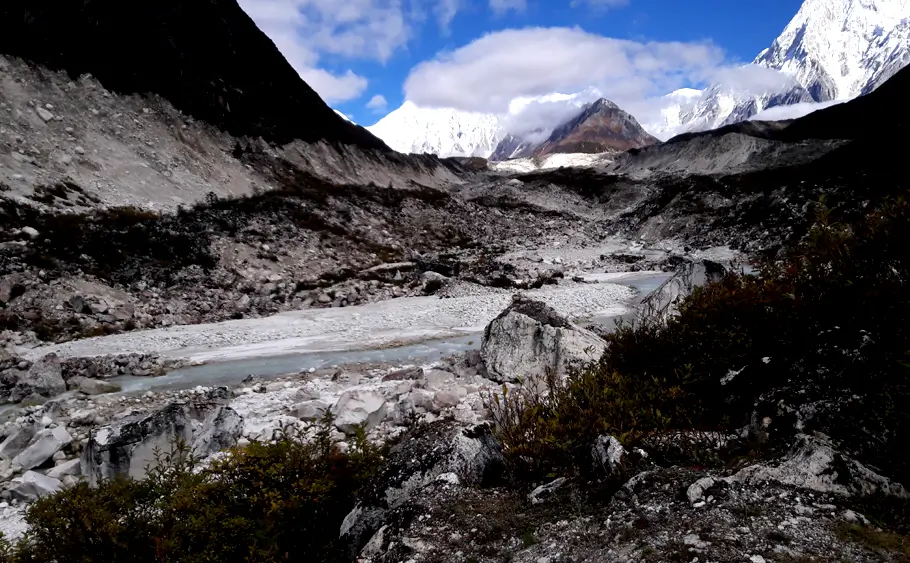
The Limi Valley has a very stark and vast landscape. It is border with snow capped mountains which provide a very breathtaking view to the valley. The mountains are very high and the valleys are very wide. It is a desert and has glacial rivers and some high plateaus. The barren land and drastic weather provide the very high and cold habitat for some special animals and plants. The rare animals that can be found are many birds, blue sheep and even Himalayan foxes. The plants are special because alpine plants and other vegetation are able to survive in the thin, cold, and enervating layer of soil.
Limi Valley has a high level of spirituality among its people. The valley is home to many Tibetan Buddhist and Bon practitioners. The practice of these traditions guides daily activities and the decisions of the communities. The area’s strong devotional practice is attributed to Rinchen Ling Monastery, a Tibetan Buddhist temple built in the 11th Century, as it serves as the main Monastery of the valley. The sacredness of the valley is due in part to its close proximity to Mount Kailash, strengthening the feeling of the trek as a pilgrimage hike.
The Circuit is typically a 3 week (18 day) trek starting and ending in Simikot. It involves river crossings and steep ascents and descents, over 5 high passes, and remote settlements. The solitude and panoramas of the trek are the main rewards. Depending on the trekkers pace and ability to acclimatize, it can take 22 days to complete the Circuit.
The trek requires advanced skills and extreme physical conditioning. In a remote and austere location medical care is unavailable, while high-altitude challenges, weather, and available services require complex planning and risk mitigation. Basically, this trek requires a developed mental framework and thorough preparation.
September to early October and late spring, May to June, present the most favorable conditions for trekking. During these months, trekkers will experience the best weather, warm temperatures, and less cloud cover. Monsoons present a different trek with more to consider, and winters provide a more disruptive trek with high snow levels and freezing temperatures.
Trekkers require a special permit to visit Limi Valley, which can only be processed through a registered trekking company. A licensed guide is also required on the trek. In these remote villages, trekkers must organize all of their own food and camping supplies and hire a porter. These areas only provide shelter and limited otions.
Because of the extreme conditions present, trekking is a delicate process. It is important that all trekkers treat the environment with care, taking only photos and leaving only footprints. In Limi Valley, it is important to carry out trash and to use local businesses so the valley can be preserved for descendants.
The Limi Valley Circuit is great for trekkers in need of real culture, great solitude, and the untouched wildness of the Himalayas. It serves those who have been on more mainstream trekking routes and are looking for something more peaceful, and profound.
Lim Valley Trek is one of the least visited off-the-beaten path adventures in Nepal that receive very little visitors compared to the iconic Everest Base Camp Trek or Annapurna Circuit. The remoteness of the area in the northwest of Humla, its inaccessibility, and permits ensure that hikers can sometimes days of their walks through clean valleys and medieval Tibetan villages without meeting anyone.
In contrast to the bustling lodges and the overcrowded routes of Everest or Annapurna, Limi Valley provides the experience of solitude and total immersion where the emphasis is put on spectacular landscapes, ancient monasteries and the local culture instead of the tourist traffic.
Physical fitness, the right clothing, sick wisdom, and patience are necessary. Trekking is all about packing your essentials, and you should expect to face the unpredictable.
The Beginning of the Journey. The first encounter with the Limi Valley should not be considered a trek in the modern sense of the word, and it cannot be attributed to a single traveler or expedition. The journey is the result of a process spanning countless ages, developed along a living continuum, and integrated with the ruins of ancient Himalayan pathways. Long before the doors of Nepal were flung opened to trekkers, the Limi Valley pathways embraced the vibrant steps of countless Tibetan migrants, traders, monks, and pilgrims who relied on these pathways for survival, commerce, and spiritual practice.
The beginning of the journey in the Limi Valley is attributed to Tibetan migration from the Tibetan Plateau. Tibetan people migrated southwards to the north of Humla and occupied the fertile valleys of Limi. They built permanent settlements/ villages in structures like Til, Halji, and Jang where they had water, pasture, and defendable positions. The settlements corridors joined water routes and dispersed population. They formed the first strategic settlements in the region, and the routes interlinked families, religious communities, and sentries along the grazing summer pastures.
The Limi Valley also developed as a significant component of the trans-Himalayan system of the Valley. The traders used the valleys to transport the salt, wool, borax, animals, and food from Tibet to the western Nepal. Seasonal round trips across the valleys of the Himalayas. They maintained the valleys and used the routes. Traversing through the Limi Valley and maintaining the routes was a necessity to the economic survival of the community.
Apart from trade, the valley facilitated the movement and pilgrimage of the religions of the region. Because of the lingering influence of Tibetan Buddhism and Bon traditions, and the religious and ritualistic,\spiritual Tibetan monks who traveled and performed along these corridors, the valley, with the Rinchen Ling Monastery of Halji, the oldest monastery in Nepal, achieved solid spiritual prominence. Most of the tracks trekkers use today were former routes of monks on pilgrimages and devotees going to the sacred Mount Kailash region.
Moving through Limi Valley was a part of the local people’s daily routine. It was nothing out of the ordinary. People would move as families between the villages, the fields, and the high pastures, depending on the season. During the period of transhumance, herds comprising yaks, sheep, and goats, used the same tracks, and in doing so, they shaped the used routes. This sustained movement created a natural circuit around the valley, linking all the settlements, the monasteries, and the grazing lands.
The Limi Valley Circuit has only recently developed into a full-fledged trekking route. Due to border restrictions, Limi Valley remained a closed-off area. Nepal allowed some foreigners into portions of Humla later on. During the late ’90s to early 2000s, a handful of local Humli-guided trekkers, explorers, anthropologists, and climbers walked Limi as a long-distance trek, using ancient pathways.
These early trekkers made no new pathways – they used the pre-existing routes created by the village residents over the years. It became a ‘circuit’ of sorts when they linked multiple pathways into a continuous route.
Contrary to popular trekking routes, the Limi Valley Circuit has offered undisturbed trekking for years. Endless logistical hurdles made it impossible to develop Limi Valley into a commercially viable route. These challenges caused the cultural and natural beauty of the valley to be preserved.
The experience of walking through Limi Valley is unique, timeless, and not constructed. Contemporary travelers take pride in walking through age-old pathways formed through centuries of cultural exchanges, pilgrimage, and survival. The focus of the experience is more in the recording of history, and not in the focus of the discovery of history. Every trail and pathway has the memory of the travelers who walked that path before trekking became an activity.
The Limi Valley Circuit is more than just an adventure in trekking. It is a step back in time to a realm that is fleeting, with its culture, idyllic and spiritual geography, and raw nature. For those who have the appetite to seek the raw and the real sans the comforts, the Limi Valley Circuit offers the pure and unadulterated connection to the great Himalayas.
The Limi Valley Circuit is a challenging trek. There is a lot of altitude, long days of walking, and the situation can be remote, so the weather can be unpredictable. It is best suited for experienced trekkers with strong physical fitness and good high altitude trekking experience.
The Limi Valley Circuit is located in the Humla District of far northwestern Nepal, bordering Tibet (China). It is located in the trans-Himalayan region with geographical and cultural links to Mount Kailash.
No one person or expedition pioneered the Limi Valley Circuit. The trail is comprised of ancient pathways that Tibetan people have used for trade, migration, and religious purposes. The modern trekking circuit was developed by connecting these existing pathways and not by building new ones.
The Limi Valley first became a trekking destination in the late 1990s/early 2000s, after Nepal first began to open its borders to foreigners in restricted areas. Even now, access to the region is controlled in order to preserve the local people and customs.
The trek takes an average of between 18 and 22 days. This is based on acclimatization, weather and the route that is taken. Depending on rest days and side trips, some itineraries can be shorter or longer.
The trek has to cross different high passes and the elevations of these high passes are most likely between 4,800 and 5,000 meters. This depends on the route taken. Proper acclimatization is crucial.
Yes. Due to the limitation of access crossing the borders of the Limi Valley, specific permits are needed that are provided by government-approved trekking agencies in Nepal. Trekkers need to have a licensed guide and cannot trek on their own.
The best time for trekking on the Limi Valley Circuit is late spring (May-June) and early autumn (September-October). These months have better weather and trekking conditions.
To reach the point of the trek, the trekkers fly from Kathmandu to Nepalgunj and fly to Simikot. Trekkers will begin the trek at Simikot, which is the administrative center of Humla.
Accommodation is rather basic. Depending on the itinerary and village, trekkers will sleep in simple lodges, tents, or homestays. Facilities are minimal, and camping is often required.
Food is local and simple. It includes yak and yak products, noodles, dal bhat, potatoes, barley-based dishes, and tsampa. Supplementary food supplies are carried by trekkers, and these are arranged by the trekking agency.
The region is not very dangerous in general, but the fact that it is extremely remote poses a threat. Health care is distant, and the evacuation is difficult. The correct direction to take is necessary and preparation is important.
Visitors get to explore ancient monasteries, and traditional stone villages, and experience Tibetan prayer and lifestyle rituals that are largely not influenced by modernity or development. The Tibetan communities in Limi Valley practice Tibetan Buddhism and Bon, the ancient pre-Buddhist religion of Tibet.
Yes. The Tibetan Buddhist calendar also serves as the basis of the local calendar, with festivals marked by prayers, monastery rituals, and, in some cases, mask dances. It is rare to witness some of these festivals, but they are very telling of the local people’s spirituality.
The Limi Valley Circuit is designated for trekkers who appreciate peace, cultural richness, and wilderness. It is for those who have already accomplished high-traffic treks and are looking for something deeper in the Himalayas.
The route is special for its lack of commercialization, crowds, and cultural dilution. It is on a living historical trail, rather than a touristic one, and provides a window into a still-functioning ancient Himalayan world.