Latest Posts

Talk to Trip Expert
+977 9704823980 (Whatsapp)


Talk to Trip Expert
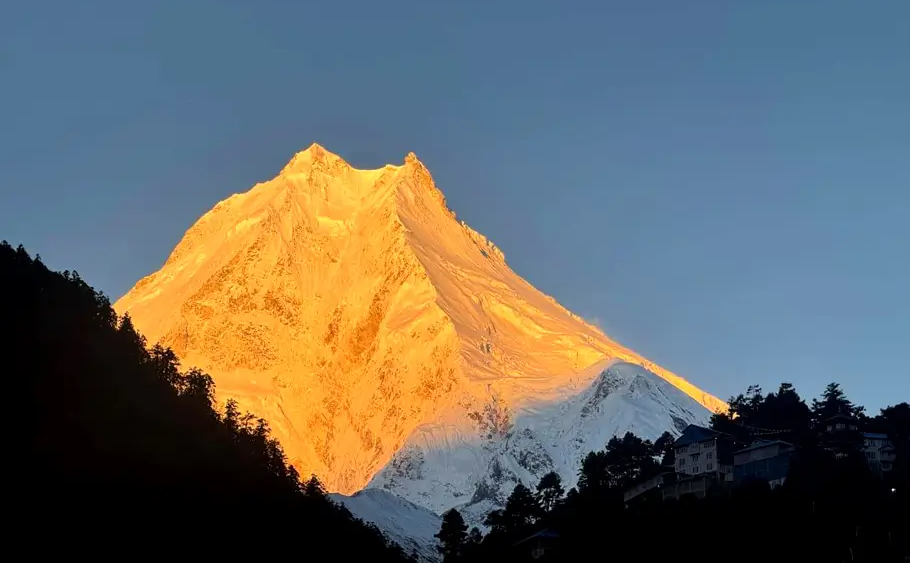
+977 9704823980 (Whatsapp)The Manaslu Circuit Trek is one of Nepal’s best and least traveled Himalayan hikes. It takes you around Mt. Manaslu (8,163m), the eighth-highest mountain in the world. Known for its raw landscapes, secluded towns, historic monasteries, and stunning high-altitude passes, it offers the perfect blend of natural beauty and cultural immersion. November, a great month for fall, is one of the best times of the year to hike this trail because the skies are clear, the temperatures are steady, and the trails are less crowded than they are in October. This book includes all you need to know about walking the Manaslu Circuit in November, from weather and obstacles to packing lists, itineraries, and safety suggestions.
The weather for trekking in the Himalayas is usually very nice and consistent in November. In places like Soti Khola and Jagat, which are at lower altitudes, the daytime temperatures are between 10°C and 20°C, which makes for good walking weather. Temperatures decrease a lot higher up, notably around Samagaun, Samdo, and Larke La Pass. Nights often drop below -10°C. The post-monsoon season is over, so the air is fresh, the view is clear, and there isn’t much rain. November is cooler and quieter than October, but it’s much warmer and more dependable than December, when winter starts to set in.
The beautiful skies that come with trekking in November are one of the best things about it. They show off stunning vistas of peaks like Manaslu, Ganesh Himal, Hiunchuli, and the ranges around them. The temperatures stay the same, which makes it easy to walk all day. Another good thing about November is that there are fewer trekkers than in October. This means that tea houses are less crowded, routes are calmer, and you get a more serene trekking experience. This is also one of the finest times to cross the hard Larke La Pass because the snow levels are usually low and the chance of bad weather is low.
November hiking has a lot of benefits, but it also has some problems. Areas at higher altitudes can get exceedingly cold at night. For example, in Dharamsala (Larke Phedi), the temperature can drop below -15°C. Because the days are shorter, trekkers need to start early and schedule their walking hours carefully. There is also a minor probability of early winter snowfall, particularly around Larke Pass, which may impair trail conditions. But with the right clothing, getting used to the weather, and a good guide, these problems are easy to deal with.
You need a lot of permits to hike the Manaslu Circuit, no matter what month it is. The Manaslu Restricted Area Permit (RAP) and the Manaslu Conservation Area Permit (MCAP) are two of these. The cost of the RAP changes with the season. Trekkers also need the Annapurna Conservation Area Permit (ACAP) because the route goes through the Annapurna region. Also, trekkers must employ a qualified guide for this walk because it goes through a restricted area that the government controls. Your trekking organization can help you get all the permits you need before you leave.
The Manaslu Circuit is a moderately difficult trek, but November makes it a little harder because the nights are colder and there is frost in the early morning. The altitude is quite important since trekkers have to traverse Larke La Pass at 5,160 meters, where there is a lot less oxygen. Even though there are problems, the consistent weather in November makes the trek safer and more predictable. Anyone who has been on a multi-day trek before can do this one if they are in decent shape, get used to the altitude, and have a guide who knows what they are doing.
Packing correctly is very important for a safe and comfortable hike in November. You need to wear warm layers, like moisture-wicking base layers, a fleece jacket, a down jacket, windproof pants, and thermal accessories like gloves, caps, and buffs. You need a good sleeping bag that can handle temperatures of at least -15°C or lower because tea rooms at high altitudes can get very chilly. Additional gear such as trekking poles, torch, power bank, gaiters, and optional microspikes for icy parts are highly useful. Don’t forget important things like a first-aid kit, water purification pills, and strong sunscreen to protect you from UV radiation at high altitudes.
Tea houses along the Manaslu Circuit stay open all of November and offer simple yet comfortable places to stay. Rooms are simple, usually with twin beds and blankets, but warmth is often supplied only in the dining hall. The food is made fresh, and some of the most typical meals are dal bhat, noodle soups, fried rice, and Tibetan bread. Hot baths are likely to cost extra, and it is also likely to pay a few dollars to charge electronics. Due to the fact that November is not as popular as October, you might receive timely service and can easily get access to rooms.
A typical Manaslu Circuit schedule requires between 14 and 16 days, depending on the speed at which you would like to travel and the duration of time that you would like to get used to the surroundings. It is typically initiated in Soti Khola or Machha Khola and ascended to Jagat, Deng, Namrung, Samagaun, and Samdo and finally concludes in Dharamsala. From here, hikers go over the beautiful Larke La Pass and down to Bimthang and Dharapani before heading back to Kathmandu. It is also important to halt in Samagaun and Samdo to get used to the altitude, especially in November when the weather gets colder at higher levels.
Safety should always come first. To avoid getting sick from being at a high altitude, drink a lot of water and keep a steady pace. Keep an eye on the weather forecasts, especially as you get closer to Larke Pass, because conditions can change quickly. To prevent hiking in the dark because the days are shorter, get up early on your trekking days. Listen to your guide, notice early indications of AMS, and never hesitate to descend if required. Make sure you have the correct gear and that your clothes are warm enough for the cold nights.
The overall cost of trekking the Manaslu Circuit in November depends on whether you book a guided tour or plan everything yourself. Depending on the particular dates of travel, the required permits cost between 100 and 150 USD. A guide usually costs $25 to 35 a day, and a porter costs $ 20 to 25 a day. Tea houses charge between $5 and 10 a night, while meals usually cost between $5 and 8 per dish. Most people who go on the walk spend between $1,200 and 1,800 on the whole trip, which includes food, lodging, transportation, and permits.
November strikes the perfect balance between ideal weather, low humidity, and peaceful trails, making it an excellent month for trekking the Manaslu Circuit. The scenery is clear, the scenery is colorful, and the environment is serene, providing the trekkers with a truly fulfilling experience of the Himalaya mountain ranges. Having the right preparation and the right guide you can have one of the most scenic and culturally rich treks of Nepal at one of the best times of the year.
The coldest and most consistent weather in the Manaslu Circuit is in November. It gets relatively cold when elevating and particularly at night and in the early mornings. The temperatures in the lower trail such as the Soti Khola, Machha Khola and Jagat, remain pleasant (around 10 °C- 20 °C) throughout the day. However, as one goes up to higher villages, such as Lho, Samagaun and Samdo, the cold becomes even worse. The temperatures are normally 0-10o °C during the day and in the evenings they may drop to -10o °C or even below.
Larke La Pass (5,160m) is the coldest part of the hike. In November, the temperature at night might drop to -15°C or even -20°C when it’s really cold. The air is dry, thin, and crisp, which makes it feel even colder, especially when there is a breeze. If you want to cross the pass early in the morning, you’ll need the right gear and layered clothing because the trails are covered in frost, the streams are frozen, and there are icy areas.
Even though it’s cold, November is still a good month for trekking because the skies stay clear and storms happen less often than in winter. You can stay comfortable on your trip if you get ready with things like a warm down jacket, excellent gloves, thermal layers, and a sleeping bag that can handle temperatures as low as -15°C. The eating spaces of tea houses are warm, but the bedrooms aren’t, therefore you need to bring warm clothes.
November may be difficult, as it is cold, particularly above 3,500 meters. It can be enjoyable, though, with the proper attire and preparation, to enjoy the clean mountain air and the breathtaking scenery with gorgeous fall skies.
Yes, November is one of the months in a year to consider doing the Manaslu Circuit Trek. It has a good weather all year round and the sky is clear and you can see well and that is what makes it the best place to view the mountains and it is also safe to walk around.
The lowlands are also favourable with daytime temperatures ranging between 10 C and 20 C. However, higher in the sky, such as Samagaun and Larke La Pass, it can be as cold as -10 o C to -15 o C at night. Wearing appropriate warm clothes is indeed significant.
Not as many people as in October. There are less trekkers in November, which makes for a quieter and more tranquil experience. The weather is still great, though.
A qualified guide is required because the trail goes through an area that is off-limits.
It is not too difficult to walk but not very easy. It is difficult due to the elevation, numerous days of walking and cold climate in high places. However, weather during November is more predictable, and this makes the trip less hazardous as compared to the first part of winter.
Yes, people think that November is a safe month to cross Larke La Pass. Usually, the amount of snow is manageable, and the weather is more dependable than in winter. It’s best to start early on pass day.
You should bring warm clothes, a down jacket, thermal clothing, waterproof gear, hiking poles, a headlamp, and a sleeping bag that can handle temperatures as low as -15°C. It’s also necessary to have gloves, hats, buffs, and power banks.
In November, all of the tea establishments along the Manaslu Circuit are open. The lodges have simple rooms, comfortable eating areas, and fresh food. There are also less people, which means more rooms are available.
Depending on how well you adapt and where you start, a typical November itinerary lasts 14 to 16 days. More days in Samagaun or Samdo can help you get used to the higher altitude.
Yes, it is highly advised that you get travel insurance that covers high altitudes (up to 6,000m). If someone gets sick at a high altitude or there is an emergency, it should involve helicopter evacuation.
People who are new to hiking but are in good shape and have done it before (like a multi-day hike) can do the route. But first-timers who are completely new to this may find the altitude and distances hard.
Most trekkers spend between $1,200 and $1,800, which includes the cost of a guide or porter, lodging, food, transportation, and permits.
There is a minor probability that it will snow early in the winter, especially around Larke La Pass. It’s crucial to keep an eye on the weather and do what your guide says.
Yes, the Manaslu area is off limits, therefore, you can’t go hiking there without a qualified guide at any time of year, even in November.
November is one of the best and most reliable months to see Manaslu’s natural and cultural features since the skies are clear, the weather is dry, the vistas are amazing, there are less trekkers, and the trails are safe.