Latest Posts

Talk to Trip Expert
+977 9704823980 (Whatsapp)


Talk to Trip Expert
+977 9704823980 (Whatsapp)Peak Climbing in Nepal is popular among various climbers and adventurous travelers because this climb provides an opportunity to climb various towering mountains in Nepal. Nepal has diverse geography, providing you with various experiences in climbing-related adventures.
However, it is important to know whether the climb requires technical skills or not. This is also important to ensure a safe and enjoyable journey. Generally, technical peaks require mountaineering skills and gear, whereas non-technical peaks don’t require mountaineering experience and are accessible to a wide range of travelers.
This guide to peak climbing in Nepal is designed for various travel seekers and adventurers who want to transition to mountaineering. This guide will outline the necessary things you will need to know before starting your expedition to have an enjoyable journey.
If you know the difference between technical and non-technical peak climbing in Nepal, it will help you achieve your goals. Setting goals based on your experience and preparation will make this journey memorable for a time.
Peak climbing in Nepal is ascending a peak with a height between 5,500 and 6,500 meters. It’s a great adventure that incorporates trekking with some obligatory basic skills of mountaineering, with limited risk of the peril involved with high-altitude climbing expeditions.
In Nepal, as a form of climbing, peak climbing is the integrated, albeit basic, use of ropes and ice axes. However, it doesn’t require the extreme or heavy-level technical climbing skills that high-altitude mountaineering would involve on 8,000-meter peaks.
The Nepal Mountaineering Association (NMA) has defined some summits as “trekking peaks.” These peaks are selected climbs like the Island Peak and Mera Peak that could be of interest to anyone aspiring to transition from trekking to climbing.
Everest, Annapurna, and Langtang are known areas for peak climbing in Nepal. Each region has distinct scenery and trekking peaks, and both are experiences for adventure seekers.
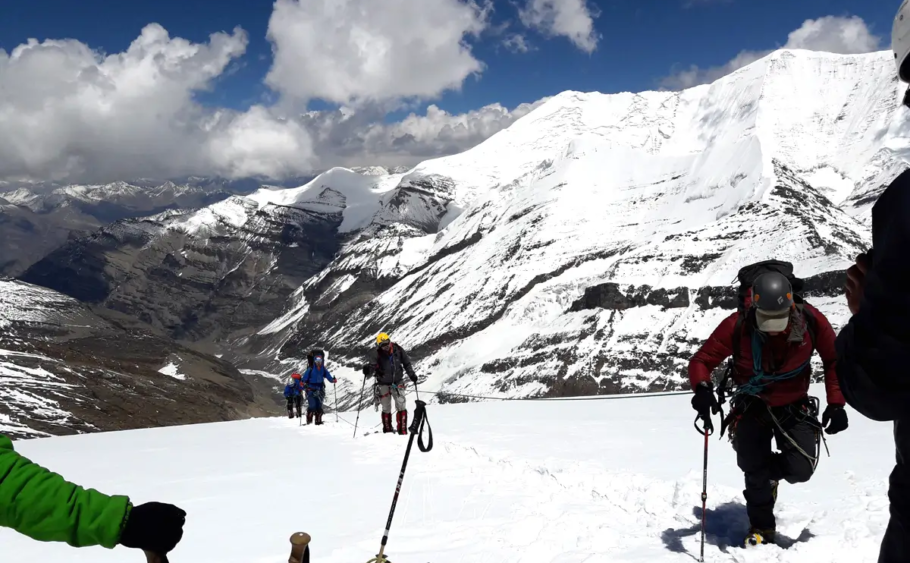
Technical Peak climbing in Nepal is a type of climbing that requires technical gear and climbing skills to climb the peaks. During the climb, you need to use gear like crampons, ice axes, ropes, and a harness as you will be walking in icy and rocky trails.
Island Peak, Lobuche East, and Kusum Kanguru are some of the peaks in Nepal that require technical climbing skills. These peaks are a mixture of terrains that require advanced mountaineering skills such as rope climbing and ice climbing.
You need skills such as the use of crampons and ice axes, rope work for ascending and descending, and navigation of snow and ice slopes in effective ways. Knowing these skills helps to ensure safety and success in technical peak climbing in Nepal.
Technical peaks of Nepal are perfect for climbers with prior climbing experience and basic mountaineering skills. Technical climbing peaks in Nepal will offer great adventure for climbers who want to improve their climbing skills in the high-altitude Himalayas with guidance from expert climbers.
Non-technical peak climbing in Nepal can be described in general terms as challenging trek-style climbing, requiring only minimal gear. Non-technical peak routes involve more of a hiking and basic mountaineering focus, and include none or low technical engagements.
Examples of non-technical climbing peaks in Nepal are Mera Peak and Yala Peak. However, Pisang Peak of Nepal lies between the non-technical and technical peaks. These peaks don’t require any climbing skills but are more about endurance and acclimatization.
Non-technical climbing peaks in Nepal are ideal for beginner climbers, doing their first climbing in the Himalayas. This will allow you to experience the Himalayan summits without heavy technical elements.
Non-technical climbing peaks in Nepal have less technical demands, altitude sickness, changing weather, and basic glacier navigation. Therefore, to have a safe and successful non-technical climb, it is important to be informed and prepared adequately.
| Feature | Technical Peak Climbing | Non-Technical Peak Climbing |
| Equipment | You should know how to use specialized gear, such as ropes, harnesses, ice axes, crampons, etc. | You should know how to use the basic trekking gear, including boots, poles, warm clothing, etc. |
| Skills Required | Advanced mountaineering skills (rope work, glacier travel, crevasse rescue) | Basic fitness & trekking experience; no technical skills needed |
| Training | Prior training & experience are essential | Physical fitness is essential; however, formal training is not required. |
| Risk Level | Higher exposure to avalanches, crevasses, and altitude. | You will be exposed to high altitude & weather risks |
| Physical Demand | Extremely high (steep climbs, long summit pushes) | Moderate to high (long hikes, gradual ascent) |
| Accessibility | Restricted (permits, guides, logistics needed) | Easier (trekking peaks, fewer restrictions) |
| Examples in Nepal | Everest, Lhotse, Makalu, Ama Dablam | Island Peak (Imja Tse), Mera Peak, Lobuche East |
| Best for | Experienced climbers & adventure seekers | Trekking enthusiasts with moderate fitness |
If you have previous climbing experience using technical gear, then you are capable of tackling challenging peaks. Experience in hiking at high altitude, using navigation tools, and climbing in other mountains will help you adapt to the new environment.
If you have never climbed before, you will need to look at less technical, trekking-style peaks. Starting easy will develop your confidence and keep you safe. Guided trips on “non-technical” peaks are an excellent way to learn some of the basics about peak climbing in Nepal without any significant stress or risk involved.
Have you used crampons, ice axes, harnesses, and fixed-line ascents? If you are used to doing this type of thing, you can look at more technical peaks. If you are comfortable with using ice and rope techniques for steep Nepalese climbs, having these skills will improve your safety and enjoyment on the adventure!
If you don’t have these skills, find non-technical peaks that require minimal gear and simple hiking. Some climbing schools could give you basic instruction or introductory courses to get you ready for technical routes later, and therefore start you off with easier climbs in the Himalayas of Nepal.
Peak climbing in Nepal demands good cardio fitness and the ability to acclimatize. Peak climbing above 3000 meters in Nepal will ensure that you can handle the strenuous walk while being at altitude, and you are ready to tackle higher or more difficult sections.
Taking a lower peak at first will develop altitude tolerance and fitness level for a high-altitude climb. You will experience rewarding and safer peak climbing in Nepal by building experience at altitude and improving physical conditions.
When training for Peak Climbing in Nepal, you want to emphasize cardio, strength, and endurance activities. You will want to simulate trekking with a weighted pack for training, and if possible, practice at higher altitudes.
While trekking peaks are all about the trek, technical climbing is all about rope skills, crampons, and ice axe skills. Pursuing professional courses is certainly a recommended way to ensure you will be safe and confident in these areas.
As for obtaining a guide or joining a group, we strongly recommend doing so for peak climbing in Nepal. Certified guides will improve your safety and confidence, with local knowledge and logistics, while groups offer safety, camaraderie, and cost sharing. A particularly important consideration is whether you are a first-time peak climber or attempting a technical climb.
In addition, if you want to climb a Group “A” (Expedition) or Group “B” (Trekking) peak in Nepal, you must apply for a permit with the Nepal Mountaineering Association. Permit fees, required procedures, and allowable size of group vary with the type of mountain.
You must ensure your gear list aligns with your objective. While these groups share a lot in common, both require boots, cold-weather clothing, a harness, a helmet, multiple carabiners, an ice axe, crampons, trekking poles, etc. All climbers, guides, and porters must also have insurance, and agencies will have insurance verify and manage for your trip.
Spring is one of the best seasons to climb peaks in Nepal. Weather patterns stabilize, temperatures are moderate, and the scenery is bursting with natural beauty and low humidity, giving wonderful visibility for an optimal experience. The trails can be busier with blooming wildflowers.
Autumn is another season with clear skies, cool temperatures, and little precipitation for peak climbing in Nepal. The air becomes crisp post-monsoon, which provides amazing visibility for mountain gazing and navigation, given the drop in haze and humidity. This is a quieter season, leading to a peaceful and less congested ascent.
Technical climbs demand stable conditions with good visibility to ensure safe ascents with the utilization of ropes, and traverses of snow or ice. Spring and autumn seasons are ideal since rigging minimizes storm, avalanche, and whiteout risks. It is also critical to understand the weather patterns and the predictability certain peaks have to safely summit Nepal’s technical peaks.
Non-technical climbers benefit from the dry trails and mild weather, as well as uninterrupted scenery during the spring and autumn seasons. The weather can have a huge impact on how a climb is experienced.
For starters, Yala Peak and Mera Peak are suitable options for beginners to the peak climbing experience. They both have non-technical routes and limited gear requirements, and are both good options for trekkers who are looking for their first Himalayan climbing experience. They both provide decent, rewarding views and are achievable climbs for first-time peak climbers in Nepal.
Island Peak and Pisang Peak can be considered perfect for the intermediate climber. Island Peak has technical portions of climbing that require the use of a rope; Pisang Peak has a combination of trekking while incorporating basic mountaineering. Both peaks challenge your skills and can provide a sense of confidence for bigger climbs in the Himalayas of Nepal.
For the advanced climber, Lobuche East, Cholatse, and Kyajo Ri have serious challenges in wait. For all three of these peaks, expect steep technical portions of climbing, glacier travel, and strenuous conditions, and prior climbing experience will be essential. With high fitness and confidence in mountaineering techniques, you will need to be capable of facing serious challenges.
You can decide on your best peak choice and enjoy a safe experience. Before selecting any trekking peaks, it is highly recommended to assess your trekking and mountaineering backgrounds. Additionally, be ready to work with professionals on technical climbs in Nepal.
Distinguishing between technical and non-technical peak climbing in Nepal is important for your safety, pleasure, and success. In true adventure style, choosing the right option to correspond with your skills and experience is paramount if you want to have a genuinely gratifying adventure in the Himalayas.
You are encouraged to work on easier peaks to start, with the hope that you can then build on that, as long as you gain skills to build up each time. That way, you enjoy the whole process of climbing and avoid taking any unnecessary chances.
Of course, the best advice and safety practices will always come from a local operator or certified mountain guide. The value of their expertise and knowledge cannot be undervalued in terms of your overall experience of peak climbing in Nepal.