Latest Posts

Talk to Trip Expert
+977 9704823980 (Whatsapp)


Talk to Trip Expert
+977 9704823980 (Whatsapp)The Ghorepani Poon Hill Trek is one of the most popular and easy to reach trekking routes in Nepal. It is known for its stunning vistas of the Himalayas, rich cultural experiences, and short length. Nestled in the Annapurna region, this trek offers an unforgettable introduction to the beauty and adventure Nepal has to offer. The Ghorepani Poon Hill Trek is a great way to get away from it all for a few days, whether you’re a first time trekker or an experienced hiker. You will see beautiful sunrises, lovely mountain towns, and colorful rhododendron woods along the way.
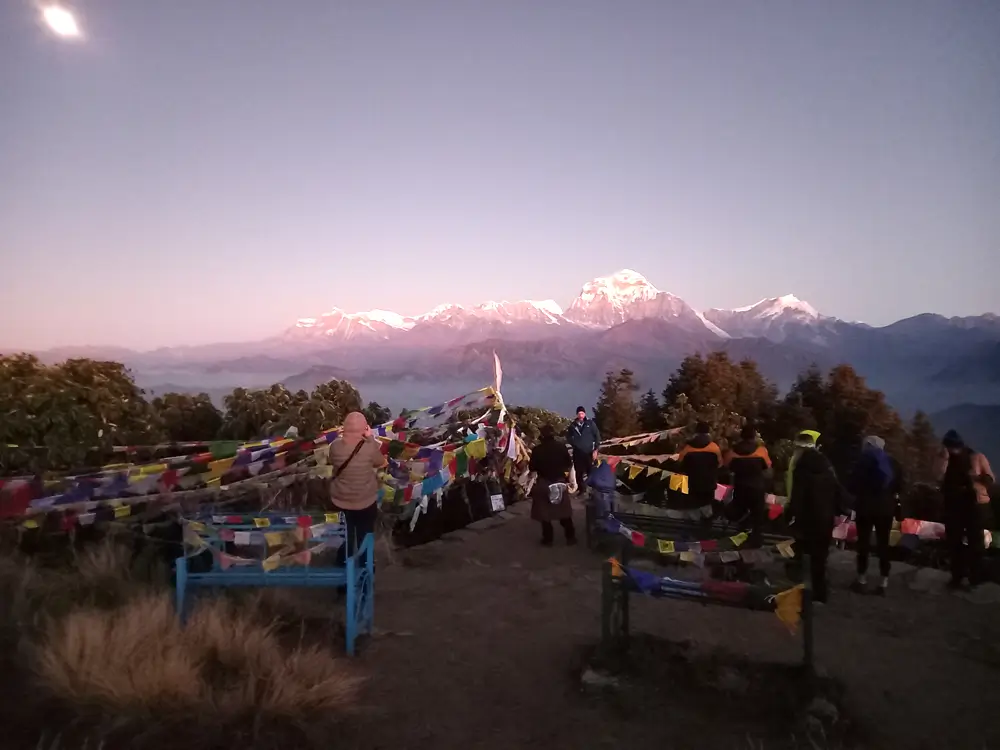
The Ghorepani Poon Hill Trek begins in the busy lakeside city of Pokhara, which is the entrance to numerous adventures in the Annapurna Conservation Area in central Nepal. The hike goes past traditional Gurung and Magar communities, thick woods, and terraced farms. It slowly rises to Poon Hill (3,210 meters), which is a renowned viewpoint. This journey takes you through some of the most beautiful parts of Nepal’s varied scenery and gives you stunning views of some of the highest peaks in the world, such as Annapurna South, Dhaulagiri, and Machhapuchhre (Fishtail Mountain).
The time you choose to start the Ghorepani Poon Hill Trek might make a big difference in how much you like it. The finest times to go trekking are in the spring (March to May) and the fall (September to November). with the fall, the sky are bright and crisp, making it easy to see the mountains. In the spring, the pathways are covered with beautiful rhododendron flowers, which are a treat for hikers. The months of December to February are cooler and quieter, but the vistas are still amazing. However, at higher elevations, there is a greater likelihood of frost and snow. People usually stay away from the monsoon season (June to August) because of the frequent rains, slick pathways, and the chance of landslides, which may make hiking dangerous.
Ghorepani Poon Hill Trek takes approximately five days on a normal schedule and that will provide you with ample time to absorb the sights and acclimate to the altitude. On the first day, you will move by car out of Pokhara to Nayapul, after which you will begin your walk to Tikhedhunga or Ulleri village.
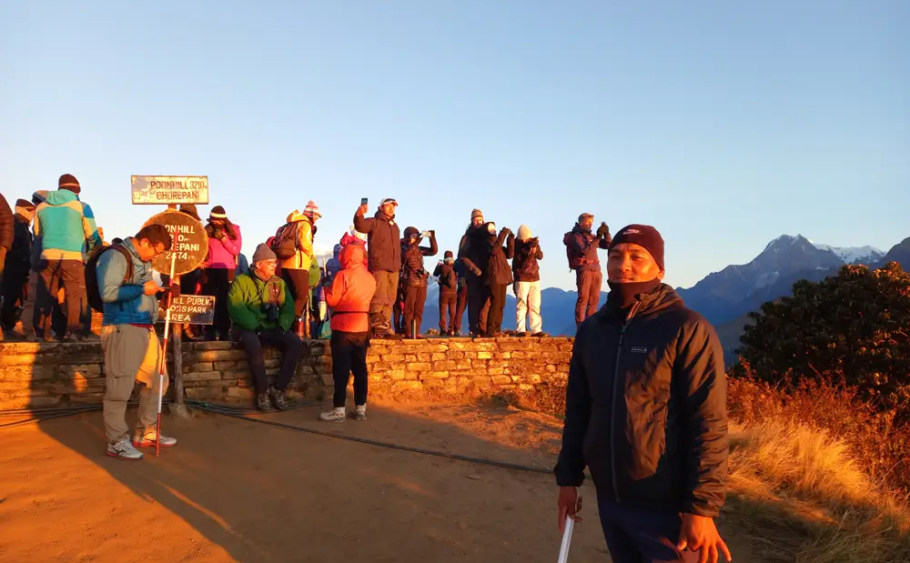
The second day is a difficult, but a satisfying, climb between Ulleri and Ghorepani, the big rest stop before Poon Hill. The hike to Poon Hill on the 3rd day is spectacular and the sunrise in the Annapurna and Dhaulagiri ranges is spectacular.
The rest of the day is used in hiking to the settlement of Tadapani. On the fourth day, the trek will lead to Ghandruk. This is a beautiful community with a rich cultural heritage. Lastly, on the fifth day, you visit Nayapul where your walk completes and thereafter you visit Pokhara. This itinerary can be increased or decreased depending on what you desire to see in the trip.
On the Ghorepani Poon Hill Trek, you can expect a peaceful mix of environment, culture, and physical challenge. There are thick forests of rhododendron and oak trees along the way. In the spring, these trees explode into bright hues. You will walk past terraced rice terraces and ancient villages, where the Gurung and Magar people are very kind to trekkers. The greatest altitude of Poon Hill (3,210 meters) is modest, giving a less demanding option to higher Himalayan hikes but still presenting stunning mountain vistas. The trails are usually in good shape, although you will have to deal with some steep parts and extensive flights of steps, especially near Ulleri. Accommodations are basic teahouses with simple rooms and tasty home-cooked meals, which are great for relaxing after a day on the trail.
Most people with an average level of fitness think that the Ghorepani Poon Hill trek is easy to moderate. Most of the time, the routes are well-marked, and people walk for 4 to 6 hours every day. The lengthy, steep journey up the stairs from Nayapul to Ulleri is the hardest part physically. It takes a lot of energy, but the views are worth it. The altitude is generally tolerable, peaking at slightly over 3,200 meters, thus altitude sickness is less prevalent than on higher Himalayan treks. Most trekkers can do this route easily if they pace themselves and do some basic fitness training, such walking or doing mild cardio before the trip.
Of course. This is the ideal trek to begin with when you simply wish to get the feeling of trekking in Himalayas without the physical and logistical hassles of more long and high altitude treks. The fairly low distance, medium elevation, and accessible terrain make it the great start point in trekking to the new or inexperienced. There is no need to carry extensive camping equipment because there are nice teahouses on the way. The trailings are marked clearly and the trails are frequented by several other trekkers thus making one feel safe. Families and individuals who walk alone usually choose this walk as it is not hectic and has a scenic view.
Yes, hiking alone on the Ghorepani Poon Hill path is frequent and typically safe owing to the popularity of the trail and well-established infrastructure. People who hike alone like being able to go at their own pace and be in nature. But you should still take safety measures, including telling family or friends about your intentions, bringing a local SIM card or offline GPS maps, and not walking after dark. You don’t have to hire a guide or porter, but a guide may provide you cultural information and aid you in an emergency. Trekking alone also helps you develop as a person and lets you connect with the Himalayan nature in a deep way.
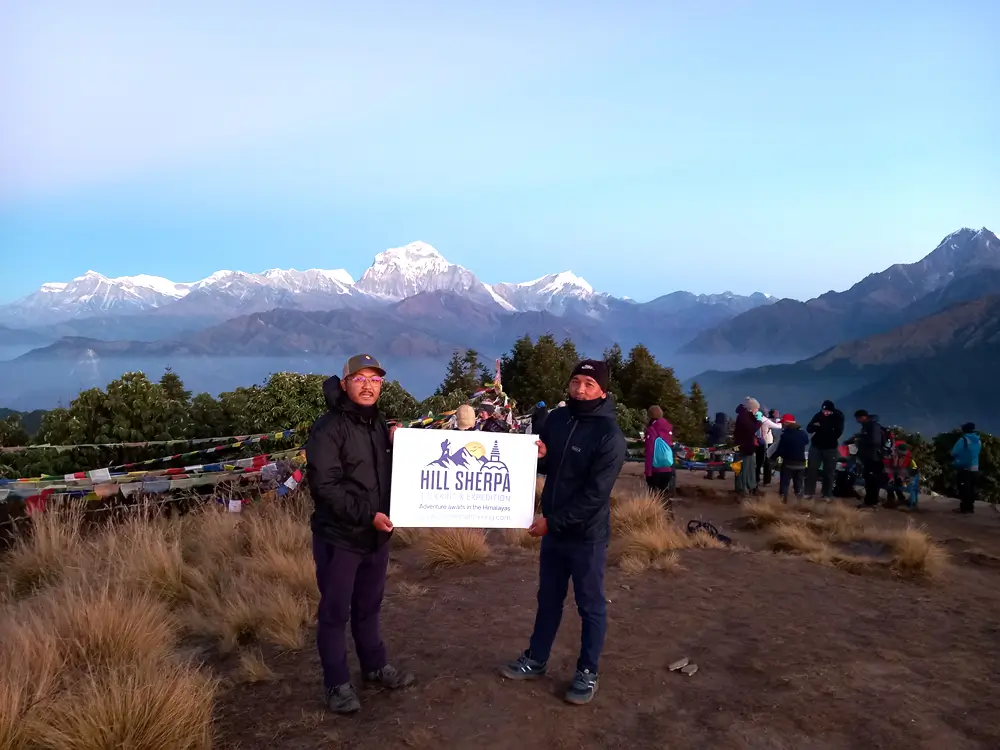
The early morning ascent to Poon hill is surely the most enjoyable aspect of the walk as the views of the snow capped Annapurna and Dhauligiri mountain ranges at dawn render the hikers speechless. The colorful rhododendron forests in blossom, the rush of the waterfalls, and the calm country life of such villages as Ghorepani and Ghandruk will all spellbound along the trail. Watching the way Gurung and Magar people live and tasting the true Nepali food is both a great cultural experience. The evenings sitting in small teahouses with other tourists and sharing stories makes this journey a lot more entertaining.
To have a good time at the Ghorepani Poon Hill Trek, it is essential to pack carefully. You will also require comfortable and broken in trekking shoes which will support the ankles and some warm clothes to keep you warm in the mornings and nights. You must have a jacket which will not be wet in case it rains and a rain cover. Hiking sticks give your knees the impression that they are not under a lot of pressure especially when you are ascending or descending steep ascents. The sun on the mountains can be very bright and burn you, that is why you have to wear sunglasses, hat, and sunscreen. Carry along additional water and purification pills to ensure that you are well hydrated. Remember to grab a small first aid kit, your own medication and a power bank to keep your gadgets going. You should bring a camera to capture images of beautiful scenery.
Along the Ghorepani Poon Hill Trek, you will stay in teahouses, which are family-run guesthouses providing humble rooms with basic mattresses and warm blankets. People commonly share bathrooms, and not all of them have hot water. Dal bhat (rice and lentils) is the main meal, although momos (dumplings), noodles, and soups are also common. After a long day of walking, tea and coffee are easy to get and quite welcome. Electricity for charging electronics is accessible in many teahouses but normally comes at a nominal fee. Overall, the places to stay are cheap and a great way to meet local people.
You need two licenses to legally hike in the Annapurna Conservation Area: the Annapurna Conservation Area Permit (ACAP) and the TIMS (Trekkers’ Information Management System) card. You can acquire them all together for around 30 to 50 USD in Pokhara or Kathmandu. This expedition is rather cheap since daily costs for meals, lodging, and other shopping are generally between 20 and 35 USD. You don’t have to hire a guide or porter, but it will cost you more. Budget tourists may easily finish the route on a tight budget without giving up comfort.
Whether you choose to trek alone or with a guide depends on what you like and how much experience you have. Independent trekkers like being able to go at their own speed and save money. The Ghorepani Poon Hill route is well-marked and crowded, so it’s typically easy to find your way. However, hiring a local guide can make your trip much better by giving you cultural insights, helping you talk to people, and making it safer, especially if it’s your first time or you don’t know the area well. Porters can carry your heavy gear, which makes the hike more enjoyable for you. Helping guides and porters is also good for the economy in the area.
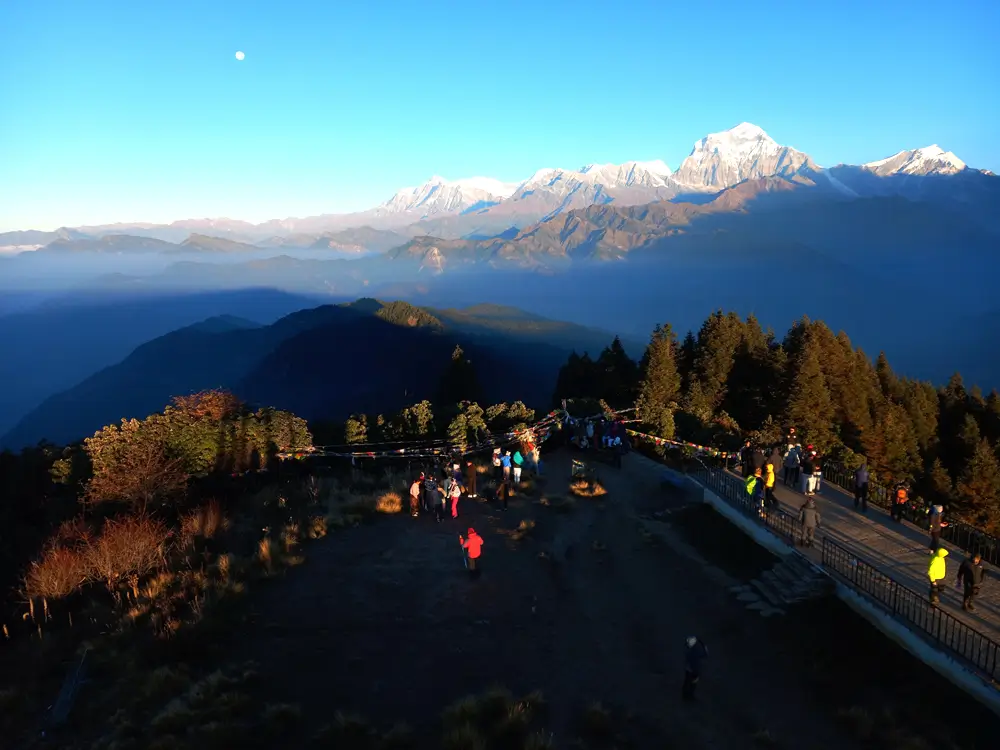
Photographers have the best chance to get stunning mountain views drenched in golden light at Poon Hill during the beautiful Himalayan dawn. Arrive early to acquire a decent viewing point and try with wide-angle images to include the immense mountain ranges. As you walk along the trail, pay attention to the colorful rhododendron flowers, the villagers in traditional dress, and the small details of life in a teahouse. Always be polite. Before taking pictures of people, ask them if you may. Don’t take pictures that are too close. Bringing additional batteries and memory cards assures you don’t miss any spectacular moments.
When you go green, you are concerned about the people and the environment. In order to maintain cleanliness on the trails, you should always carry your garbage along with you and consume less plastic. Follow set tracks to reduce erosion and preserve fragile plants. Get to know people in the neighborhood, wear decently, and greet them when you meet them. Benefit the community through purchase of meals and souvenirs as well as employment of guides or porters in the society. Avoid excessive noise and observe the local culture especially around places of worship. Responsible hiking ensures that the area will be even more appealing to the generations yet to come and that your trip will be pleasant.
This Ghorepani Poon Hill trek is a nice place to begin with experience and then proceed with more difficult tracks such as the ABC trek via poon Hill. or Ghorepani with Mardi Himal base camp. You can also visit all the places of interest in Pokhara, such as paddling in the Phewa Lake, paragliding in the air, caves and waterfalls. Nature lovers can also see exotic wildlife and have jungle safaris within Chitwan National Park. You can visit greater historical and cultural attractions of Kathmandu Valley after hiking.
The Ghorepani Poon Hill trip is a great option for novices, single travelers, and anybody who wants to get away from it all for a short time in the Himalayas. It has the right mix of natural beauty, cultural depth, and ease of access. This walk makes a lasting impression on every tourist, from the beautiful sunrises over the mountains to the friendly mountain towns. Ghorepani Poon Hill is ready to welcome you, whether you want a mild beginning to trekking or an unforgettable trip in Nepal. Get your luggage packed, your boots ready, and get ready to see some of the most beautiful mountains on Earth.
The Ghorepani Poon Hill walk usually takes four to five days, which makes it one of the quickest and most rewarding treks in the Annapurna area. The length of time may change according on how fast you go, where you start, and how much time you want to spend seeing the sights or touring communities. Some people who go on treks prefer to add extra time to their schedule by spending longer time in areas like Ghandruk or by adding side routes. In general, the walk is quite adaptable and can be changed to meet both busy and leisurely schedules.
Most individuals of all ages and fitness levels can do the trek since it is simple to moderate in difficulty. There are several of teahouses along the well marked and well maintained paths. The steep stone stairs up to Ulleri are the hardest part of the hike. They may be hard, but if you take rests often, they are doable. There isn’t much of a danger of altitude sickness since the highest point is just a little over 3,200 meters (Poon Hill). Acclimatization is also less of a problem than it is on higher altitude treks like Everest Base Camp trek or Annapurna Circuit trek.
The Ghorepani Poon Hill trek is the best trek in Nepal to do as a beginner. It does not require any experience in hiking or climbing. The altitude is not too challenging, the distance is not too long, and there are many comfortable teahouses on the route, which is why it is the best option to first-time trekkers. The majority of the population will be able to complete the trek and enjoy themselves provided that they do some basic fitness training in the run-up to the trip such as walking, hiking, or light cardio.
Poon Hill Viewpoint is the summit of Ghorepani Poon hill hike. It is 3,210 meters (10,531 ft) above the sea level. At this level the altitude is not a problem to most of the trekkers as the height is regarded as moderate. Nevertheless, you should get enough water, walk at the speed that you feel comfortable with, and rest when you have to in order not to become over tired.
There is no need of having a guide or a porter, but it would make your trip a lot better. A guide can give you information regarding the culture, nature, and history of the area and additional safety and assistance. Porters will help you carry your huge bags in order to hike more conveniently. A guide is recommended in case you are new to trekking. And the more seasoned hikers usually go alone.
Yes, it’s okay to go trekking alone on the Ghorepani Poon Hill route. The path is well-used and has a lot of villages and teahouses along the way. This means that help and other trekkers are almost always close by. That being said, anyone who go hiking alone should always be careful. They should tell someone about their plans, bring a local SIM card with data, not go trekking after dark, and stay at well-known teahouses. This is one of the safest and best routes in Nepal for those who are hiking alone for the first time.
There are two permits required to do the Ghorepani Poon Hill trek. The first one is the TIMS (Trekkers Information Management System) card used to monitor the trekkers and ensure that they are not in danger. The second there is the ACAP (Annapurna Conservation region Permit) permitting you to enter the secured zone and take a tour. It is possible to obtain these permits at Pokhara or Kathmandu, and they are approximately 40-50 USD overall. You will pass many check points on the way, therefore, you need to carry them with you.
The best times to do the Ghorepani Poon Hill trek are in the fall (September to November) and the spring (March to May). In the fall, the skies are the clearest and the mountain views are the sharpest. In the spring, the rhododendron forests bloom and the weather is nice. The trail is less crowded and has more peaceful views in the winter (December to February), but it’s colder. Monsoon (June to August) is generally not recommended due to heavy rains, muddy trails, and the presence of leeches. However, for those seeking solitude, off-season trekking with proper gear is still possible.
The accommodation along the Ghorepani Poon Hill trail is predominantly in terms of teahouses, family-run local guesthouses. These provide simple and yet cozy accommodations that have twin beds, blankets and occasionally have attached bathrooms. There are different facilities in different villages. There are no fancy lodges, but the hospitality, coziness, and traditional food more than compensate the lack of luxury. Hot food, snacks, and hot beverages, such as ginger tea or masala chai, are served in most teahouses to ensure that you stay warm after a day on the trail.
Ghorepani Poon hill trek is among the cheapest treks in Nepal. Food, accommodation and little extras usually cost between 25-35 USD daily person depending on how much you would like to comfortably stay, whether you will have a guide or porter. A 5-day trek will cost about 150-250 USD in case of permits and transportation. The price will be further augmented by the cost of hiring a guide (30-25 / day) or porter (15-20 / day) who will make it easier and more enjoyable to explore.
Yes, there are numerous villages on the way with Wi-Fi, and it is typically a minor extra fee. Nonetheless, the speed and reliability might not be at par among the distant places such as Tadapani. The mobile networks (NTC and Ncell) are typically extensive in coverage across most parts of trek particularly around bigger villages. To have peace of mind, it is a good idea to purchase a local SIM card and social network with data in Pokhara prior to the trek.
Charging stations are available in the majority of teahouses, but in more remote locations, there might be a limited power supply or use of sun energy. Most charging devices do have a nominal charge (1 00 -2 USD per hour or device), particularly at elevated altitudes. One of the good ideas is to carry a power bank and put off or put on airplane mode when you do not need your gadgets to help save on battery life.
None, there is no ATM on the trail and no credit/debit card accepted in the villages. Before beginning the trek you should withdraw sufficient amounts of Nepali Rupees in Pokhara or Kathmandu to finance all your expenditure including food, accommodation, permits and guide/porters tips (where necessary).
To be comfortable and safe during the trek, it is necessary to pack correctly. Among the essential items, there are high quality trekking boots, warm clothing (fleece or down jacket), waterproof gears (rain jacket and pants), trekking poles, daypack, water bottles or hydration bladder, purification tablets, first-aid kit, sunscreen, lip balm, and a hat. A headlamp, two-way utensils, snacks, and personal cleanliness products will be handy too. Light packing, don’t forget that, you will be carrying your gear unless you get a porter.
Yes, the Ghorepani Poon hill trek is an easy one which can be easily added to the Annapurna Base Camp (ABC) trek which will take an additional 4-5 days to complete the trip. Poon Hill is used by many trekkers as a warm-up and then they proceed into the Annapurna Sanctuary. It is a mixture to give you the cultural richness of the lower villages and the dramatic alpine scenery of the base camp region.