Latest Posts



Talk to Trip Expert
+977 9704823980 (Whatsapp)


Talk to Trip Expert
+977 9704823980 (Whatsapp)This is the best question to tackle with various thoughts. Everest Region is the home to Mount Everest, the highest peak in the world, with an altitude of 8848.86 m from sea level is popularly known as the Everest Region is also the home to the unique diversity of nature and its diversity of geography, wildlife, flora, and fauna. It provides the habitat for the biodiversity of the high-altitude wildlife and plants, making the region a great place for the ecosystem to rely on. In such extreme conditions, weather, and other factors that come along with the increase in altitude, wildlife found unique paths to survive and live over.
The factors known for its unstable conditions, remote and difficult geography, and extreme conditions make the wildlife there unique as it needs a few challenging ways to survive. The cold feature of the region, as it lies over the high altitude of the Himalayas, and the weather conditions as well as the terrain geography stand as the main factors that make survival there for animals a bit challenging and rare to find those animals and wildlife as well as the plants to be found all around the world.
So, we are about to share and discuss the unique conditions in which these animals survive, making them rarer and more difficult to see worldwide. We will discuss the biodiversity that creates a unique ecosystem that allows them to survive in such high-altitude conditions. Stick here to begin your journey inside the insightful wildlife of the Everest Region.
The ecosystem of the Everest Region is a bit diverse and adopts wide features and factors, making it a hard place for any beings that are found there to survive. First, we need to identify some factors that are making the conditions difficult. Some of them are as follows.
The climate in the Everest Region is a proper weather condition of high altitude geography, which is very unstable all year. Even after the weather forecast, it is very hard to predict and determine the upcoming weather, which means the weather has suddenly changed features in there. It makes the human topography and animals tackling the sudden change in weather a difficult one for them. It also affects the change in seasonal vegetation, which is important for Herbivorous animals, as well as hard to be on hunting sites for carnivorous animals to hunt on hunting sites, making it one of the main factors that make the Evert region a difficult place for animals for their survival.
The environment is obviously unique in there over the geography of Everest. But it also comes with the features which along attached to the factors affecting the biodiversity. The environmental features, such as the vegetation, plants, and the animal food chain, are challenging even though they have diverse natural features. This is due to the climate, as we discussed above. The climate is very unpredictable. It makes the seasonal plants grow before the season and sometimes later than they should. In recent times, it has become harder for animals, mostly herbivores, which are totally reliant on plants due to climate change. It also affects the animals which are predators in nature and totally rely on hunting.
Sometimes, animals need to adapt to higher altitudes and sometimes to lower altitudes to escape the extreme conditions of the changing seasons. It can also happen due to the scarcity of foods, the late arrival of seasons, and the weather as needed. Animals in there need sudden changes in location and altitude in search of food and stable weather conditions. It makes it difficult for them as they need to adapt to new geography, altitude, and ecosystem. Mostly, animals tend to change altitude from lower to higher in summer and higher to lower in winter to escape the weather conditions.
The Everest Region is a diverse place to explore, with many animals. However, we will mention only some of the rare animals and birds we picked due to their rarity and the need for good fortune to witness them.
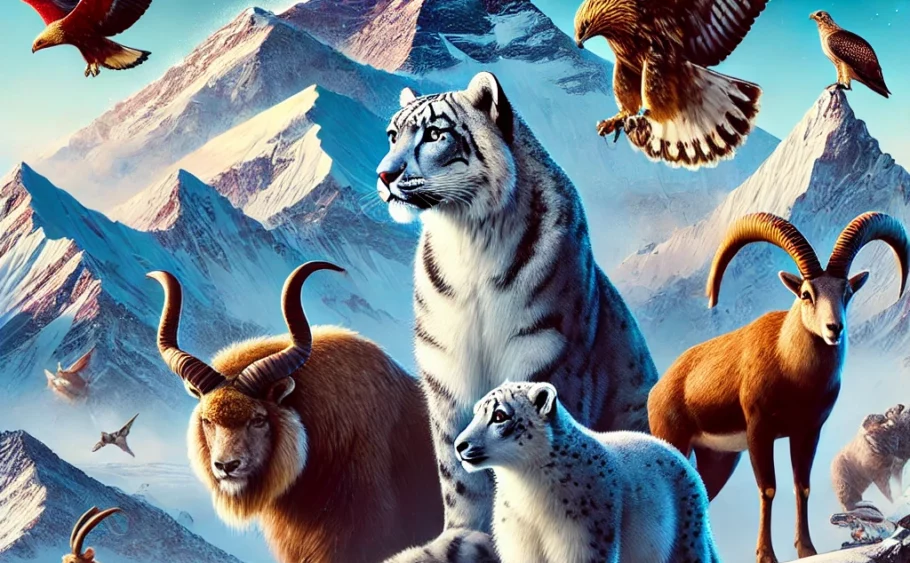
It is a rare species of leopard, seen rarely over the Everest Region and some other parts of the Himalayas. This is due to its habitat at altitudes between 3000 and 6500m above sea level. The leopard is also listed as an endangered animal.

It is also found in the Everest Region. Due to its unique features, this goat species can survive in high altitudes and extreme cold conditions.
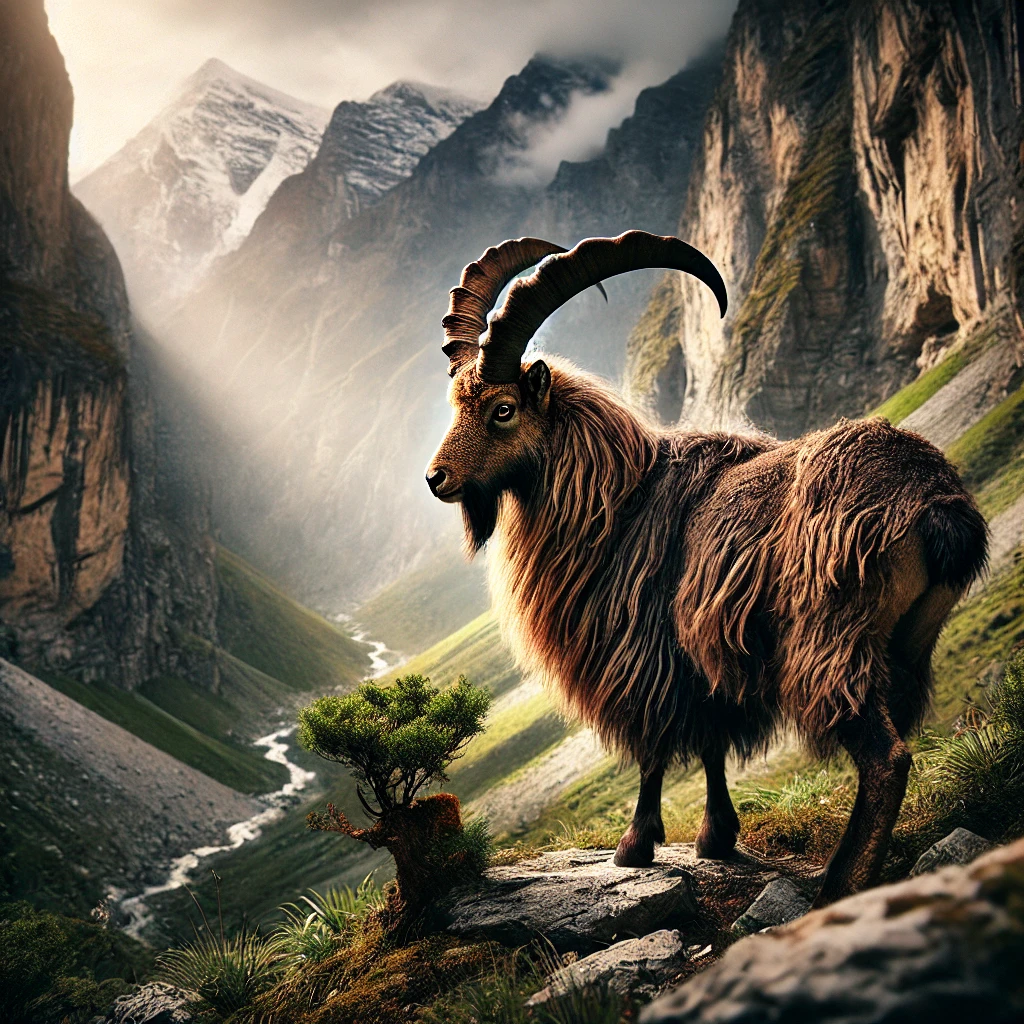
They are also listed as endangered. They are found in some parts of east Nepal, mostly at the high altitudes of the upper hilly region in the Himalayas.

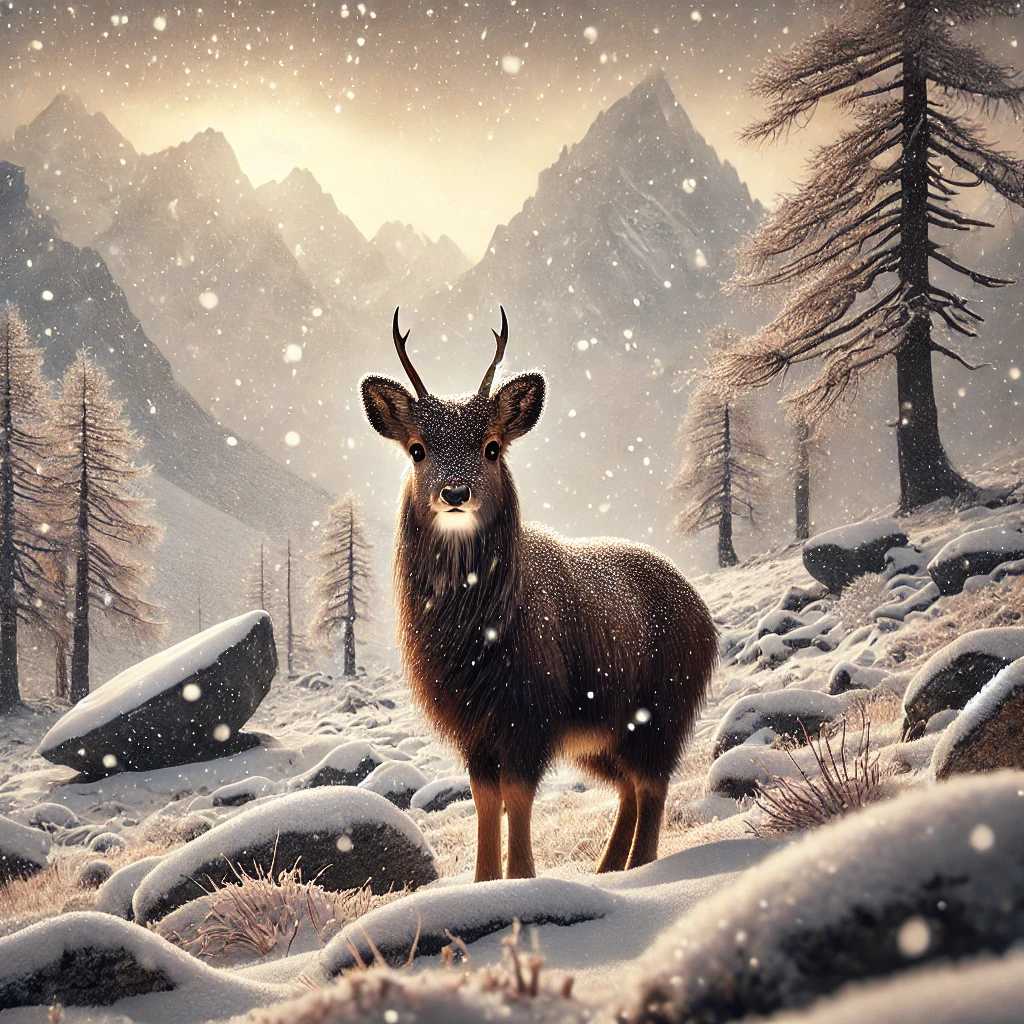
It is a species of high-altitude deer that lives in the cold region of Everest and is found across the Himalayas, mostly during the fall snowfall.
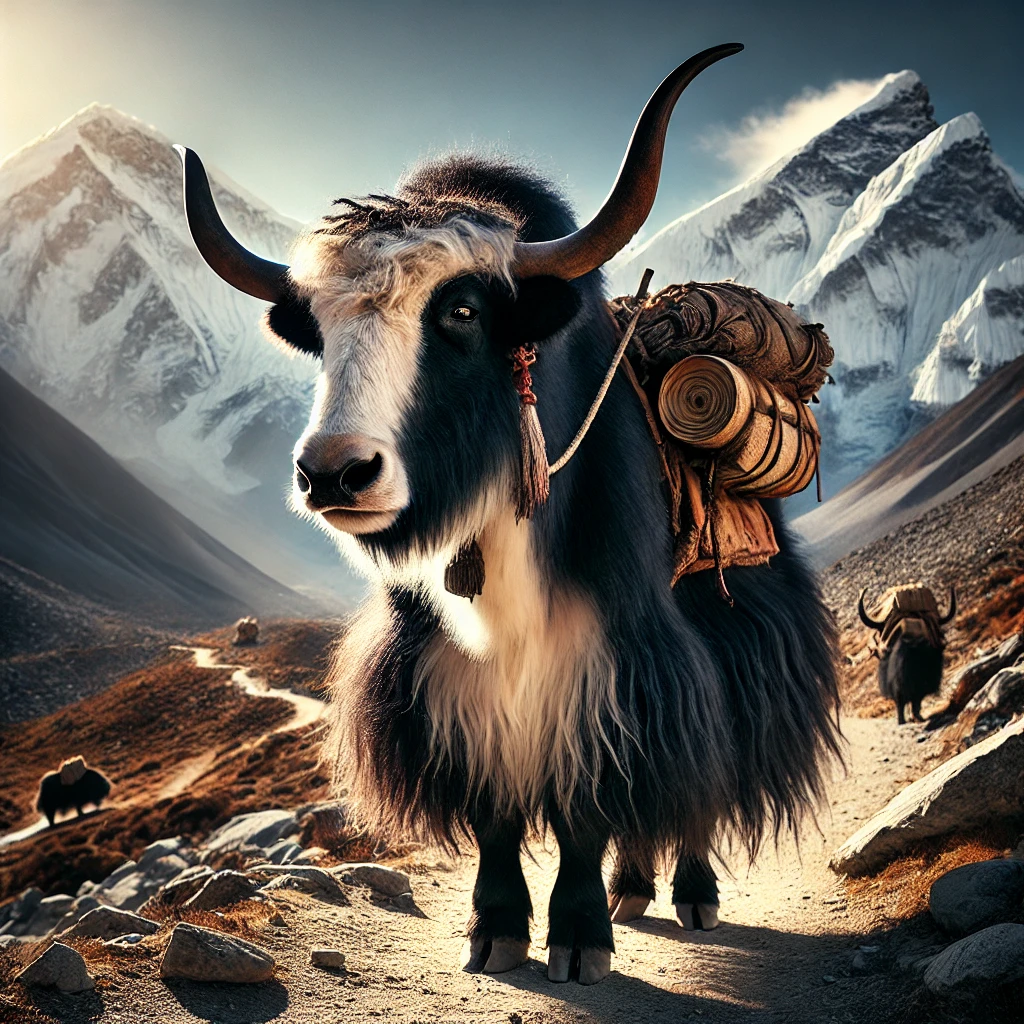
It is an iconic animal for the Everest Region. Mostly a contributor animal for the Himalayan people for transferring goods, milk products, and meat.
Here, we also need to mention some of the rare birds and iconic wildlife of the Everest Region. Some of them are as follows.
It is the national bird of Nepal, widely known as Danfe in its local name. It is rarely found in the uppermost part of the Himalayas. It is a very colorful bird that is also very rare around the Everest region.

It is a rare species of Blood Pheasant that is rarely seen and the only species of its kind native to Nepal.

This type of eagle is found across the mountains of Asia and Europe. It is a big and powerful eagle in its species. It is also a wildlife feature to witness in Everest Region wildlife.

Animals’ survivability in different extreme conditions comes with mutation and strategic moves, which are also part of the natural cycle. Most animals and birds descend to lower altitudes to escape the cold conditions. During the arrival of summer, they ascend to higher altitudes to adapt to colder regions again. The animals that can survive such extreme cold still live there, hibernating.
For the lower oxygen, it is their natural mutations, and the features in their red blood cells, as well as the organs that are capable of respirations, are built in a way that they can adapt and survive the low oxygen environment.
The wildlife seen across the Everest Region is already rare; some of them are even listed as endangered animals or species about to become extinct. It comes with the different factors which are the cause of these conditions. The wildlife and the ecosystem of biodiversity are very diverse there, and they need to be preserved before they become just the banner of books and museums. The main reason for this is over-tourism and the effects of climate change. The region itself is the only place where some of these species survive and can adapt for their survival. So, the conservation of the reason itself plays a big role in preserving these species.
Most of the big factors, such as climate change and tourism, come from humans, so it is our responsibility to make efforts to conserve this wildlife and the ecosystem of rare flora and fauna. Tourists who arrive in many arrivals should be managed and aware of the cause and effect of their activities, from nature to the life inside it. Activities such as waste management, noise cancellation, and spoiling of forests should be strictly followed.
The major factor in climate change should be the insight matter of the world. The mountain peaks of the Himalayas, which were covered in snow all year, are slowly losing their features and turning into black hills. This means the ecosystem and environment around them are also losing features, increasing the difficulty of wildlife survival.
So, again, we need to consider strict rules and regulations for visitors, and local communities should be aware of the hunting of animals and birds to preserve them. Regarding climate change, people worldwide must make equal efforts to prevent such diverse natural biodiversity from going extinct.
No logical question has been set to question why all wildlife is important, but when we look into significance and characteristics of wildlife that exists in the Everest region it is because they are unique among others such as being rare to see and in danger. It is also very special to see and study zoology and the nature of various species since the place is under extreme conditions that the habitant lives in.
The biodiversity at the regions of the upper Himalaya also needs to be balanced. The chain and the ecosystem are significant in managing the environment and retaining nature as it is. In addition, the above-mentioned animals contain traditional importance and conserve characteristics. Part of them is specifically linked with culture, traditions, and religious importance, which makes traditional values of the Himalayas varied.
We should also keep such blessings of nature to pass on to the other generations. The information sessions should not only do the teaching of the history of animals and extinct wildlife. We must also conserve them since as the most intelligent creatures within the natural chain. and this is what makes for human.
So, up to here, we talked about the biodiversity of the Everest Region and the wildlife found all over the Himalayas. They are equally important for the natural chain and the ecosystem to sustain the environment as we have. Most of them are already rare to spot and are in the condition of endangered and near extinction. It is mostly due to climate change and activities such as pollution, hunting, etc., which disturb the ecosystem and pyramid of cycles in the animal food chain.
Again, we need to control activities that can affect or could have a bigger impact on the environment to preserve rare and endangered animals and all the lives that fully rely on a proper and clean natural environment. As mentioned above, it is our responsibility, too, as we are the most intelligent beings on this planet. All of these factors come from us, so we must take responsibility for preserving them naturally. It is what makes us Human.
The animals that fall under the category of mammals, such as Leopard, Deer, and Tahr, have habitats there. The birds that are primarily habitable at higher altitudes and in cold weather, such as Himalayan Monal, Pheasant, Golden Eagle, snow-cock, etc, have a vast habitat there. Besides the animals and birds, it is also home to many diverse plants only found at higher altitudes.
They survive such conditions of extreme cold and low oxygen with their natural features as well as the strategic short migrations during the cold weather. To survive in low oxygen at such high altitudes comes with a genetic mutation and the characteristics in their red blood cells. It all comes out of their biological features, which provide them the advantage to survive in such low oxygen. During the extreme cold weather, some of the animals that cannot tackle migrate to the lower altitudes strategically to survive. Also, there we can find some animals and birds even during extreme cold which can survive and tackle those circumstances.
Yes, it is a much-endangered animal that is now very hard to spot. Some experts even claim it is more endangered than the statistics show, as it is rarely seen nowadays, and the number of spots has declined exponentially from year to year.
Birds such as Blood Pheasant, Grandala, Himalayan Monal, Bar Headed Goose, and Tibetan Snow-cock are commonly seen in the Everest Region and can also be easily spotted across the Everest Region. But it also depends upon the location and the areas in which they have their habitant.
Climate change significantly impacts wildlife in the Himalayas. It is due to the unseasonal change in seasons, which impacts the vegetation and the migrating cycle of animals and birds at different times of year. Climate change also affects the food chain on which this wildlife depends. The late arrival of the monsoon or the change of weather sooner than the season also impacts the cycle of living beings on Mount Everest.