Govt. Tourism License 3195/080/81





US$ 2299 per person For a group of 17-24 pax.
- 1 personUS$ 3250
- 2 - 2 personUS$ 2750
- 3 - 6 personUS$ 2549
- 7 - 12 personUS$ 2450
- 13 - 16 personUS$ 2350
- 17 over 9999 US$ 2299
- Best Price Guarantee
- Secure Online Booking
- Flexible booking dates
- Owner operated company
- Decades of experience
- Dedicated sherpa team
- 100% success rate
- 5/5 ratings by travelers


Highlights of Annapurna Base Camp Trek via Poon Hill Return By Helicopter
- You will get to see Annapurna I (8,091m), which ranks 10th in the world’s highest peaks, while gazing upon other peaks of the Annapurna and Dhaulagiri ranges.
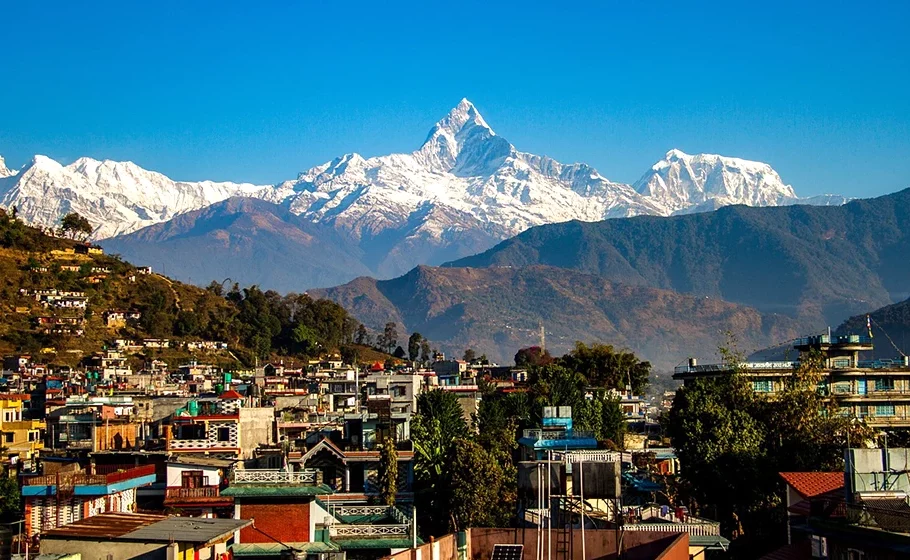
- Watch the sunrise from Poon Hill (3,210m) that reveals panoramic views of the Fishtail Mountain along with Dhaulagiri and Nilgiri.
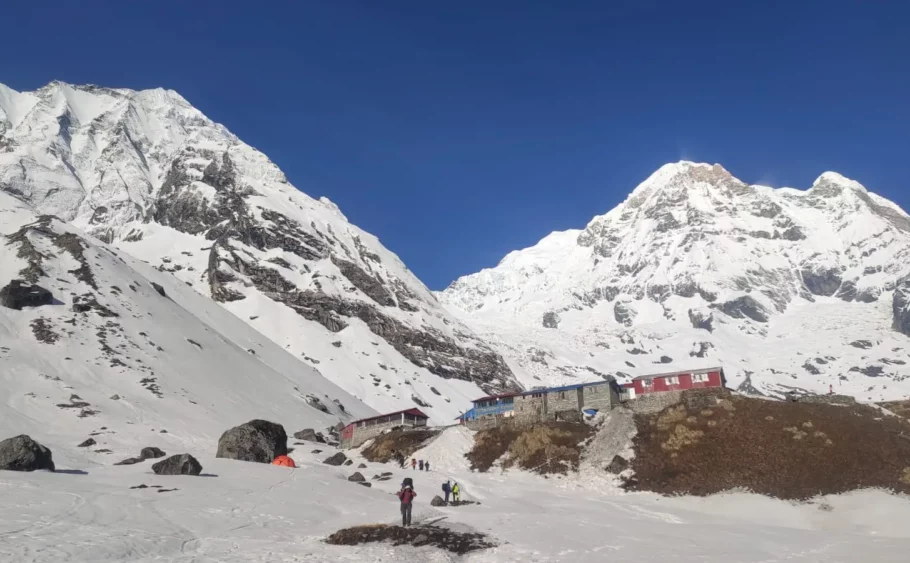
- Walk into Annapurna Base Camp, which stands at 4,130 meters above sea level, with numerous peaks and huge glaciers surrounding it.
- The trekking journey leads through both Ghorepani and Ghandruk, which serve as traditional holdings of the Gurung and Magar tribes, who hold the reputation for their friendly nature and remarkable cultural heritage.
- The forests are known for their rhododendron splendor, which reaches its peak in the spring months (March- May).
- Jhinu Danda provides remarkable hot spring facilities for tired hikers who want to unwind.
- The trek requires exploring numerous suspension bridges that cross the high-speed flowing Modi Khola.
- You will stop at Machhapuchhre Base Camp, which stands at 3,700m, while en route to ABC.
- The Annapurna Sanctuary presents itself as a private sanctuary containing mountains alongside glaciers.
- You can see the glacier-covered South Face of Annapurna I, which is hard to find elsewhere in the Himalayas.
- During your Himalayan exploration, you will spot the Himalayan monals and blue sheep together with the langur monkeys that live in the area.
- The path shows the combination of Hindu and Buddhist beliefs while visitors encounter monasteries and prayer wheels as well as chortens throughout their journey.
- Amazing flight to Kathmandu by Helicopter
Trip Overview
Introduction to Annapurna Base Camp Trek via Poon Hill
Travellers seeking the finest trekking adventure in Nepal will find it at Annapurna Base Camp via Poon Hill. The trek combines dramatic views of mountains and multiple environments with cultural meetings along the way. Travelers experience rhododendron forests and traditional villages, and river valleys on their way to reach the Annapurna Sanctuary.
The main attraction of this trek is standing at Poon Hill (3,210m) which offers a famous sunrise viewpoint of Annapurna and Dhaulagiri ranges including Machhapuchhre (Fishtail). People always remember the special beauty of golden light enhanced peaks during sunrise.
The tour proceeds to Gurung and Magar villages, allowing travelers to explore local customs as well as meet hospitable indigenous residents. Authentic Nepali teahouses offer trekking guests both traditional Nepali hospitality and traditional food.
The end destination at Annapurna Base Camp (4,130 m) reveals massive peaks, with Annapurna I (8,091 m) as the main attraction among others. Any trekker will remember this position as it provides one of the most mesmerizing moments.
The helicopter return on this trek substitutes the typical base camp departure through the trekking path because it takes adventurers from Annapurna Base Camp back to Pokhara. From above, you can see the Annapurna range mountains as well as the valleys, and the rugged terrain offers an excellent conclusion to your trek.
The trek welcomes both experienced trail runners and inexperienced starters who want an exciting cultural experience alongside mountainous beauty.
The proper preparation required makes Annapurna Base Camp Trek via Poon Hill deliver a permanent adventure that unites the physical benefits of the trek with a high-class helicopter return to ensure comfort and adventure throughout.
Why Choose Annapurna Base Camp Trek via Poon Hill?
Travelers witness the most gratifying trekking adventures with the Annapurna Base Camp Trek via Poon Hill. The location provides visitors a balanced mixture between adventurous pursuits and natural scenery, together with traditional cultural attractions.
This trek travels through different terrain, which includes forested areas and high alpine fields, to arrive at the Annapurna Sanctuary, which is covered by glaciers. The route differs from others in high altitude by gently increasing elevation, which helps people adapt to the elevation change.
The trek provides breathtaking views that do not require trekkers to face extreme height obstacles. Well-vaunted mounting routes with rest spots situated frequently along the trails provide walkers with convenient trekking facilities.
The amazing views stand out among all other reasons why people make this trek choice. The trekking route lets participants observe Annapurna I along with Machhapuchhre and Dhaulagiri, which are considered some of the world’s tallest peaks.
Each bend on the hiking trail shows different panoramas, which include deep canyon views together with magnificent snow-topped peaks.
Culture plays a significant role in the highlights of this trek. During their journey between the Gurung and Magar settlements, people encounter local residents who share their ancestral customs with travelers.
The visitors experience additional joy because of the welcoming spirit that characterizes the local population.
People seeking out a middle-level challenging yet satisfying trek should choose Annapurna Base Camp Trek via Poon Hill. Travelers can have a thrilling journey on this trek without enduring the harsh weather conditions found in other extreme altitude walks.
Widely marked trails, accessible facilities, and friendly guides make Annapurna Base Camp a choice that works well for travelers.
The laboratory analysis session indicates that the trek offers flexible routes for different fitness groups and specific time requirements.
The trek stands among the premier trekking experiences in Nepal regardless of which route you choose or how you blend it with Poon Hill. Each memory created throughout the Annapurna Base Camp Trek via Poon Hill becomes everlasting.
Annapurna Base Camp Trek via Poon Hill Return By Helicopter Itinerary
01
Day 01: Arrival in Kathmandu
In the Annapurna Base Camp via Poon Hill Itinerary, the first stop is Kathmandu, which stands in Nepal’s capital position with its mountains dominating the landscape. When you arrive at the airport, our representative will welcome you and transport you to hotel accommodation.
Upon checking into our hotel, we investigate the vibrant shopping district of Thamel, which shows off a mix of vibrant stores and local dining options. We dedicate any remaining available time to see either Swayambhunath Temple or Kathmandu Durbar Square as well as other historic sites near Kathmandu.
Our evening meeting includes receiving detailed information about the upcoming trek from our guide. We will finalize permits while inspecting equipment and then sit down for Nepali traditional cuisine before getting our rest for the night.

Duration
30 mins drive to hotel
Max Altitude
1300 m.
Meals
Excluded
Accommodation
3-Star Hotel 02
Day 02: Flight from Kathmandu to Pokhara
The first flight at dawn takes us to Pokhara which shows the beautiful lakeside city. The wide horizon reveals majestic sights of both the Annapurna and Dhaulagiri peaks.
We stay at an accommodation near Phewa Lake before taking some time to rest. The lakeside area invites exploration while small cafes provide coziness and peaceful boat tours are available on the calm lake waters.
People visit the World Peace Pagoda at sunset to witness a stunning sight. We spend our night at the hotel while completing our trek finalization before resting well for the rest of the night.
Duration
30 mins flight to pokharaMax Altitude
820 mMeals
BreakfastAccommodation
3-Star Hotel 03
Day 03: Drive to Bhirethanti then trek to Ulleri
The morning after breakfast, we start the trip, which leads us through Bhirethanti beneath terraced hills and greeneries, 2 hours drive by private car. A curving path tracks along the Modi River while it moves through various communities supported by agricultural territories.
From Bhirethanti, we start moving forward on the simple trail that runs through subtropical forests. The expedition leads us across multiple suspension bridge crossings as we traverse rushing rivers in the mountain environment.
A steep stone staircase starts from this point on the trail that leads to Ulleri. The demanding climb leads to eye-catching sights of Annapurna South mountain together with beautiful greenery in the distance.
We eventually reach Ulleri which boasts stone houses together with teahouses despite its position as a Magar village. When choosing our lodge, we eat a hot meal before sleeping because the next day requires our energy.
Duration
4-5 hoursMax Altitude
1933 m.
Activity
TrekkingMeals
Breakfast, Lunch, DinnerAccommodation
Local Teahouse 04
Day 04: Trek to Ghorepani
We depart from Ulleri and we march through thick forests that consist of rhododendrons and oak trees. Red sunlight passes through tree branches while bird sounds carry across the fresh mountain air.
After steady elevation, we reach Nangethanti, which is a tiny community that serves as a brief pause. After enjoying our warm tea, we gaze at the distant snowy tops from our resting point.
Our trek keeps ascending towards Ghorepani, which stands as a popular point of rest along the Annapurna trail. From this ridge location, the village delivers sensational mountain views to all directions.
Our stay at the teahouse allows us to pass the time observing remarkable mountain views. The group prepares for Poon Hill’s sunrise hike after having a first dinner of the day.
Duration
5-6 hrsMax Altitude
2860 m.Activity
TrekkingMeals
Breakfast, Lunch, DinnerAccommodation
Local Teahouse 05
Day 05: Hike to Poon Hill and trek to Tadapani
At dawn we start climbing up the steep trail towards Poon Hill by reaching its peak in time for sunrise. The sunrise lights the Annapurna, Dhaulagiri and Machhapuchhre peaks with gold as it appears on the horizon.
We return to Ghorepani after the unique vista capture to enjoy a full breakfast. We use the energy gained to hike toward Tadapani as we walk through magical forests of rhododendron.
The path crosses various small rivers during its route where you can catch sight of distant mountain peaks from occasional viewpoints. During our progress, we stop for brief resting periods to take advantage of the quiet surrounding environment.
We find Tadapani, which sits quietly in between pine and rhododendron trees that tower over the settlement. After completing an outstanding day, we find comfort in our teahouse and eat a hot meal followed by relaxation.
Duration
5 - 6 hrs WalkMax Altitude
2630 m.Activity
TrekkingMeals
Breakfast, Lunch, DinnerAccommodation
Local Teahouse 06
Day 06: Trek to Chhomrong
Our morning travels down from the dense forest showcase plenty of rhododendrons and oak trees. The first breaths of air today feel crisp even though the mountain peaks remain far in the distance.
The trail moves toward a stunning valley that shows terraced agricultural fields after we go deeper into the descent. We move across tiny wooden structures connecting the mountain streams before walking forward to reach the Kimrong River.
The trail becomes more demanding as we climb up from the river to reach the attractive Gurung settlement of Chhomrong. The physical challenge of the route becomes manageable due to the stunning mountain scenery featuring Annapurna South together with Machhapuchhre.
Arriving at the destination gives users the opportunity to check into the teahouse followed by exploring the local village. The permanent settlement of Chhomrong exists as the last point before reaching Annapurna Base Camp while providing nice lodges coupled with welcoming hospitality.
Duration
5-6 hoursMax Altitude
2170 m.Activity
TrekkingMeals
Breakfast, Lunch, DinnerAccommodation
Local Teahouse 07
Day 07: Trek to Bamboo
From Chhomrong we have to go downhill across a lengthy series of stone steps before reaching the Chhomrong River. A steep elevation through dense bamboo forests establishes a cooled-down environment with peaceful surroundings.
Higher altitudes reveal the beauty of the Modi Khola valley through clearing forests. We march on while the flowing river generates the background noise.
Along the trail, we stop at Sinuwa and then finally reach the open area where different teahouses are located. We find a chance to unwind here before our journey proceeds to Bamboo.
Once we get to Bamboo, we find comfort in a small tea house located within breathtaking cliffs and beautiful green landscapes. The serene setting of this location creates an ideal rest spot during the evening after long working hours.
Duration
5-6 hoursMax Altitude
2310 m.Activity
TrekkingMeals
Breakfast, Lunch, DinnerAccommodation
Local Teahouse 08
Day 08: Trek to Deurali
The initial part of our day involves a peaceful walk which takes us into thick bamboo forests and rhododendron territory. The trail we walk on remains moist, along with a chilly temperature, and we spot occasional snowy mountain peaks through the forest.
The forest trees begin clearing out as our expedition progresses ahead. The trail now leads us to a rough terrain containing big boulders and flowing waterfall features.
Dovan and Himalaya serve as our two stopping points as we move through these small settlements on our way. Thinning air blends with rock walls that present a stunning visual number.
We arrive in Deurali, which sits on a mountain ridge at the afternoon hour. We set our accommodation at a teahouse and gained beautiful peak views from our resting spot.
Duration
5-6 hoursMax Altitude
3230 m.Activity
TrekkingMeals
Breakfast, Lunch, DinnerAccommodation
Local Teahouse 09
Day 09: Trek To Machhapuchhre Base Camp
The Annapurna Base Camp Trek via Poon Hill continues until we advance into the Himalayas’ alpine zone. The trail leads up the Modi Khola River while it ascends gradually through an awe-inspiring valley.
The elevation rise leads to the disappearance of vegetation which transforms into shrublands and rocky slopes. The magnificent cliffs rising up on both sides produce a scenery beyond all comparison to our past experiences.
After crossing a few wooden bridges and managing steep terrain, we finally arrive at our destination, Machhapuchhre Base Camp (MBC). At 3,700 meters MBC stands as one of the most beautiful destinations during the trek.
At this location we obtain direct sightlines of the majestic peaks in Fishtail and Machhapuchhre. We stay at our teahouse while enjoying the spectacular views, which will enable us to prepare for the upcoming climb.
Duration
3 hoursMax Altitude
3700 m.Activity
Short TrekkingMeals
Breakfast, Lunch, DinnerAccommodation
Local Teahouse 10
Day 10: Trek to Annapurna base camp
The trail begins early to lead us along its smooth path toward the heart of the Annapurna Sanctuary. The path runs between fantastic mountain peaks, which creates a powerful effect on viewers.
Rising in elevation cools the environment more and converts the region into an ice-covered plain. Our journey ends in a stunning manner because Annapurna I and its companion peaks reveal themselves completely during this section.
We have reached our highest elevation at Annapurna Base Camp, which stands at 4,130m. The grandeur of the Annapurna range, reaching all around us, creates a sight that no one can forget.
The afternoon at base camp allows us to take in the breathtaking mountain panorama that spreads around 360 degrees. We rest inside the teahouse after securing this enchanting base camp image.
Duration
3 hoursMax Altitude
4130 m.Activity
Short TrekkingMeals
Breakfast, Lunch, DinnerAccommodation
Local Teahouse 11
Day 11: Return to Kathmandu by helicopter
Our early rise permits us to observe the Annapurna range lighting up with morning sun one final time. The fresh mountain air combines with golden illumination to form a picture that will never be forgotten.
We board a helicopter for a stunning helicopter ride towards Kathmandu after having our morning breakfast. From above, we can observe the breathtaking combination of mountain glaciers and valleys as well as the snow-covered peaks.
The first priority upon entering the city is hotel check-in, followed by an enjoyable, peaceful day. Thamel awaits visitors who want to go shopping or can enjoy relaxation after completing their trek.
Max Altitude
1300 m.Meals
BreakfastAccommodation
3-Star Hotel 12
Day 12: Departure from Nepal
Shortly after breakfast we take the time to review our outstanding trekking experience in the Annapurna region. The Annapurna memories comprise majestic peaks and peaceful walking paths together with welcoming hosts who never left our thoughts.
A representative transfers you to the airport for your flight home. Kathmandu offers two optional destination choices, either market exploring or walking through the city.
The spirit of the Himalayas follows you after your departure from this place. Although the Annapurna Base Camp Trek via Poon Hill ends, the life-changing revelation will persist through all your days.
Max Altitude
1300 m.Meals
BreakfastAccommodation
ExcludedIncludes & Excludes
What is included?
- Airport pick up / drop off is by private car.
- Flight from Kathmandu to Pokhara.
- Helicopter flight to Kathmandu from Annapurna base camp.
- Provide transportation from Pokhara to Bhirethanti by private car.
- 3 * Hotel twin sharing room accommodation ( 2 nights in Kathmandu with breakfast)
- 3 * Hotel twin-sharing room accommodation (1 night in Pokhara with breakfast)
- All meals during the trek: breakfast, lunch, and dinner.
- Complimentary fresh fruit after dinner.
- Accommodation, tea house during the trek.
- Annapurna Conservation Area Permit (ACAP)
- Tourist Information Management System (TIMS Card)
- Government licensed holder and English speaking guide.
- All staff wages, food, drinks, accommodations, transportation, and insurance.
- One strong sherpa helper for carrying your baggage, 1 porter for 2 clients.
- Hill Sherpa Trekking first aid kit by guide.
- Water purification tablets for tap water ensure safe drinking water throughout the journey.
- Your travel insurance will cover helicopter service in case of an Emergency.
- All government taxes and official expenses.
- A sleeping bag, Down jacket, Duffel bag, and trekking poles are provided by Hill Sherpa trekking but should be returned after the trek if needed.
- Oxy meter for checking pulse, level (AMS) acute mountain sickness.
- The assistant guide provides for groups of 8 people,
- Hill Sherpa Trekking provides trip certificates
- Farewell dinner after the trek, (Nepalese cultural meal)
What is excluded?
- International airfare tickets.
- Nepal entry visa fee, visa obtained on (TIA) arrival at the international airport in Kathmandu.
- Additional accommodations, foods, drinks, bar hill, laundry in Kathmandu if stays extra day.
- Your Personal Medical & Travel Insurance,
- Desserts, sweet items like chocolate, cake, pie, mineral water, any beverages, and pudding during the trek and for any extra expenses.
- Excess baggage weight is 10-15 kg maximum.
- During the trek, hot showers, mobile, camera, power bank, any batteries charging, Wi-Fi internet.
- Kathmandu sightseeing entrance fees
- Tips for guide & porter.
Note:
We also operate private trips.
Trip Information of Annapurna Base Camp Trek via Poon Hill Return By Helicopter
Best Time to Trek to Annapurna Base Camp & Poon Hill
The selection of correct timing when trekking improves the total trekking quality. Tourists should plan their Annapurna Base Camp Trek via Poon Hill during spring or autumn because the climate stays favorable and the mountain views remain crisp.
Tourists should tackle the Himalayas’ trekking routes during springtime and autumn because conditions remain optimal during these seasons.
The period stretching from March to May delivers spectacular views, which makes Spring one of the optimal times for the Annapurna Base Camp Trek. The hills at this time look spectacular because they are filled with flowering rhododendrons. Nice weather prevails in this region because clear skies enable us to see breathtaking mountain views.
From September to November, during the autumn season, makes up one of the best times to perform trekking activities. Monsoon season washed away all the dust to reveal excellent mountain views that are precisely visible. This trekking environment experiences a friendly climate along with well-drained paths that provide ideal trekking possibilities.
If you are an experienced trekker, then you can select winter as the seasonal choice between December and February. Higher altitudes may bring harsh temperatures, but clear skies continue to exist throughout. Trekking through the winter scenery with snow cover brings an enchanting experience, yet you need suitable equipment for safety.
Monsoon trekking is considered the worst season for trekking because the region receives monsoon rains from June through August. Wet trails and the frequent appearance of leeches frequently occur in the lower elevation areas during this time.
People seeking relaxation from others and the beauty of green plants may discover an intriguing trip despite the absence of popular destinations.
The success of Annapurna Base Camp Trek via Poon Hill depends on planning based on your preferred time frame. Every season brings its unique charm to the Annapurna region because visitors can find breathtaking aesthetics during both springtime and autumn months.
Appropriate preparation and selection of the right time result in adventures that are both secure and memorable.
How Difficult Is the Annapurna Base Camp Trek?
Trekking to Annapurna Base Camp via Poon Hill stands as moderate in difficulty.
The challenge of the journey consists of both steep mountain ascents and lengthy trekking periods, as well as exposure to elevated elevations, but lacks specialized climbing capabilities. The Annapurna Base Camp Trek needs trekkers to have suitable fitness to navigate the entire trail without difficulty.
Hiking between six and seven hours marks the daily walking length during this expedition. A significant portion of the trek requires rock steps extending from Ulleri that present a difficult climbing challenge to hikers.
The steady increase in elevation allows trekkers to adapt better, which means they have decreased chances of getting altitude sickness.
The challenging conditions of the trek become more intense due to weather variations. During wintertime, the path becomes harder due to snow accumulation and freezing cold temperatures.
The combination of dangerous trails and leech sightings during rainy seasons diminishes the trekking pleasure of trekking because they create slippery conditions.
The overall difficulty decreases dramatically when preparation takes place properly. The combination of cardio exercises, strength training, and with hiking practice builds endurance.
Slipping into discomfort while hiking on the trail can be avoided by carrying the right gear combination between comfortable winter attire and reliable trekking footwear.
Teahouses operating throughout the trail offer both stopping points and needed amenities to travelers. Travelers do not require camping supplies because the teahouses supply the necessary equipment, making their expedition more accessible.
Significant assistance can be obtained from guides and porters who will navigate trails and carry weights. Through sufficient knowledge acquisition and logistical arrangements, trekkers from different proficiency backgrounds can successfully execute this expedition.
The Annapurna Base Camp Trek via Poon Hill offers both physical hardship and amazing views that turn every difficult aspect into something worthwhile.
Flora and Fauna Along the Trek
The Annapurna Base Camp Trek via Poon Hill lets participants witness multiple plant and animal species because it traverses various elevation zones.
Throughout the trek’s ascent from lower foothill regions toward alpine areas, trekkers will walk through dense forests, followed by alpine pastures, and then finish at glacial moraines, which all have separate types of biodiversity.
Throughout March to May, when the spring season starts, the Ghorepani and Ghandruk regions embrace visitors with magnificent displays of red, pink, and white blooming rhododendron trees. The forest terrain consists of oak, magnolia, bamboo, and pine trees that create a lively green view during the walk.
Beyond an elevation of 3,000m, the trek enters an area where dense forests transform into bush shrubs, then advance to alpine meadows, and finally reveal barren rocky terrain to become part of the high-altitude zone of Annapurna Sanctuary.
The trek contains multiple species of wild animals in their habitat. Near Ghorepani and Tadapani, one can frequently observe the Himalayan monal (Danphe), which serves as Nepal’s national bird.
The bird population counts pheasants, eagles, and Himalayan griffons among their members. Langur monkeys, together with Himalayan thar (mountain goat), blue sheep, and musk deer occasionally appear to walkers on the trekking trails.
As you ascend into the upper part of the Annapurna area, there exists a chance to encounter the seldom-seen snow leopard species.
Life exists within the Modi Khola River, which derives from the Annapurna Glacier and the multiplicity of flora and fauna in the area makes the Annapurna Base Camp Trek via Poon Hill an experience you will never forget.
A paradise exists here for nature lovers and photographers because the place merges spectacular mountain views with unique wildlife and colorful forests.
Altitude Sickness on the Annapurna Base Camp Trek via Poon Hill
Trekkers who plan to visit Annapurna Base Camp Trek via Poon Hill need to worry about possible altitude sickness severity.
At heights exceeding 4,000 meters, the body needs proper time for oxygen level adjustment to occur. Acquiring knowledge about symptoms, along with suitable safety measures, supports safe trekking experiences.
At lower levels of altitude sickness, patients experience head pain and nausea together with dizziness and breathing difficulty. Above 3,000 meters, the body shows signs of adaptation trouble, which leads to sickness symptoms.
People who neglect altitude sickness symptoms will face an increased risk of developing pulmonary or cerebral edema.
A hiker needs to properly adapt to high-altitude environments to prevent altitude sickness. The body adapts better to altitude change through slow walking approaches, water intake, and sufficient rest periods. Slower elevation during the tour permits gradual body adjustment, which lowers sickness risks.
Descending to a lower altitude with rest stands as the most effective way to deal with any symptoms that arise. The medication Diamox helps acclimatize patients when prescribed by medical professionals. Trekking safety requires you to monitor your body signals.
Annapurna Base Camp Trek via Poon Hill vs other treks
Dangerous mountains surround the Annapurna Base Camp Trek via Poon Hill which showcases spectacular panorama views among Nepal’s most adventurous hiking locations.
The path leads diverse trekkers from rhododendron forests through Gurung and Magar traditional villages before reaching the Annapurna Sanctuary heart, where trekkers are embraced by the Annapurna I (8,091m), Machhapuchhre (6,993m), and Hiunchuli (6,441m).
Trekkers with basic fitness can reach this journey because of its accessible moderate difficulty level and 4.130 meter maximum altitude. Sunrise viewers standing on Poon Hill will have amazing views of Annapurna and Dhaulagiri mountain ranges emerging in the morning.
The Mardi Himal Trek presents itself as a prime Annapurna region attraction which delivers serene trekking in understated locations. The base camp at Mardi Himal stands at an elevation of 4,500m, which presents astounding overlooks of Machhapuchhre and Annapurna South.
The trail consists of a mix of forest areas, alpine meadows, and challenging terrain that attracts explorers who want to escape the crowds. This trek can be completed in 5 to 7 days because of its shorter duration, which provides a suitable high-altitude adventure for time-limited walkers.
Everest Base Camp Trek delivers a legendary adventure inside the Khumbu region until it reaches an elevation of 5,364m. From its position, the path showcases unmatched vistas that encompass Everest (8,848m) and other peaks, Lhotse, Nuptse, and Ama Dablam.
Better acclimatization, together with physical preparation, becomes essential due to the higher elevation of this trek. Experiencing Sherpa cultural traditions is combined with seeing famous monasteries while using Namche Bazaar as the main access point to Everest Base Camp.
Visitors often consider Kala Patthar (5,545m) their main focus because it allows the best view of Everest.
The Mardi Himal Trek provides individuals who want peaceful landscapes combined with shorter distances and beautiful surroundings. The EBC Trek offers the supreme adventure experience for climbers who want to experience Everest Base Camp with its global highest peak backdrop.
The selection between these three treks depends on how challenging one requires and their maximum altitude comfort and their desired experience.
Sunrise from Poon Hill
On the Annapurna Base Camp Trek via Poon Hill, the Poon Hill viewpoint maintains position as one of Nepal’s most popular observation sites.
Visitors can witness a miraculous sunrise that reveals the entire extent of the Annapurna and Dhaulagiri mountain ranges. The first light of day paints the surrounding mountains with hues of gold and pink colors.
Hiking to Poon Hill commences in dark hours by climbing a steep trail for one hour. Mountain trekkers illuminate their way forward with the help of their headlamps while their expectations intensify. As light breaks through the sky, the summit reveals the elevations of the surrounding peaks.
Travelers remember forever the broad sight observed from Poon Hill. The Himalayan peaks Annapurna South, Machhapuchhre, and Dhaulagiri, together with several other peaks, tower above the surrounding clouds.
Traveling back from Annapurna Base Camp through helicopter transportation provides both comfort and opulence to trekkers. By using helicopters, passengers can travel to their destination more swiftly and see the Himalayan peaks in glorious aerial fashion.
The sightseeing flight lets trekkers gain a novel vantage point on the mountains. Everything about this breathtaking sight proves that the early morning climb is entirely worth the effort.
Benefits of Helicopter Return Tour
The Annapurna Base Camp Trek via Poon Hill with a helicopter return provides an excellent transportation solution to travelers who need to save time or rest from exhaustion.
A comfortable helicopter service enables trekkers to take another route home. The descent down lengthy, steep paths becomes non-existent when you use helicopter services.
Every helicopter voyage exposes passengers to spectacular mountain views that combine glaciers and valleys together with mountain peaks. The superior vantage point across the Annapurna region creates a fresh understanding of its expansive scale and picturesque scenery.
The chance to experience aerial views enhances the end of the trekking journey.
Cultural Encounters on the ABC Trek via Poon Hill
The Annapurna Base Camp Trek via Poon Hill offers trekkers more than stunning panoramas because it provides them with the opportunity to witness the step-by-step exploration of traditional local heritage.
Walkers encounter Gurung and Magar villages at different points of the trail, which allows them to observe their individual traditions and social customs. The people from these ethnic groups have stayed in the area for centuries, where they continue to protect their old ways of living and customs.
Gurkha soldiers gain their reputation through Gurung people who dwell in locations such as Ghandruk and Chhomrong. The residents use stone homes, along with prayer flags and their specific clothes, to display their age-old cultural background.
Those who visit can engage with local people to learn about their past while getting the chance to watch traditional dances. The local population sustains itself through farming, livestock rearing, and through running teahouses as accommodations for trekkers.
The Magar community displays known hospitality throughout their settlement in Ghorepani. The villages of this community are excellently maintained, which reveals the authentic way of life in Nepalese rural areas.
Buddhist traditions manifest through the presence of monasteries together with prayer wheels and mani walls along the entire length of the trail. Following the clockwise circle around any religious structures represents a mark of respect that trekkers are supposed to perform.
Walking through an atmosphere of spirituality brings profound value to this hiking experience. To make the trekking adventure more profound, the local customs and interactions with villagers should be part of one’s plan.
The practice of learning basic Nepali phrases, such as ” Namaste and Dhanyabad, leads to positive social exchange. The Annapurna Base Camp Trek via Poon Hill exists as an adventure that serves as both an exciting adventure and a life-shaping encounter between humans.
How to Train for the Annapurna Base Camp Trek
A successful Annapurna Base Camp trek via Poon Hill requires proper training for its participants.
The trek demands moderate expertise, even though hikers need to cope with lengthy walks and challenging mountain climbs across high-altitude trails. The combination of physical and mental preparations leads to better endurance and decreases fatigue risk.
Participating in cardiovascular exercises including jogging, cycling, or swimming, and brief walks enhances stamina efficiency. After three months of proper training, the body develops essential abilities to maintain continuous physical work.
The strength of your legs serves as an important factor in handling sustained ascents and prolonged descents. Leg muscle strength benefits from performing squats combined with lunges and step-up movements.
A hike in rough areas with weighted carrying equipment duplicates the real experience of mountain trekking. The process of adjusting to higher altitudes proves difficult because oxygen levels diminish in mountain elevations.
Deep breathing practice, along with previous time spent in elevated locations, enables better preparation for the trek. Acclimating properly throughout the trekking adventure minimizes the chances of suffering from altitude sickness.
The capability to remain stable on rough terrain heavily depends on maintaining both flexibility along with core strength. The combination of yoga, together with stretching exercises, helps people develop flexible muscles, and planks alongside sit-ups assist in improving core stability.
Walking long distances becomes easier because of correct body posture combined with balanced movement.
The preparation of your mind requires equal attention to physical workout routines. The ability to persevere, along with fatigue tolerance, is essential for trekking.
Success during trials depends on developing positive thoughts, alongside staying motivated and ensuring readiness for unexpected conditions.
Annapurna Base Camp Trek via Poon Hill becomes more accessible for travelers when they receive proper training that minimizes physical discomfort. Fully preparing for your Himalayan adventure will lead to a more pleasurable and valuable time in the mountains.
Weather Conditions on the Annapurna Base Camp Trek
The climate conditions during the Annapurna Base Camp trek via Poon Hill undergo substantial changes according to different times of year. Knowledge of these conditions allows people to prepare adequately and select the perfect timing for their adventure.
The Annapurna region has four distinct trekking seasons that each present individual weather patterns both favorable and problematic to travelers.
Trekking enthusiasts commonly select spring as their favorite season to enjoy mountaineering activities between March and May.
The temperature zone spans between 10°C to 20°C during this milder seasonal period at base camp altitudes. Colorful rhododendron blooms decorate the entire trail pathway throughout its length.
From September to November, the weather conditions feature clear skies together with mild temperatures. The daytime spans from 15°C to 25°C, whereas nighttime temperatures stay cooler than daytime temperatures during each part of the daily schedule. The mountain views remain clear during this season, while the fresh air conditions are perfect for hikers.
The coldest season of the year in the Annapurna Region occurs between December and February, when temperatures drop below the freezing point at higher elevations.
Heavy snowfall during the season will create obstacles that complicate the traverse. Perfect visibility accompanies empty trails because of clear atmospheric conditions.
The period from June to August brings heavy rainfall, primarily to the lower altitude areas. Both the terrain and leech-infested forest areas become unsettled with thick mud and unsafe surfaces during this period.
An adventurous crowd of trekkers seeks out the attractive features of both quiet trails and lush green landscapes in their hiking experiences. The need to wear layered clothing exists because weather conditions often turn unexpected.
Tourists need to bring rain protection with them, together with warm outerwear and sun-blocking items, to stay comfortable regardless of the weather. The knowledge of various weather situations increases the enjoyment of Annapurna Base Camp Trek via Poon Hill.
Trekking Solo vs Guided Tour
The 2023 government regulation in Nepal bans foreign trekkers from walking independently within regions including Annapurna Base Camp Trek via Poon Hill and Everest Base Camp (EBC) so they must employ a certified tour guide for their trips.
The new regulation prohibits solo trekkers because their safety is at risk, increasing from potential incidents such as getting lost, suffering altitude sickness, or unexpected conditions like avalanches or injuries.
Walking in isolated wilderness presents both hazardous environmental factors and limited emergency assistance that makes trekking independently extremely dangerous.
The trekking agencies grant access to regions that demand specific permits because obtaining these documents becomes more straightforward through their assistance.
A guided tour comes with many advantages to customers. A professional guide creates organized routes and assists you through the proper acclimation process as they reveal the best way forward.
A professional guide provides permit support, arranges accommodations and meals, and modifies the trek according to the weather and physical capabilities of the individual. The professionals facilitate a better connection to the local population through breaking language limitations so people can have meaningful conversations together.
The presence of a professional guide provides an improved quality to the entire trekking journey. Traveled with a guide enables visitors to understand local cultural legacies in addition to historical background, while learning about traditional ways of life, which greatly deepens one’s trip experience.
The safety of trekkers is assured through the guide training in first aid and altitude sickness prevention methods. Financial support for Nepal’s economy exists through the hiring of guides while trekking.
Initial impressions aside, the journey of solo trekking comes with disadvantages which exceed its advantages. A guided trek provides both safety protection and a stronger destination for Nepal’s beautiful landscapes and cultural attributes.
Licensed guides who possess expertise in trekking help beginners and experienced individuals alike to have a safer, more enjoyable Annapurna Base Camp Trek via Poon Hill.
Food and Accommodation Options on the Annapurna Trek
Visitors to Annapurna Base Camp Trek via Poon Hill can enjoy dining establishments and overnight stays.
Basic accommodations, accompanied by home-cooked meals, are available at teahouses that operate throughout the path of the trekking route. The lodges are small establishments operated by local families, which create an authentic atmosphere for the travelers.
The majority of teahouses provide shared rooms where guests can rest on twin beds with basic bedding. Budget rooms with private bathrooms exist near the low elevations, but shared bathroom facilities are standard at higher altitudes. Hot showers can be accessed at an extra charge, but the establishment heats the water using solar power.
Guests have access to a mix between Nepali and Tibetan recipes and Western food choices for regular meals.
Rice combined with lentil soup fills the base of dal bhat, accompanied by vegetables and traditional Nepalese pickles. The healthy food offers the correct amount of energy required for successful trekking.
Most locals enjoy eating noodle soups next to momos and fried rice with pancakes. The food selection for breakfast includes porridge, together with eggs, toast, and coffee or tea. The trek benefits from additional sustenance provided by energy bars together with nuts as snacks.
Water for drinking is accessible at teahouses, even if bottled water remains pricey. Pathfinders either use filtering water bottles combined with purification tablets or a supply system of water which incorporates filtering technology. Storing water with filtration tools eliminates plastic waste in addition to ensuring clean drinking solutions.
The simple living arrangements at teahouses are improved by the heartfelt welcome from guesthouse owners. Visitors on the Annapurna Base Camp Trek via Poon Hill are expected to spend their money on the local village resources such as dining and lodging facilities.
Community sustainability is achieved through these methods, which improve trekking yet benefit the local populations of people.
Trekking Permits Required for Annapurna Base Camp Trekking
The necessary permits for Annapurna Base Camp Trek via Poon Hill consist of the Annapurna Conservation Area Permit (ACAP) and the Trekkers’ Information Management System (TIMS) card.
Both permits serve to manage the trekking operations while supporting conservation objectives in the area.
You need to obtain an ACAP from the Nepal Tourism Board for a price of USD 30. By using these permits, the money goes toward protecting the environment and the upkeep of trails as well as village development initiatives.
Carriers of the permit need to have it ready for display at every checkpoint encountered throughout the journey.
Group trekkers need to pay USD 10, and single trekkers should pay USD 20 for their TIMS cards when purchasing the documents. This security feature functions as a safety apparatus to release vital information about trekking members in emergency situations.
The Nepal Tourism Board, along with Trekking Agencies Association of Nepal (TAAN) issues this card.
The trekking permits become available for purchase from official offices in both Kathmandu and Pokhara before trail initiation. All trekkers need to share their passport information with their assigned itinerary and present their passport photographs.
The safekeeping of permits holds high importance since lost documents will lead to new document issuance.
Having proper permits gives trekkers access to a lawful trekking experience that flows without difficulties. The funds from Annapurna Base Camp Trek via Poon Hill are used to protect natural resources and establish trekking facilities that serve both visiting tourists and local residents.
Altitude Chart of Annapurna Base Camp Trek via Poon Hill Return By Helicopter
Equipment List

General Information
- Hill Sherpa Trekking provides feather sleeping bag, feather down jackets, but these should be refunded after the trek.
- Hill Sherpa Trekking provides a duffle bag and trekking poles during the trek, but it should be refunded after the trek.
- We, Hill Sherpa Trekking, mostly recommend a windproof and waterproof thin layered jacket above 3450m wearing morning and evening.
- Mostly recommend for Daypack bag 35-45 ltr.
- Headlamp & extra batteries during the trek

Daily Use Essentials
- A black sun cap & warm hat
- Sunglasses 100% snow UV protection
- A muffle (full-cover mask)
- Sunscreen (30+ to 60 SPF depending on age)
- A pair of thin & warm gloves
- A pair of Trekking poles
- Water bottle & filter
- Water purified tablets
- lips guard

Upper Body Essentials
- Fleece hat
- A pair of t-shirts
- Thermal tops
- Sports bras for ladies
- Windproof & fleece jacket
- waterproof jacket

All Lower Body
- waterproof trouser
- warmer & fleece trousers
- A pair of Comfortable trekking pants
- Extra casual sports pants
- A pair of sports shoes
- Thermal underwear
- A pair of comfortable, waterproof trekking boots
- Pair of light sandals
- Some Thick (woolen) socks and Sock liners
- Light shoes

Personal Medical and First Aid Kits
- Diamox (125mg to 250mg tablets for AMS)
- Ibuprofen & paracetamol tablets IP
- Some Assorted adhesive bandages
- Warps, splints, wound coverings, butterfly bandages
- Blister treatment cream or similar
- Insect / anti-itch ointment
- Moves in case sprain any body
- pain-relief medication
- Sinex, Eye Drops, etc.
(Note: First-aid kits & medicine will be carried with our company’s guide during the trek. However, we recommend you bring your personal first-aid kit.)

Important Things
- passport-size photos with original passport
- Personal Insurance details of the traveling
- Flight details (to pick you up & transfer to hotel)
- Details of medical and travel insurance

Extra Essential Things
- Quality energy dry foods (up to you)
- Ladies, important things: what’s the necessary
- The power bank is most important (if you have one)
- Camera (memory card, chargers, and extra batteries)
- Important things for both males and females like wipes, toilet
- paper, towels
Addons & Options for Annapurna Base Camp Trek via Poon Hill Return By Helicopter
Addons
Price
Upgrade to 4* hotel in Kathmandu suite deluxe
US$
260
Upgrade to 4* hotel in Pokhara supper deluxe
US$
280
Upgrade to 5* hotel in Kathmandu
US$
380
Upgrade to 5* hotel in Kathmandu
US$
380
Sightseeing in Kathmandu (minimum group of 4) per person 35 USD
US$
140
Frequently Asked Questions
What is the best time to trek to Annapurna Base Camp via Poon Hill?
The period of September to November, along with March to May, presents perfect conditions for visiting because the weather remains stable and the scenery becomes clear.
How difficult is the Annapurna Base Camp trek via Poon Hill?
The trek is considered moderate. A technical expertise in mountain climbing is not needed, but the route includes extensive walking distances combined with arduous paths upward and reaches tall elevations.
Do I need a permit for the Annapurna Base Camp trek?
The trek requires two essential permits, the Annapurna Conservation Area Permit (ACAP) along with Trekkers’ Information Management System (TIMS) card.
How long does it take to complete the Annapurna Base Camp trek via Poon Hill?
The total length of an average Annapurna Base Camp trek via Poon Hill spans between 10 to 12 days based on specific route planning and rest stops.
What is the highest altitude on the Annapurna Base Camp trek via Poon Hill?
The summit point of Annapurna Base Camp Trek via Poon Hill is at Annapurna Base Camp stands at 4,130 meters (13,549 feet) above the sea level.
Is altitude sickness a concern on this trek?
The chance of altitude sickness remains less significant at Annapurna Base Camp despite the lower incidence rates when compared to Everest Base Camp.
People should ascend slowly while staying hydrated and listening to their physical signals when trekking.
What kind of accommodation is available on the trek?
Travelers can find accommodation at tea houses and lodges where they can access basic rooms with shared bathrooms together with simple dining choices.
Can I do the Annapurna Base Camp trek via Poon Hill solo?
Trekking solo is prohibited due to Nepal’s government regulation. So, all travelers should have guide or porter services because it ensures security as well as path navigation alongside better comfort.
Reviews on Annapurna Base Camp Trek via Poon Hill Return By Helicopter


US$ 2299 per person For a group of 17-24 pax.
- 1 personUS$ 3250
- 2 - 2 personUS$ 2750
- 3 - 6 personUS$ 2549
- 7 - 12 personUS$ 2450
- 13 - 16 personUS$ 2350
- 17 over 9999 US$ 2299
US$ 2299

Talk to Trip Expert
+977 9704823980 (Whatsapp)
✖
Free Travel GuideGet Expert Guidance from Experienced Sherpas