Govt. Tourism License 3195/080/81






US$ 4799 per person For a group of 17-24 pax.
- 1 personUS$ 5399
- 2 - 2 personUS$ 5149
- 3 - 6 personUS$ 5099
- 7 - 12 personUS$ 4999
- 13 - 16 personUS$ 4899
- 17 over 9999 US$ 4799
- Best Price Guarantee
- Secure Online Booking
- Flexible booking dates
- Owner operated company
- Decades of experience
- Dedicated sherpa team
- 100% success rate
- 5/5 ratings by travelers


Highlights of Sherpani Col Pass Trek 22 Days
⦁ An unparalleled journey filled with trekking and mountaineering adventures
⦁ Discover the hidden treasures of the Arun and Barun River Valleys
⦁ Traverse under the cool shadow of Makalu Barun National Park
⦁ Encounter adorable red pandas, snow leopards, musk deer, and wild boar
⦁ Immerse in the rich cultures of Sherpas, Rais, and Limbus
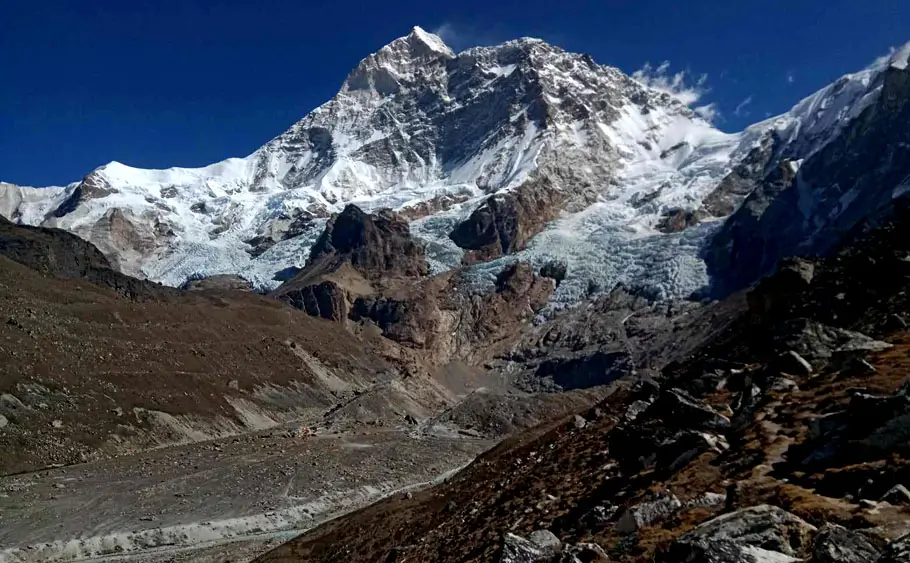
⦁ Reach the base of the world’s fifth tallest peak, Mount Makalu, to witness breathtaking views of Makalu, Everest, Lhotse, Peak 3, and more
⦁ Thrilling crossing of the high glaciated passes of Sherpani Col and West Col
⦁ Sensational views of Makalu, Kanchenjunga, Jannu, Baruntse, Lhotse, Everest, Ama Dablam, Pumori, Thamserku, and Kangshung
⦁ Traverse the Amphu Lapcha Pass and follow the iconic Everest Base Camp trail through Dudh Koshi and Bhote Koshi Valleys
Trip Overview
Wouldn’t it be fun to draw a line between the two Nepalese Giants, Makalu and Everest, and then take on a once in a lifetime trek across them? Our 22 days Sherpani Col Pass trek is precisely the adventure that will enable you to walk across this line that connects the eastern Khumbu to the Makalu Barun region which is also the starting point of our expedition.
Also referred to as Sherpani Col Pass trek via Makalu 22 Days, Ice Col Trek, Makalu Three Pass Trek, and Makalu to Everest via Three Pass Trek, this trekking adventure is not just a regular hiking but a mountaineering expedition. It leads you deep into the Arun and Barun Rivers Valley which involves the legendary crossing of the three high mountain Passes, two of which are over 6000 m.
Inaugurated in the early 1990s as an extension to Sagarmatha Park, the best hike to Sherpani Col Pass trek via Makalu is part of the Great Himalayan Trail (GHT). It is considered one of the longest high-mountain routes in the world, the total length of which is 4,500 kilometers.
During the initial stage, the 22 days hard hike to Sherpani Col Pass Trek will let you follow one of the largest rivers in the country, the Arun River. The path then leads you to the uninhabited areas of the upper Arun valley beyond the medium passes of Shipton La, and Keke La up to the Makalu Base Camp at 4870 m altitude.
Then traversing deep into the Barun Valley, you will encounter the two mystical glaciated Passes of Sherpani Col at 6190 m and West Col at 6135 m on your way to Baruntse.
Then a snow-covered plateau offers itself as a path by which you will finally join the usual trail of Everest Base Camp after crossing the last but not least Amphu Lapcha Pass at 5848 m. This glacial setting will then descend you to Namche, Lukla, and Kathmandu.
Additionally, through our Sherpani Col Pass Trek via Makalu, you will discover the protected spaces and rare wildlife of Makalu Barun National Park. You will first walk through the hilly landscape and soon stumble upon the indigenous populations of Rai, and Limbu.
Then the final leg of the Sherpani Col Pass Trek will take you through the picturesque high alpine Kharkas (yak pastures) before you reach the junction of Dudh Koshi and Bhote Koshi Valleys, where you can witness the traditional way of life of the Sherpa community.
The lifetime hike to Sherpani Col Pass Trek via Makalu is an ultimate adventure that combines trekking, mountaineering, and cultural exploration leading you to the still REAL Nepal where the influence of globalization has so far still had little impact.
However, this Sherpani Col Pass Trek is a challenging journey that resembles a mini expedition that every ambitious extreme mountaineer must take at least once in life.
How does our journey begin?
The Sherpani Col Pass trek will begin with a flight to Tumlingtar and a drive to Num Village. Then walking through the charming villages of Arun Valley, you will make your way to Makalu Base Camp overcoming the medium Shipton La Pass (4125m) and Keke La Pass (4170m).
The next stage will take you through the remote villages of Barun Valley to conquer the Sherpani Col and West Col Passes. You will then cross another prominent pass of Amphu Lapcha to step into the Dudh Koshi valley of Sagarmatha from where you will return to Kathmandu via Namche and Lukla.
Sherpani Col Pass Trek 22 Days Itinerary
01
Day 01: Arrival at Kathmandu Airport
Namaste and greetings from the Land of the Himalayas! Thank you for choosing us to be your reliable companion in your Sherpani Col Pass Trek. One of our representatives will receive you at TIA and drive you to your hotel in the city center.
Please rest and get acquainted with the atmosphere of the capital. You can take a free stroll on your own in the evening through the colorful alleys of the city. Our tour guide will meet you the next morning for a short briefing about the tour.

Max Altitude
1300 m.
Activity
Arrival on Nepal
Meals
Breakfast
Accommodation
5-Star Hotel 02
Day 02: Official Procedure and Preparation Day
Enjoy your lovely morning in the capital with the beautiful views of the Himalayas in the distance. After your breakfast, our tour guide will meet each group member in the lobby, introduce you to each other, and give a briefing about the Sherpani Col Pass trek. Please ask if you have any doubts or inquiries.
He will also check your equipment and help you out in purchasing or renting the needed one. He will also collect your documents so our team can obtain the required permits for the trip.
Now, we have time to visit the chaotic yet beautiful sites of the capital including short visits to Monkey Temple, Boudhanath, Pashupatinath, and Basantapur Square.
Please sleep early as our marvelous adventure will begin from tomorrow.
Max Altitude
1300 m.Activity
Preparation DayMeals
BreakfastAccommodation
5-Star Hotel 03
Day 03: Fly from Kathmandu to Tumlingtar 35-40 minutes then drive to Num
We will depart to the domestic terminal of TIA early in the morning to fly to Tumlingtar- a small town beside the Arun River. The 35-minute flight will take us in an easterly direction high above the mountains of Ganesh Himal, Kanchenjunga, Everest, Gaurishankar, Everest, and many more.
At the airport, our accompanying team will greet us relieving us of our luggage. Then, we will drive up the Arun Valley through the first section of the enormous gorge, passing through a subtropical landscape. En route, we will pass by the rice fields of Khandabari and Hururu to reach the small town of Num.
We will make ourselves comfortable in the cozy lodge of Num and rest for the next day’s trek.

Duration
5-6 hours.Max Altitude
1560 m.Activity
Flight / DriveMeals
Breakfast, Lunch, DinnerAccommodation
Local Teahouse 04
Day 04: Trek to Seduwa
We will depart from the charming Num Village in the morning after breakfast then march to Seduwa. We will first cross the mountain ridge and proceed through the numerous paddy fields towards Lumbang. We will then climb down on a sustained slope until we reach the suspension bridge over the wild Arun River. Mind you descent is quite steep taking us down by about 900 m so caution is particularly needed.
After crossing the river, we will begin a steep climb of about 750 m up the slopes toward Seduwa. Along the route, our permits for the Makalu Barun National Park will be examined as we are now in the protected region of the Park.
Duration
5-6 hours.Max Altitude
1500 m.Activity
TrekkingMeals
Breakfast, Lunch, DinnerAccommodation
Local Teahouse 05
Day 05: Trek to Tashi Goan
Today, we have a short walk towards Tashi Gaon. After breakfast, we will begin our march in a northwesterly direction to climb the ridge surrounded by the Isuwa Khola on the west and Kasuwa Khola on the east.
Along the way, we will traverse the traditional farmlands of Navagaon and Kharsing Kharka before reaching Tashi Gaon. After some rest, we will explore the small village for a few hours.
Duration
4-5 hours.Max Altitude
2100 m.Activity
TrekkingMeals
Breakfast, Lunch, DinnerAccommodation
Local Teahouse 06
Day 06: Trek to Khongma danda
We have a fairly difficult challenge today as we will be gaining 1400 m elevation today so we will walk gradually with no hurry. Leaving Tashi Gaon after breakfast, we will head north and follow a ridge.
Gaining the height, we will walk through the humid forest for about 3 hours, and reach Dhara (2867 m). The small village has a tea shop where we can stop for some refreshments.
The landscape gradually gives way to alpine bushes and rocky stairs as we head on with our journey. The path follows a sharp climb now leading us to the 3200 m high village of Unshisha. We have to now gain 300 m more elevation via a steep climb to reach Khongma where we may see some yaks grazing nearby.
Duration
6-7 hours.Max Altitude
3500 m.Activity
TrekkingMeals
Breakfast, Lunch, DinnerAccommodation
Local Teahouse 07
Day 07: Acclimatize Day
Today is a free day and is mainly used to acclimatize to the altitude for the coming days of trekking. There is the option of short hikes in the area or we can climb the Kauma La Pass (3603 m) one hour away from the village.
Activity
Short Hike / Rest DayMeals
Breakfast, Lunch, DinnerAccommodation
Local Teahouse 08
Day 08: Trek to Mumbuk (Dobato) (3540m) via Shipton La Pass (4125m) and Keke La Pass
We have to rise early today and get ready for the long and tough hike involving the crossing of numerous Passes above 3500 m.
First, the path climbs through the thin rhododendron thickets and comes out to chortens installed on the Kauma La Pass. Now the trail goes along the ridge.
There may be snow along the trail now. We will overcome the first pass of Shipton La decorated with numerous prayer flags and chortens. The pass is named after Eric Shipton, a participant in Hillary’s Himalayan expeditions.
From the Pass, we will climb down and reach the basin of Kalo Pokhari Lake. Then, again going up, we will traverse the slope to reach Keke La Pass.
The initial slope leading to the Pass is quite easy but the middle part of the slope is approximately 45-50 degrees and we will have to trample steps in the snow. At the top, the mountains of Peaks 6 and 7, Makalu and Chamlang will be waiting for us.
The fourth and final Pass we now have to tackle is Tutu La at 4075 m before reaching Dobato. From Dobato the trail goes downhill and then goes along the slope through a pine forest to the town of Mumbuk marking our entry in the Barun River Valley.
Duration
7-8 hours.Max Altitude
4170 m.Activity
TrekkingMeals
Breakfast, Lunch, DinnerAccommodation
Local Teahouse 09
Day 09: Trek to Yangla Kharka
After we depart from Dobato, our path now gradually descends and turns left along the slope, finally reaching the Barun River. Going down to the river,
the trail follows its southern (right) bank mainly along the scree. We will cross the river on a bridge, and hike through a series of large landslides where there can be many rocks and the line of the trail may not be clear in some places.
After traversing a long slope, we will now climb gently and the valley begins to open up leading us to Yangla Kharka. The landscape is magnificent here, with small patches of alpine grass adorned with flowers, lichen-formed spruce trees, and rocky boulders.
Duration
5-6 hours.Max Altitude
3557 m.Activity
TrekkingMeals
Breakfast, Lunch, DinnerAccommodation
Local Teahouse 10
Day 10: Trek to Langmale Kharka
After breakfast, we will march to the north side of the Barun River and arrive at Nghe Kharka where we can visit its small artistic monastery offering beautiful views of the surrounding Himalayas.
The route now climbs through the pine forest to take us to Yak Kharka and Merek Camp at 4010 m. After some rest, the path again ascends slightly leading us to the crossing of two streams.
Then a wooden bridge will lead us to the other side of the Barun River where the pine trees are now replaced with thin grassy meadows. We will now climb up the meadow to reach the Langmale Kharka.
400 m ahead toward the northwest, we can find a few rustic tea houses where we can settle for the night enjoying the fascinating views of Peaks 6 and 7, Yaupa, Chamlang, and Honku Chuli.
Duration
4-5 hours.Max Altitude
4410 m.Activity
TrekkingMeals
Breakfast, Lunch, DinnerAccommodation
Local Teahouse 11
Day 11: Trek to Makalu Base Camp
Our tour today will be in an alpine and high-altitude environment. We will leave the forest behind and hike along the sandy plain. Slowly the lower Barun Glacier will be in sight as we arrive at Shershong pasture elevated at 4650 m.
Turning right, we will walk along the Barun River shore until we reach a wooden bridge. After crossing the river, we will arrive at Makalu Base Camp where amazingly we can find warm lodges for our overnight stay.
The huge rock pyramid of Makalu at 8485 m towers above us making us feel so tiny.
Duration
5-6 hours.Max Altitude
4870 m.Activity
TrekkingMeals
Breakfast, Lunch, DinnerAccommodation
Local Teahouse 12
Day 12: acclimatization (rest day)
Today, you can take a lovely day trip to a nearby mountain with a great view or you can simply relax in the camp and enjoy the landscape and take it all in. If you decide to hike to nearby Viewpoint, then the glorious Everest and Lhotse will be waiting for you.
For the acclimating hike, we will cross the Barun Glacier River from where the path takes us up the eastern ridge of Makalu on a moderately steep serpentine path. We will then slowly pass the 5000m altitude mark and the hiking trail gradually becomes flatter until we reach a plateau at an altitude of around 5220m.
We are now standing directly in front of Peak 3 (6,682 m) and the mighty Makalu. We can also see the east face of Everest, and the glaciated peak of Lhotse on the northwest horizon. After a sufficient break, we will return to base camp following the same route.
Activity
Rest day / short hikeMeals
Breakfast, Lunch, DinnerAccommodation
Local Teahouse 13
Day 13: Trek to Swiss Camp
We will leave the Makalu Base Camp and climb slowly and comfortably towards Swiss Camp with a wonderful view of Everest, Lhotse, and Makalu. We will head west and walk along the side moraine of the Barun glacier, on the right we can see the majestic Makalu standing delightfully.
Advancing over the trail covered with huge rock boulders and ice, we will reach The Swiss Camp where we will set up our tent for a peaceful night stay.
Later on, our guide will show us how to use crampons, and harnesses, and navigate along the fixed ropes.
Duration
5-6 hoursMax Altitude
5150 m.Activity
TrekkingMeals
Breakfast, Lunch, DinnerAccommodation
Local Teahouse 14
Day 14: Trek to Sherpani col base camp
Waking up early in the morning, we will dismantle our tents after breakfast and march towards the Sherpani Col Base Camp located at almost 5700 m.
We will climb the steep rocky slope of the Barun Glacier and continue walking till we reach the site nestled between the two small glaciers. We are at the base camp or advance camp now where we will put up our tents for a restful night as much as possible.
We will practice one more time with crampons, harness which come in handy for tomorrow’s test as we will reach the highlight and highest destination of our Sherpani Col Pass trek.
Duration
5 hoursMax Altitude
5690 m.Activity
TrekkingMeals
Breakfast, Lunch, DinnerAccommodation
Local Teahouse 15
Day 15: Trek to to Honku Basin (5500m) and cross Sherpani Col (6190 m) via West Col
We will cross the mighty Sherpani Col today, a task that will be arduous and time-consuming. So, we will wake up in the dark at around 3 am, dress warmly, pack our gear, and commence our trek around 4 am.
Our path first leads along a gently rising glacier field where we may have to use crampons and harnesses. Then, we will steeply climb to the Sherpani Col using the fixed ropes. The last section 100 m down from the Pass is pretty hard regarded as grade 4 rock climbing.
Congratulations! We have reached the top of the Pass where sensational views of Makalu, Kanchenjunga, Jannu, Baruntse, Lhotse, Everest, Ama Dablam, Pumori, Thamserku, Kangshung surrounds us.
After the obligatory summit photo, our descent begins steeply down a rock face through the fixed rope. Once we reach reach the bottom, we will follow the flat West Barun glacier, and reach the ridge of West Col Pass. Overcoming 150 m 45-60 degrees inclined slope, we will reach the West Col Pass.
From here, we will descend over the West Col snow and rock gully using the fixed rope. Next, a 200 m slope inclined at 30 to 45 degrees will lead us to Hongu Glacier from where we will now climb down to Honku Basin passing by the advanced Barunste base camp.
The Honku Basin is located in an absolutely picturesque landscape. The Honku Chuli (6,833 m), Baruntse (7,152 m), Kali Himal 6,985 m and Hunku (6,119 m) dominate the 360-degree panoramic view.
Duration
10-12 hours.Max Altitude
6190 m.Activity
Highest pass, Sherpani ColMeals
Breakfast, Lunch, DinnerAccommodation
Local Teahouse 16
Day 16: Trek to Amphu Lapcha Base Camp
Today, our trail will continue along the narrow Honku glacier basin as we advance towards the western peak of Kang Leyamura (6430 m). descending little, we will walk around the small glacial lake and continue to climb steadily until we reach Panch Pokhari (Five Lakes).
We will continue hiking along the northern side of the lake and then reach the base camp of the Amphu Lapcha pass – a remarkable site to watch the Hinku glacier and the Mingu La pass.
Duration
6-7 hours.Max Altitude
5527 m.Activity
TrekkingMeals
Breakfast, Lunch, DinnerAccommodation
Local Teahouse 17
Day 17: Climb over Amphu Lapcha La pass (5848m) to Chhukhung
Another hard yet rewardful day when we set off to cross the Amphu Lapcha Pass. The path ascends amid the steep seracs for about two hours till we reach the two railing sections. We will cross these sections using jumar and climb along the gentle slope for about an hour to reach the top of the Pass.
Below the Pass, we can see the Panch Pokhari glistening under the morning sun, while on the other side, we can see Lhotse wall, Baruntse, West Col, Mera Peak, Island Peak, Everest, Makalu, Chamlang, Cho Oyu, and Hongu Basin.
We will now climb down from the Pass once again using crampons, and harnesses. There are steep passages to overcome that are secured with fixed ropes.
With every step deeper, we are approaching the Khumbu region and can feel the breath of Lhotse and Mt. Everest. We will now follow the lateral moraine of the Baruntse glacier and walk straight towards Island Peak. A large glacial lake blocks the way, so we will go around the lake on the left and then reach the small village of Chhukung after about 3 to 4 hours. From now on, the Ama Dablam (6,841 m) will enter as our companion.
Duration
9-10 hours.Max Altitude
4720 m.Activity
High PassMeals
Breakfast, Lunch, DinnerAccommodation
Local Teahouse 18
Day 18: Trek to Pangboche
Our path from now runs through the classic Everest Base Camp trail. After we leave our lodge in Chhukung, we will pass through the lush vegetation along the Imja Khola. Past the small villages of Orsho and Shomare, we will reach Dingboche in about 1.5 hours.
Continuing our trek for an additional 2 hours, we will walk past the western ridge of the Imja Khola and enter the Dudh Koshi Valley. En route, we can breathe in the cool breeze of the Ama Dablam and Taboche Peak.
We will now gradually climb down to Pangboche with the famous Gompa under its lap. The Yeti skull said to be kept here had been stolen in the 1990s but the replica had been returned to the monastery.
Duration
5-6 hours.Max Altitude
4260 m.Activity
TrekkingMeals
Breakfast, Lunch, DinnerAccommodation
Local Teahouse 19
Day 19: Trek to Namche Bazaar
After leaving the accommodation of Pngbcohe, we will walk for about an hour and a half towards Debuche. Walking amidst the tropical forest for about an hour, we will arrive at the beautiful monastery of Tengboche.
The trail now climbs down steeply for about an hour to Phungi Thanga (3250 m). we will then cross the bridge and steeply go up toward Sanasa Village. The route now splits- one leading to Gokyo and another leading to Namche.
We will follow the second trail and walk past the Kyangjina village, we will finally arrive at Namche Bazaar where Thamserku, Lhotse, Everest, and Ama Dablam will bless us with their majestic views.
Duration
5-6 hours.Max Altitude
3440 m.Activity
TrekkingMeals
Breakfast, Lunch, DinnerAccommodation
Local Teahouse 20
Day 20: Trek to Lukla
After breakfast, we will descend almost 1000 meters to the confluence of Dudh Koshi and Bhote Koshi Rivers, cross the rivers over a metal bridge, and continue hiking through fragrant pine forests and pass small villages of Jorsalle, Monjo, and Benkar to reach Phakding.
Then, marching through Ghat, Thadokoshi, Chheplung, and Chaurikharka, we will arrive at Lukla thus ending our trek.
Duration
5-6 hoursMax Altitude
2830 m.Activity
TrekkingMeals
Breakfast, Lunch, DinnerAccommodation
Local Teahouse 21
Day 21: Fly from Lukla to Kathmandu.
Waving goodbyes to our Sherpas and Himalayas, we will fly to Kathmandu and return to the comfort of our hotel. You will have plenty of time to shop, relax, and unwind in the enchanting environment of the capital.
Duration
35 mins. Domestic flightMax Altitude
1300 m.Meals
BreakfastAccommodation
3-Star Hotel 22
Day 22: Departure from Nepal
The Sherpani Col Pass trek has now come to an end. We hope we have been your true friend and serve you well during this trip. As our concluding service, we will drive you to TIA for your return flight home.
Meals
BreakfastAccommodation
ExcludedIncludes & Excludes
What is included?
- Airport pick up / drop off ( private Car )
- Accommodation 3* star hotel twin sharing room ( 2 nights in Kathmandu with breakfast)
- Domestic Flight from Kathmandu to Tumlingtar then drive to Num village
- Domestic Flight from Lukla to Kathmandu and all airport private transportation.
- All meals included during the trekking breakfast, lunch, dinner, and tea
- Accommodations, local tea house twin sharing room, and camping tent.
- Down jackets, duffel bags, sleeping bags, and trekking poles are provided by Hill Sherpa Trekking but should be returned after the trek (if you need them)
- Makalu barun national park permit and (TIMS)
- Everest Sagarmatha National Park entry permit
- Khumbu Pasang Lhamu rural municipality entry fee.
- During the camping company provides all kitchen, dining, all cooking utensils, sleep tent twin
- sharing, and toilet tent. unlimited tea/coffee, hot water, food
- Government licensed holder, speaking English, great experience climbing guide.
- All staff’s wages, food, drinks, accommodations, transportation, and Insurance.
- Sherpa helper will manage according to the group size for carrying clients’ baggage and camping equipment (porters)
- Hill Sherpa Trekking first aid Kit carrying by guide and climbing gear Ropes, Snow bar, Rock piton, ice screw, etc
- Helicopter service is covered by your travel insurance in case of Emergency.
- All government taxes and official expenses & ground transportation.
- Oxy meter for checking pulse, level (AMS) Acute Mountain Sickness.
- Hill Sherpa Trekking provides a complementary sunblock Cap.
- Water purification tablets for tap water.
- Trip Certificate Provides by Hill Sherpa Trekking.
What is excluded?
- International airfare tickets.
- Nepal entry visa fee, visa obtains on arrival at the international airport in Kathmandu.
- Additional accommodations, food, and drinks in Kathmandu if you stay extra day.
- Your personal medical & travel insurance.
- Desserts, sweet items like chocolate, cake, pie, pudding, any extra expenses.
- Excess baggage weight is 15 kg maximum.
- During the trek hot showers, mobile, camera, power bank any batteries charging, Wi-Fi internet.
- Kathmandu sightseeing entrance fees are 30 USD per person.
- Personal climbing equipment
- Personal first aid kit.
- Tips for guide & porters ( tips is most expected)
Note:
We also operate private trips.
Trip Information of Sherpani Col Pass Trek 22 Days
Best Time to Sherpani Col Pass Trek
The best season for the Sherpani Col Pass trek is autumn and spring, more precisely March, April, May (Spring), September, October, and November (Autumn).
The Sherpani Col Pass trek climate during these periods will be predominantly dry in all parts of the trek featuring the famous climate with an open sky and a cold, but pleasant climate. Temperature can dwell around 20 degrees Celsius in the daytime and can fall to -0 to 5 degrees at nighttime.
We may encounter winds and adversities along the way, but nothing so intense that it poses risks. Summer (June to August) features monsoons that bring high temperatures and the presence of dust and pollution, damaging the clarity of the mountains. Winter in Nepal occurs between December and February, characterized by clear skies but negative temperatures in the high mountains.
The Sherpani Col Pass trek passages to the high Passes will be covered with snow bringing the closure of the trail.
Sherpani Col Pass Trek Elevation and Distance;
The journey for the Sherpani Col Pass trek via Makalu begins in the town of Tumlingtar, which can be accessed by flying in a small plane from Kathmandu. During the 35 to 40 minutes of the flight, we will cover a total distance of 191 km in the air.
From Tumlingtar, we then travel by road to the small village of Num, located 29 km from Tumlingtar and 201 km from Kathmandu. The trek lasts for 22 days, leading us to the three massive glaciated Passes of Sherpani Col Pass at 6190 m, West Col Pass at 6135 m, and Amphu Lapcha Pass at 5848 m.
This Sherpani Col Pass trek is a unique trek that takes us through the deep valleys of the Arun River, spanning approximately 52 km, and Barun Valley, spanning about 46 km.
The highest point of the entire Sherpani Col Pass trek is the Sherpani Col Pass itself, with the highest overnight stop at the Sherpani Col Pass base camp, situated at an elevation of 5690 m.
Maximum/Minimum walk per day
Our Sherpani Col Pass trek spans 22 days and includes 17 days of extensive hiking. This challenging journey will take us through the diverse landscapes of Arun and Barun Valley, ultimately leading us to the breathtaking Bhote Koshi and Dudh Koshi valleys.
The Sherpani Col Pass trek each day, we can expect to hike for an average of 5 to 7 hours, covering approximately 15 to 20 km on foot. However, on day 5, we will enjoy a relatively easier and shorter walk, as we make our way from Seduwa village to Tashi Gaon in just 4 to 5 hours.
The Sherpani Col Pass trek is the most demanding part of the journey occurs on day 15 when we travel from Sherpani Col Base Camp to Honku Basin, crossing the massive Sherpani Col and West Col passes with a trek lasting 10 to 12 hours.
Another challenge awaits us on day 17, as we begin the crossing of the Amphu Lapcha Pass from its base camp and descend to Chhukung, taking us 9 to 10 hours on foot.
Difficulty and Acclimatization for Sherpani Col Pass Trek
The Sherpani Col Pass trek via Makalu is considered the highest and most demanding trekking route graded level 5 trekking journey. The trek route corresponds to a high alpine expedition throughout and takes 17 days to complete.
The Sherpani Col Pass trek access to the three high Passes is long, as is the exit trek via Amphu Lapcha, which means that a good part of the acclimatization is done on trekking paths. There are two rest days in between the trek one on day 7 at Khongma and the other on day 12 at Makalu Base Camp. Approach to the Sherpani Col and West Col is integrated with a minimal walk of 5 to 6 hours.
Please remember that the access to the Passes needs traversing over rocky passages and icy terrain. Some sections will be more complex notable on ice with 50 degrees inclination which requires the use of harnesses, crampons, and fixed ropes to facilitate the ascent and descent.
The crossing of the two high Passes above 6000 m can be considered as the climbing to the 6000 m peaks of Mera, Lobuche, or Island. Additionally, the actual daily walks have an indicative average duration of 5-7 hours with peaks of 9 to 12 hours and more for some stages.
Can a beginner join this trek?
For those who are new to high-altitude trekking in Nepal, we don’t advise you to attempt our Sherpani Col Pass trek as your first experience. And this trek is definitely not for families, teens, kids, and senior citizens.
This Sherpani Col Pass trek is one of the toughest treks traversing you from Makalu to the Everest region It includes walking on deep snow, and glacial paths, overcoming the steep ridges, and tricky sections.
Some technical expertise is a must that needs you to use crampons, harnesses, and fixed ropes for the tricky ups and downs along the high Passes. Yes, our guide does provide some training but the training session on site still may not be enough to tackle the risks you may encounter on the trail.
Additionally, numerous days will lead you to the isolated zones where you have to spend nights in tents. There may also be potential dangers of avalanches, especially after fresh snow. The weather represents a risk to consider. The very high altitude is also a factor not to be forgotten.
Sherpani Col Pass Trek Preparation and training
The challenging Sherpani Col Pass trek requires past experience in high-altitude trekking in either Nepal or your own home country. Even if you have previous trekking experience, we strongly recommend preparing yourself physically at least 6 months before engaging on this journey.
You can start with complementary exercises such as running, walking, swimming, biking, squats, push-ups, and pull-ups. However, please note that these activities are just the initial phase of your preparation, and you should gradually progress to the next level.
You can participate in crossing the mountain trails as the practice of trekking in natural environments. This will, to a lesser extent, reproduce the type of exercise performed when climbing the mountain Passes above 6000 m such as carrying a heavy backpack, overcoming differences in level and obstacles, etc.
We also suggest you take on easy to moderate trekking trips in Nepal such as Everest Base Camp, Annapurna Base Camp, and Ghorepani Poon Hill if you are looking for an easier than Sherpani Col Pass trek.
Alternate Route of Sherpani Col Pass Trek
Instead of following our recommended route to the Sherpani Col Pass trek, you have the option to take the opposite direction. Our original route takes you through the Makalu region before reaching the Everest Region.
Alternatively, you can start from the Everest region and then proceed to the Makalu region, crossing the relatively easier Amphu Lapcha Pass first. To do this, you will need to take a flight to Lukla and trek through Phakding, Namche, Dingboche, and Chhukung. Finally, you will move on to the Amphu Lapcha Base Camp and cross the pass.
Next, you will progress towards Honku Basin by passing through Baruntse Base Camp and traversing the West Col and Sherpani Col Passes before reaching Makalu Base Camp via Swiss Camp.
Then, you will journey to Langmale and Yangla Kharka, then continue to Dobato where you will overcome the medium Passes of Keke La and Shipton La. After that, you will hike through Khongma, then proceed to Seduwa and Num. Finally, you will drive to Tumlingtar and take a flight back to Kathmandu during the Sherpani Col Pass trek.
Sherpani Col Pass Trek Altitude Sickness
We cannot ignore the risk of altitude sickness in our Sherpani Col Pass trek. From day 6, we will be trekking at altitudes above 3000 m. The elevation will progressively increase, eventually leading us to an altitude of more than 5500 m and 6000 m. For 13 days, we will be sleeping at elevations higher than 3400 m, so yes, there will be the risk of altitude sickness.
We therefore cannot neglect the importance of acclimatization which will help our bodies to get used to the high-altitude air of the Nepali Himalayas. Not all but some may feel the sickness during ascent and even descent along the trail.
Most of our participants have gone through mild headaches, drowsiness, vertigo, appetite loss, and some difficulty in breathing. Our accompanying team always carries the first aid kit for dealing with injuries and altitude sickness. Our guide is also properly trained and experienced in handling these types of situations.
So you can take Diamox if our guide advises you to which will help you get rid of the condition within 3 to 4 hours. But remember to drink lots of water and take plenty of soups as this is a diuretic drug. In some cases, the symptoms may persist, if so, one of our team members will take you to lower heights until your health improves.
Transportation, Accommodation, Meals and Drink
As part of our Sherpani Col Pass trek via Makalu trip package, we offer you airport pick-up and drop-off transfers to your hotel. We will also arrange a private vehicle for a sightseeing trip in Kathmandu. We will also take care of all your domestic airline tickets from Kathmandu to Tumlingtar and from Lukla back to Kathmandu. You will drive comfortably in private transport from Tumlingtar to Num village from where your hike commences.
During your stay in Kathmandu, you will be accommodated in a 3-star hotel for a duration of 3 nights with breakfast included. Throughout the trek, you will sleep in local tea houses or lodges, where you will be provided with breakfast, lunch, dinner, and tea. Additionally, fresh fruits will be served daily after dinner.
Our Sherpani Col Pass trek for a comfortable stay during camping, we will supply all necessary tents, kitchen equipment, dining facilities, and a toilet tent. You can expect unlimited food, tea/coffee, and hot water at the camping sites.
Communication, Gadgets charging, and Internet/wifi
NCELL and Namaste mobile networks work well in the city and lowland areas and certain high-altitude villages. However, in the isolated regions of Arun and Barun Valleys, the network coverage is limited and there may be no signal at all.
For the Sherpani Col Pass trek our team will carry the satellite phone that allows us to communicate anywhere in the world. You can use this phone to talk to family and will only pay the cost per minute, which is currently $1 to $3.
Wifi is available in the cities but at the shelters of the remote villages, the service costs you a few NPR from 300 to 500 per hour or per person. When camping, the WIFI is of course not available. On the availability of NTC or NCELL signals, you can use their internet data packages.
In the shelters, you can charge your electric gear and devices at additional cost. Please carry extra batteries, and a power bank for your mobile and camera during camping.
Permits for Sherpani Col Pass Trek
The Sherpani Col Pass Trek will take us through the remote setting of the Makalu region and most of our treks will be confined within the Makalu Barun National Park. Therefore, for this trek, we need a Makalu Barun National Park permit and a special permit for entrance into the remote areas of Makalu.
Since at the end of the journey for 22 days Sherpani Col Pass Trek, we will pass through the protected region of Sagarmatha, we will also obtain the Sagarmatha National Park permit and Khumbu Pasang Lhamu Rural municipality permits.
We will take care of securing these permits as your representative in Nepal.
Equipment List

General Information
- The company provides feather sleeping bags but it should be refunded after the trek.
- The company provides a feather-down jacket but it should be returned after the trek.
- Hill Sherpa Trekking provides a duffle bag during the trek but it should be returned after the trek.
- The company mostly recommends for morning and evening, The windproof and waterproof thin layered jacket above 3450m.
- The company mostly recommends daypack bags of 35-45 ltr.
- Headlamp & extra batteries during the trek

Daily Use Essentials
- A Sun Black Cap & Fleece hat
- Sunglasses 100% snow UV protection
- A muffle (full-cover mask)
- Sunscreen (30+ to 60 SPF depending on age)
- A pair of thin & warm gloves
- A pair of Trekking poles
- Water bottle & filter
- Water purified tablets
- lips guard

Upper Body Essentials
- Warm hat
- A pair of t-shirts
- Thermal tops
- Sports bras for ladies
- windproof & fleece jacket
- waterproof jacket

All Lower Body
- waterproof trouser
- warmer & fleece trousers
- A pair of Comfortable trekking pants
- Extra comfortable sports pants
- A pair of sports shoes
- Thermal underwear
- A pair of comfortable waterproof trekking boots
- Pair of light sandals
- Some Thick (woolen) socks
- Sock liners
- Light shoes

Essential Climbing Gears
- Helmet
- Harness
- Ascender
- Descender
- Carabiners 4 locks, 2 unlocks
- Tape Celling – 120 cm
- Alpine boots in good condition & fit the side
- Crampon good condition for an alpine boot
- Ice-axe Normal

Personal Medical and First Aid Kits
- Diamox (125mg to 250mg tablets for AMS)
- Adhesive bandages and pocket masks
- Non-stick pad W/ Adhesive
- Ibuprofen & paracetamol tablets IP
- Some Assorted adhesive bandages
- Warps, splints, wound coverings butterfly bandages
- Blister treatment cream or similar
- Insect / anti-itch ointment
- Moves in case sprain anybody
- pain-relief medication
- Sinex, & Eye Drops, etc.
- Gauze sponge
- Saline solution
(Note: first aid kits & medicine will be carried with our company’s guide during the trekking However, we recommend you bring your first-aid kit)

Important Things
- passport size photos with original passport copy
- Flight details (to pick you up & transfer to hotel)

Extra Essential Things
- Energy gel or dry foods (that’s your desire)
- The power bank is most important for the backup device (if you have one)
- Camera, chargers, extra batteries, memory card)
- Most important for ladies’ essentials things (if you are ladies)
Addons & Options for Sherpani Col Pass Trek 22 Days
Addons
Price
Upgrade to 4 star hotel in Kathmandu
US$
260
Upgrade to 5 star hotel in Kathmandu
US$
380
Full Camping Trek
US$
$
Extra Porter
US$
$
Frequently Asked Questions
Which route is better: your designed route or the alternate route you have suggested above for the Sherpani Col Pass trek?
We suggest our designed route as it prioritizes effective acclimatization by starting from the lower altitude of Tumlingtar and gradually increasing in elevation. This gradual ascent provides ample opportunity to adapt to the high-altitude air. On the other hand, departing from Lukla for the Sherpani Col involves a shorter journey but lacks the necessary acclimatization process due to sudden changes in elevation.
Is Sherpani Col Pass 6,155 meters?
Yes, It is 6,155 meters in Nepal, The government requires peak climbing permits above six thousand meters but The Sherpani Col Pass Trek is climbing without a six thousand climbing permit as well and you will pass all the way to Baruntse Expedition camp 1 down to reach the Everest region.
Will you provide any equipment for this trek?
Yes, we will provide you with a warm Down Jacket, Sleeping Bag, trekking Poles, ropes, and snow bar, which are important to use in the mountains, all trekking tents, a kitchen, and dining, porters, a local chef, (trekking cook) all assistants, climbing guide for this trek.
How much money should I carry and in what forms?
Please carry an extra USD 500 for emergencies. You will need to pay extra for lunch and dinner in Kathmandu, which are not included. It is recommended to always carry change in Nepali currency because the remote villages only accept the national currency, and a visa card means nothing acceptable because lack of internet.
Is travel insurance mandatory?
Yes, travel insurance is mandatory for the Sherpani Col Pass trek. It is important to note that this insurance must have coverage for high-altitude trekking in heights exceeding 6000 m.
Will I be sharing a room or accommodation with another member?
All of our itineraries include double rooms, depending on the number of participants. You will definitely be sharing a room with a fellow traveler.
Is Sherpani Col Pass Trek Technical and Required Climbing Gears?
Yes, The Sherpani Col Pass Trek requires all climbing gear because the pass is the most technical and highest trekking pass in Nepal so without preparation nobody can’t do it.
Reviews on Sherpani Col Pass Trek 22 Days


US$ 4799 per person For a group of 17-24 pax.
- 1 personUS$ 5399
- 2 - 2 personUS$ 5149
- 3 - 6 personUS$ 5099
- 7 - 12 personUS$ 4999
- 13 - 16 personUS$ 4899
- 17 over 9999 US$ 4799
US$ 4799

Talk to Trip Expert
+977 9704823980 (Whatsapp)
✖
Free Travel GuideGet Expert Guidance from Experienced Sherpas