Govt. Tourism License 3195/080/81







US$ 875 per person For a group of 7-12 pax.
- 1 personUS$ 1079
- 2 - 2 personUS$ 999
- 3 - 6 personUS$ 949
- 7 over 9999 US$ 875
- Best Price Guarantee
- Secure Online Booking
- Flexible booking dates
- Owner operated company
- Decades of experience
- Dedicated sherpa team
- 100% success rate
- 5/5 ratings by travelers


Highlights of Short Trek to Everest Base Camp – 9 Days
- A circular route beginning and concluding at the charming mountain town of Lukla
- The most complete and well-organized short program for Everest Base Camp
- An intoxicating mountain flight over the High Himalayas and landing at the most iconic Airport in the world
- Routes in some of the most remarkable Himalayan landscapes in the World
- Visiting the base of the tallest Peak in the globe
- Reaching the apex of Kalapatthar for the front row view of Everest, Khumbutse, Lingtren, Pumori, Lobuche, Ama Dablam, Nuptse, Khumbu, and Changri Glacier, Lhotse, etc.
Trip Overview
Who doesn’t want to experience the allure of the Himalayas- the mythical mountain range, the sacred goal for most climbers and hikers? However, time may have stood in your way but no more. We introduce you to our short trek to Everest base camp 9 days program that will take you in the bowels of the mountains of Khumbu, Nepal. And, the main goal is the base camp of Everest- the highest Peak and the King of Kings, his Majesty.
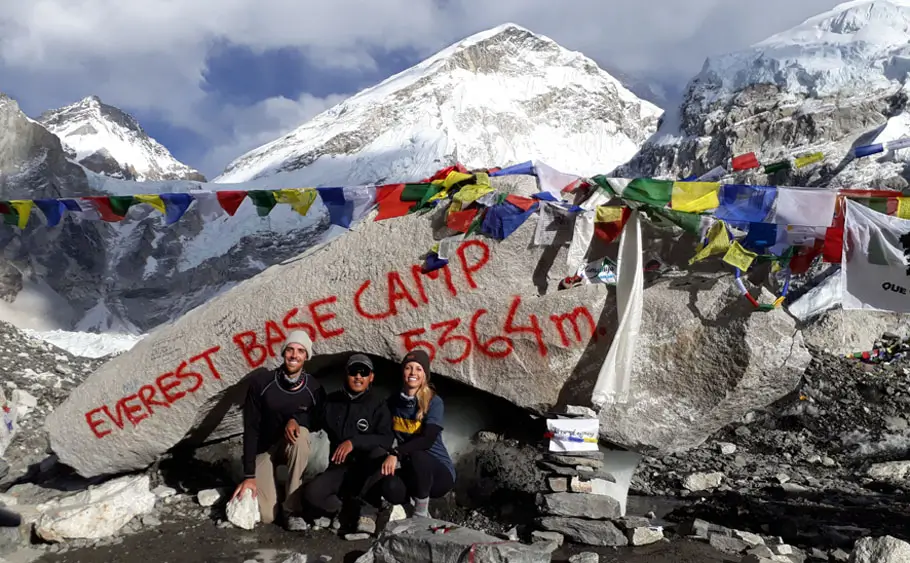
At 5364 m, the Everest Base Camp hides behind the massive snowy walls of the 5486 m high Khumbu Icefall in the majestic Sagarmatha National Park of Solukhumbu, Nepal. In 1953, this base camp guided Hilary and Tenzing to the zenith of Everest.
Since that momentous time, it has consistently fulfilled the ambitions of numerous climbers, and today, we are excited to become part of this legacy.
Our 9 days short trek to Everest base camp also offers you the thrill of getting to the top of 5550 m Kalapatthar- the most spectacular spot on the planet to see Everest.
However, our short Everest base camp trek has much more to offer beyond the great snow-white heads of the Himalayas. We promise that every nine days on this trip will be an unprecedented and unique life experience for you.
During our short trek to Everest base camp adventure, you will walk in the amazing Khumbu Valley and cross the villages of the local Sherpas thus feeling the sacred character of the area through the Buddhist monasteries that are scattered along the way. You will encounter colorful prayer flags and metal bridges with which you will cross the dreamy, deep canyons.
The rich combination of natural beauty, fascinating culture, and personal sense of achievement, as well as the warm Nepalese hospitality of the local people, make our short trek to Everest Base Camp journey one of the most unforgettable in the world.
That being said, the absence of rest days in between the walking days will make the 9 days of travel a bit difficult. However, the good news is that it’s not an extremely difficult hike that will in the span of nine days will take you to the foothills of not only Everest but other snowy ridges of the Himalayan mountains.
Thus the short Everest base camp trek 9-day journey is undoubtedly worth every bit of effort we put into our trek.
How does our short trek to Everest Base Camp adventure starts?
Our Everest base camp trek 9 days short program gets underway with a flight to Lukla. Through the huge mountain walls of the Himalayas, the plane will land on the small sloping airstrip of the village.
We will then cross the entrance of our track to the Mother Mountain. The trail crosses the Sagarmatha National Park, where we can admire the diverse flora and fauna of the area.
We will keep on walking by the several Sherpa villages (Namche, Phortse, and Dingboche), getting in touch with the authentic way of life of the Himalayan people. Climbing higher by the Khumbu Glacier, we will encompassed by the dramatic alpine terrain.
In Lobuche, we will walk between glaciers while reaching the colorful Everest Base Camp where we will find ourselves surrounded by mountain peaks with a breathtaking panoramic view.
The next day, dawn will make us ascend to Kalapatthar and take our feet back through Pangboche, Tengboche, towards Namche and Lukla.
Video Testimonials: Highlighting Memorable Moments

Short Trek to Everest Base Camp – 9 Days Itinerary
01
Day 01: Flight from Kathmandu to Lukla and trek to Phakding
Early in the morning, we will be driven to the TIA for the spectacular mountain flight to Lukla. From here, our walking adventure begins and the first impression of the mountain landscapes will accompany us forever. Mount Kongde Ri (6187 m) at the Airport shines giving us a hint of what awaits us for the rest of the journey.
As we exit the Lukla border, our guide will secure the necessary permits for our short trek to Everest Base Camp journey. We will then follow the east bank of the Dudh Koshi River which soon joins the main trail via Chheplung, Chaurikharka, and Thado Koshi.
Overlooking Kusum Kangaru (6367m), our track runs down towards Ghat and then to Phakding- a small village on the bank of a rushing river and in a dense pine forest. Our first day will be short for acclimatization reasons.
Point to Remember for a Short Trek to Everest Base Camp
The busiest trekking seasons are spring months of March-May and autumn months of October-November. Due to heavy air circulation, flights to Lukla are sometimes redirected from Kathmandu’s Tribhuvan International Airport to Ramechhap (Manthali) Airport. Ramechhap is 4 hours away from Kathmandu. To provide uninterrupted hassle-free, private transportation to be arranged from Kathmandu to Ramechhap in time for your Lukla flight.
Note: Flights to Lukla are on a first come first first-served basis, and flight schedules are wholly in the hands of the airline operators. Expect delays and reschedules, as is the trekking months norm, and be flexible for a short Everest Base Camp trek.
Helicopter Option
If you want comfort, speed, and convenience on your short Everest Base Camp trek, you can hire a direct helicopter flight from Kathmandu to Lukla for an additional cost. The helicopter option is a luxury one and costs between 500 to 600 dollars for a booking in a shared helicopter with a maximum of five other passengers.
It’s a LOT of work driving to Manthali for 4-5 hours and having to leave super early in the morning or stay the night for the busy trekking seasons. A helicopter transfer is the ideal way to avoid that. This is a growing helicopter transfer option for travelers starting short treks to Everest Base Camp. This allows trekkers to avoid the driving hassle and start the trek well rested.
Trek Preparation & Trek to Phakding
Preparing for an Everest Base Camp trek is super important. The day before the flight, everyone does a gear check and packs their hiking outfits and trekking equipment to make sure everything is super well organized and ready to go. The next day, bright and early, everyone goes to the terminal at Lukla’s Tenzing-Hillary Airport and has a big breakfast and waits for the flight.
When everyone lands in Lukla, they depart for their trek to Phakding. The trek starts with a relaxing day of easy and short walking from Lukla to Phakding. This first day is perfect for acclimatization and is low effort, so it’s a great start for those on short treks to Base Camp. Before walking, everyone meets their climbing team and porters. For easy hiking, trekkers only need to carry a day pack. There is a porter who is carrying two trekker bags.
You will trek for 2 and a half hours, walking alongside the Dudh Koshi River. The path follows the banks and crosses many suspension bridges, walking closely next to the villages of Ghat and Chheplung. You will reach your destination of Phakding, which will allow you to rest and recover for the steep trek to Namche Bazaar which will start the next morning.

Duration
3 hours
Max Altitude
2600m
Activity
Trekking
Meals
Breakfast, Lunch, Dinner
Accommodation
Guesthouse 02
Day 02: Trek from Phakding to Namche bazaar
After Phakding, the walking track stretches along the western shore of the Dudh Koshi River passing the tiny hamlet of Toktok. We will have a clear view of Thamserku peak (6609 m) and reach Benkar (2710 m) where the rocks above the village are decorated with huge figures of Buddhist deities.
We will then cross the long attractive suspension bridge and venture into the Sagarmatha/Everest National Park at Monjo (2840m). After Jorsale we will follow the river bank, walk through a pine forest for 40 minutes, and cross the Dudh Koshi River over a large Hilary suspension bridge overlooking the Taboche Peak (6495 m).
An hour upward track will take us to the top of 3410 m high Top Danda. Another sharp upward ascension for a while will finally end at Namche Bazaar.
Duration
5-6 hoursMax Altitude
3443mActivity
TrekkingMeals
Breakfast, Lunch, DinnerAccommodation
Guesthouse 03
Day 03: Trek from Namche to Upper Pangboche
After Namche, the trail starts with a meandering smooth route towards Sanasa. The track then rises suddenly taking us to Mongla (3973 m) within 1.4 hours.
Witnessing the sparkling Cholatse, Taboche, Everest, Thamserku, and Ama Dablam, we will take the path that climbs down smoothly for about half an hour towards Phortse Thanga.
The steel bridge will usher us over the raging river, and the trail again rises for about two hours that reach Phortse Village.
We will start climbing vertically through coniferous and hills up for around three hours towards Upper Pangboche, where the tree vegetation zone ends. The unique monastery mirrors the beautiful Ama Dablam. Once home to the Yeti Scalp, now only its relic has been kept in the Gompa (Monastery), which ends at Upper Pangbiche today.
Duration
6-7 hoursMax Altitude
3,950mActivity
TrekkingMeals
Breakfast, Lunch, DinnerAccommodation
Guesthouse 04
Day 04: Trek from Upper Pangboche to Thukla
This beautiful trek from Upper Pangboche to Thukla goes through the quiet villages of Samare and Pheriche and has great views of Ama Dablam and the other peaks in the Himalayas. The path goes up slowly through the mountains, crossing extensive yak pastures and glacier streams. Pheriche is a great place to stop and recuperate before continuing the last steep climb to Thukla, where trekkers are greeted by poignant memorials to climbers who died on Everest and breathtaking views of the mountains. And our short Everest base camp trek team will spend overnight at thukla, where thre is only two lodge and two small local tea shop.
Duration
5-6 hoursMax Altitude
4,620 mActivity
TrekkingMeals
Breakfast, Lunch, DinnerAccommodation
Guesthouse 05
Day 05: Trek from Thukla to Gorakshep, then continue trek to EBC
hiking from Thukla to Everest Base Camp across Thukla Pass and Lobuche.
The trip starts with a hard climb over Thukla Pass around 30 minites, where climbers are commemorated by plaques for those who died on Everest. The path then goes to Lobuche, a little village that is surrounded by tall peaks. This is a great place to stop for a quick cup of tea or coffee.
Next, we will get over the Lobuche Pass or Thangma Riju and walk upwards alongside the Changri Glacier. We are at the sandy land of Gorakhsep- the last highest settlement in the Khumbu.
At this point, we will rest first, then only continue our journey to Base Camp. The short trek to Everest Base Camp is not very difficult, however we are moving between glaciers, with many maneuvers and ups and downs.
As we reach the base camp, we will enjoy the unbelievable sight of Khumbu Icefall, Nuptse, Khumbuste, Lhotse, and Pumori mountains. After the stunning view, we will hike back down towards Gorakshep.
Duration
6-7 hoursMax Altitude
5,364 mActivity
TrekkingMeals
Breakfast, Lunch, DinnerAccommodation
Guesthouse 06
Day 06: Climb to Kalapatthar (5,550 m) then continue trek down to Pangboche
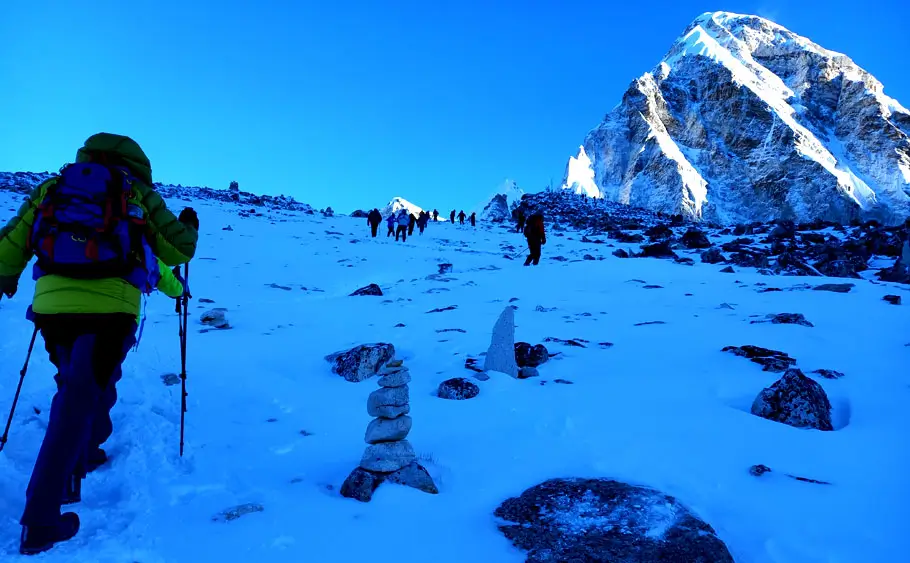
Our day starts in the early hours of the morning (3 or 4 am) with headlamps over our forehead so that we have the opportunity to enjoy the sunrise at Kala Patthar, the highest point on our 9 days Everest base camp trek where we can meet the highest webcam.
We are now located at the foot of Pumori at the top of the Kala Patthar, overlooking the highest mountains in the world, such as Everest, Nuptse, Ama Dablam, Changtse, Taboche, Kantega. Lobuche, Lingtren, Pumori, Khumbutse.
Loaded with enchanting images, we descend towards Gorakshep, eat our breakfast, pack our luggage, and continue to Pangboche village. The sloping path takes us down through Lobuche, Dughla Pass, Dughla, Pheriche, and down to Pangboche.
Duration
7-8 hrsMax Altitude
4,260 mActivity
TrekkingMeals
Breakfast, Lunch, DinnerAccommodation
Guesthouse 07
Day 07: Trek down to Namche Bazar via Tengboche monastery
From Pangboche, we will continue down to Imja Khola, through the forest to Tengboche, and visit Tengboche Monastery. After our afternoon meal at Tengboche, we will resume with the descent.
The steel bridge will make us cross the Dudh Koshi River from where the track then runs along the Dudh Koshi Gorge going down rapidly through pine thickets before reaching Phungi Thenga. We may come face to face with wildlife like mountain goats, sheep, musk deer, snow leopards, etc. en route as we approach Namche Bazaar.
Duration
5-6 hoursMax Altitude
3,445 mActivity
TrekkingMeals
Breakfast, Lunch, DinnerAccommodation
Guesthouse 08
Day 08: Trek down to Lukla via Jorsale, Monjo, Toktok, Phakding, Ghat and Cheplung
After Namche, our track goes down sharply so we have to walk carefully as our tired legs may constantly struggle with the rocky terrain. After crossing the suspension bridges over the Dudh Koshi and its tributaries through Jorsalle, and Monjo, we will continue easily on the smooth trail to Benkar, Phakding, Thadokoshi, Chaurikhark, and Chheplung ending in Lukla.
After arriving in Lukla, we rest and reminisce with a delightful farewell dinner with our loyal team.
Duration
5-6 hrsMax Altitude
2,800 mActivity
TrekkingMeals
Breakfast, Lunch, DinnerAccommodation
Guesthouse 09
Day 09: Flight back to Kathmandu
After the memorable hike to Everest, you can fly from Lukla to Kathmandu in 35 minutes, and during the busy season, take a magnificent mountain flight to Manthali (Ramechhap) 20 minutes, and then drive through the hills to Kathmandu for 4 to 5 hours. A final tour through the heart of Nepal, which marks the end of an amazing trek across the Himalayas.
You will be able to see many of the world’s tallest mountains from the air in the Himalaya Ranges. Your Short Everest base camp trek guide will take you from the airport to your accommodation.
Duration
35 minutes flightMax Altitude
1300 mActivity
TrekkingMeals
BreakfastAccommodation
ExcludedIncludes & Excludes
What is included?
- Free airport pick-up and drop-off by private car and transfer to the hotel.
- Kathmandu to Lukla to Kathmandu or Ramechhap – Lukla – Ramechhap
- All ground transportation and entrance fees.
- Permit for Sagarmath National Park
- Permit of Khumbu Pasang Lhamu Rural Municipality fee
- Full board meal, breakfast, lunch, and dinner, choose one item from menu
- Complementary daily fresh fruit after dinner.
- Accommodation, tea house during the trek.
- Government-licensed holder, speaking English, and experience guide
- All staff wages, food, drinks, accommodations, transportation, and insurance
- One strong sherpa helper for carrying your baggage (1 porter for 2 clients)
- Hill Sherpa Trekking provides a first aid kit for this Everest Base Camp Trek.
- Water purification tablets for tap water
- Helicopter Rescue service will be covered by your travel insurance in the event of an emergency.
- Nepal government tax and the company’s official charge
- Down jackets, duffel bags, sleeping bags, and trekking poles are provided by Hill Sherpa
- Trekking but should be returned after the trek (if you need them).
- An oxy meter is provided to check your pulse and oxygen level (AMS) (acute mountain sickness)
- An assistant guide will be provided if groups are larger than 7 people
- Hill Sherpa Trekking provides trip certificates (after completing the trip).
- A Complementary sunblock cap of Hill Sherpa Trekking.
What is excluded?
- International airfare tickets
- Nepal entry visa fee and visa will be obtained on arrival at the international airport in Kathmandu.
- Accommodations, food, and drinks in Kathmandu,
- Additional dessert, sweet item, chocolate, cake, TEA, COFFEES, pie, pudding, mineral water, or bar bills, for any extra personal expenses
- During the trek, hot showers, mobile, camera, power bank, any battery charging, Wi-Fi Internet,
- Kathmandu sightseeing, and entrance fees of wherever you will visit temples
- Your personal medical and travel insurance, and Personal first aid kit.
- maximum excess baggage weight of more than 15 kg
- Tips for Guides and Porter (most expected)
Note:
We also operate private trips.
Trip Information of Short Trek to Everest Base Camp – 9 Days
Best Time for the short trek to Everest Base Camp
Like all the regions of Nepal, Everest also enjoys spring from March to May, summer/monsoon from June to August, autumn from September to November, and winter from December to February.
The most common months for the short EBC Trek are April and October, but it is possible to hike throughout the spring and fall seasons, and some hike the trail well into January.
The choice of the timeframe depends on your goal: why you are going to the Everest Base Camp. If you want to get a glimpse of the expeditions that go up to the top of Everest, you should go in April (May).
It is only then that summit ascents are possible and there is an actual camp at Base Camp. At other timeframes, the Everest Base Camp is generally empty of tents.
If you like to see the green contrast against the pink hue of the blossoming rhododendrons and, at the same time watch the surging waterfalls, then spring would be the ideal time.
If you want the complete unimpeded Himalayan views, then autumn would be the time for you to go for our 9 days short trek to Everest Base Camp.
Winter trek is best suited for the already high-altitude accomplished trekkers. While summer is the time you want to avoid completely due to the possibility of road blockages, flight cancellations, cloudy weather, and landslides.
Elevation and Distance during the Short trek to Everest Base Camp
Nestled at a staggering altitude of 5,364 m, the Everest Base Camp offers a serene view of the Khumbu Icefall. Our 9 days Everest base camp trek runs along the 130 km long round trail from Lukla to Everest Base Camp to Lukla.
Lukla will be the town from where our journey initiates, 135 km afar from the capital. The distance may seem long but it can be covered swiftly within 30 minutes by flight. A hike from Lukla to Everest Base Camp involves an ascent of 2,504 m in altitude and takes about 5 days.
Our short trek to Everest Base Camp trip will also see us reaching the top of Kala Patthar- 5550 m- the highest altitude of our entire adventure. Among the various overnight accommodations along the way, Gorakshep at 5180 meters will be our highest sleeping altitude we experience.
Maximum/Minimum walk per day on short trek to Everest Base Camp
In the 9 days short trek to Everest Base Camp itinerary, we will walk somewhere between five and six hours per day and it is important to walk calmly and allow it to take time as you have to get used to the altitude.
Most days of our trek will not be too demanding, except for day 6 when we will have to walk for up to 8 hours from Lobuche to Gorakshep, then advance to Everest Base Camp and walk back down to Gorakshep. However, there will also be a day when our walk will be more relaxed as we descend from Lukla to Phakding in just 3 hours on the very first day of our journey.
Difficulty and Acclimatization on short trek to Everest Base Camp
Our short Everest Base Camp trek falls under the medium-level trek in Nepal. That being said, if you are in decent shape, focused, and follow the altitude sickness prevention instructions then you will easily reach the Everest base camp.
There is a lot of altitude increase and loss within few days on this hike. After Phakding, the track can rise and descend sometimes gradually and sometimes sharply, however, it is never too risky. After Namche, our walk will be mostly on a slow uphill.
Many senior citizens in their 70s and pre-teen children have easily completed this trek without any great difficulty. On the other hand, many trekkers at their prime age and health have failed trying to speed it without enough altitude acclimatization.
Discipline, trust, and patience are vital to the journey at Everest Base Camp. A slow and gentle approach like a tortoise will win you the race.
Can a beginner join the short trek to Everest Base Camp?
Little Zara of 4 years old from the Czech Republic, together with her 7-year-old brother, Sasha, and her father, David Sifra, reached Everest Base Camp in January 2024.
If such a little child can trek to the base camp, then of course, you can too even if you are a new hiker or inexperienced traveler to Nepal. A decent shape and physical and mental well-being are all you need for this short trek to Everest Base Camp journey.
The availability of quality lodges along the path also makes this trek more attractive to inexperienced hikers. In addition, our guide will be present throughout this trek who will not only lead you on the trail but also take care of your well-being. Additionally, our porter will carry your luggage, another burden off your shoulder!
Preparation and training for short trek to Everest Base Camp trip
Our 9 days short trek to Everest Base Camp is not a simple hike as Ghorepani or others. Here, our bodies will be exposed to more stresses, especially those related to height. Therefore, you should make sure you have as good a foundation by preparing well and building mental strength.
First of all, you ensure that you are not too still in your everyday life. This means walking a lot to work or a few extra bus stations. Use a backpack to carry your things such as a computer, extra shoes, jacket, or other items.
But to prepare the body for a more active challenge, you can cycle or go hiking. Go off-road with the clothes and shoes you intend to take with you and fill your backpack you wish to use with as much as you intend to carry. Try to walk in different types of terrain and preferably on slopes.
Short Everest Base Camp Trek Altitude Sickness
When it comes to the risks of hiking up to Everest Base Camp, there’s really only one that’s essentially different from other hikes: Altitude. Already at 2,500 m. some people can feel symptoms and it doesn’t matter if you are young or old, fit or a couch potato.
You may breathe faster, your pulse may increase, you feel difficulty moving your legs, you may sleep worse, get headaches, lose your appetite, become nauseous, or even vomit.
All of these are natural symptoms and nothing to be immediately concerned about. But if you feel them, it is still a sign that the body has a little difficulty keeping up with the climb and it is then important that you identify the signals your body sending you and help it resolve.
Find a steady pace that works to maintain during a longer hike. Make sure to stay well hydrated while hiking. Eat even if you have no desire or no appetite. Don’t stress about the situation and worry about whether or not you have altitude sickness.
Some may even start taking Diamox before their short trek to Everest Base Camp journey begins and it can also help. Diamox often seems to help the body acclimatize faster than it can naturally. However, it is a diuretic drug and you must drink lots and lots of water even if you don’t feel thirsty.
If you have any renal (Kidney) ailments, please ask your physician first before taking Diamox.
Alternate Routes of Short Everest Base Camp Trek
Our short trek to Everest Base Camp 9 days itinerary is designed for those eager to arrive at the base camp as quickly as possible. Therefore, we have shortened the trek by omitting rest days in between. If you have the luxury of time, it is beneficial to rest in Namche and Dingboche for gradual acclimatization.
If you don’t even have nine days but only say a day to spare, then you can take the one-day Helicopter EBC tour that will land you in Kalapatthar and at Namche over the helipad in the periphery of the Everest View Hotel.
However, if you have 22 days to spare, then you can take the original route that was once taken in 1953 going through Jiri to Lukla.
On the other hand, you may also consider incorporating the ascent of Lobuche, Island Peak, or Mera Peak alongside the Everest Base Camp trek. Additionally, it is possible to integrate the three high passes of Renjo La, Cho La, and Kongma La, with a brief diversion to Gokyo Valley.
Transportation, Accommodation, Food and Drink during short trek to Everest Base Camp
Transportation will be arranged from your hotel to either TIA or Ramechhap Manthali Airport in a private car or van. Additionally, our team will also coordinate a domestic flight to Lukla for you.
Throughout the 9 days short trek to Everest Base Camp, your nights will be spent in small guesthouses along the route, called teahouses. Here, you will have your meals and drinks for the hike, along with conveniences like a shower, charging, or WiFi.
A complete meal service (Dinner, Lunch, Breakfast) with seasonal fresh fruits will be offered to you. You have Western food options, or the typical local food like fried rice with vegetables, momos (steamed dumplings), and mushroom soup.
Communication, Gadgets charging, and Internet/WIFI
NCELL or NTC SIM cards can be bought in Kathmandu or Lukla or Namche for conversation. Or, you can also opt for Nepal eSim of the same networks to be bought in Kathmandu. They had 4G service with improved coverage in the Everest area.
WiFi can be accessed in all the lodges in the Solukhumbu Area which can cost between 5 and 10 dollars a day. Alternatively, you can go for 10 GB Everest Link Wifi prepaid card that is valid for up to a month at Namche Bazaar.
All the teahouses on the way to Everest Base Camp sell outlets for charging electronic devices, and prices range from $2 to $10 for a full charge, depending on how high up the trail you are.
You can bring an extra powerful power bank so you can charge your gadgets any time any place you wish.
Permits for short trek to Everest Base Camp
There are two permits you must have near the start of the 9 days short trek to Everest Base Camp. The local government permit for Khumbu Municipality (Khumbu Rural Municipality Permit) and permit for Everest Park (Sagarmatha National Park Entry Permit). As mentioned in the itinerary, our guide will get these permits in Lukla.
Why Travel Insurance?
Traveling to Everest Base Camp is an exciting journey; however, trekking in the high Himalayas has some genuine risks, which is why insurance is a must-have for all treks and hikes in Nepal, and the Everest Base Camp trek is included. The rugged high-altitude terrain and unpredictable mountain weather make weathering the storm a critical safety issue rather than a formality.
The Everest Base Camp trek passes through remote terrains, with no nearby roads. In the case of altitude sickness, injury, or a serious illness, helicopter evacuation may be the only viable option. Travel insurance is a must-have for the reallocation of these extremely pricey emergency evacuations. Emergency roadside assistance is a must-have for trekking, as the insurance policy confirms protection from medical emergencies, trip interruptions, or trip cancellations for unforeseen events.
High Altitude Coverage
The most critical point of travel insurance for the short trek to Everest Base Camp is high-altitude insurance. Many travel insurance plans only cover activities based on a ceiling of 3,000 meters, a threshold significantly lower than the altitude of the Everest Base Camp trek.
Everest Base Camp, Annapurna Circuit, and Manaslu Circuit are just some of the famous trekking routes in Nepal, all of which reach elevations above and beyond 5,000 meters. Everest Base Camp, for example, is 5,364 meters tall, and panoramic viewpoints like Kala Patthar are even higher at a whopping 5,545 meters. It is critical to verify that your insurance policy specifically includes coverage for trekking up to a minimum of 5,600 meters, or else your coverage could become void when it is needed the most.
Helicopter Evacuation in the Everest Region
Helicopter evacuation insurance coverage is one of the most pertinent requirements for trekkers doing the Base Camp trek, even if it is a short one. Because there are no roads through most of the Khumbu region, helicopters are the only method for transporting trekkers in emergencies, such as critical cases of altitude sickness, broken bones, severe chest infections, and other emergencies.
Helicopter evacuation without insurance is a problem, as it can cost anywhere from 2,500 to 8,000 USD and is often required to be paid in full and up front. Once you have a full travel insurance policy, you will be able to have a helicopter evacuation that is fully paid for, plus transport to Kathmandu for any medical emergencies you need. This way, you will be able to receive emergency medical care without the high out of pocket cost.
Medical Treatment and Hospitalization Coverage
Medical treatment and hospitalization coverage are equally necessary for anyone trekking to Everest Base Camp or doing a short trek to Everest Base Camp. High-altitude travel comes with a greater risk of altitude sickness, respiratory complications, falls, and infections.
Quality medical care, particularly in privately-owned international hospitals in Kathmandu, tends to be expensive and may require upfront payments. A travel insurance policy that covers outpatient treatment, emergency care, hospitalization, medications, and recuperation will allow you to focus on healing rather than worrying about expenses.
Choosing the Right Travel Insurance for a Short Everest Base Camp Trek
World Nomads, IMG Global, Allianz, Covermore, True Traveller, and SafetyWing (with a high-altitude add-on) are popular among trekkers, and many international insurers offer plans that are appropriate for high altitude trekking. It is important to point out that each provider has varying altitude caps, policies for helicopter evacuations, and activity coverage (for adventurous activities).
Prior to purchasing insurance, make sure to thoroughly check the policy to confirm coverage of high-altitude trekking, helicopter evacuations, and medical emergencies. Some providers may offer more competitive pricing or coverage depending on your nationality. If your insurance provider is experienced with trekking in the Himalayas, you’ll likely have faster help when you need it most.
Insurance Requirements with Hill Sherpa Trekking
In case of an emergency, Hill Sherpa Trekking needs to keep on file specific details on all trekkers’ insurance coverage to facilitate emergency evacuation insurance claims with their trek participants. The trekkers must submit the name of the insurer, policy number, emergency contact number, details of their coverage, and verification that their insurance provides high altitude flight coverage and helicopter evacuation insurance.
Insurance information must be carried by all guides on the brief trek to Everest Base Camp. If emergency evacuation procedures need to be carried out, the proper insurance company must be contacted at once. Emergency evacuation procedures can be markedly less complicated if the guides have the insured’s details immediately available to them.
Conclusions
Travel Insurance Is Non-Negotiable for a Brief Trek to Everest Base Camp
Insurance coverage for a brief trek to the Everest Base Camp is a requirement and, most importantly, a safety net for the world’s most challenging trekking valleys. Without proper insurance, all trekkers – first timers or seasoned trekkers – will have a lean on their peace of mind and put their life at risk.
Completing a brief trek to Everest Base Camp will be an experience of a lifetime. You will be rewarded with stunning landscapes and a rich and diverse culture. To be able to enjoy this experience with peace of mind knowing that all the right insurance coverage is on file for you is a real treat. This peace of mind insurance coverage will include adequate altitude range coverage for high altitude trekking, helicopter flight evacuation coverage, and medical coverage.
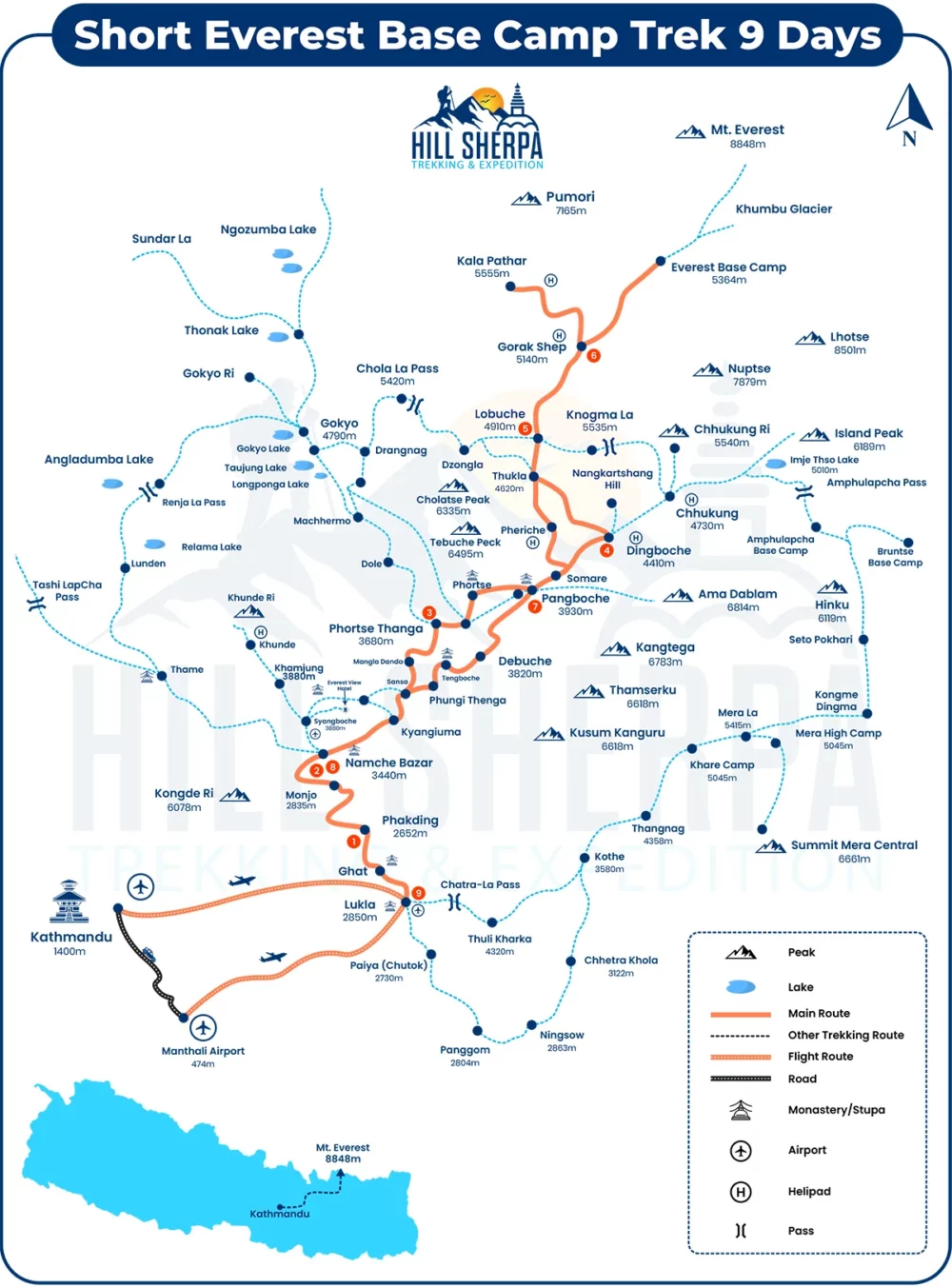
Trip Map of Short Trek to Everest Base Camp – 9 Days
Altitude Chart of Short Trek to Everest Base Camp – 9 Days
Equipment List

General Information
- The company provides feather sleeping bag but should be refunded after the trek.
- The company provides feather down Jacket but should be refunded after the trek.
- Hill Sherpa Trekking provides a duffle bag during the trek but should be refunded after the trek.
- mostly recommend for morning and evening, The windproof and waterproof thin layered jacket above 3450m.
- mostly recommend for Daypack bag 35-45 ltr.
- Headlamp & extra batteries during the trek

Daily Use Essentials
- A Sun Black Cap & warm hat
- Sunglasses 100% snow UV protection
- A muffle (full-cover mask)
- Sunscreen (30+ to 60 SPF depending on age)
- A pair of thin & warm gloves
- A pair of Trekking poles
- Water bottle & filter
- Water purified tablets
- lips guard

Upper Body Essentials
- Fleece hat
- A pair of t-shirts
- Thermal tops
- Sports bras for ladies
- windproof & fleece jacket
- waterproof jacket

All Lower Body
- waterproof trouser
- warmer & fleece trousers
- A pair of Comfortable trekking pants
- Extra casual sports pants
- A pair of sports shoes
- Thermal underwear
- A pair of comfortable waterproof trekking boots
- Pair of light sandals
- Some Thick (woolen) socks and Sock liners
- Light shoes

Personal Medical and First Aid Kits
- Diamox (125mg to 250mg tablets for AMS)
- Ibuprofen & paracetamol tablets IP
- Some Assorted adhesive bandages
- Warps, splints, wound coverings butterfly bandages
- Blister treatment cream or similar
- Insect / anti-itch ointment
- Moves in case sprain any body
- pain-relief medication
- Sinex, Eye Drops, etc.
(Note: first aid kits & medicine will be carried with our company’s guide during the trekking However, we recommend you bring your personal first-aid kit)

Important Things
- passport size photos with original passport
- Personal Insurance details of the traveling
- Flight details (to pick you up & transfer to hotel)

Extra Essential Things
- Quality energy dry foods (up to you)
- Ladies important things what’s the necessary
- The power bank is most important (if you have one)
- Camera (memory card, chargers, and extra batteries)
- Important things for both males and females like wipes, toilet paper, towels
Addons & Options for Short Trek to Everest Base Camp – 9 Days
Addons
Price
Upgrade 4 star hotel in Kathmandu
US$
160
Upgrade 5 star hotel in Kathmandu
US$
340
Upgrade Yeti Mountain Home Lukla (over night)
US$
200
Upgrade Yeti Mountain Home Monjo (over night)
US$
210
Upgrade Yeti Mountain Home Namche Bazar (over night)
US$
220
Stay over night Hotel Everest View
US$
410
Horse on rent for whole trip
US$
1199
Extra porter for whole trip
US$
275
Extra assistant guide
US$
275
Frequently Asked Questions
I have come to know that the Everest base camp does not offer a view of Everest, so why should I proceed with this trek?
For this reason, we have integrated Kalapatthar climbing the next day after we reach the base camp for the unimpeded Everest visual. Besides, you will be the very few ones to feel tine in front of the gigantic Khumbu Icefall and you will get to see the colorful tent village alongside Nuptse and Lhotse walls.
Is it really hard to trek to EBC in winter?
The difficulty of the trek depends on how you perceive the moment. Winter hiking has its own advantages- the weather and the sunshine will be outstanding, the Himalayas will be fully snow-white coated, and the small Khumbu Valley will resemble like a snow fairytale land. The main difficulty is that of minus heat that can reach to your bone. And lodges may also be closed not all but some. So with correct gear, clothing, and mindfulness, you can make it to EBC even in winter.
Can I stay in camp in the base camp of Everest?
No, the overnight stay in the base camp is only granted in spring for the climbers who have acquired special permission to climb Everest. We will have enough time on our hand to visit the base camp for one or two hours.
Can you explain to me the type of insurance I need for your short Everest Base Camp trek?
Most of the home insurance policies include travel insurance for a certain number of days, so check with your insurance company what applies to your particular policy and ask what applies to hiking at high altitudes (some require additional insurance above a certain altitude). Also, ask specifically about what happens if you have to be picked up by helicopter.
Can I get a hot shower en route and how much it costs?
Yes, in some lodges, you can get a hot shower depending on the season and how high you are, and costs 600 to 1200 rupees.
How much Nepali Currency do I need to carry?
You have to pay for the usage of WIFI, charging, hot shower, snacks and beverages during our short Everest Base Camp trek. ATMs do not exist outside of Lukla and Namche Bazaar, and even if they are, they can be unreliable. So you have to withdraw Nepali currency in Kathmandu Atms.
For a single day, $25 is sufficient, and set aside some cash for a decent tip. So NPR 30,000 to NPR 40,000 can be carried for the entire trek.
Reviews on Short Trek to Everest Base Camp – 9 Days


US$ 875 per person For a group of 7-12 pax.
- 1 personUS$ 1079
- 2 - 2 personUS$ 999
- 3 - 6 personUS$ 949
- 7 over 9999 US$ 875
US$ 875

Talk to Trip Expert
+977 9704823980 (Whatsapp)
✖
Free Travel GuideGet Expert Guidance from Experienced Sherpas