Govt. Tourism License 3195/080/81







US$ 1735 per person For a group of 17-24 pax.
- 1 personUS$ 1985
- 2 - 2 personUS$ 1935
- 3 - 6 personUS$ 1885
- 7 - 12 personUS$ 1835
- 13 - 16 personUS$ 1785
- 17 over 9999 US$ 1735
- Best Price Guarantee
- Secure Online Booking
- Flexible booking dates
- Owner operated company
- Decades of experience
- Dedicated sherpa team
- 100% success rate
- 5/5 ratings by travelers


Highlights of Three Pass Trek 18 Days
- Renjo La Pass with great views of Mt. Everest, and the Gokyo Lakes.
- Cho La Pass 5,420 with great views of Mt. Makalu 8,463, Baruntse 7091, and Nuptse.
- Visit the charming and picturesque village of Thame.
- The pristine Gokyo Lakes are a sight to behold.
- Kongma Pass with sight overseeing the frozen lakes and valleys.
- Visit the Highest peak Everest Base Camp (5,364 m)
- See the stunning views of Everest, Lhotse, Nuptse, and Ama Dabla, from Kala Patthar.
- Everest Three Pass Trek offers us five out of eight thousand meters peaks
Trip Overview
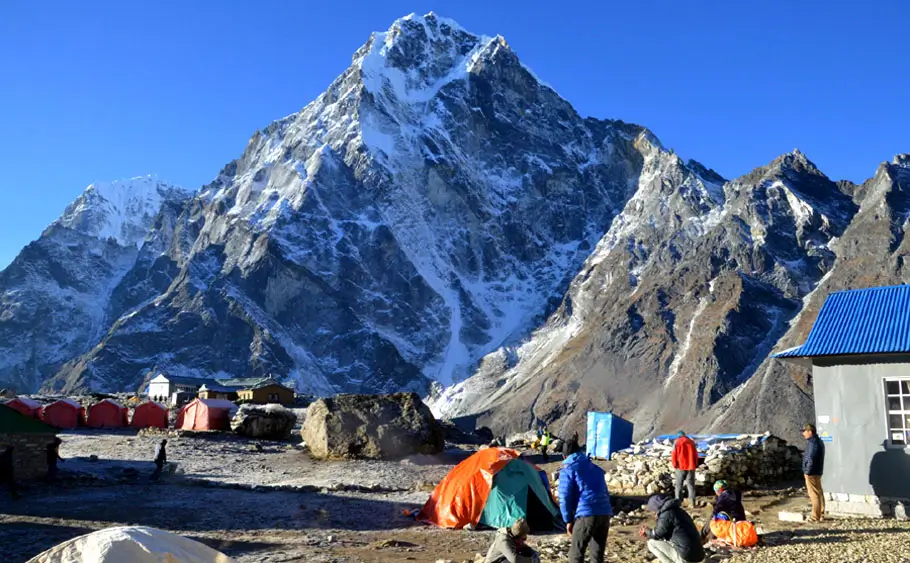
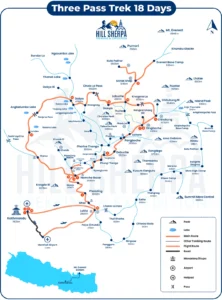
The Three Pass Trek 18 Days rank among the most exciting and fun options for those looking for highland treks in the Himalayas. The trail crosses three highland passes starting from the Kongma La Pass (5545 meters), Cho La Pass (5420 meters), and Renjo La Pass (5346 meters). (3 passes Trek) as well as, the next option also starts from the Lungden side which is called Renjo La Pass, Chola Pass, and Kongmala Pass.
This trek will also take you to Chukung Ri (5550 meters), Kala Pattar (5545 meters), and Gokyo Ri (5357 meters). This trek offers you a once-in-a-lifetime opportunity to take in the incredible views of the gigantic peaks in the Everest region.
In recent years, the possibility of trekking these highland passes has been made possible by advancements and the creation of ever-newer trekking paths and itineraries. Among the numerous other trekking excursions of this kind, the Three Passes trekking trip is among the most regularly scheduled trekking adventures in the eastern region of Nepal.
This journey is difficult and more than just a leisurely adventure. The paths are difficult since they travel to elevations above 5,000 meters.
You will likely experience altitude sickness because the trek runs through high-altitude regions and primarily passes through rough, sloppy hills covered in ice, snow, glaciers, valley slopes, and more.
As a result, you must be prepared both psychologically and physically to handle any difficulties you may encounter while trekking. From Lukla, the journey takes you all the way across and around the Khumbu, finishing at the famous Everest Base Camp.
Hill Sherpa Trek is ready to take you on this beautiful adventure to the Himalayas of the Everest region. Here’s a detailed breakdown of our Three Pass Trek 18-day package including all the info you will need to get started.
The three passes that you will cross in this trek are the Kongma-La Pass, Cho La Pass, and Renjo-La Pass. The Kongma-La Pass sits at an elevation of 5,550 meters above sea level, making it the highest pass of the three. Since it is the highest pass, it is the most difficult one of the three and you will definitely feel the intensity while climbing to this pass.
The second pass that we will visit during this trek is the Cho La Pass, this pass connects the Gokyo valley to the mainline Everest Base Camp trek. This pass is also the connecting point of Thagnak and Dzongla, two villages of the Khumbu region. Since it is a midpoint for many routes, it is the most traveled pass out of the three.
The last pass we have to cross during this trek is the Renjo La Pass, which is the easiest pass of the three. Sitting at an altitude of 5360 meters above sea level, this is the only pass without any glacier on it.
Video Testimonials: Highlighting Memorable Moments
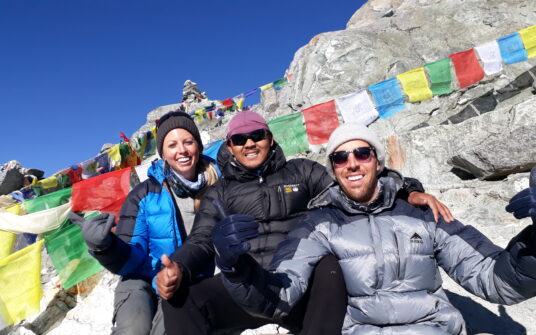
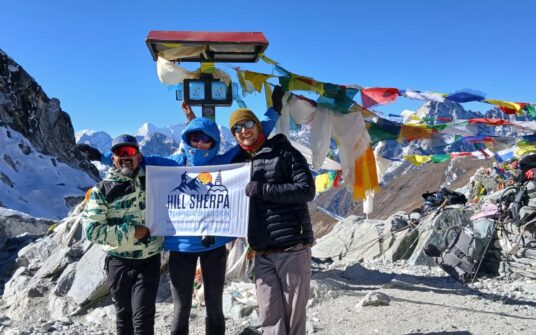
Three Pass Trek 18 Days Itinerary
01
Day 01: Arrival in Kathmandu Pick up / Transfer to Hotel
Once you are flying over the Tribhuvan International Airport in Kathmandu, you will get to see the Himalayas to the South. Your flight to Kathmandu is a scenic flight and makes you excited for the upcoming trip. After your flight lands at the airport, you will have to visit the immigration booth at the airport to get your tourist visa.
You will need your proof of accommodation, your passport that is valid for at least 6 months, return tickets, two passport-sized photos, and bank receipt of visa fees. Don’t worry, you don’t have to go far to get your bank receipt. There’s another booth nearby where you can pay your visa fees.
But before you pay your visa fees you will have to fill in the form, state your desired duration of stay, and pay as required by the state laws. Visa fees are subject to change without notice and are controlled by the government of Nepal, so make sure that you bring a little extra cash just in case.
After you are done with your visa processing, you can leave the terminal. You will find our representative waiting for you or he will find you instead, which happens most of the time. You will be then dropped to your designated accommodation.

Duration
30 mins drive to hotek
Max Altitude
1,300 m/4,264 ft
Meals
Excluded
Accommodation
3-Star Hotel 02
Day 02: Flight from Kathmandu to Lukla and trek to Phakding
Today, we will be transferred by air from Kathmandu to Lukla, which has one of the world’s most risky airports, situated in the hills. Though the trip lasts for about half an hour only, it gives marvelous views of the Himalayan format. We can see Kongde Ri from Hillary Airport and Mt. Khumbila views on the way to Phakding.
Once we land at Lukla, we start our journey to Phakding, a beautiful place found on the bank of the Dudh Kosi River. It passes through swinging bridges and beautiful Sherpa villages. After a few hours of stunning trekking, we will spend a little time there, meditate, and spend our night there.
We will descend for the majority of the trail and it is an easy trek. We will also get you permits (Sagarmatha National Park and Khumbu Pasang Lhamu Rural Municipality) at the end of Lukla village. As we make our way to Phakding, we will get to see views of Mt. Khusum Khangru from Thadakoshi village.
Point to Remember
The direct flights from Kathmandu to Lukla are often prone to diversion to Ramechhap/Manthali Airport especially in spring and autumn due to heavy air traffic. In such case, we will drive to Ramechhap airport for four hours and board a 20-minute flight to Lukla.
Duration
3 hoursMax Altitude
2656 m
Activity
TrekkingMeals
Breakfast, Lunch, DinnerAccommodation
Local Teahouse 03
Day 03: Trek to Namche Bazaar from Phakding
On day four, we will start a beautiful walk from Phakding to Namche Bazaar, which is a busy and beautiful village at an altitude of 3440m/11,280 ft. The trail will take us to a beautiful area covered with rhododendron trees along the Dudh Kosi River. You will see several suspension bridges.
The climb will be a steep one, and it will impair our endurance, yet the site of Everest inching nearer will motivate us to keep on going. Thus, after making our way for 5–6 hours, we will arrive at Namche Bazaar, which is the main tourist destination for trekkers from all over the world.
On this day, we will enter the Sagarmatha National Park and make our way to Jorsale for lunch. After we are done with having lunch, we will get to Hillary Bridge in about 30 minutes where you can enjoy the views of Mt. Tabuche. From there, we will reach a viewpoint called Top Danda where views of Mt. Everest, Lhotse, Nuptse, etc. remain the main attraction.
Duration
5-6 hoursMax Altitude
3443 mActivity
TrekkingMeals
Breakfast, Lunch, DinnerAccommodation
Local Teahouse 04
Day 04: Hiking to Everest View
On this day, you will be given a rest day to acclimatize and avoid the formulation of altitude sickness in Namche Bazaar, which is at an altitude of 3,440 m/11,284 ft. Today, we will go around and discover the cultures of the colorful town.
We will have our breakfast and start our trek to the Everest View Hotel (3880 m) while admiring the view of the mountains ranging from Everest down to Lhotse, Nuptse, and many more. Once we reach the Everest View Hotel, you can enjoy the views of Mt. Everest, Nuptse, Thamsheru, Amadablam, Tabuche, Cholaste, Lhotse, etc. from the open balcony space.
Duration
2-3 hoursMax Altitude
3880 mActivity
HikingMeals
Breakfast, Lunch, DinnerAccommodation
Local Teahouse 05
Day 05: Trek to Tengboche from Namche
Today, we will trek for about 5 to 6 hours from Namche Bazaar to Tengboche. The trail gently rises up and Rover has a closer view of the mountains, including Mount Everest, Lhotse, and Ama Dablam. Crossing the rhododendron forests and beautiful Sherpa village, we will arrive at Tengboche, which is at a height of 3,870 m (12,694 ft).
Tengboche is especially popular for its monastery, built centuries ago, thus offering a rather religious and quiet environment. This day will enable us to get the best view of the natural resources and cultural settings in the Everet region.
Duration
4-5 hoursMax Altitude
3,867 mActivity
TrekkingMeals
Breakfast, Lunch, DinnerAccommodation
Local Teahouse 06
Day 06: Trek to Dingboche
On our seventh day of the trek, we will trek to Dingboche, which is at an altitude of 4,360 m/14,300 ft, and this will take us 5 to 6 hours. Today’s walk is an easy walk following the Imja river.
First we will get to Upper Pangboche and on the way we can see the oldest monastery in the Khumbu region. This monastery also houses a Yeti Scalp. Our lunch spot for the day is Shamare.
On the way up, you can look around and see other mountains too: Konde, Lhotse, Nupse, and, of course, Everest. This part of the trip enables you to get fitter to conquer the high altitudes and see more of the natural and culturally beautiful aspects of the Everest region.
Duration
4-5 hoursMax Altitude
4,410 mActivity
TrekkingMeals
Breakfast, Lunch, DinnerAccommodation
Local Teahouse 07
Day 07: Acclimatization day
Today we will acclimatize ourselves to enable the body to acclimate to the high altitude so as to minimize altitude sickness. For this, we will hike the Nangkartshang hill to reach the Nagarjun Hill viewpoint, also called Chukkhung Ri. This view point offers you views of the Mt. Makalu, Island Peak, Baruntse, Chopola, Ambigetshen, Amadablam, Khankaru, Tabuche, Nirukhang, Cholatse, Thamsheru, Lobuche Peak, etc.
Other options include observing the lifestyle of the indigenous Sherpa people, visiting the monastery located nearby or just having a rest and creating harmony with the stunning nature of the mountain. The days of acclimatization are very important before trekking in the region of Everest.
Duration
3-4 hoursMax Altitude
5083Activity
HikingMeals
Breakfast, Lunch, DinnerAccommodation
Local Teahouse 08
Day 08: Trek Chhukung Village
The next journey will be three hours of walking from Dingboche to Chhukung Village, a place located at an altitude of 4,730 m (15,518 ft). We will cross through meadows, streams, glaciers, and mountains. Chhukung Village is a small village in the Imja Valley that is well-known as the climbers’ base camp for Island Peak. This part of the trek shows a high-altitude trail and you can enjoy the cultural touch of mountaineering in the area.
Duration
2.5 hoursMax Altitude
4,730 mActivity
TrekkingMeals
Breakfast, Lunch, DinnerAccommodation
Local Teahouse 09
Day 09: Trek To Lobuche (4,910 m) Via Kongma-La Pass
Today’s destination will have us cross a glacier, the Kongma La Pass (5600 m), then to Lobuche (4950 m) This is a rather demanding hike, and it will take between 6 and 8 hours; however, the view of the neighboring Himalayas is truly spectacular. As we move toward Lobuche, this place will provide you with a perfect opportunity to unwind after a long day of trekking.
Duration
6-8 hoursMax Altitude
5,545 mActivity
Kongma la passMeals
Breakfast, Lunch, DinnerAccommodation
Local Teahouse 10
Day 10: Trek to Gorak Shep / Everest Base Camp
The trek to Gorak Shep/Everest Base Camp (5364 m) takes approximately 7/8 hours, the last town before reaching Everest Base Camp. On this day, you will get to see fascinating mountain scenes. We will leave our luggage in the hotel back in Gorakshep. The track will be rough; the mountains are steep and sometimes the air is thin.
When we get to the Everest Base Camp, you will forget all your tiredness and admire the beauty of the place and the achievement of reaching the base of such an iconic mountain in the middle of the Himalayas. We will get back to Gorakshep after we are done with visiting the EBC.
Duration
7-8 hoursMax Altitude
5,364 mActivity
Trekking, Main DestinationMeals
Breakfast, Lunch, DinnerAccommodation
Local Teahouse 11
Day 11: Hike to Kalapather (5,550 m) and Trek to Dzongla
Today, we will wake up early in the morning to ascend Kalapather (5550 m) to view the major range of the Himalayas from the top while watching the sunrise. You can see the majority of the Everest region’s peaks from this viewpoint, this includes Mt. Everest, Lhotse, Nuptse, Amadablam, Lobuche, Pumori, Lingtren, etc.
After enjoying the scene from here, we will head to Dzongla, which will take between 7-8 hours. After a couple of hours of trekking, we will reach Dzongla, where we will have some rest and enjoy the tranquil environment.
Duration
7-8 hoursMax Altitude
4,830 mActivity
TrekkingMeals
Breakfast, Lunch, DinnerAccommodation
Local Teahouse 12
Day 12: Trek To Gokyo Lake Via Cross Chola Pass
Today, we will trek toward the Cross Chola Pass at 5,420 m and the elevated Gokyo Lake at 4,750 m. This journey will take 6-7 hours. The harder part of the trekking would be getting to the Gokyo RI as we climb to the higher regions. We will cross Chola Pass as we draw closer to the magnificent Gokyo Lake. As we reach there, this magnificent place will leave you speechless because of its beauty.
Duration
6-7 hoursMax Altitude
4,750 mActivity
Chola pass 5,420 m)Meals
Breakfast, Lunch, DinnerAccommodation
Local Teahouse 13
Day 13: Rest Day (Hike to Gokyo Ri 5,357 m)
Today we will hike to Gokyo Ri (5,357 m) 17,576 ft. early in the morning to see amazing views including Mt. Everest, Lhotse, Nuptse, Cho Oyu, Makalu, Kanchenjunga, Ama Dablam and almost will all Everest region mountains. which hike duration 2-3 hours up than back to same place and whole rest for next day Renjo la pass trek.
Duration
3-4 hoursMax Altitude
5357 mActivity
HikingMeals
Breakfast, Lunch, DinnerAccommodation
Local Teahouse 14
Day 14: Trek To Lungden Village Via Cross Renjo-La Pass
Today’s destination is Lungden Village, which is 4,375 m above sea level. The trail to Lungden passes through a difficult area, especially the Cross Renjo-La Pass, which is at 5,345 meters. This segment of the journey will take approximately 6–7 hours. The beauty of the mountains Everest, Lhotse, Nupste, Makalu, Kanchenjunga, Cholatse, AMa Damlam more, and Lungden Village, where you will meet the locals and get to explore their culture, history, and livelihood.
Duration
6-7 hoursMax Altitude
4,375 mActivity
Renjo La pass 5,345 mMeals
Breakfast, Lunch, DinnerAccommodation
Local Teahouse 15
Day 15: Trek To Namche Bazaar
Today, we will head toward Namche Bazaar after a 7-8 that lies at an altitude of 3,443 m. This part of the trip will be a little tiring but rewarding because we will be descending the altitudes this day. This means that the path we will follow is through the beautiful slopes and landscape, real native buildings of the region, and great views of the Himalayas.
You can revisit your favorite places and take a walk around the local shops. Here, we will spend our night at cozy inns.
Duration
7-8 hoursMax Altitude
3,443 mActivity
TrekkingMeals
Breakfast, Lunch, DinnerAccommodation
Local Teahouse 16
Day 16: Namche Bazaar-Lukla
On our sixteenth day of the trek to the Everest Three Pass Trek, we will head towards Lukla. The distance to be covered today from Namche Bazaar to Lukla usually takes 6-7 hours of trekking. It is picturesque; you will see mountains along the trail and the trail also runs through several villages. You can also revisit your favorite places during your stay in Lukla.
Duration
6-7 hoursMax Altitude
2800 mActivity
TrekkingMeals
Breakfast, Lunch, DinnerAccommodation
Local Teahouse 17
Day 17: Lukla-Kathmandu
Today will be the second-last day of our Everest Three Pass trek. On this day, you will have to say goodbye to the majestic Himalayas along with the local Sherpas. We will take off our flight from the Tenzing Hillary Airport and land in Kathmandu. If we get there earlier than expected, then you can enjoy the scenery of the Kathmandu Valley, which is worth it.
Duration
35 mins flightMax Altitude
1300Meals
Breakfast, Lunch, DinnerAccommodation
Local Teahouse 18
Day 18: Farewell Dinner, Nepalese Cultural Meals
This day will be your final day of the Everest Three Pass Trek. Our team members will organize a small farewell dinner where you will get to taste varieties of Nepalese cuisine, especially dal ( lentil), vat (rice), tarkari (curry), chutney, and many more.
Max Altitude
1300 mMeals
Breakfast, DinnerAccommodation
Local Teahouse Trip Note:
Attention
In the busy season of autumn and spring months, and during unfavorable weather conditions, the direct flight to Lukla is diverted to Ramechhap Airport. At this event, we will drive you to Ramechhap, aka Manthali Airport, which is a four-hour drive away. From here, we will fly to Lukla, and the flight will last only 20 minutes. so other options is helicopter with little raising fare too.
Includes & Excludes
What is included?
- Airport pickup and drop-off by private car and transfer to hotel.
- 3-star hotel twin sharing room accommodation 2 nights in Kathmandu with breakfast.
- Domestic flight from Kathmandu-Lukla-Kathmandu, or Ramechhap – Lukla – Ramechhap including 15 kg baggage.
- Permit of Sagarmatha National Park entry Everest region.
- Permit of Khumbu pasang Lhamu rural municipality.
- Breakfast, Lunch, and Dinner 3 meals in a day, choose from the menu.
- Complementary daily fresh fruit after dinner.
- Accommodation, tea house during the trek.
- Government-licensed holder, speaking English, and experience guide
- All staff wages, food, drinks, accommodations, transportation, and insurance
- One strong sherpa helper for carrying your baggage (1 porter for 2 clients)
- Hill Sherpa Trekking provides a first aid kit during this Trek.
- Water purification tablets for tap water
- Helicopter Rescue service will be covered by your travel insurance in the event of an emergency.
- Nepal government tax and company’s official charge
- Down jackets, duffel bags, sleeping bags, and trekking poles are provided by Hill Sherpa Trekking but should be returned after the trek (if you need them).
- An oxy meter is provided to check your pulse and oxygen level (AMS) (acute mountain sickness)
- An assistant guide will be provided if groups are larger than 7 people
- Hill Sherpa Trekking provides trip certificates (after completing the trip).
What is excluded?
- International airfare tickets
- Nepal entry visa fee and visa will be obtained on arrival at the international airport in Kathmandu.
- Additional accommodations, food, and drinks in Kathmandu (if staying an extra day)
- Any sort of dessert, sweet item, chocolate, cake, Tea, coffee, pie, pudding, mineral water, or bar bills, for any extra personal expenses
- During the trek, hot showers, mobile, camera, power bank, any battery charging, Wi-Fi Internet,
- Kathmandu sightseeing, and entrance fees of wherever you will visit temples
- Your personal medical and travel insurance, and Personal first aid kit.
- maximum excess baggage weight of more than 15 kg
- Tips for Guides and Porter (most expected)
Departure Dates
Departure Date
Trip Duration
Availability
Price
2026-03-29
18 Days
3-5
US$ 1885
2026-03-30
18 Days
3-5
US$ 1885
2026-03-31
18 Days
3-5
US$ 1885
2026-04-01
18 Days
2
US$ 1935
2026-04-01
18 Days
3-6
US$ 1885
2026-04-02
18 Days
2
US$ 1935
2026-04-02
18 Days
3-6
US$ 1885
2026-04-03
18 Days
2
US$ 1935
2026-04-03
18 Days
3-6
US$ 1885
2026-04-04
18 Days
2
US$ 1935
2026-04-04
18 Days
3-6
US$ 1885
2026-04-05
18 Days
2
US$ 1935
2026-04-05
18 Days
3-6
US$ 1885
2026-04-06
18 Days
2
US$ 1935
2026-04-06
18 Days
3-6
US$ 1885
2026-04-07
18 Days
2
US$ 1935
2026-04-07
18 Days
3-6
US$ 1885
2026-04-08
18 Days
2
US$ 1935
2026-04-08
18 Days
3-6
US$ 1885
2026-04-09
18 Days
2
US$ 1935
2026-04-09
18 Days
3-6
US$ 1885
2026-04-10
18 Days
2
US$ 1935
2026-04-10
18 Days
3-6
US$ 1885
2026-04-11
18 Days
2
US$ 1935
2026-04-11
18 Days
3-6
US$ 1885
2026-04-12
18 Days
2
US$ 1935
2026-04-12
18 Days
3-6
US$ 1885
2026-04-13
18 Days
2
US$ 1935
2026-04-13
18 Days
3-6
US$ 1885
2026-04-14
18 Days
2
US$ 1935
2026-04-14
18 Days
3-6
US$ 1885
2026-04-15
18 Days
2
US$ 1935
2026-04-15
18 Days
3-6
US$ 1885
2026-04-16
18 Days
2
US$ 1935
2026-04-16
18 Days
3-6
US$ 1885
2026-04-17
18 Days
2
US$ 1935
2026-04-17
18 Days
3-6
US$ 1885
2026-04-18
18 Days
2
US$ 1935
2026-04-19
18 Days
2
US$ 1935
2026-04-20
18 Days
2
US$ 1935
2026-04-21
18 Days
2
US$ 1935
2026-04-22
18 Days
2
US$ 1935
2026-04-23
18 Days
2
US$ 1935
2026-04-24
18 Days
2
US$ 1935
2026-04-25
18 Days
2
US$ 1935
2026-04-26
18 Days
2
US$ 1935
2026-04-27
18 Days
2
US$ 1935
2026-04-28
18 Days
2
US$ 1935
2026-04-29
18 Days
2
US$ 1935
2026-04-30
18 Days
2
US$ 1935
Note:
We also operate private trips.
Trip Information of Three Pass Trek 18 Days
How does our Three Pass Trek 18 Days start?
Most trekking adventures in the Khumbu region typically begin at Lukla. You can get to Lukla in a few different ways. You can choose to either fly from Kathmandu directly to Lukla or get on a jeep ride to a settlement farther down the Solukhumbu Valley and trek to Lukla. Although flying may be more quick and easy it is also more costly and susceptible to weather-related cancellations and postponements.
You can begin your trip from deeper in the Valley if you’ve got a few additional days and want a more genuine experience. By opting for a trek to Lukla instead of a flight, you can save money while exploring less-traveled communities and seeing the magnificent peak of Pikey.
Three Pass Trek 18 Days Difficulty;
Trekking the Three Pass Trek is a challenging activity and you must be in excellent physical condition. It is suggested that you possess some prior experience hiking and ascending at height for this kind of route. You’re going to need specialized gear like Gaiters, Ice Axe, and Ski Poles because you’ll be exposed to freezing temperatures and rugged paths.
Trekking sessions will last six to nine hours (or longer), with daily ascents of about 1,200 meters and the possibility of trekking over 4,500 meters. This kind of trip is something you should think about if you’re up for a challenge or if you know you can finish a thrilling adventure.
Best seasons to Three Pass Trek 18 Days
During the seasons of Autumn and Spring, many trekkers and travelers visit Nepal as it is the best time to visit most destinations including the highlands of Nepal. One of the best things about these seasons is the lack of rain and the clear skies. However, it might be a little cloudy during the spring season as monsoon nears.
These seasons also host a ton of festivities that you can enjoy if you are just right on time. Don’t shy away from joining in, the locals will happily take you in and let you enjoy the colorful festivals.
You should avoid traveling during the summer and the winter season. During the summer season, it gets a bit too hot for you to trek during the day. It’s not completely undoable, it is manageable but you will be very sweaty and tired by the end of the day.
Likewise, winter has its own cons. Heavy snow and substantial temperature drops can make it harder for you to trek the trails. On top of that, some sections of the trail are difficult to travel as is and the snowfall makes it even harder.
Can a beginner join this trip?
No, a beginner should not join this Three Pass Trek. You need to have at least some level of prior trekking experience to be able to complete the Three Pass trek with ease. Beginners are not accustomed to the harsh conditions and environment of the highlands of Nepal, so it is always recommended that beginners must stay away from this trek.
On a scale of 1 to 10, we would rate this trek a solid 7, and professional trekkers consider this a moderately difficult trek.
Altitude Sickness of Three Pass Trek 18 Days
Altitude Sickness is one of the worst things that can happen to trekkers visiting the high Himalayan lands. It is arguably the worst thing since it can make you quit your trek on the spot and it can happen to anyone regardless of age, gender, or expertise. To counter this we will make sure that we move at a safe pace, dividing the long journey into bite-sized daily day treks.
We have also included an acclimatization day at the beautiful Namche Bazaar.
Accommodation, Food and Drink for Three Pass Trek 18 Days
Accommodation in this region is not the same as you would get in the cities, which is obvious. You will be staying in tea houses that are owned by the locals of the village, if there are any particular accommodation requests please make sure that you let us know before the start of the trek. We will try to make it happen to the best of our abilities. Accommodations in these Himalayan lands are limited to twin sharing rooms with communal bathrooms and a shared eating space.
Food and drinks are limited in the Everest region as well. As we move up the valley, you will notice that the option of food also decreases. Transporting food supplies to these remote and easily inaccessible areas is really a challenge and thus you will only get the bare minimum of food and drinks. However, you will get to enjoy a lot of varieties in Namche Bazaar.
Three Pass Trek 18 Days Transportation
As this is a long journey, you are required to travel a lot of miles on 4-wheelers. For instance, we have to get to the airport to catch a flight to Lukla. We will also drive you to and from the international airport in Kathmandu at the end and start of the trek.
Permit of Three Pass Trek 18 Days
To do this Three Pass Trek, you will need a Sagarmatha National Park Entry Permit which you can get in Kathmandu as well as at the very end of Lukla. You will also require another permit, the Solukhumbu Regional Permit which is only available in Monjo village or Lukla.
Trip preparation and fitness
Since this is a challenging trek, we highly recommend you hit the gym for at least a couple of months before the start of the trek. Being in proper physical form is the best thing you can do before you embark on this beautiful and thrilling journey.
Alternative routes
Alternative routes for this trek are limited to the initial phase of the route. You can basically choose to fly to the starting point of the trek, Lukla, or take a longer route by a 4-wheeler. This alternative route will have you travel substantial miles on the road and trek a little to the village of Lukla.
Alternatively, you can also visit the Gokyo lakes as additional destinations for the already long Three Pass Trek.
Gadgets charging & Internet
As this trek follows the itinerary of the main trail of the EBC trek for the most part, you can enjoy basic facilities to the max, including electricity. You don’t have to worry about having no electricity to charge your devices. However, you might face power outages from time to time.
Your Extra expenses for Three Pass Trek 18 Days
Our Three Pass Trek covers much of your expenses related to trekking but there are somethings that cannot be covered by our package. These extra expenses include your flight fare to and from Nepal, visa fees, insurance fees, tips for the crew members, and additional accommodation in Kathmandu including food and drinks, desserts, and sweet items like chocolate, cake, pie, pudding, extra baggage (weight limit 10-15 kg per person), and more.
Trip Map of Three Pass Trek 18 Days

Altitude Chart of Three Pass Trek 18 Days
Equipment List

General Information
- The company provides feather sleeping bag but should be refunded after the trek.
- The company provides feather down Jacket but should be refunded after the trek.
- Hill Sherpa Trekking provides a duffle bag during the trek but should be refunded after the trek.
- mostly recommend for morning and evening, The windproof and waterproof thin layered jacket above 3450m.
- mostly recommend for Daypack bag 35-45 ltr.
- Headlamp & extra batteries during the trek

Daily Use Essentials
- A Sun Black Cap & warm hat
- Sunglasses 100% snow UV protection
- A muffle (full-cover mask)
- Sunscreen (30+ to 60 SPF depending on age)
- A pair of thin & warm gloves
- A pair of Trekking poles
- Water bottle & filter
- Water purified tablets
- lips guard

Upper Body Essentials
- Fleece hat
- A pair of t-shirts
- Thermal tops
- Sports bras for ladies
- windproof & fleece jacket
- waterproof jacket

All Lower Body
- waterproof trouser
- warmer & fleece trousers
- A pair of Comfortable trekking pants
- Extra casual sports pants
- A pair of sports shoes
- Thermal underwear
- A pair of comfortable waterproof trekking boots
- Pair of light sandals
- Some Thick (woolen) socks and Sock liners
- Light shoes

Personal Medical and First Aid Kits
- Diamox (125mg to 250mg tablets for AMS)
- ibuprofen & paracetamol tablets IP
- Some Assorted adhesive bandages
- Warps, splints, wound coverings butterfly bandages
- Blister treatment cream or similar
- Insect / anti-itch ointment
- Moves in case sprain any body
- pain-relief medication
- Sinex, Eye Drops, etc.
(Note: first aid kits & medicine will be carried with our company’s guide during the trekking However, we recommend you bring your personal first-aid kit)

Important Things
- passport size photos with original passport
- Flight details (to pick you up & transfer to hotel)

Extra Essential Things
- Quality energy dry foods (up to you)
- The power bank is most important (if you have one)
- Camera (memory card, chargers, and extra batteries)
- Toile Paper and important ladies’ things (if you are ladies)
Addons & Options for Three Pass Trek 18 Days
Addons
Price
Kathmandu - Lukla by helicopter sharing
US$
500
Lukla - Kathmandu by helocopter sharing
US$
500
Upgrade 4 star hotel in Kathmandu (2 nights)
US$
160
Upgrade 5 star hotel in Kathmandu (2 nights)
US$
340
Extra porter for whole trip
US$
400
Stay at Hotel Everest view (one night)
US$
410
Yeti Home Lukla, Namche (one night)
US$
210
Sightseeing in Kathmandu (minimum group size 4)
US$
25
Private Sightseeing
US$
100
Frequently Asked Questions
Can the trek be extended?
Yes, you can extend the Three Pass Trek based on your preferences.
What can we expect on this trek?
Basically, you can expect to have a lot of fun and exciting moments on this Three Pass Trek.
Can kids come along to the Three Pass Trek?
No, kids should not be brought along on this trek. It is made for experienced trekkers.
What type of accommodation can we expect on this trek?
Your stay during the trekking days will be in local tea houses and lodges, while you will stay in a modern hotel in Kathmandu.
Reviews on Three Pass Trek 18 Days


Matej Perny
 Verified Buyer
unforgettable Adventure – A True Himalayan Challenge!
The Three Pass Trek is an absolute must for any trekking enthusiast looking for a real Himalayan challenge! The route is breathtaking, offering unparalleled views of Everest, Lhotse, and Ama Dablam, and the feeling of crossing Kongma La, Cho La, and Renjo La is truly rewarding.Hill Sherpa Trekking provided top-notch organization from start to finish. Our guide was knowledgeable, experienced, and incredibly supportive, making sure we were safe and acclimatized properly. The accommodations and meals along the way were well-managed, and the team ensured we had the best possible experience.
This trek is tough, but if you're up for an adventure filled with stunning landscapes, diverse terrains, and the thrill of high-altitude trekking, this is the perfect choice. Highly recommended for seasoned trekkers looking for an epic journey!
Thanks you Dandi!

Ava Katz
Verified BuyerEverest High Adventure Three Pass Trek | Hill Sherpa Trekking
I traveled to Nepal with the goal of completing the Three Passes Trek in the Everest region. Before my trip, I contacted Hill Sherpa Trekking, and Pasang Sherpa quickly answered all my questions. Despite not booking in advance, I arrived in Kathmandu on April 3, 2024, with no set plan. and Next day I visited to Hill Sherpa Trekking office, and brif of itinerary and payment, and then I began my 15 day three passes trek adventure, including a flight to Lukla, all expertly arranged by Pasang sherpa.I joined three pass adventure trekking via EBC Trek and Gokyo Ri Summit, guided with Pasang Sherpa, a supporter porter from Nima Sherpa. The team was energetic, knowledgeable, and punctual, ensuring our safety, health, and overall enjoyment. The weather was perfect, and my bags always arrived in top condition at the next lodge. Pasang’s decisions were always spot on, and I trusted him completely, even through countless photo stops and moments of reflection, like hanging prayer flags at Renjo La Pass.
The entire trek was flawlessly organized by Hill Sherpa from the airport pick up to my end up trek till departure. Pasang also helped me find a great place to stay in Kathmandu after returning from Lukla. My 19 day holiday in Nepal was an unforgettable memory, and I owe it all to Pasang, and the team for their outstanding care and support. Nepal is a magical country, and I promised them to do their next adventure soon, if someone looking first time or wants to have a great experience highly recommend - Hill Sherpa Trekking.
US$ 1735 per person For a group of 17-24 pax.
- 1 personUS$ 1985
- 2 - 2 personUS$ 1935
- 3 - 6 personUS$ 1885
- 7 - 12 personUS$ 1835
- 13 - 16 personUS$ 1785
- 17 over 9999 US$ 1735
US$ 1735

Talk to Trip Expert
+977 9704823980 (Whatsapp)
✖
Free Travel GuideGet Expert Guidance from Experienced Sherpas