Latest Posts

Talk to Trip Expert
+977 9704823980 (Whatsapp)


Talk to Trip Expert
+977 9704823980 (Whatsapp)The Everest Base Camp trek, which begins at the foot of the world’s highest mountain, Mount Everest(8,848.86m), is one of the most well known travel experiences on the planet. This trek offers a once in a lifetime experience full of breathtaking mountain views, vibrant Sherpa culture, and personal triumph, regardless of experience level.
The best seasons to visit the Everest base camp in the Khumbu region are September, October, November, March, April, and May. These are the ideal times to trek in the Everest region and its base camp. The fall and spring seasons are separated by these months. The Himalayan region is visible when trekking during the best months. During these months, the area’s mountain ranges offer stunning blooms for the local flora and fauna, and the atmosphere is generally upbeat and pleasant.
The clear weather during these months allows one to observe the unique flora and fauna, as well as a sky with fewer clouds and a lively atmosphere, making them the best months of the year. You can take advantage of the Everest base camp helicopter tour during these months in Nepal.
For a nation like Nepal, which is a popular tourist destination due to its stunning Himalayas, lush landscape, and diverse natural environment, it is common knowledge to be aware of the various seasons, their climates, and the months that fall within them. In this manner, one can be prepared for anything. Reaching the 5,380-meter (17,600-foot) Everest base camp is therefore an exhilarating, difficult, and enjoyable experience.
This comprehensive guide to the Everest Base Camp trek covers the route, schedule, expenses, fitness requirements, altitude information, highlights, and helpful tips.
Among the most sought-after and finest experiences is the Everest Base Camp Trek in Nepal’s high Himalayas. The great trek route is open all year round. Nevertheless, selecting the best time to embark on the trek is important. It will enhance your trip’s comfort and guarantee your safety since natural disasters and accidents may occur anywhere. Everything considered, the weather plays a huge role in determining how well a great trekking trip turns out.
Spring season starts in March and continues until May. The entire spring season is marked with favorable weather and moderate temperatures. This Everest region trekking is worth it because of the beautiful Himalayas and scenery. There will be no other weather problems during the journey to Everest base camp while hiking in peaceful and calming environments. But there isn’t any surety of stable weather in the higher altitudes of the trek and also you’ll still be feeling the impacts of winter as the first part of March is a transitional month.
Along the pathways in the spring, a variety of plants is in bloom. Nature lovers may find it fascinating to see the stunning pine and rhododendron trees. Therefore, finding the amazing landscape to be both beautiful and tiring. During this time of year, the Everest Mahalangur range, which includes Mount Everest, is breathtaking. The trek is also divine due to the dry climate and minimal precipitation. During spring, the temperatures in the area are between 15°C and 25°C. The climate, however, gets very cold in the evening as it gets dark and even colder on the higher trail sections.
Trekking to Everest Base Camp during the monsoon season, which lasts from June to August, can be extremely challenging. Due to weather-related issues, trekking can become very challenging during this time of year. The paths you will be walking in will be difficult. The area surrounding the route is humid and wet because of the monsoon season’s heavy rainfall. Because of the heavy rainfall, the trails are muddy and slippery, making them extremely dangerous. Dark and overcast skies along the trails also become an issue because they impair visibility.
As a result, navigating through terrain becomes nearly impossible. Because of the intense rainfall during this season, natural disasters like landslides and flooding may also happen. Trekking to the Everest base camp during this season is therefore very difficult.
Autumn, which lasts from September to November, is regarded as one of the best times of year to trek to Everest’s base camp. Traveling through picturesque mountains and lush, beautiful landscapes in fantastic weather will give you the experience of a lifetime. This is the best time of day to go trekking because of the weather and temperature. With temperatures ranging from 10°C to 20°C, this is one of the most comfortable times of year to trek because you can explore the breathtaking routes and landscapes without running into any weather-related issues.
Additionally, there won’t be any rain or snow when you visit the area. However, it will be colder in the higher altitude regions than in the lower ones. Trekkers have the opportunity to see breathtaking scenery during this season, as the snow-capped mountains of the Everest region become visible. Because of the cool, temperate weather, trekking in the fall is enjoyable and joyful. Additionally, during this season, people who spent the winter in the lower towns and villages return to the upper regions, providing trekkers with an opportunity to engage with ethnic locals and gain some familiarity with the customs and culture of the local Sherpa settlement.
Another off season that makes trekking in the Everest region difficult is winter, which runs from December to February. You will have a unique winter experience while traveling through stunning landscapes. However, the routes will be covered in a thick layer of snow due to the cold and freezing temperatures. On shorter and darker days, the treks might be more difficult. Nevertheless, the routes will go through beautiful scenery.
But you might also see stunning snow-capped mountains nearby. Unpredictability in the weather can lead to weather-related problems like heavy snowfall, snowstorms, etc. in the area. The local temperature can fall as low as twenty degrees. In order to avoid frostbite and cold weather, you must keep yourself warm and cozy. Additionally, fewer hikers are using this trail due to the severe weather. There will be fewer tea shops, lodging options, and dining options as the majority of the local ethnic populations of Sherpa settlements move to the lower villages and towns of the area to escape the harsh climate and freezing temperatures.
Amazing Flight to Lukla
Incredible views of the Himalayas can be seen during the exhilarating 35-minute flight from Kathmandu to Lukla, which lands on one of the most daring runways in the world.
Namche Bazaar, sherpa capital city
The vibrant Sherpa capital is the heart of the Khumbu region, offering cafes, bakeries, gear shops, and panoramic viewpoints like the Everest View Hotel.
Tengboche Monastery
A spiritual and scenic highlight of the journey is Tengboche Monastery, Nepal’s most well-known Buddhist monastery, with Ama Dablam and Everest looming behind.
Everest Base Camp
It is a surreal experience to stand at the foot of Everest, surrounded by glaciers, icefalls, and climbers getting ready to reach the top of the highest mountain in the world.
Kala Patthar Sunrise
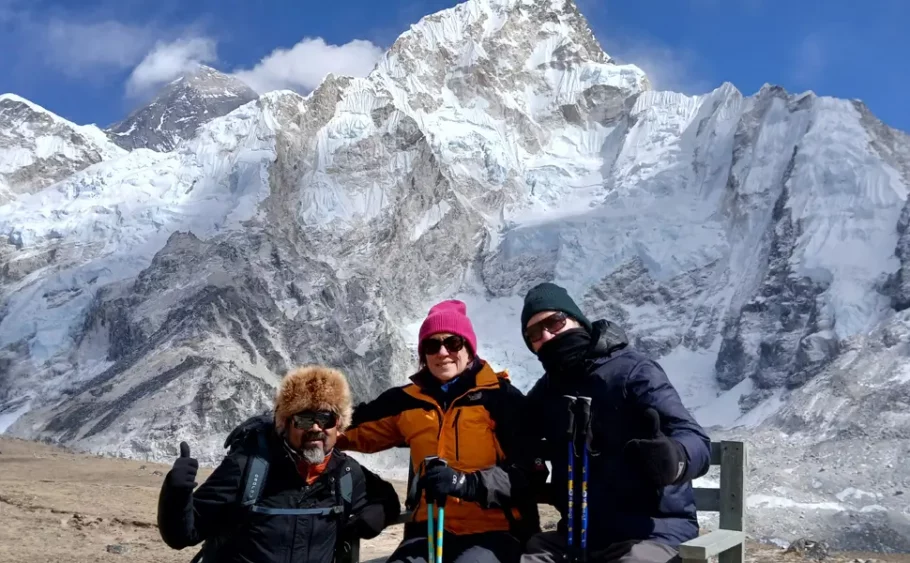
The best panoramic view of Everest, Nuptse, and the Khumbu Icefall can be found at 5,545m on Kala Patthar, making it the ideal location for your epic photo moment.
Altitude sickness is real and can be dangerous. The EBC trek follows the “climb high, sleep low” rule and includes rest days in Namche Bazaar and Dingboche to help your body adjust.
Symptoms of AMS (Acute Mountain Sickness)
Always ascend slowly, drink plenty of fluids, and avoid alcohol. If symptoms worsen, descend immediately.
Everest Base Camp Trek Return by Helicopter
For those short on time or wishing for a more comfortable return, you can trek up to EBC and then fly back by helicopter to Kathmandu in under an hour.
Advantages
You don’t need to be a mountaineer, but a moderate level of fitness and mental determination are essential. It’s a challenging trek, mainly due to the altitude, not the technical difficulty.
Packing smart is essential. Here’s a basic checklist
Trekking package cost starts
Note: Many trekkers choose a package trek with a local agency, which includes permits, guide/porter, lodging, meals, and internal flights.
Trekking to Everest Base Camp in any month or season may depend on personal preference because each has advantages and disadvantages of its own. Even though most domestic and international tourists travel to Nepal to trek Everest during the busiest time of year, this does not imply that no tourists travel during the off-season. In contrast to its later seasons, the peak season will see a large number of trekkers heading toward Everest base camp. However, visitors will not be disappointed by the icy scenery of the majestic mountains, stunning landscapes, and interactions with local ethnic Sherpa settlements, regardless of the weather, seasons, or months.
Last but not least, safety must always come first when traversing the difficult and rugged terrain of the Everest region because accidents or natural disasters can occur at any time of year. Therefore, for the ideal Himalayan experience, the trek must be meticulously planned and carried out.