Located in the northeastern part of Nepal, Everest is the world’s tallest peak. Many visitors from all over, domestically as well as internationally, visit Nepal’s Everest region for the Everest base camp trek. Known for its beautiful landscapes and tall Himalayas trekking to Everest Base Camp is a once in a lifetime experience.
It also caters to visitors and trekkers with time constraints as they can opt for the Everest Base Camp Short Trek, which is a condensed version of the Everest base camp classical trek. Hence, completing the trek on time might not be an issue as trekkers are not bound to choose a set route they can choose the classical route, an alternative route, or the Everest short trek route.
As popular as it is the Everest base camp is one of the most strenuous and toughest treks in the world. Starting from Lukla, the trek makes a journey through various tough and rugged terrains with beautiful mountains and lush landscapes but the difficulty and the route are decided by the trekkers as they have the option of different routes which creates a different experience for individuals.
Many people choose the classic route as well as the Everest base trek 12 days route as they want to enjoy and experience the Everest region in a shorter time frame. Whereas some people prefer the latter and choose the alternative routes which take trekkers through tough and rugged terrain, local ethnic settlements of the Sherpas, and beautiful natural vegetation which gives a visitor a detailed perspective and experience of the Everest region.
Every route has its own set of drawbacks but the weather in the Everest region can make or break the trekking experience no matter what route one is on. Hence having detailed knowledge about seasons and weather conditions is necessary for an unforgettable and pleasant trekking experience. In this article, you will learn about the right season to trek to Everest Base Camp, as well as the weather and conditions of Everest base camp so stick around until the end to learn more.
Seasons and weather conditions of the Everest region
One of the most popular and best experiences is the Everest Base Camp Trek in the high Himalayas of Nepal. This amazing trail is accessible all year round. However, choosing the ideal time to go on the trek is crucial. It will increase your trip’s comfort level and ensure your safety as natural calamities and accidents can happen anywhere. All things considered, the weather has a big impact on how well an amazing trekking trip goes.
Weather in spring
The spring season starts in March and ends in May. The entire spring season is marked by beautiful weather and temperate temperatures. This trek in the Everest region is worthwhile because of the beautiful Himalayas and landscapes. There won’t be any more weather-related problems on the journey to the Everest base camp as you walk in peaceful and relaxing surroundings. But there isn’t any guarantee of stable weather at the higher altitudes of the trek and you will still feel the impacts of winter as the first part of March is a transitional month.
Along the pathways in the spring, a variety of plants are in bloom. Nature lovers may find it fascinating to see the stunning pine and rhododendron trees. Hence, the terrain is both magnificent and tough. The Everest Mahalangur range, which includes Mount Everest, looks breathtaking during this season. The trek is also blissful due to the dry weather and minimal rainfall. In the spring, the region experiences temperatures between 15°C and 25°C. However, the weather becomes quite cold after sunset as it gets dark and even colder on the higher trail paths.
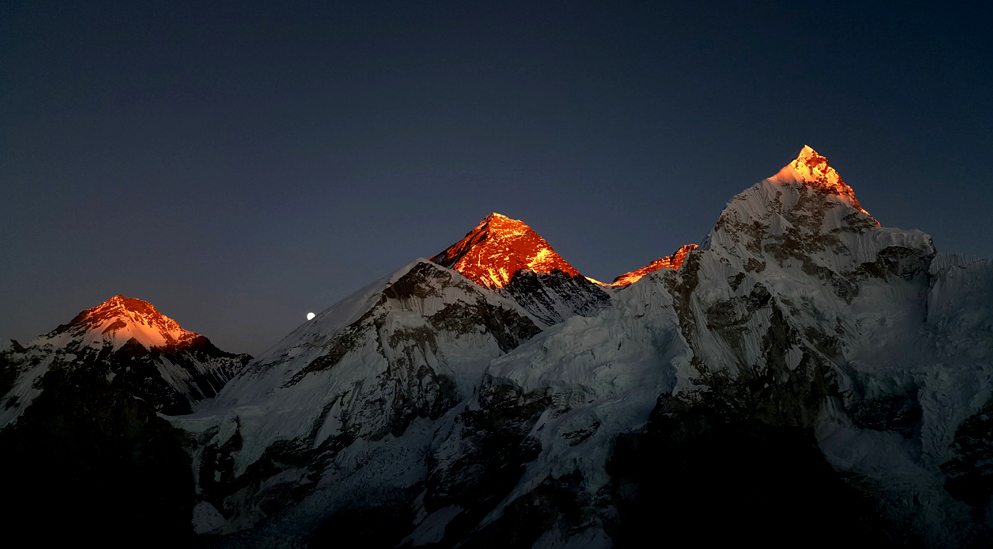
Everest, Lhotse, Nuptse
Weather in monsoon
The monsoon season which spans from June to August can be a very tricky season to trek to Everest Base Camp. Trekking during this season can become extremely difficult because of weather related difficulties. You will be trekking the paths in challenging conditions. Due to heavy rainfall during the monsoon season, the area around the route is damp and humid. The trails are extremely dangerous as they are muddy and slippery due to the heavy rainfall. A cloudy and dark sky along the trails also becomes a problem as it affects visibility.
Therefore, navigation through terrains becomes nearly impossible. Natural calamities such as landslides and flooding might also occur during this season due to heavy rainfall. Hence, trekking to Everest Base Camp during this season is quite challenging.
Weather in autumn
The season of autumn starts in September and ends in November. This season is known as one of the best seasons for the Everest base camp trek. You will get a once-in-a-lifetime experience as you travel through scenic mountains and beautiful and lush landscapes in amazing weather. The temperature and weather conditions make a perfect moment in the daytime for the trek. Temperatures will vary from 10°C to 20°C during this season making it one of the most comfortable seasons to trek as you can trek the amazing routes and terrains without encountering any weather-related difficulties.
Also, it won’t snow or rain when you visit the area. However, the higher altitude areas will be colder compared to the lower areas. This season offers trekkers a chance to view fantastic scenery as the snow-capped mountains of the Everest region are visible. Trekking in autumn is pleasant and joyful due to the cool and moderate atmosphere. Also, during this season, the population that moved to the lower towns and villages during the winter moves back to the upper parts which gives trekkers a chance to interact with ethnic locals and also build some form of familiarity with the local sherpa settlement’s culture and tradition.
Weather in winter
Another off-season that makes the trek difficult in the Everest region is winter, which runs from December to February. You will go through beautiful scenery and get a distinctive winter experience. but the routes will be covered in a thick layer of snow due to cold and freezing temperatures. Shorter and darker days can make the treks more difficult. The routes will take you through amazing terrain.
However, you may also see breathtaking mountains covered in snow in the area. Weather can become unpredictable and cause weather-related issues such as significant snowfall, snowstorms, etc in the region. The temperature in the area can drop as low as twenty degrees. So you will need to protect yourself from frostbite and cold conditions by keeping yourself warm and cozy. Aside from that, the trail for this walk has fewer trekkers due to harsh weather conditions. There will also be fewer tea shops, lodging options, and dining establishments as most of the local ethnic populations of sherpa settlements move to the lower villages and towns of the region to save themselves from harsh climatic conditions and freezing temperatures.
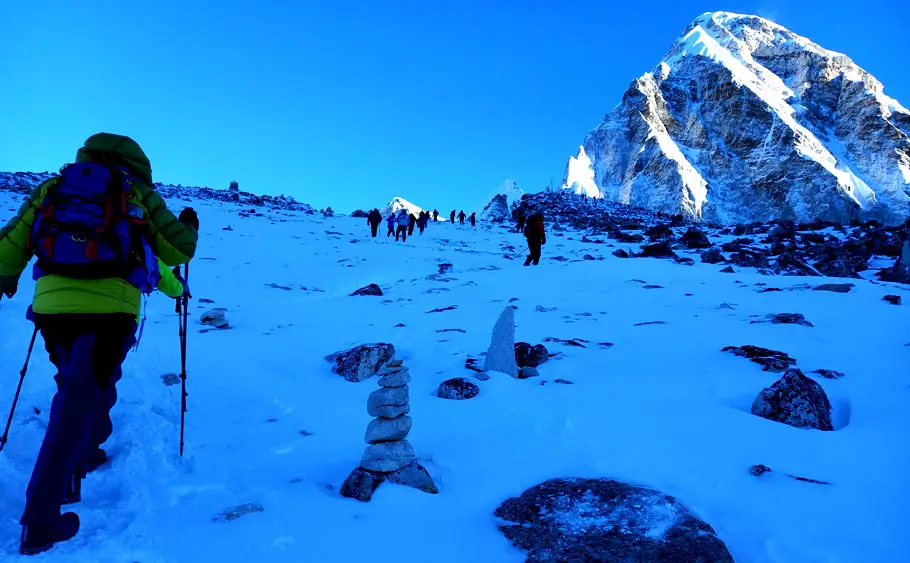
Winter Trek
Best time to trek Everest base camp
The ideal months to travel to the Everest base camp of the Khumbu region are six months September, October, November, March, April, and May. These are the most appropriate and recommended times to undertake trekking in the Everest region and its base camp. The autumn and spring seasons coincide with these months. The Himalayan region is perfectly visible when trekking during the best months. During these months, the region’s mountain ranges offer exquisite flora and fauna, and the general atmosphere is also pleasant and blissful.
These are the best months of the seasons as the weather is clear, providing a view of the distinct flora and fauna as well as a sky with fewer clouds and a vibrant atmosphere. During these months in Nepal, you can enjoy the helicopter tour to Everest base camp.
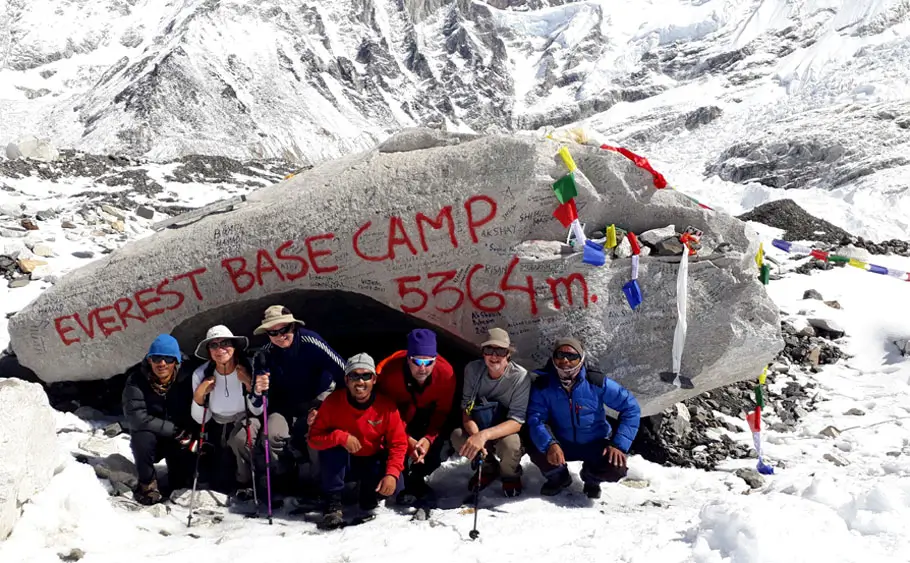
Knowing all the various seasons, their climates, and the months that fall within them is common information for a country like Nepal as it is one of the popular tourist hotspots known for its beautiful Himalayas, lush landscape, and diverse natural environment so that one can be prepared for any eventuality. Hence, it is a thrilling, challenging and pleasant experience to have reached a height of 5,364 meters (17,600 feet) of the Everest base camp.
What to Pack for the Everest Base Camp Trek in Different Seasons
Packing the right equipment is essential for a comfortable and enjoyable Everest Base Camp Trek.
The weather can change quickly, and temperatures become colder as you gain altitude. Therefore, trekkers should prepare for different conditions rather than relying on a single set of clothing.
Packing list for spring and autumn
Moisture-wicking thermal base layers.
Comfortable trekking trousers.
Fleece jacket or mid-layer.
Insulated down jacket.
Waterproof and windproof outer jacket.
Warm gloves and trekking socks.
Sun hat, warm hat, and sunglasses.
Comfortable, well-broken-in trekking boots.
Sleeping bag suitable for cold mountain nights.
Sunscreen and personal medication.
Winter Packing List
Winter requires additional protection against freezing temperatures.
Heavy insulated down jacket.
Warm thermal base layers.
Insulated trekking trousers.
Waterproof outer layers.
Thick gloves and warm mittens.
Warm hat and neck covering.
High-quality sleeping bag suitable for winter conditions.
Warm trekking socks.
Appropriate cold-weather footwear.
Monsoon Packing List
During the monsoon season, waterproof equipment is especially important.
Waterproof jacket and rain trousers.
Backpack rain cover.
Waterproof trekking boots.
Quick-drying clothing.
Extra pairs of socks.
Waterproof bags for important belongings.
Trekking poles for slippery trails.
A lightweight towel.
Regardless of the season, pack in layers so that you can adjust your clothing as temperatures and weather conditions change.
Tips for Choosing the Best Time for Everest Base Camp Trek
Choosing the right month is only one part of planning a successful Everest Base Camp adventure. You should also consider your physical preparation, acclimatization, itinerary, and weather conditions.
Here are some practical recommendations to help you plan your journey.
Choose the Right Trekking Season
Most hikers choose spring or fall. April and October are suggested because these months provide the best weather and usually scenic views on the mountains.
Allow enough time for Acclimatization
Everest Base Camp Trek presents altitude sickness challenges as you hike to higher elevations and decreasing levels of oxygen. Give your body adequate time to adjust.
An appropriate itinerary will include two to three days for acclimatization to help adjust to the altitude in and around Namche Bazaar and Dingboche. Fighting the urge to rush to the base camp to save time and complete the trek in fewer days is important.
Check Weather and Trail Conditions
There is unpredictable weather in the mountains. Check local weather forecasts and ask your trekking guide about the latest trail conditions before beginning each trekking day.
Book accommodation and flights in advance
Spring and autumn are busy trekking seasons. Booking your Lukla flights and accommodation in advance can help avoid unnecessary last-minute difficulties.
Prepare for cold nights
Even during spring and autumn, nighttime temperatures at higher elevations can fall below freezing. Carry suitable warm clothing and a sleeping bag appropriate for the season.
Trek with an experienced local guide
An experienced local guide can help you understand the mountain environment, manage daily walking schedules, monitor weather conditions, and recognize possible symptoms of altitude sickness.
Local knowledge is particularly valuable when weather or trail conditions change unexpectedly.
Keep extra days for possible delays
Flights to and from Lukla can sometimes be delayed or cancelled because of poor visibility or unfavorable weather.
Including one or two extra days in your travel schedule can help you manage unexpected transportation delays.
Conclusion – When Should You Plan Your Everest Base Camp Trek?
Choosing the best time for the Everest Base Camp Trek depends on the kind of Himalayan experience you want. However, spring (March to May) and autumn (September to November) remain the most recommended seasons for most trekkers.
Clear mountain views, stable weather, and good trekking conditions can be found in October and early November. If you want warmer weather and blooming rhododendron forests, hiking in April and May can be good options.
Winter and monsoon treks can also be done but require more flexibility due to unpredictable weather conditions and variable temperatures.
At Hill Sherpa Trekking, we have first hand experience with the Everest region. We have an excellent understanding of the Khumbu Trails. Our Sherpa team works closely with trekkers, helping them make the right itinerary choices and giving them the best possible experience. We ensure that our guests have a safe and comfortable trek by adjusting the pace and itinerary according to each trekkers needs.
The Everest Base Camp Trek is one of the classics and if time permits, we can also help you do the shorter treks in the area.
What is the best time to trek to Everest Base Camp?
The best times to go to Everest Base Camp are spring (March to May) and autumn (September to November). These times generally have better weather and clearer views of the mountains. April and October are the most popular months.
Which month is best for the Everest Base Camp Trek?
Most consider October to be the best month for the Everest Base Camp Trek as there is typically clear and stable weather with great views of the mountains. While October takes the crown for clear skies, the Rhododendron forests in April are said to be beautiful.
Can you trek to Everest Base Camp throughout the year?
While you can trek to Everest Base Camp year round, the trekking conditions and your experience vary seasonally. Spring and Autumn are the recommended seasons, while Winter and Monsoon seasons require additional preparation.
Is spring a good time for the Everest Base Camp Trek?
Spring is a great time to go on the Everest Base Camp Trek. Between March and May, the weather is warmer and the mountain views are great, with the rhododendron forests in bloom. April is the most popular month with trekkers.
Is autumn the best season for the Everest Base Camp Trek?
It’s widely known that autumn is the best time of the year for the Everest Base Camp Trek. October and November provide excellent weather with clear skies, little to no chance of snow, and therefore, great views of Mt. Everest.
Can I trek to Everest Base Camp in winter?
Trekking is possible between December and February, but expect sub-zero temperatures at the higher altitudes and the effects of snow on the trails. The support staff will know the current situation and can assist in deciding whether to make a particular day’s trek.
Is the Everest Base Camp Trek possible during the monsoon season?
Yes, the trek can happen during monsoon season (June through August), but it is usually not recommended during these months. Visibility is poor due to rain and cloud cover. The trails become muddy and slippery. Flights may also be delayed and cancelled due to poor weather.
What is the temperature at Everest Base Camp during the trekking seasons?
The temperature at Everest Base Camp varies depending on the season and weather conditions. Even during spring and autumn, temperatures can fall below freezing at night. Winter is considerably colder, and trekkers should prepare for freezing conditions throughout the year.
Which season offers the best mountain views during the Everest Base Camp Trek?
Autumn generally offers some of the clearest mountain views, especially in October and November, because the atmosphere becomes clearer after the monsoon. Spring also provides excellent Himalayan scenery, particularly during clear mornings.
Is October too crowded for the Everest Base Camp Trek?
October is a peak month for tourist traffic in the Everest region. Popular villages like Namche Bazaar, Tengboche and Dingboche can get crowded. Advance planning and booking of your lodge accommodations and organizing your daily trekking itinerary is recommended.
What is the best time for a less crowded Everest Base Camp Trek?
Late November, early March, and December generally offer quieter trekking conditions than the peak months of October and April. However, temperatures can be colder, particularly at higher elevations, so proper preparation is important.
What should I pack for the Everest Base Camp Trek in different seasons?
Your packing list varies with the season. For spring and autumn bring thermal clothes, a down jacket, waterproof layers, trekking boots, gloves and a warm sleeping bag. For winter you need additional insulation. For monsoon, you need waterproof clothes and a waterproof backpack cover.
Is the Everest Base Camp Trek safe during spring and autumn?
Spring and autumn generally offer the most favorable trekking conditions. However, altitude sickness, sudden weather changes, and challenging mountain terrain remain important risks. Proper acclimatization, suitable equipment, and experienced local guidance are essential.
Can beginners trek to Everest Base Camp?
Yes, beginners with good physical fitness and proper preparation can complete the Everest Base Camp Trek. Previous high-altitude trekking experience is helpful but not essential. A suitable itinerary, gradual ascent, acclimatization days, and experienced guide support are important.
How many days are needed for the Everest Base Camp Trek?
It takes around 9 to 14 days to complete a typical Everest Base Camp Trek, depending on things like your itinerary and how well you are acclimatizing to the altitude. Some itineraries can be done in less time, however adequate time for altitude acclimatization must always be prioritized.