Traditional Marriage Ceremony in Nepal – Complete Guide to Culture, Rituals, Castes, and Wedding Planning in Nepal
Nepal, home of the great Mount Everest, is one of the most wonderful places in the world to start a new life together. A wedding in Nepal goes beyond a simple event. It is a fusion of culture, family, and the bridal couple; however, most deeply revered for its intent to unite and bless the couple.
Here is a guide to marriage in Nepal, complete with descriptions of the ceremonies, ethnic groups, castes, wedding rituals and planning. This guide will describe the marriage system in Nepal, and will also describe the wedding planned by Hill Sherpa Trekking for a smooth and meaningful wedding with all the details.
Traditional Marriage in Nepal
Marriage in Nepal is a highly valued life event for the couple and parents. It is a deeply loved social practice that is founded on family values, religious affiliations, and cultural traditions. Marriage in Nepal is not like modern Western weddings. It is a community event, attended by friends, relatives, and elders.
In all places of the world, a wedding is a unification of two people and families, blessed by the gods and ancestors. In a modern, urbanized world, a wedding is temple-centered, hotel-centered, and even mountain-centered all over the world, but still family-centered.
Caste and Ethnic Diversity in Nepal
With over 120 castes and ethnic groups, Nepal has a tradition of caste diversity and ethnic pluralism. Nepal is home to the four main castes of Hinduism (Brahmins, Kshatriyas, Vaishyas, and Shudras) and a number of ethnic and indigenous groups: Gurung, Magar, Rai, Limbu, Sherpa, Tamang, Tharu, Newar and others. Each of these sub-groups has different languages, styles of clothing, music, and styles of marriage.
As customs marry the modern, urban communities show increased willingness to participate in inter-caste and inter ethnic marriages, and communities show increased willingness to embrace inter-caste and inter-ethnic marriages.
Types of Marriage in Nepal
Nepal has a unique tradition with respect to marriage. Nepalis participate in arranged marriages, love marriages, and inter-ethnic and inter-caste marriages. These marriages comprise a diverse ethnic and caste group, which is indicative of the modern Nepalis’ view. Custom adheres to tradition regardless of the above-mentioned marriages; they all participate in the cultural ceremonies and rituals.
Traditional Hindu Wedding Ceremony
Hindu marriages comprise the common and the ritual, the common being a diversified group of castes and the ritual being the ceremonial rites and the sacred fire, which adheres to the rituals of purity and the divine.
The celebration starts with a procession known as Janti for the groom’s side, with lots of music and dancing. The father of the bride welcomes the groom with respect and some traditional customs.
During the wedding, the couple, through the guidance of a priest, initiate their wedding with some traditions. A very significant practice is when the groom puts the bride’s Sindoor (Vermillion) as a symbol of the bride’s new married status. Depending on the wedding traditions, the bride also gets a ceremonial necklace known as the Mangal Sutra or Pote.
After all wedding customs are completed, the ceremony is capped with the family’s gratitude and the bride’s farewell, known as Bidai, as she moves on to her new family.
Buddhist Wedding Ceremony in Nepal
Sherpa, Tamang, and many other Himalayan ethnic groups host Buddhist weddings. They are Lagna or Buddhist wedding ceremonies. The Buddhist Lama leads them and is spiritual and peaceful.
The wedding ceremony focuses on prayers, blessings, and ensuring harmony between the couple. Buddhist weddings also do away with wedding fire rituals. They instead prefer chanting and spiritual blessings, which are conducted to instill peace, happiness and longevity in the couple.
Buddhist Lagna weddings are simple, but very significant and of great value. It signifies the Buddhist doctrine of balance and compassion.
Christian Marriage in Nepal
Christian weddings are in Nepalese churches and are based on the teachings of the Bible. They are church and biblical celebrations, as hymns, scripture, celebrations and prayers, and the exchange of vows takes place.
Many Christian weddings in Nepal have included traditional celebrations with family and food, where faith and local customs are enhanced.
Wedding Tradition of the Sherpa
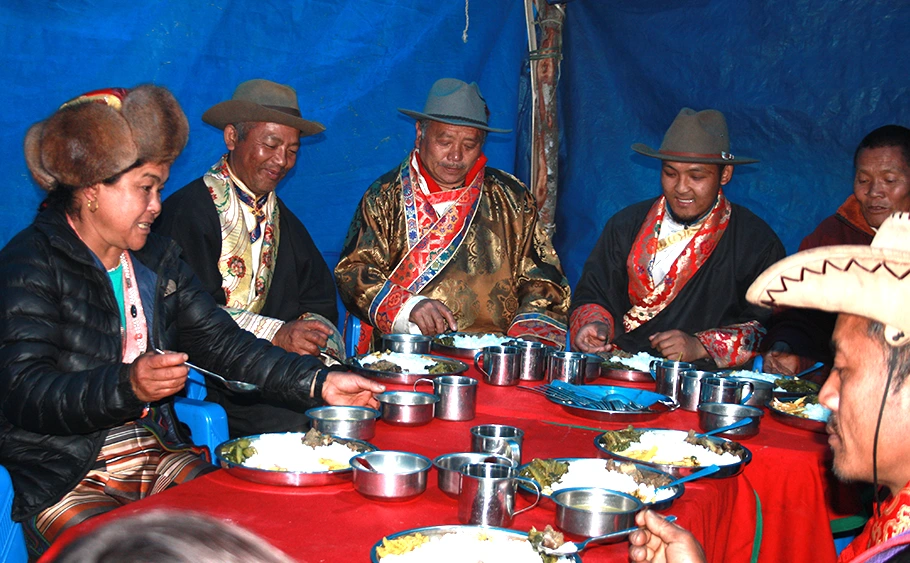
The wedding ceremonies of the Sherpa of Namche Bazaar, for example, and many other Tibetan and Sherpa ethnic groups, are very spiritual, simple, and conducted with family satisfaction in their homes or in Buddhist Monasteries.
The wedding celebrations of the Sherpa people have included traditional meals, folk songs, and the hospitality of the local people for community participation.
Magar Wedding Tradition
Magar weddings are simple and communal. Everyone, from families to the whole village, participates in weddings. Because of this, the focus is on the social rather than the extravagant. The joyous dances and music that accompany weddings serve to highlight the environment of the wedding and the importance of the pride and social connection that mark the occasion.
Rai Wedding Tradition
Rai weddings include indigenous customs and beliefs. These weddings include the hosting of the Nakchhong, an indigenous marrying priest, who marries the couple through intrinsic customs that involve elements of nature and elements of the occasion. The Rai traditions remain through music and dances.
Gurung Wedding Tradition
Gurung weddings are equally joyous. Like the other traditions, this celebrates the uniting of families and clans through joyous music and dance.
Engagement Ceremony in Nepal
In the Nepali culture, marriage is only seen to begin with the formal engagements. The start of marriage customs is signified by the meeting of the families, who exchange gifts and blessings that are to be extended to the marriage. This is where the ‘official’ exchange of rings takes place, along with a blessing from the family. This is the marriage customs that the families are signifying to create a union between them.
Nepal’s Pre-Wedding Traditions
Nepalese weddings hold significant importance for families, especially during the functions that bring families together, such as the Mehendi and Haldi ceremonies. The Mehendi ceremony is the henna application that adorns the bride’s hands and symbolizes love and beauty. Haldi is the yellow paste made of turmeric that is applied to the bride and groom. This is believed to bless and purify the couple before they wed.
The Step by Step Guide to Marrying in Nepal
Marrying in Nepal begins with a family agreement or the couple’s mutual understanding to wed. The next critical step is to choose an auspicious date for the wedding. The wedding festivities and rituals then begin. Nepali custom dictates that after the wedding, the bride’s residence is changed to the groom’s family home. Couples further formalize the marriage through legal registration, especially in modern Nepal.
Marriage Registration in Nepal
As is the case for legal marriage in many countries, Nepal requires marriage registration to acknowledge the new relationship. Couples must go to the office of one of the Nepal marriages with the right documents. Marrying Nepali couples may be simpler than marrying foreigners. The foreigners have specific legal requirements, such as more legal documents and higher processing times, to marry in Nepal. Despite the added time and documents, the legal marriage simultaneously offers legal recognition of the marriage.
Current Wedding Trends around Nepal
There have also been changes concerning weddings in Nepal. Modern weddings, including external marriages, legal registrations, and a plethora of marriage services and options, have become available. Having destination weddings and helicopter weddings in luxurious hotels has become a phenomenon. Couples also have weddings that mainly reflect their individuality while simultaneously intertwining their tradition. Marriages, especially intercaste, have also become less restricting and more varied in society.
Wedding Planning Support by Hill Sherpa Trekking
For international couples, Kathmandu wedding planning can be a difficult process. Hill Sherpa Trekking has wedding support services to assist with venue suggestions, cultural arrangements, permits, logistics and event photography and editing services.
Services include planning for the traditional ceremonies in Kathmandu or planning for a wedding in the foothills of the Himalayas. Hill Sherpa Trekking strives to take on the wedding planning stress, so the couples can enjoy the beautiful event.
Highlights
- Cultural and spiritual procedures
- More than 120 styles of ethnic marriages
- Stunning Himalayan wedding venues
- Willing to accommodate any size wedding budget
- Willing to accommodate marriages, both legal and customary
- Distinctive mountain and village wedding venues
- Full-service planning through Hill Sherpa Trekking
FAQs
Can foreigners legally get married in Nepal?
Absolutely, Nepalese law supports the marriage of foreign and international parties. However, foreign couples need to accomplish the legal step of document verification, substantiating court procedures, and fulfilling some residency regulations. Because of Nepal’s rich and unique culture, some couples opt to combine legal marriage certification with a ceremony, enriching their experience with the mortis of marriage in Nepal.
What are the requirements for marriage in Nepal?
Legality aside, marriage in Nepal does come with its own documents that couples will need to fulfill. Passport, visa, recent passport-sized photographs, some are a no objection documents status from their home country’s embassy, and a witness are all requirements. Depending on the courts and the documents, there may be varying requests for sustainability.
How long does the marriage registration process take?
Marriage document proceedings in Nepal usually take two to three weeks. The restrictive factors are Document verification, court approvals and residency. International couples should anticipate the need to stay in Nepal while these steps are taking place. Only after all the legal formalities are fulfilled will the court recognize the marriage by issuing a marriage certificate.
Can we have both a legal and traditional ceremony?
Certainly, in Nepal, it is traditional to have both legal and religious wedding ceremonies. It is common to first register marriages legally and then host religious ceremonies. This practice provides a balance between legal requirements and emotional, psychological, and traditional wedding practices in Nepal.
What is the best time of year to marry in Nepal?
Spring (March to May) and autumn (September to November) are optimal wedding months in Nepal. The weather settles to a steady state with clear skies and ideal temperatures. Photographers, guests, and the wedding party will all enjoy the optimal conditions for mountain views.
How safe are marriages that are mountain based for the Himalayas?
Yes, Mountain-based marriages for the Himalayas are safe with the use of a planned and well-coordinated structure. It is usually great for you, your guests, and the bride. It is not likely to be safe for your guests, as health and environmental issues are common with the high peaks. With the use of preliminary activities, support, and willingness to undertake great risks, you are likely to have a life-lasting experience with mountain marriages.
How much does a wedding cost in Nepal?
Traditional wedding expenses are generally between USD 7,000 and 11,000. Simple weddings in basic venues can run USD 12,000 to 22,000. Destination, luxury, or high-end weddings can range between USD 29,000 and 60,000. Prices primarily depend on catering, venue selection, and decor, as well as transportation and lodgings for the guests, wedding photography, and the overall wedding management.
Can wedding rituals be customized in Nepal?
In Nepal, wedding rituals and traditions are interchangeable for the couples’ guest list, religious affiliations, and practices. For contemporary weddings, most families in Nepal and the Nepali Customs place a high value on tradition, which can be, and often are, integrated. For instance, they can be merged with personalized details, including shorter wedding ceremony durations, destination settings, or contemporary and modern themes. Consequently, they can have traditional Nepali wedding ceremonies and practices.
Does Hill Sherpa Trekking organize wedding ceremonies in Nepal?
Yes, Hill Sherpa Trekking handles the end-to-end wedding organization and planning in Nepal. To that end, they assist with venue selection, legal documents, and frameworks, and arrange for traditional and contemporary rituals. we company handles everything to make the old-fashioned, contemporary, and traditional wedding celebrations for the couples and their families stress-free.