Govt. Tourism License 3195/080/81





Kanchenjunga Base Camp trek


- Best Price Guarantee
- Secure Online Booking
- Flexible booking dates
- Owner operated company
- Decades of experience
- Dedicated sherpa team
- 100% success rate
- 5/5 ratings by travelers


Highlights of Kanchenjunga Base Camp trek
- Discover the untouched and remote Kanchenjunga Base Camp Trek route in eastern Nepal.
- Witness spectacular views of Mt. Kanchenjunga (8,586 meters) the world’s third highest mountain.
- Explore both the North and South Kanchenjunga Base Camp routes.
- Hike through abundant rhododendron forests, alpine meadows and glacial valleys.
- Explore the true culture of the Rai, Limbu, Sherpa and Tibetan people.
- Crossing exciting suspension bridges, high mountain passes and pure rivers.
- Explore traditional Himalayan villages, Prayer flags and ancient monasteries.
- Enjoy peaceful trekking trails far from crowded tourist routes.
- Meet and see a variety of wildlife in the Kanchenjunga Conservation Area.
- Beautiful sunrise and Himalayan mountain views from the balcony.
Trip Overview
Experience the ultimate trek in the eastern Himalayas of Nepal with the highly challenging Kanchenjunga Base Camp, and get ready for both an iconic adventure and the mesmerising beauty of Nepal in the Kanchenjunga Base Camp trek. This trek begins with a scenic flight to Biratnagar, Nepal’s vibrant second-largest city, and a drive to the trek’s starting point in Taplejung.
Trekking through the Kanchenjunga Base Camp trek, tourists and travellers will have the unique opportunity to experience ancient monasteries and gompas, ethnic settlements, and lush, verdant hills. Apart from the snow capped, towering mountains and torrential rivers, the local warm hospitality in the nearly desolate area (from a touristic point of view) is remarkable and unforgettable.
On your Kanchenjunga Base Camp trek, you’ll embark on a journey along the meandering Tamor River. You will enjoy trekking through the scenic waterfalls and the infamous caves of Chiruwa, while crossing steep trails and passing through lush pastures and small villages. Beyond the steep trails, you will encounter fragrant cardamom fields and dense bamboo and rhododendron forests. Finally, you will arrive at a Tibetan refugee settlement where you will see a poignant Dhunsa.
One of the biggest challenges of this trek is the crossing of Miring La Pass, which sits at 4,650 meters. After 4-8 hours of hiking on an intensifying trail surrounded by rocks, brave enough to forget your safety to reach the haven of Tseram, you will be able to call yourself a Kanchenjunga Base Camp trekker confidently. After Tseram, you will hike up to a breathtaking view of the third tallest peak in the world, Mt. Kanchenjunga, which is better known as the FIVE TREASURES of the GREAT SNOW.
From Tseram, you will descend to Trongten, Phumpe Danda, and then Sherpa Gaun, which is the first location on the culturally diverse trails of this trek. After visiting Kade Bhanjyang and Lali Kharka, you will finally be able to relax and celebrate reaching the Kanchenjunga Base Camp Trek. Take a flight from Suketar Airport back to Kathmandu to reminisce about the amazing experience this trek gifted you.
Trek to Kanchenjunga Base Camp isn’t for the faint of heart. Each leg of the hike will take you 6-8 hours and will require you to cross steep and rugged trails, and to reach the Base Camp, you will also have to cross many treacherous passes. For the best experience, plan to visit between September and October or March and May to enjoy clear skies and weather and witness the beauty of the Himalayas. Kanchenjunga Base Camp trek isn’t for those who want an easy trek, like Ghorepani poon hill, the Everest Base Camp trek, or the Langtang Valley trek, but rather is for those who want to experience the sense of fulfilment that comes from visiting one of the most beautiful places in the world.
Kanchenjunga Base Camp trek Itinerary
01
Day 01: Flight from Kathmandu to Biratnagar, then drive to Taplejung
You embark on the much awaited Kanchenjunga Base Camp Trek. You will start your journey by flying from Kathmandu to Biratnagar. Biratnagar is one of the largest and most prominent industrial cities in Nepal. You will experience aerial views of the lush hills, river valleys, snow-capped peaks of the Himalayas, and the vast plains of eastern Nepal along the 45 minutes flight.
Upon arrival in Biratnagar, you will begin a long and scenic drive to Taplejung, the starting point for the Kanchenjunga Base Camp region. You will drive along the East-West Highway, which will begin to ascend. Once started, you will drive along winding roads through the villages with terraced farmlands and forests in the green hills. Along the drive, the climate will go from a warm tropical to a cool mountain climate.
By evening, you will arrive in the Taplejung district, which is a peaceful hill town with stunning landscapes and traditional mountain culture. You will spend the night in Taplejung.

Duration
7-8 hours
Max Altitude
1,440 M
Activity
Flight/drive
Meals
Breakfast, Lunch, Dinner
Accommodation
Local Teahouse
02
Day 02: Trek from Taplejung to Chhirwa
Your Kanchenjunga trek starts today. The Tamor River runs alongside your trail, and the hiking is easy through the many remote villages and farms. The hills and farms are only a short distance from the villages. The villages along the way include Dobhan, Bojhe, Mahadevtar, and Panisar.
Your path will include many ups and downs, across wild and fun terrain the included crossings. The forests and valleys will be along the passage for the traditional mountain settlements, Mitlung, Sinwa, and Tawa. Within this cultural landscape, this day will be both distinct and enjoyable.
Your first night in the Limbu village of Chhirwa, with its warm and cultural hospitality.
Duration
4-5 Hours walk
Max Altitude
1,185 M
Activity
Trekking
Meals
Breakfast, Lunch, Dinner
Accommodation
Local Teahouse
03
Day 03: Trek from Chhirwa to Sekathum
While trekking today, you’ll pass through the wild and untamed beauty of Kanchenjunga Base Camp, following the Tamor River. This path winds through tiered rice paddies, fields of cardamom and small farms. Occasional villages will dot your way, including Taplethok, Tamewa and Margen. Horse-drawn carts will transport goods through the bright verdant hills and peaceful rivers and through the rural, eastern areas of Nepal.
The path is not devoid of vertical sections. However, the sections that take you through canyons and require crossing suspension bridges can be exciting. The path will take you past the Ghunsa River and Sekathum, the settlement that lies within the steep walls of cliffs and thick, heavy woodlands. You will be able to venture farther into the remoteness of the Himalayas and the terrain will change to rugged and steep. You will be well prepared for the high-altitude trekking of the coming days. You will spend the night at Sekathum.
Duration
5-6 Hours walk
Max Altitude
1,650 M
Activity
Trekking
Meals
Breakfast, Lunch, Dinner
Accommodation
Local Teahouse
04
Day 04: Trek from Sekathum to Gyabla
This day is one of the most fulfilling days of the Kanchenjunga Base Camp Trek as the trail takes you deeper into the wild parts of the Himalayas. Following the beautiful Ghunsa River, the route takes you through woods and valleys covered in all variations of trees.
The trek includes many steep ascents and descends across narrow suspension bridges, rocky mountain paths and waterfalls. Trekkers along this path can watch for glimpses of some rare Himalayan wildlife. Higher along the trek, one can observe stunning and dramatic landscapes.
After all the trekking for the day through the untamed and wild forests and valleys, you will reach Gyabla, a traditional Tibetan-influenced village. Gyabla has stunning and unique mountain culture, as well as an all encompassing peaceful aura. Gyabla will be your overnight hibernation for the day.
Duration
6-7 Hours walk
Max Altitude
2,727 M
Activity
Trekking
Meals
Breakfast, Lunch, Dinner
Accommodation
Local Teahouse
05
Day 05: Trek from Gyabla to Ghunsa
Today’s trek takes you further into the stunning alpine areas towards the Kanchenjunga Base Camp. This variety of ecosystems includes crossing many mountain rivers and dense forests of different types of trees. The higher you go, the more you are rewarded with beautiful mountain landscapes and fresh air.
You will arrive at the Tibetan refugee settlement of Phale along the way. You will have time to experience the local community and buy beautiful Tibetan souvenirs and handicrafts. The remainder of the path will be lined with prayer wheels, Mani stones, and other symbols of Tibetan Buddhism.
The trek’s final reward is the lovely Sherpa village of Ghunsa. Ghunsa is the Kanchenjunga region’s largest settlement. The location is surrounded by mountains. Construction is one of the best examples of mountain architectural features. The mountains and a variety of other things make Ghunsa the perfect spot to slow down for a while and adjust the body for the biggest challenge, high altitude. You will have an overnight stay at Ghunsa.
Duration
6-7 Hours walk
Max Altitude
3,415 M
Activity
Trekking
Meals
Breakfast, Lunch, Dinner
Accommodation
Local Teahouse
06
Day 06: Acclimatization Day at Ghunsa
An acclimatization and rest day occurs at Ghunsa, and with good reason. Your body needs time to adjust to the 4,000 meters trekking challenges that lie ahead. A rest day can be boring, but at Ghunsa, you can explore what this site has to offer.
Ghunsa is a small Sherpa village. Sherpas are well known and praised for their culture. Sherpa houses are made from stone and their culture encompasses ancient Buddhist beliefs. The houses often include a place of worship either for a religion or the practice of Buddhism. These houses often have prayer flags lining their walls and are called Mani walls. In Ghunsa, you can learn about these walls through a local. Ghunsa takes pride in its hospitality. After exploring the village, one can continue briefly to Lapsang La Monastery where the views are interesting and the acclimatization is beneficial.
After a long day, it is good to rest and build on the day’s experience. Ghunsa has gracious hospitality and will welcome you to stay in their teahouse for the night.
Max Altitude
3,415 M
Activity
Rest/acclimatization
Meals
Breakfast, Lunch, Dinner
Accommodation
Local Teahouse
07
Day 07: Trek from Ghunsa to Kambachen
Today’s trek takes you through the untouched wilderness above the tree line into the beautiful landscapes of the high alps as you undertake the Kanchenjunga Base Camp trek. As you set out from the beautiful village of Ghunsa, you will be following the trail that leads you to the Ghunsa River, and continuing onward to the rocky paths and glacial valleys that are lined with some of the tallest peaks in the region.
Altitude causes the terrain to change to stunning cliffs and glacial rivers. The mountains in this region are covered in snow and steep. The trail is somewhat gradual, however, because of the higher altitude, trekkers are required to take the trail at a steady pace. The customs of the region and the height of the trail mean that trekkers are likely to see many of the local wildlife, including the famous blue sheep.
After trekking for some time, Kambachen will finally be within sight. Kambachen will be the final stop, a rustic Tibetan village that rests within the shadow of some stunning peaks. The afternoon will be left open, so that you may rest and acclimatize to prepare for the mountain ahead. The night in this village will be completed with a stay in a local teahouse.
Duration
3-4 Hours walk
Max Altitude
4100 m / 13451 ft
Activity
Trekking
Meals
Breakfast, Lunch, Dinner
Accommodation
Local Teahouse
08
Day 08: Trek from Kambachen to Lhonak
Our route today takes us further to the most secluded sections of the Kanchejunga Base Camp Trek in the high altitudes. With Kambachen behind, the trek heads along the rocky glacial, still bleeding terrain along the Kanchenjunga Glacier, providing breathtaking vistas of the spine of the earth along with the rugged mountain terrain, with earth’s highest peaks piercing the sky.
From here onwards into the higher terrain, the magnificent greenery along the valleys disappears, being replaced by steep rugged alpine, moraines and valleys, icy valleys; there are wandering pastures of yaks, almost isolated remote Himalayan terrain. This is the region of remote Nepal; it is one of the most untouched regions of Nepal, and technically the most challenging trip.
After a steep toiling climb, you will settle with the shelter of one of the most memorable along the journey, Lhonak, surrounded by earth’s most magnificent peaks and steep rugged terrain.
You will spend the night in a teahouse in Lhonak.
Duration
4 hours
Max Altitude
4,785 m/ 15,698 ft
Activity
Trekking
Meals
Breakfast, Lunch, Dinner
Accommodation
Local Teahouse
09
Day 09: Hike to Kanchenjunga North Base Camp (Pangpema) and Return to Lhonak
The highlight of the Kanchenjunga Base Camp Trek definitely comes at the point when we trek to the Kanchenjunga North Base Camp (Pangpema). We will have to start walking early in the morning from Lhonak across the glacial moraines’ rugged tracks to reach our destination, located within the high altitude wilderness region of the Kanchenjunga Region.
In our trek, we will have the opportunity to see the majestic mountains such as Mt. Kanchenjunga (8,586m), the third highest peak in the world and some other tall mountains including Tent Peak, Chang Himal and others. This walk is unique with glacier landscapes, ice falls and cliffs.
Kanchenjunga North Base Camp (Pangpema) is undoubtedly the best place to observe and take pictures of Mt. Kanchenjunga. This place is very remote and there is no teahouse near Pangpema Base Camp. We can enjoy the amazing scenery and click beautiful pictures and then return to Lhonak in the evening.
Definitely, this trek is very challenging but it will be extremely rewarding for us and will turn out to be the best amongst all the Kanchenjunga Base Camp Trek.
Duration
8 Hours
Max Altitude
5,143 M / 16,873 ft
Activity
Trekking
Meals
Breakfast, Lunch, Dinner
Accommodation
Local Teahouse
10
Day 10: Trek from Lhonak to Ghunsa
In today’s hike, you start a downhill trek from the pristine wilderness of Lhonak down to the scenic Sherpa village of Ghunsa, representing a significant difference in terms of terrain and altitude within the Kanchenjunga Base Camp Trek itinerary.
The hike retraces your route, passing through tough glacial valleys and rocky terrains, while en route to Ramtang and Kambachen. The hike also rewards you with the best scenery of the north face of Mt. Kanchenjunga and other majestic peaks of the Himalayas. Even though you have an easy time descending, some parts are rocky and need careful attention.
As you descend lower and lower, the environment changes from icy moraines and rocky slopes to green vegetation and rhododendrons, as well as a beautiful valley with rivers flowing. In this area, you might be lucky to encounter some rare species such as the blue sheep and snow leopards in their habitat.
Eventually, you reach Ghunsa, a breathtaking Sherpa village with prayer flags scattered everywhere, wooden houses and a Buddhist monastery. There are numerous days spent in the mountains, among which is the ideal spot to refresh and recuperate. Night halt at Ghunsa.
Duration
6-7 Hours walk
Max Altitude
3,415
Activity
Trekking
Meals
Breakfast, Lunch, Dinner
Accommodation
Local Teahouse
11
Day 11: Trek from Ghunsa to Sele Le
On today’s hike, you will be moving out of the valley and heading for the challenging and high mountain route that leads to the south face of the Kanchenjunga Base Camp Trek route. On your way, you will hike up through picturesque forests of rhododendrons, pines, and junipers while enjoying the scenic beauty of the mountains.
The terrain gets rougher and wilder, and you get more open spaces along with some impressive views of the snowcapped mountains and the majestic Himalayas.
Today walking path is comparatively quiet, offering hikers an adventurous experience in this remote part of Nepal.
You will hike up through this high altitude route for a few hours until you reach the campsite named Sele Le, which lies beneath the mountain ridges. Overnight stay at the teahouse in Sele Le.
Duration
5 Hours walk
Max Altitude
4,390 M / 14,402 ft
Activity
Trekking
Meals
Breakfast, Lunch, Dinner
Accommodation
Local Teahouse
12
Day 12: Trek from Sele Le to Cheram
This is one of the most exciting days on the Kanchenjunga Base Camp Trek as you will be passing through a series of mountain passes en route to the southern area of Kanchenjunga. You will be starting your journey early in the morning from Sele Le as the trail will lead you to Sinion La Pass (4,450m) followed by an exciting walk through an amazing ridge leading to Sinelapche La Pass (4,830m).
The views from here are absolutely amazing where you can have breathtaking panoramas of Mt. Kanchenjunga along with the surrounding Himalayas, deep valleys and other spectacular alpine sceneries. This is an incredible trekking adventure at high altitudes passing through rugged mountain terrains and wilderness areas.
Once you get done with the amazing experience of this wonderful mountain environment, the trail will continue downhill through the narrow mountain trails towards the tranquil area of Cheram. Cheram is the only inhabited area during your entire journey till here as you walk through the rugged mountain terrains and wilderness. Night halt at Cheram.
Duration
8 Hours walk
Max Altitude
3,870 M / 12,696 ft
Activity
Trekking
Meals
Breakfast, Lunch, Dinner
Accommodation
Local Teahouse
13
Day 13: Journey to the South Base Camp of Mt. Kanchenjunga via Ramche
It marks the next noteworthy stage of the journey in the context of the Base Camp Trek of Kanchenjunga. The climb will take place through Cheram, and the trek itself will take place on a steep slope across the alpine meadow, rock and glacier landscape, with magnificent views of the snow-capped peaks of the Himalayas.
Several hours later, at the end of the trail, tourists will reach the famous highland village named Ramche. Having enjoyed lunch there, tourists move on for about 40 minutes to reach the South Base Camp of Mt. Kanchenjunga located close to Yalung Glacier.
Here, travelers can admire the whole southern side of the peak, as well as glaciers, ice falls and vibrant Tibetan prayer flags fluttering in the mountain air.
Having explored the base camp and enjoyed the nature here, participants of the tour head back to the settlement of Cheram where the night stay takes place.
Duration
5-6 Hours walk
Max Altitude
4,580 M / 15,026 ft
Activity
Trekking
Meals
Breakfast, Lunch, Dinner
Accommodation
Local Teahouse
14
Day 14: Trek from Ramche to Torongding
Trek begins from the harsh alpine terrain and reverts to the milder low valley regions connected to the Kanchenjunga Base Camp Trek. After leaving the highlands, the trail traverses Cheram and subsequently descends into the thick forests of rhododendrons, pine, and bamboo in the Kanchenjunga Conservation Area.
The path is made up of sharp staircases in rocks, forested switchbacks, and rocky sections that demand care while descending. During the journey, the visitors may come across Himalayan wildlife like monals, barking deer, and rare red pandas living in the forest.
Lower elevation means more warm weather and full vegetation, quite different from the previous days spent in the high Himalayas. The walk finishes in the quiet little village of Torongding towards the end of the afternoon and is set in an ideal forest landscape. The night is spent in a local teahouse at Torongding.
Duration
4 Hours walk
Max Altitude
2,080 M / 6,824 ft
Activity
Trekking
Meals
Breakfast, Lunch, Dinner
Accommodation
Local Teahouse
15
Day 15: Trek from Torongding to Rani Pul
The current part of the trek is associated with a steep descent within the area characterized by a subtropical climate which dominates the lower part of the Kanchenjunga Base Camp Trek trail. The way winds through bamboo forests, cardamom plantations, terraced lands, and beautiful slopes full of nature and local villages.
The route passes by some small villages occupied by people of Chhetri and Limbu ethnicity who traditionally cultivate their land using primitive methods. The quiet villages, earth houses, livestock, and cultivated lands can be considered a cultural experience that gives an opportunity to understand rural eastern Nepal.
Since there is a decline in elevation, the weather becomes warmer and more humid. After several hours of moving down through the woods and villages, visitors reach the tiny village located on the road named Rani Pul, which is the end of another great day in the Himalayas.
Overnight stay in Rani Pul village.
Duration
6-7 Hours walk
Max Altitude
1,430 M / 4,690 ft
Activity
Trekking
Meals
Breakfast, Lunch, Dinner
Accommodation
Local Teahouse
16
Day 16: Travel from Rani Pul to Taplejung
This leg involves abandoning the trekking trails and taking a scenic ride back to Taplejung by way of a local Four Wheel Drive car. The trip winds along the Kabeli River and passes green hills, terraced farm fields, village settings, and cardamom farms which are famed across eastern Nepal.
This stretch provides ample opportunity for the observer to learn about rural life in the mountains as the trip takes place through tranquil ridge areas and rural scenery. After spending several days in the distant Himalayan villages, the return trip to Taplejung proves to be a relatively easy one.
Once reaching Taplejung, more facilities will be found, such as comfortable rooms, warm showers, power, Wi-Fi access, local shops, and food outlets. Being the central administrative town of the area, Taplejung is also where the trip experience concludes. It marks the formal end of the Kanchenjunga Base Camp Trek adventure.
Accommodation at Taplejung.
Duration
4 hours short walk
Max Altitude
1,820 M / 5,971 ft
Activity
trek/drive
Meals
Breakfast, Lunch, Dinner
Accommodation
Local Teahouse
17
Day 17: Flight from Bhadrapur to Kathmandu
On this day, you will make a flight from Bhadrapur to Kathmandu and view amazing aerial scenery along the eastern hills, valleys, and Himalayas for one last time. After landing at Kathmandu airport, you will be escorted to your hotel.
After such an exciting experience in the far-off Himalayas, you will have the leisure to spend the day as per your convenience either by exploring various tourist spots around Kathmandu city or by doing some shopping in the bustling city.
It’s a great way to wind up your trip with Kanchenjunga Base Camp Trek and experience the local culture of the Nepalese capital city.
Overnight stay in Kathmandu.
Duration
50 Minutes flight
Max Altitude
1,300 M / 4,265 ft
Activity
Flight
Meals
Breakfast
Accommodation
3-Star Hotel
Note:
We also operate private trips.
Trip Information of Kanchenjunga Base Camp trek
Best Seasons for the Kanchenjunga Base Camp Trek
The two best seasons for the Kanchenjunga Base Camp Trek are the spring months of March to May and the autumn months of September to November. These times of year offer stable Weather, clear views of the mountains, pleasant temperatures, and favourable conditions for trekking in the remote eastern Himalayas of Nepal.
Spring Trekking Conditions
Spring is the ideal season to trek to Kanchenjunga Base Camp. During this season, the hills are blanketed with blooming rhododendrons, magnolias and beautiful wild flowers lining the trek. Also, it is great for viewing wildlife in the Kanchenjunga Conservation Area. Pleasant and mild spring weather allows for beautiful views of Kanchenjunga and the peaks of the Himalayas. It is mild, with clear and beautiful skies. However, at this time, temperatures at lower elevations are temperate and could be quite cold at night.
Autumn Trekking Conditions
Autumn is the season of choice and is the bustling time of year for the Kanchenjunga Base Camp Trek. After the heavy rains of the monsoon period, the skies clear, crashing the trekking and bathing mountain views with beautiful dry Weather. Pleasant and mild Weather is provided at the highs and lows of this season. Snow-covered peaks stack high for beautiful views and stunning, praise-worthy photographs at high altitudes. These vaulting heights of the Himalayas paired with the refreshing summer air and beautiful scenery all contribute to the great autumn trekking conditions.
Winter Season (December to February)
Winter trekking to the Kanchenjunga Base Camp can be done, but generally, participants should be ready to work harder than in the other seasons, as hikers will have to face multiple feet of snow and freezing Weather at the start of each trek. While many high passes and trails can be likened to frozen rivers, the teahouses that would normally aid a stranded trekker will likely be closed. For those who want an experience that the majority of other trekkers will not have, winter trekking can offer that experience. Treat yourself to an experience of isolation in the snowy winter.
Monsoon Season (June to August)
When choosing the Kanchenjunga Base Camp Trek, it is best to avoid the monsoon season. Yearly, the monsoon season will consistently bring torrential rainfall. To hikers, this is a deadly combination of forces that can result in a banquet of leeches, the trails becoming muddy slip and slide rubber mats, and the danger of rockfall. Add to that a view of the mountains enveloped by the clouds and it is easy to see why the monsoons have taken the life and beauty from the trek.
Even the roads that line the eastern Nepal mountains will be impassable due to unfavourable weather this time of year. Still, for the best experience on the Kanchenjunga Base Camp Trek, the most favourable conditions offer a wealth of opportunities for breathtaking landscapes.
Elevation and distance
The highest point of the Kanchenjunga Base Camp Trek is the Kanchenjunga North Base Camp or Pangpema, which is located at 5,143m. This trek begins at Taplejung, which is around 1,442 m and continues to climb through valleys and forests, and eventually through the mountain on a high-altitude path. This trek provides close viewing of Mount Kanchenjunga and the surrounding glaciers. From there the base camp trek continues to a south camp which is around 4,580 m. From the top the trek returns to lower elevations which end around Taplejung.
Kanchenjunga Base Camp trek is 220 to 250 km round trip from Taplejung, with the total trek distance changing based on the route with optional sidetrails taken. Trekkers are expected to walk 10 to 18 km per day for 5 to 8 hours walking. The trek is high in demand due to its popularity for its unobstructed views of the Himalayan and rugged landscape.
Difficulty and Acclimatization
The Kanchenjunga Base Camp trek is one of the most demanding high-altitude treks in Nepal. Trekkers should expect long days of steep ascents and descents and isolation and a lack of services for days. The higher the trek goes beyond 3,500 meters, the more rugged and wearisome the trek will be. The weather also changes dramatically, which makes the Kanchenjunga high altitude trek more remote and demanding. For these reasons, only rather experienced trekkers, in good shape, physically and mentally should attempt this trek.
For the trek to Kanchenjunga Base Camp, acclimatization is critical in the trek. Besides the high risk of altitude sickness, the Kanchenjunga Base Camp trek is well known for the precarious risk of altitude sickness. For these reasons, the docs determine rest days, say, in Ghunsa, where the trekkers can acclimatize to the thinner air. Trekkers also employ the technique of a slow ascent, which entails going higher but sleeping at a lower elevation to balance the risk of altitude sickness. Staying well-fed and hydrated is essential.
Kanchenjunga Base Camp trek is rewarding in that most of the journey is remote, so the majority of the trek is away from other trekkers. If acclimatizations, rest days, and slow ascent allow the trek to be challenging, Kanchenjunga Base Camp is a safe trek to one of the most remote and rewarding parts of Nepal.
Minimum & Maximum Walking Distance
Trekking hours at Kanchenjunga Base Camp vary by season, trail, and camp locations and typically last from 4 to 8 hours. Trekking hours decrease to 3 to 4 hours to allow trekkers to acclimatize to higher altitudes. The transition between camps at Ghunsa and Kambachen is such an example.
Trekking days may last 7 to 8 hours either while traversing a high mountain pass or while visiting both the North and South Kanchenjunga Base Camp areas. Shorter trekking distances may seem easier, but rocky and steep paths, glacier moraines, and remote mountain wilderness make the journey more strenuous.
Although travelling 10 to 18 kilometres a day through the high Himalayas and among the forests, traditional village sights, and scenic landscapes is impressive and a great experience, the Kanchenjunga Base Camp trek is tough.
Can Beginners join the Kanchenjunga Base Camp Trek?
Hiking to the Kanchenjunga Base Camp trekking trails very long days of trekking on steep paths within a remote, fierce region of the Himalayas. You certainly will be above 5000 m for extended periods. The trek is long and strenuous. A complete trek beginner will likely find this trek beyond their capabilities. For these reasons, Hill Sherpa Trekking do not recommend this trek for complete beginners without any hiking experience.
If you have some hiking experience and are accustomed to extended walking with moderate trekking, the 20 days Kanchenjunga Base Camp trek will be possible. With adequate preparation and some level of determination and fitness, you will be able to complete the trek. The journey will be much safer at a slow pace with good acclimatization and the presence of your guides.
The secluded Kanchenjunga Base Camp trek will be perfect for those with an adventurous spirit. Visitors will be able to experience the real wilderness of the Himalayas.
Preparation and Training for Kanchenjunga Base Camp Trek
The Kanchenjunga Base Camp Trek is best suited for trekkers who can commit to the necessary preparation and training for the long, challenging, high-altitude trek. The trek involves a daily walk along steep, rocky, and poorly defined paths situated in a remote area of the Himalayas. The daily walk can take a day’s work of 5 to 8 hours, often exceeding 5,000 meters in elevation.
Your training is to begin 1 to 2 months before the trek. Frequent hiking is the main exercise. Long walks, using the stairs to go up and down, jogging, cycling, and engaging in various cardio exercises are all excellent ways to improve endurance and stamina. Building up your leg strength and overall conditioning is critical and will make high-altitude trekking much easier too.
While training for the trek, you should practice walking with a small backpack as you will have gear with you on long trekking days. You must prepare mentally as the trek is remote and the basic teahouse facilities may have unpredictable weather which may affect trekking.
At Hill Sherpa Trekking, we consider it important that trekkers have some prior hiking or trekking experience before setting out to do the Kanchenjunga Base Camp trek. Provided that you have adequate training and are acclimatized, have the right attitude, and have a sense of adventure, this Himalayan trek is extremely safe and certainly worth the effort.
Alternate Routes in Kanchenjunga Trek
Trekking in the Kanchenjunga region offers many options for alternate routes. Some select options based on shorter, less intense, or more diversified experiences. The most popular trekking route option is the complete circuit of the Kanchenjunga Base Camp Trek. This complete circuit contains the northern and southern Kanchenjunga Base Camps and all of the awe inspiring ‘Sele La Pass’. This complete circuit has the best concentration of the view of the many mountains, glaciers, remote villages, forests, and the Tibetan culture, which is influenced in the population of the region.
For mills that limit time, they can select the North Base Camp Trek option. This option takes you to Pyangpema base camp located at 5,143 m and also contains some of the best views of Kanchenjunga along with some other glaciers and a very defined, sharply rugged alpine landscape and surroundings. Another very good option trek is the Kanchenjunga South Base Camp where more of the landscape of Kanchenjunga and select views of the Yalung glacier and some of the southern face of Kanchenjunga can be found at both Ramche and Oktang.
For a more spectacular trek with a true wilderness feeling, the Sele La Pass, the high mountain route and also offers a span of a mountain range is the trek to select. Each route that can be selected in the Kanchenjunga Base Camp region has some of the best trekking you can do in Nepal. Each of these routes contains less crowded trekking trails with all of the diverse beautiful mountain landscape combined with a very authentic local culture.
Altitude Sickness in Kanchenjunga Base Camp Trek
Trekking to Kanchenjunga Base Camp poses a trekker’s challenge both physically and mentally with elevations surpassing 5,000 meters. Each challenge and risk varies and is not determined or limited by a person’s age or physical condition. One risk is altitude sickness. Rising elevations decrease the amount of oxygen in the surrounding atmosphere.
Altitude sickness, in a textbook definition manifestation, can vary in symptoms. Most commonly, a trekker will experience fatigue, headaches, excess and sudden nap-related urges, nausea and/or vomiting, and/or lack of oxygen. These symptoms can easily be developed by a trekker if elevations surpass 3,000 meters in the atmosphere, given that the trekker’s body does not acclimate properly.
To reduce the risk and possibly the severity of altitude sickness at Kanchenjunga Base Camp, we will prioritize proper acclimatization with an uphill trek and a walking or rest-day itinerary rhythm. Acclimatization can happen naturally and is prioritized in Ghunsa. Alcohol should be avoided, along with a steady trek and hydration. Proper nourishment can also lessen altitude sickness. Pack enough beneficial nutrients and hydrate properly.
Hill Sherpa Trekking prioritizes the skilled hiking and health observation of its experienced guides. Trekking symptoms will not be ignored. If symptoms become heightened or worse, a rest itinerary at the lower elevations will happen.
Trekking to Kanchenjunga Base Camp should not be completed in to do list style. With the strategy outlined, most trekkers, if properly prepared, have successful and safe voyages in the excellent Himalayan landscapes.
Transportation, Accommodation, Meals, and Drinks
We prioritize your comfort and satisfaction while trekking at Kanchenjunga Base Camp. At Hill Sherpa Trekking, we take care of all the planning and logistics in regard to your transportation, accommodations, and meals.
We will take care of your private airport transfers in Kathmandu as well as your private domestic flights to and from Bhadrapur. Your private jeep transfers to and from your trek’s starting point will also be arranged.
We only provide three star accommodations to our clients in Kathmandu and your breakfast is included. During your trek you will stay in local tea houses.
We include all of your meals and beverage needs throughout the trek. Included in your trek is breakfast, lunch, and dinner as well as tea and coffee during meals. Tibetan meals, Nepali meals, pasta, rice, noodles, potatoes, and seasonal local foods and soups can all be enjoyed during your trek. Meals in remote areas can be quite basic, but your meals will be diverse, and they will provide all the fuel you need to conquer high altitude trekking.
Communication, Charging, and Internet/WiFi
The mobile network and internet services are good in Kathmandu, but they are sparse the further one travels from Kathmandu. We suggest using the Nepal Telecom/Namaste (NTC) SIM card. It has better coverage than Ncell in many of the mountain villages.
Some of the teahouses on the trails provide limited services to make phone calls and connect to the internet, and some teahouses sell satellite phones for emergencies. WiFi is almost non-existent in the remote areas, and due to the sparse coverage and the cost, it is better to use the NTC data and activate it before the trek.
Most villages have electricity for charging your devices. At the higher elevations, charging may come with a cost. We suggest that you carry spare batteries and power banks for charging your devices during the trek.
Permits for Kanchenjunga Base Camp Trek with Selele Pass
Special trekking permits are required to trek to Kanchenjunga Base Camp, as it is a restricted and protected area of Nepal. The permits are the Kanchenjunga Conservation Area Permit (KCAP) and the Restricted Area Permit (RAP).
Hill Sherpa Trekking will handle all the permits you need and complete all required permit processes. We make your trek to the Kanchenjunga region an enjoyable one.
Trip Map of Kanchenjunga Base Camp trek
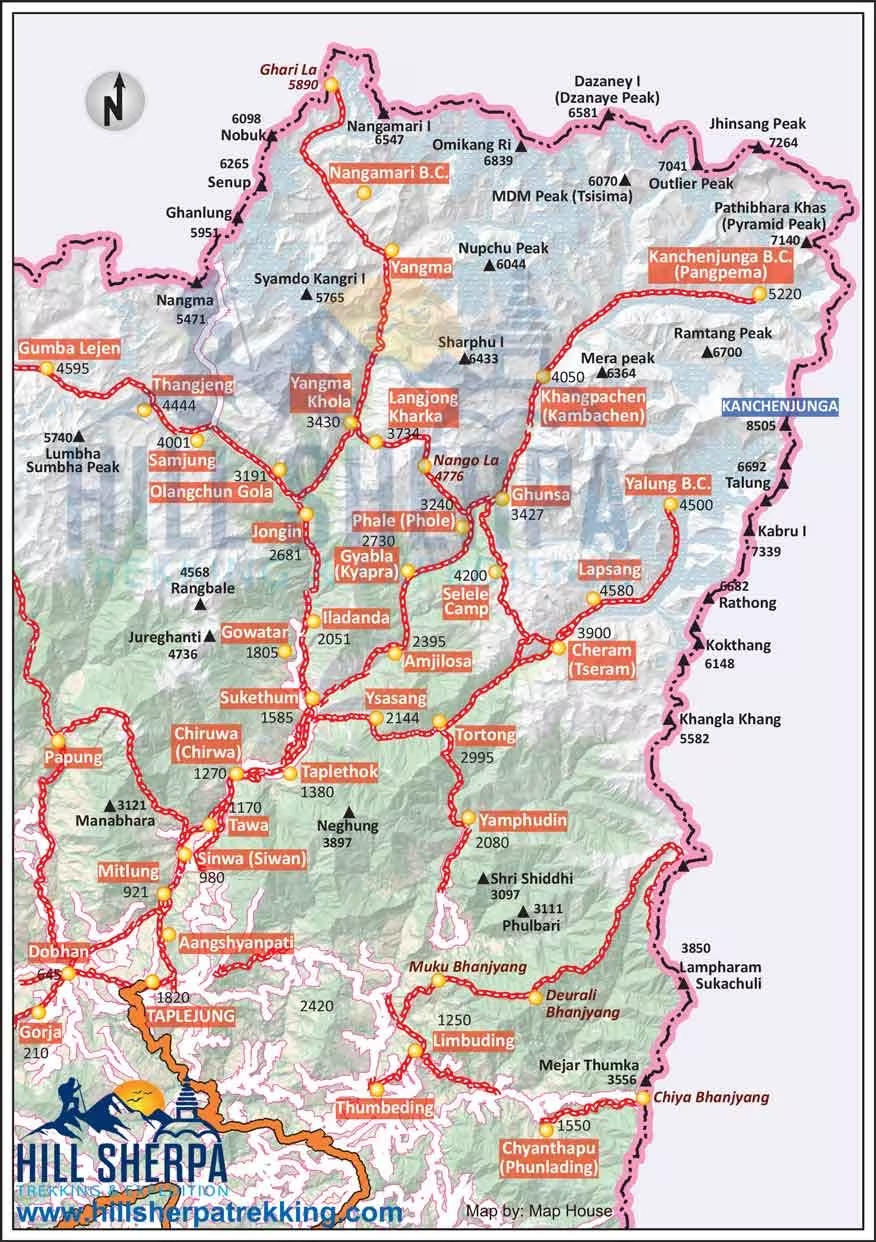
Altitude Chart of Kanchenjunga Base Camp trek
Frequently Asked Questions
 General
How long does the Kanchenjunga Base Camp Trek take?
Kanchenjunga Base Camp Trek takes 18-24 days to cover the entire trek, depending on the decided trekking pace and number of acclimatization days.
What is the highest altitude of the trek?
The highest elevation will be 5,143 m (the Pangpema is commonly referred to as the Kanchenjunga North Base Camp which is also known to be an exceptional overlook for views of Mt. Kanchenjunga and the many other peaks that share the same skyline.
Can I trek solo in Kanchenjunga?
No, solo trekking is absolutely prohibited in the Kanchenjunga restricted area. Trekkers are required to obtain the services of a licensed guide from a registered trekking agency.
 Preparation & Fitness
How difficult is the Kanchenjunga Base Camp Trek?
Trekking to Kanchenjunga Base Camp is not easy. Expect long trekking days, steep inclines, and elevation of 5,000m+ (which takes you above the highest peaks in your country). For this reason, you should come in good physical shape and prior experience is imperative.
Can beginners do the Kanchenjunga Base Camp Trek?
Not strongly recommended as a first trek, there are important skills you will need including good fitness and moderate experience, so many people will often ask if they should incorporate the Kanchenjunga Base Camp Trek.
 Permits
What permits are required for the trek?
When entering the restricted areas of the Kanchenjunga region, trekkers are required to obtain a Restricted Area Permit (RAP) and a Kanchenjunga Conservation Area Permit (KCAP).
 Accommodation and Facilities
What type of accommodation is available?
The base accommodations are simple and run/ owned by local families. Typical village guest houses or tea houses are very basic, but they do offer a comfortable nights rest after spending the day on the trail. In the city of Kathmandu, you will stay in a nice, three star hotel.
Is WiFi and mobile network available during the trek?
Some rural communities provide mobile networks, especially with NTC (Namaste) SIM cards. WiFi may be available, but is more likely to be nonexistent in rural areas.
 Food and Drinks
What kind of food is available during the trek?
Teahouses usually offer food that is simple, hearty, and filling. However, the options at high elevations become fewer and fewer. During this trek, you will have the option of having potato, rice, and noodle dishes, Dal Bhat, as well as pasta and soup. Tibetan breads and teas or coffee are also available.
 Weather & Seasons
What is the best time for the Kanchenjunga Trek?
For stable trekking conditions, as well as safe and uninterrupted views, the best seasons are autumn and spring. Trek in the spring season (March-May). (Or in the autumn season (September-November).
 Health & Safety
Is altitude sickness common on this trek?
There is a huge, if not the biggest, risk of altitude sickness, but there is a chance. The recommended altitude for safe trekking should not exceed 3,000m for the first part of the trek. But if you take your time to acclimatize and hydrate, it should be safe.
 Transportation & Flight
How is transportation managed during the trek?
As part of the trip package, trekkers can expect domestic flights, private transfers, and local jeep transport services to the treks operated out of Kathmandu and Bhadrapur.
Reviews on Kanchenjunga Base Camp trek







✖
Free Travel Guide
Get Expert Guidance from Experienced Sherpas