Annapurna Circuit Trek in November: Weather, Highlights, and Essential Guide
The Annapurna Circuit Trek in November is noted for its Piece de resistance in its breathtaking landscape, culture, and the grandeur of the Himalayas. It spans between the Thorong La Pass (5,416 m) the highest pass in the world, and is between 160 to 230 km (depending on the route) encircling the Annapurna range.
November offers the most ideal combination of conditions for trekking. The weather is near perfect, the views are clear and the trails are comfortable to walk. It is the approaching end of the autumn season and the Golden hues of Nepal are the perfect backdrop. The month of November is contrasting to October in the sense that it is much quieter, which allows for better immersion in the beauty of the Himalayas.
For individuals who are seasoned in trekking as well as those who have little or no trekking experience, November serves as the perfect month to gain an extraordinary experience in the Annapurna Region.
Weather Conditions in November
November is definitely one of the best months for the Annapurna Circuit. Weather is one of the most important factors for the success and enjoyment of any trek. Monsoon is long gone and the air is clean, with greenery in the lower valleys. The weather is pleasantly warm in the day for trekking, and gets progressively colder at night as you hike to higher altitudes.
Lower regions (Besisahar to Chame) Daytime temperatures are pleasant in the range of 15°C to 22°C, with cool mornings and evenings.
Mid regions (Manang to Yak Kharka): Daytime temperatures are quite cool, in the range of 5°C to 15°C, with nights dropping to around -5°C.
High passes (Thorong La and above 4,000m): Daytime temperatures will be near freezing and night temperatures will go down to -10°C to -15°C.
Even though it’s cold at altitude, November still has incredible visibility with crystal clear skies. Snow is rare and there is only light snow accumulation on the trails. However, the weather near Thorong La Pass is icy and trekkers should be careful.
While temperatures continue to drop in November, conditions nonetheless improve compared to October: the skies remain clear, the trails are less populated, and for serious trekkers who seek the tranquility and unadulterated beauty of the wilderness, November will prove to be sublime.
Although there are few treks that can compare to the scope and diversity of the Annapurna Circuit, the November trek marks the start of the seasonal transition. As the season closes, harvested golden grains will blanket the terraces, pine trees, and fields will sparkle in the sunlight and the mountains exposed to the early winter snow will shine.
This trek is extraordinary in that it crosses many diverse climatic zones. From tropical wetlands and jungles with rice terraces to alpine meadows and glacial defiles, the trek crosses vast barrens and artistic desert formations that conjure the Tibetan Plateau. This juxtaposition is surely one of the trek’s finest offerings.
Manang (3,540m) is one of the important settlements in the zone and is encircled by glacier fields. Manang is vital halt for acclimatization, and offers a glimpse into the rich Tibetan civilization in the Himalayas.
Major attractions are: Thorong La Pass (5,416m), the pinnacle of the trek, which offers the most revered sights of Annapurna and Dhaulagiri. Most trekkers consider this an accomplishment. Muktinath (3,760) Temple is a pilgrimage for Hindus and Buddhists, which represents the faith and culture convergence of Nepal.
Jomsom & Kagbeni: Windy valleys with stunning desert landscapes and ancient monasteries, this region marks the gateway to Mustang.
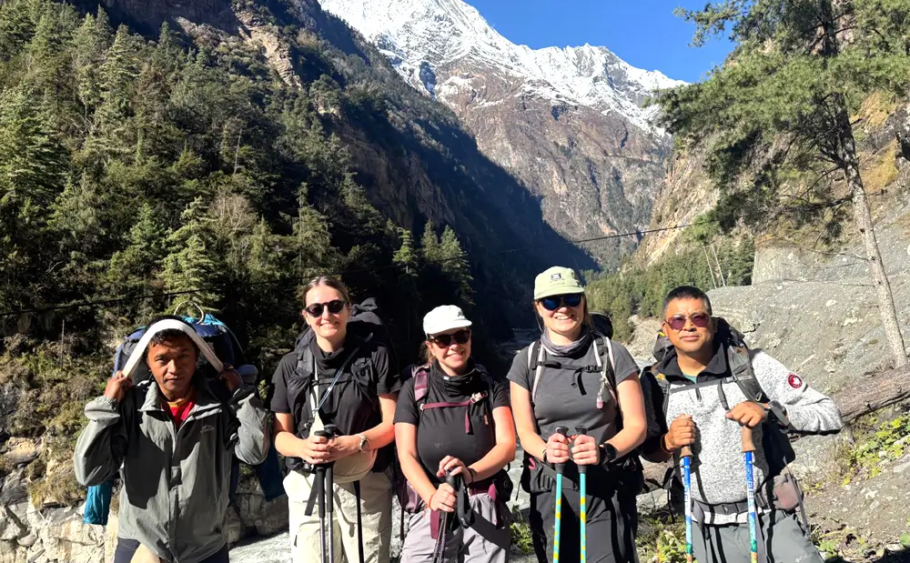
November’s clear skies reward trekkers and nature lovers alike with stunning photographs and memories. Annapurna I’s sunrise and Pisang Peak’s sunset are sights to be cherished.
Cultural and Local Experiences
The Annapurna Circuit Trek in November is more than a stunning landscape. It offers an unparalleled perspective on the wonderful mosaic of ethnicities and cultures that Nepal is home to. Each valley you trek through reveals new and very welcoming, yet distinctively different communities, be it Gurung, Thakali, Manangi, or those of Tibetan descent.
November is the best time to partake in local celebrations like Tihar (Deepawali), the Festival of Lights, with its festive oil lamps, celebrations, and rituals around cherished siblings, animals, and decorations. Lunar calendar changes also usher in the living sun-worship festival Chhath, which is predominantly celebrated in the Terai region and symbolically in the hill communities.
The evenings in teahouses are the best time to relax and enjoy the culture in your surroundings. You can expect your hosts to share tasty, traditional meals of dal bhat, thukpa, or momos while the mountain people fill the room with songs and dances, welcoming the visitors with extraordinary warmth and generosity.
Items to Bring on a November Trek
When packing for the trek, contend with altitudinal temperature changes.
Clothing
The purpose of the base layers (thermals) is to retain and absorb sweat, while the mid layer (fleece/ wool) keeps you warm. Then comes the outer layer, which is a waterproof and windproof down jacket. Please bring lightweight and quick-drying pants and warm accessories, which include gloves, a beanie, a neck gaiter, and sunglasses.
Gear
Bring a sleeping bag rated for -10°C. Bring trekking poles for the Thorong La descent. Sunscreen and lip balm (SPF 50+) are essential, as is hand sanitizer. Bring a headlamp and extra batteries. If there are icy sections, bring microspikes/ crampons.
The trek will require you to change clothing layers which helps when adjusting to the warm valley trails and freezing mountain passes.
Accommodation and Meals
November is peak trekking season, which means teahouses and lodges are fully operational. Mountain lodges are simple but cozy and warm. Each lodge has a few clean rooms, shared bathrooms, and a warm communal dining area with a wood stove.
The offered menus feature both Nepali and international options, such as dal bhat, fried rice, pasta, and drinks like tea and soup, as well as pancakes. At higher elevations, the selection is somewhat limited, but the overall quality remains satisfactory. Meals are freshly prepared with locally sourced ingredients.
Most villages, particularly at the higher elevations, have solar-powered electricity and will charge devices for a small fee, so you may keep your devices charged. Wi-fi is offered, although it is limited at higher elevations. The friendly staff and welcoming food make for a lovely evening relaxing in the lodges at the end of the trail.
You will have to face a number of challenges during your travels in the Annapurna Circuit. Although November provides the most temperate trekking conditions, most challenges remain, including the risk of altitude sickness, low temperatures, and extended periods of walking.
To combat these challenges
- Spend at least 2 nights in Manang to let your body acclimatize
- Drink a minimum of 3 liters of water a day to stay hydrated
- Make it a point to start your day early so you can have safe passage before strong winds or extreme cold hits.
- Do not drink alcohol, as it will exacerbate altitude sickness
- If you start showing signs of altitude sickness, descend slowly to relieve the pressure.
Weather prediction on a local level is essential and basic medicines such as Diamox to altitude sickness and painkillers. It is strongly advised that a certified guide or a porter be hired to make it safer as well as appreciate the culture.
Permits and Trek Logistics
Each trekker participating in the Annapurna Circuit requires a pair of permits.
ACAP (Annapurna Conservation Area Permit): It is a document to protect the conservation area and aids in the maintenance of the trail.
TIMS (Trekkers’ Information Management System) Card: It is a document to monitor trekkers for safety.
Both permits are obtainable in Kathmandu (Nepal Tourism Board) or Pokhara. Passport copies and passport-sized photographs are mandatory for permits.
Most of the trekkers start in Besisahar (which is accessible from Kathmandu or Pokhara via bus or jeep) and finish the trek in Jomsom, from where flights or jeeps are available to Pokhara. Regarding the total trekking days, it varies from 12 to 20 depending on the pace and side trips.
For safety, navigation, and an understanding of the local culture, it is advisable to hire a licensed guide or a porter, especially through a recognized trekking agency. This also benefits the local economy.
Why November for the Annapurna Circuit?
November is the best time for trekking the Annapurna Circuit, arguably one of the best times to trek in the Annapurna region. You enjoy the clear post-monsoon skies of October but with fewer crowds, cooler temperatures, and equally breathtaking views of the mountains. In November, the teahouse owners start preparing for winter, hospitality is at its warmest, and the landscape is still warm with the colors of autumn, the rivers still flow gently, and the landscapes are still warm with the colors of autumn.
November also has the great advantage of stable weather with little to no unpleasant weather for an extended period of time. You are able to take great photographs because the atmospheric conditions will be clear and the photography will be great. Plus, the cultural energies of the holiday season will be festive in the villages, and this will add to your experience in November. November is for climbers seeking balance.
Conclusion
November trekking in the Annapurna Circuit is an amazing adventure and will be a memorable one for its amazing views, great culture, and personal challenges. The golden valleys with the snow capped peaks at your height will be a view to save and keep for the rest of your life.
Taking into consideration the appropriate preparations, gear, and consideration for the altitude, one can understand why this trail is regarded as one of the most beautiful in the world. November gives trekkers the perfect combination of everything: peace, safety, beautiful views, and the perfect environment for the soul. So, make sure your boots are tied, take in the mountain air and go to the Annapurna Circuit.