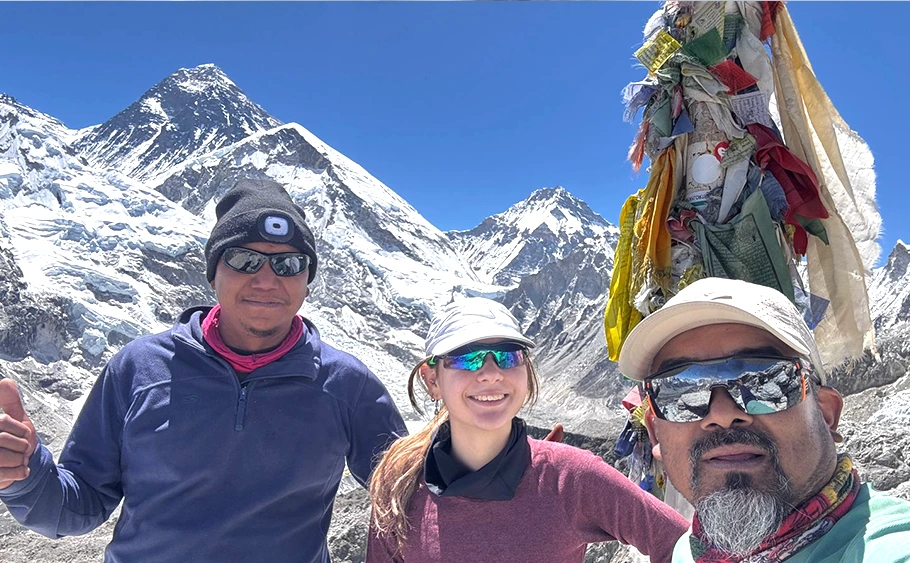
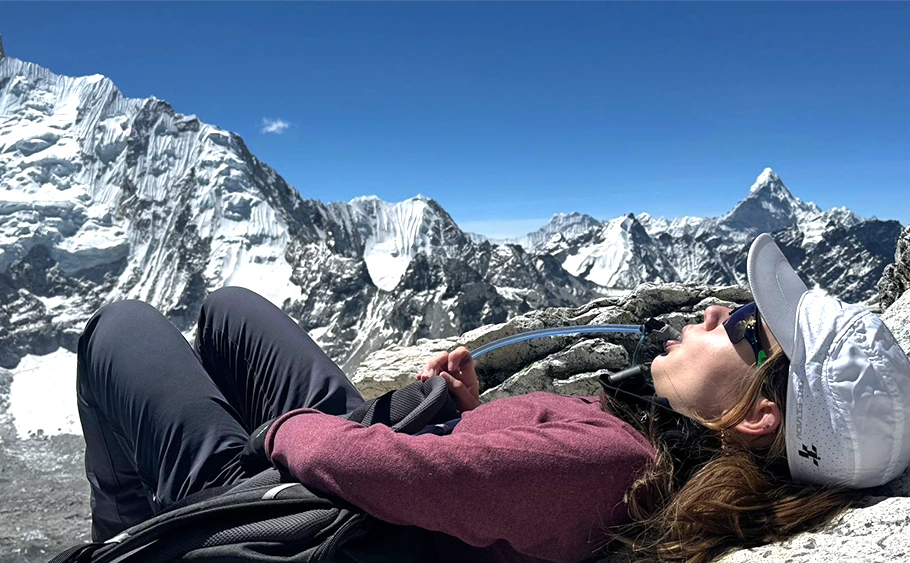
The Everest Base Camp trek is arguably one of the most popular trekking routes in the world. Each year, thousands of trekkers plan their trips to Nepal with the hope of seeing Everest in person. Before embarking on this journey, however, most have the same question, how difficult is the Everest Base Camp trek?
The answer lies somewhere between moderate and very difficult. This is, however, very relevant to an individual’s experience, fitness, mental state, and capacity to overcome challenges of high altitude travel. Everest Base Camp is not a technical trek, but, like every Trek, there is a lot of physically and mentally demanding trekking to be done. This Trek has long hiking days, thinning air, steep paths, unpredictable weather, and living in very primitive conditions, which makes this Trek a challenge for not just beginner trekkers, but also veteran trekkers.
The biggest surprise to most trekkers is that the most challenging obstacle along this Trek is Altitude, not distance. The further you trek into the Khumbu, the air continues to diminish, and even the simplest of tasks, like walking, becomes difficult. The higher you get the more your body has to work to breathe, recover, and create energy. This means that if you don’t acclimatize properly, fit trekkers can struggle just as much as those not in shape.
Trekking to Everest Base Camp is more about mental fortitude; however, with sufficient training and preparation, it is an attainable goal for any trekker in good health. Thousands of trekkers do it successfully every year, and good planning can ensure that it is one of the most rewarding experiences of your life.
What makes the Everest Base Camp Trek So Hard?
The Everest Base Camp (EBC) trek combines many factors that make it difficult, many of which are physical, mental, and environmental. For most of the shorter treks in the mountains, it is possible to complete the day’s goal of walking and gain Altitude, and then rest for the night. On the EBC trek, you will almost constantly be walking for the next two weeks and continue to gain Altitude. Your body will not be able to recover much overnight, and high Altitude means that there is less oxygen available.
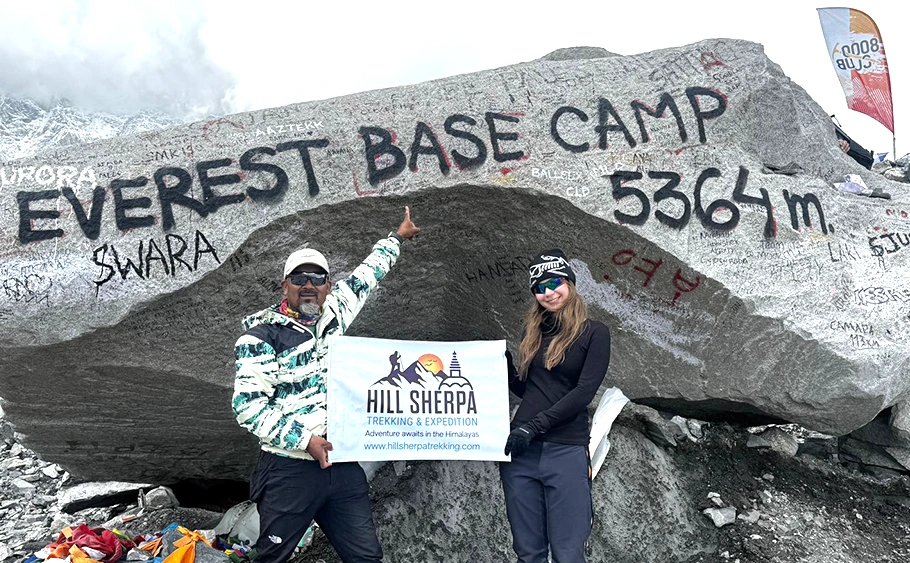
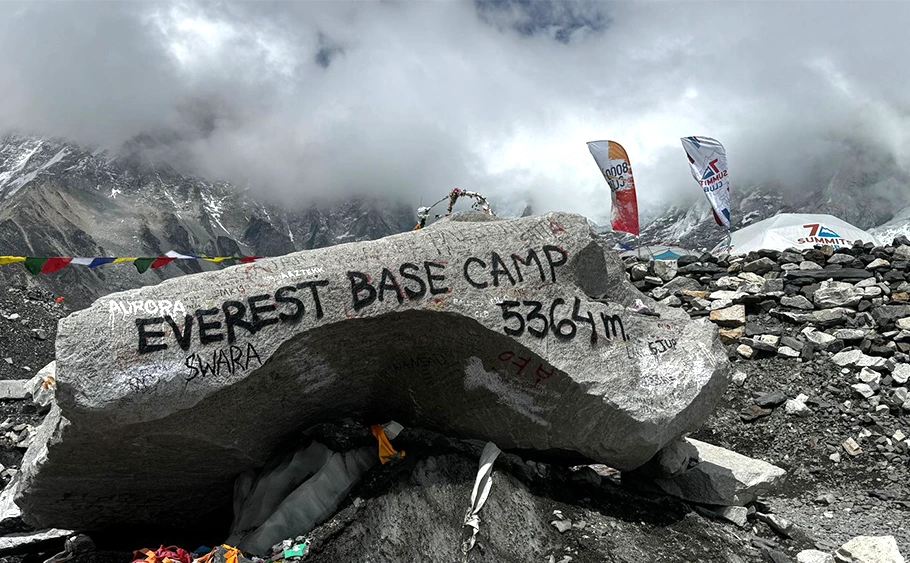
Elevation gain is one of the main reasons that this Trek is difficult. EBC is already located at 2,800 meters, meaning that you will constantly be gaining elevation on your way to the 5,364 meters mark. Many trekkers are not able to grasp how difficult it is to be at such high altitudes. When there is less oxygen available, even the simple act of walking or stair climbing can be physically exhausting.
The raw and rugged terrain of the Himalayas makes the Trek even more difficult. The trail is interrupted by uneven and rocky pathways, steep ascents and descents, suspension bridges, and glacier moraines. The terrain is physically challenging, and despite the trail being well established, it requires frequent and repeated walking. This can be difficult, especially on the legs and knees.
Furthermore, the conditions in the Everest region are notoriously inconsistent and severe. The temperature is able to change from warm to freezing, snowy and windy within hours. This, in combination with little to no infrastructure and long days of trekking, turns the journey challenging in every sense required: physically and mentally.
The Biggest Challenge of the Everest Base Camp Trek
Without a doubt, the Everest Base Camp Trek is the Altitude. Climbing the steep Himalayas begins to thin the atmosphere as we trek. At the Everest Base Camp, the atmosphere is almost 50% thinner compared to sea level. This, in combination, creates less oxygen for the body to breathe and therefore makes general movement physically more exhausting.
One starts to feel the immediate effects of higher Altitude after reaching Namche Bazaar at 3,440 meters, and beyond Dingboche and Lobuche, the effects begin to be more severe. Headaches, dizziness, nausea, a feeling and loss of appetite, breathlessness, interrupted and poor quality sleep, and unbearable tiredness are all symptoms of altitude sickness. The effects of altitude sickness can be lifelong (Acute Mountain Sickness, AMS) and in some instances, death can be a consequence of neglect.
The best treatment for altitude sickness (the most serious kind of mountain sickness) is sustained acclimatization to the higher Altitude. Most of the itineraries of the Everest Base Camp Trek are scheduled with days of sustained acclimatization in Namche Bazaar and Dingboche. During the days of acclimatization, it is recommended to trek to higher altitudes to help the body naturally and permanently adapt to the higher Altitude, and it is recommended to sleep at lower altitudes to help the body rest.
Hydration is crucial for the prevention of altitude sickness. Trekkers along the Everest Base Camp Trek are instructed to drink copious amounts of water throughout the journey. Walking at a slow pace, steering clear of alcohol, having an adequate diet, and hearing and responding to your body are all critical elements to ensure a successful trek.
Long Walking Hours and Physical Demands
Trekkers engage in nearly two weeks’ worth of continuous physical effort. Typically, trekkers engage in 5 to 7 hours of walking on a daily basis, with some days demanding in excess of 8 hours of walking. Incorporating both the Trek to Everest Base Camp and the return journey, the total distance walked is nearly 130 kilometers. A majority of the Trek is spent walking uphill.
The Himalayas are a far cry from other traditional hiking locations owing to an ever-present combination of thin air and rough terrain. Many seasoned trekkers find the hike to be more difficult, owing to the inability to rely on a consistent pace. In combination with both a steep ascent and a steep decent, this Trek calls for both leg strength and endurance.
The Trek along Phakding and Namche Bazaar, along with the Trek along Lobuche, Everest Base Camp, and Gorakshep, are both particularly demanding. Due to both the combination of Altitude and the distance walked, these locations are both physically demanding.
Although trekkers are advised to walk at a slow pace, the cumulative effect of spanning multiple days calls for a significant amount of stamina and strength. Engaging in an adequate exercise program before the trip is recommended for physical preparation, as this tends to result in an overall more enjoyable trekking experience.
Terrain and Trial Conditions
When embarking on the Everest Base Camp trek, trekkers will experience a variety of different terrains. Although the route is not too complicated and does not require climbing equipment, the Trek can still be challenging.
The lower parts of the Trek include beautiful forests, numerous rivers, and Sherpa villages. The paths are also relatively easy to traverse. This all changes once the Trek has progressed. The paths become more challenging, requiring trekkers to traverse smooth and rocky paths, uneven rocky paths, steep paths, loose paths, steep hills, and glacier moraines, which are found near Gorak Shep and Everest Base Camp.
One of the most popular parts of the Trek is crossing suspension bridges that are high above deep river valleys. Although the bridges are built with safety and stability in mind, some trekkers may find the bridges intimidating.
The constant uphills and downhills along the Trek can be hard on your knees and ankles, especially on the downhill portions. Because of this, trekking poles are highly recommended as they are great for aiding in balance and decreasing the impact on your joints.
During the colder months, some paths may be icy or slippery, making it more difficult to traverse. Snowfall can also bring the same effects.
Weather Challenges
Regarding the Trek as a whole, the weather is one of the more challenging and unpredictable parts of trekking in the Everest region. Conditions can change rapidly within a single day. Trekkers may experience scorching sunlight, heavy rain, falling snow, aggressive winds, and freezing temperatures, and may experience all of this within a very short time span.
In the mornings, the weather is mild and clear, while the afternoons can be windy and gloomy. As trekkers move up in Altitude, the air gets cooler. The places of Lobuche and Gorakshep are among the first places to reach subzero temperatures at night.
Lukla Airport is famous for being one of the most dangerous airports in the world (for trekkers) due to the weather factors and temperature. The weather and temperature conditions create a large amount of uncertainty for scheduled flights. As a result of low visibility and strong winds, most flights are cancelled or delayed, and some trekkers can even be stranded at the airport for multiple days with no flights in sight.
Unpredictable weather means trekkers must prepare for bad weather at a moment’s notice. As a result, trekkers are forced to carry a lot of equipment to adjust for the changes in weather conditions. of comfort and safety for the duration of the Trek. Waterproof jackets, colder-weather outfits, gloves, and boots with good traction will be good to have throughout the trip.
Accommodation and Food Difficulties
The only accommodation on the Everest Base Camp route is the mountain lodges and teahouses. While the lodges provide basic comfort and warm meals, the services become limited as you go higher.
In lower villages, trekkers are often given the luxury of private rooms, hot showers, charging, and internet accessibility. As you go higher, the services offered become more basic and more expensive. In the more remote areas that are less trekked, the rooms are more spartan, the bathrooms are communal, and the only available heating is in the dining hall.
During the most popular trekking seasons, which are in the spring and Autumn, the teahouses see massive volumes of trekkers as almost 1,000 trekkers are entering the Everest zone in a given month. Those who do not book in advance end up without accommodation and do not find proper accommodation in the more popular villages of Namche Bazaar, Dingboche, and Gorakshep.
Considering the remote locale, food options are extensive. Trekkers may have a choice of dal bhat, noodles, soup, pasta, potatoes, rice, pancakes, tea, coffee, and eggs. At the higher elevations, more expense is placed on the food. At the higher elevations, more expense is placed on the food. At these elevations, the food must be carried by porters, yaks, or by helicopter.
How to Prepare for the Everest Base Camp Trek
The perceived difficulty of the Everest Base Camp Trek is greatly impacted by how well trekkers have prepared for the Trek. Those who prepare health and fitness-wise generally find the Trek more manageable than those who under-prepare.
When hiking, the lungs and heart are put under considerable strain. Thus, the heart and lungs are the most severely impacted by low oxygen levels. For this reason, it is prudent to practice activities that improve cardiovascular endurance, such as running, swimming, cycling, and hiking.
When preparing for the Trek, the importance of strengthening the core and legs should not be overlooked. Long days of trekking in the mountains will strain core and leg muscles and require preparation. Core and leg exercises will help prepare for this strain and may include squats, lunges, deadlifts, step-ups, and planks.
An important preparation step for the Trek is practicing the act of walking while carrying a backpack. A backpack will condition the body to the long, continuous walks required for trekking, and should be used frequently.
Also important is preparing for the emotional challenges of the Trek. The Trek is not only physically demanding, but mentally difficult as well. The cold, fatigue, discomfort, and Altitude pose mental challenges, which include the maintenance of a positive mindset and practicing patience. Preparing mentally for the emotional challenges will help participants reach their goal.
Best Time to Trek to Everest Base Camp
The choice of season to undertake the Everest Base Camp trek greatly impacts the overall experience and difficulty of the Trek.
Spring lasts from March to May, it is a favorite season of many as temperatures stabilize, the sky clears, and trails are filled with Rhododendron flowers. Springs provide beautiful visibility with stunning views of Everest and the surrounding peaks of the Himalaya.
Trekkers will consider Autumn, from September to November, as the best season to hike. Following the monsoon rains, the skies, the weather, and the trails become clear and dry with stable conditions.
Winter trekking is possible, but with the increased difficultly with extremely cold temperatures and snowy trails. With the arrival of the monsoon season, the leading paths become wet, slippery, and cloudy, dampening visibility and the trekking conditions.
Everest Base Camp Trek Cost 2026
Price Guide for All Travellers
One of the most popular trekking adventures in the world is the Everest Base Camp (EBC) Trek. Each year, thousands of trekkers are drawn to the EBC route. The trek takes you first through the Sherpa villages, past historic Buddhist Monasteries, through rhododendron forests, and all the way to the foot of the tallest peak in the world at 8,848.86 meters, Mt. Everest. For many, one of the first questions in the EBC trek planning process is about the cost.
The cost of the trek depends on many things, including the trekking season, how many days you plan to trek, whether you plan to join an organized group or trek independently, and the level of service. This guide outlines the major costs and gives you the information necessary to select the most compliant package.
Cost of the Everest Base Camp Trek
The costs associated with the Everest Base Camp Trek are highly dependent on the level of luxury you want. For the more budget-conscious individuals who opt to self-organise much of the trek, they can expect to pay USD 1699-2,199 for the self-organised components. The more common package, the Everest Base Camp trek, is priced at USD 1,299 – USD 1499 and includes trek permits, domestic flight connections, lodging, meals during the trek, a licensed trekking guide, and porter assistance.
For those looking for value between comfort and price, consider USD 2,199 – 5,999 luxury trek packages. These trek packages include 5-star hotels and upgraded tea houses, return helicopter flights, private transport and more personalized services. While more comfortable, luxury trek packages are not the best use of your money and an average trek package is the best use of your money for safety and experience.
Trek Type Average Cost (USD)
Budget Trek $899 – $1,199
Standard Guided Trek $1,349 – $1,999
Premium Trek $2,199 – $3,599
Luxury Trek $3,699 – $6,190+
What is in Guided Trek Packages?
Guided treks up to Base Camp of Mt. Everest value combine most of the essential services. Offerings differ among trek sponsors, but most Packages include: airport transfer, pre and post trek hotel stays in Kathmandu, domestic flights to/from Lukla, trek permits, tea house accommodations during the trek, 3 meals a day, government licensed & experienced trek guide, porter service, and government taxes.
Most reputable companies also provide post trek farewell dinner, first aid, and emergency assistance. Having these services included makes budgeting easier and also allows enjoyment of the journey without worry of transportation, permits, and accommodations along the trek.
Trek to Base Camp of Mt. Everest Permit Cost
Every foreign trekker must obtain permits before entering the Everest Region. These permits assist in the protection of the natural environment and local cultures, as well as help maintain the infrastructure of trekking along the routes.
Sagarmatha National Park Entry Permit – Roughly USD 30
Khumbu Rural Municipality Permit – Roughly USD 30
Guided trek packages generally include both permits. If you are planning your trek on your own, you should purchase the permits in advance or along the trek, depending on your planned route. Permit fees are subject to change, so checking the fees prior to your trip is a good idea.
Lukla Flight Cost
The trek begins with a flight that is considered one of the most thrilling in the world. A round trip flight should cost trekkers between USD 420 and USD 508, according to the update of 2026, after the big of American and Iran, as flights are only available on a limited basis.
To help reduce congestion at the Kathmandu airport, during the March to May and September to November trekking seasons, flights to Lukla depart from Ramechhap Airport, a 4-5 hours drive from Kathmandu. This flight, along with the drive, is an essential part of the Everest Base Camp Trek.
Due to the flights from Ramechhap to Lukla being subject to cancellation and delay, an additional day or two is recommended to offer flexibility to the itinerary.
Guide and Porter Cost
Hiring a guide for your trek to Base Camp on Mount Everest is an investment in safety and enjoyment. Licensed guides know the trail, the local culture, altitudes and risks, the weather, and help with itinerary logistics and lodging and meals, and what to do in case of an emergency.
Porters carry the weight of large backpacks. This helps trekkers make it to Base Camp and back with more energy. The average load for a porter is 20–25 kilograms and is split between 2 trekkers.
Foods and drinks
Only porters, yaks, and helicopters transport food supplies, thus, food prices go higher with the altitude. Expect to pay USD 10-15 for breakfast, USD 15-20 for lunch and dinner. Beverages and bottled water are USD 3-6 and become even more pricey the further up the trail you go. To help trekkers help avoid unscheduled expenses during the trek, many trekking companies offer all meals included.
Additional Expenses
Apart from the main trekking package, travellers should allocate a budget for personal expenses. These may include the Nepal visa fee, international airfare, travel insurance with high altitude helicopter evacuation, trekking equipment rental or purchase, a hot shower, Wi-Fi, charging electronics, laundry, snacks, soft drinks, bottled water, and tips for guides and porters.
It is best to bring sufficient Nepalese cash before leaving Kathmandu because ATM facilities are very scarce beyond Namche Bazaar and most tea houses do not accept credit cards.
Can i trek independently?
Some travellers consider trekking independently in order to save some money. However, first time visitors to Nepal are highly encouraged to hire a licensed guide. A guide will help with the trekking route, provide local knowledge, and help you monitor your health to look for signs of altitude sickness.
The weather in the Everest region is notorious for changing quickly and the trail conditions vary depending on the season. Having a guide makes trekking safer and adds to the experience by letting you look around at the beautiful scenery rather than worrying about all the logistics.
Trekking costs can be decreased without impacting the overall experience. The biggest savings come from planning and booking all travel and excursions months in advance. Small group departures split the cost of the transportation and guide services. This is usually a more affordable option compared to private treks.
Purchasing all new trekking equipment can be avoided by renting in Kathmandu. Bringing a reusable water bottle, along with water purification tablets, can eliminate the cost of buying water during the trek. Costs of high altitude snacks and soft drinks can be avoided by keeping purchases to a minimum.
Is the Everest Base Camp Trek Worth the Cost?
Connecting with nature and experiencing a different culture makes the Everest Base Camp Trek an affordable and fun experience. The trek provides up close views of some of the highest mountains in the world, including Mount Everest. Exploring Sherpa villages and ancient Buddhist monasteries and crossing famous suspension bridges of the Khumbu region are all part of the experience and hospitality.
Reaching EBC, the closest one can trek to Mount Everest at 5,364 meters, and sunrise from Kala Patthar at 5,545 meters, is a once in a lifetime experience for many trekkers.
Why Choose Hill Sherpa Trekking?
Hill Sherpa Trekking ensures safe, professional, and lifelong memorable trekking ventures in the Himalayas. Our designed Everest Base Camp Trek includes local Sherpa guides, porter services, tea house accommodation, meals, and an honest pricing policy where we don’t include hidden costs.
Our team is knowledgeable and has ample experience leading trekkers in the Everest region. We know what’s important to trekkers and concerns trekkers have such as safety, acclimatization, and trekking services. We organize every detail of your trek adventure to enable you to focus on trekking the mesmerizing trekking routes of the Himalayas. It doesn’t matter if you are travelling solo, with a friend, or in a group.
Depending on your travel style, the Everest Base Camp Trek can have different costs. However, in guided packages, costs in the range of USD 899 to USD 6,199 are a reasonable cost for all that is included. This cost usually includes permits, flights, meals, accommodation, services of a guide, and porter support, thus enabling a trekker’s convenient and enjoyable trek.
When trekking, don’t just consider the price of the trek. Better services, experienced guides, and safety and customer care items of consideration all result in a memorable trek. There is a significant difference between an unreliable trekking operator and a reliable trekking operator.
If you want to go to Everest Base Camp, we can guide you on the trek to achieve your goal. Contact us for an amazing experience.
Conclutions
The Everest Base Camp trek is undoubtedly an adventure that truly tests physical limits, mental strength, and adaptation to environments inhospitable to humanity. Although the trekking adventure comes with a lot of challenges, the trekking experience brings many more rewards.
With sufficient preparation and planning, taking it slow, and a positive mental attitude, trekking to the Everest Base Camp is a journey that many healthy individuals can see through to the end.
The unique cultural experience of the Everest region, trekking through the Sherpa villages and witnessing and absorbing the breathtaking Himalayan landscapes, all make for gratifying memories, but are made even more heavenly with the experience of the world’s highest mountain and the stunning views beyond.
Reaching Everest Base Camp is one of the most enduring and personally transformative experiences for many trekkers. It is one of the great adventures in life.
FAQs
Is the Everest Base Camp Trek Difficult for Beginners?
While many treks are geared towards beginners, the Everest Base Camp trek is a different kind of challenge altogether. While it requires no climbing knowledge and it is trek that can be done by anyone with the right mindset, some form of preparation is required to be able to tackle the trek. The trek is designed to test your mental and physical limits.
The trek is done at high altitudes which makes the trek even more challenging, as at high altitudes the air has less oxygen. The hardest part of the trek is adjusting to the air after crossing the 3,000 meters mark. For beginners, the most helpful advice is to train as much as you can. When the time comes to complete the trek, walk at a slow and steady pace and follow the acclimatization schedule to help you adjust.
How Fit Do You Need to Be for the Everest Base Camp Trek?
Moderate fitness levels are a requirement for the Everest Base Camp trek. Each individual will be required to walk for around 5 to 7 hours each day over an extremely steep and uneven terrain that will also be rising in elevation. Good leg strength combined with high levels of cardiovascular endurance and stamina is going to be crucial for those long days of trekking.
There is no need to be an athlete to complete the trek successfully, but doing regular exercise along with endurance training and practicing your hikes while keeping in mind the duration and the terrain will make it a lot easier.
What Is the Hardest Part of the Everest Base Camp Trek?
High altitude is the most difficult aspect of the Everest Base Camp trek. Hypoxia increases significantly at high elevations. This makes even basic physical activities like walking feel tiring. Most trek participants experience headaches, fatigue, shortness of breath, and lethargy.
Namche Bazaar is one of the more strenuous parts of the trek and the trek from Lobuche to EBC and back to Gorakshep is long and difficult. High altitude coupled with the severe environment makes the long hours of trekking extremely exhausting. This is the most difficult aspect of the trek.
How many hours do you walk each day on the EBC Trek?
On the Everest Base Camp trek, participants walk roughly 5 – 7 hours per day. On some of the easier days, this is reduced to 3 – 4 hours, and on some of the more difficult trekking days, this can extend to more than 8 hours of walking. Due to altitude, the pace is more gradual, but there is a constant need for significant physical effort due to the undulating terrain. The conditions, personal fitness levels, and the trekking plan also determine the duration of trekking.
Can older people do the Everest Base Camp Trek?
Older people are able to complete the Everest Base Camp Trek. People aged in their 60s and 70s, and even older people, have trekked to Base Camp. More important than age are people’s fitness levels and health. Older trekkers should train and prepare prior to the trek, and should take longer treks to allow for better acclimatization. It is also important for older trekkers to see their doctor and get advice prior to the trek.
Is Altitude Sickness Common on the Everest Base Camp Trek?
Altitude sickness occurs often, making the journey to Base Camp difficult, as the trek gets to over 5,000 meters. Headaches, extreme fatigue, and trouble sleeping are all a result of the trek’s lack of oxygen. The serious symptoms caused by high altitudes can be fatal. Adjusting to the altitude, drinking water, and taking frequent breaks all help reduce the impact of high elevation and altitude sickness.
The trek offers a great opportunity to improve body awareness. Prioritizing health above all is the goal. If the symptoms are too much and sickness occurs, then descending is the priority.
Do you need oxygen for the Everest Base Camp Trek?
Oxygen is not needed for the majority of trekkers. Trekkers usually are able to adapt to the lacking oxygen at high altitude. If severe altitude sickness occurs, it may be necessary to use emergency oxygen. Trekking companies usually have emergency oxygen and medical supplies to use for emergency purposes.
Which is Hard Everest Base Camp or the Kilimanjaro?
Kilimanjaro’s rapid ascent compared to the Base Camp’s gradual ascent where trekkers spend multiple days acclimatizing leads many trekkers to claim the more difficult trek is Kilimanjaro. Although the Everest Base Camp trek is longer and demands more continuous walking. Trekkers should keep this in mind when planning either trek. The same amount of commitment and preparation is required of both treks and both are equally rigorous.
What is the Success Rate of the Everest Base Camp Trek?
When trekkers take proper acclimatization measures and walk with experienced guides, the success rate of the Everest Base Camp trek is high. Everest Base Camp is reached by over ninety percent of trekkers and is considered a success. Trekkers fail to reach base camp due to altitude sickness, injuries from extreme weather, and a lack of preparation.
Is the Everest Base Camp Trek Safe?
The trek is generally considered safe if trekkers prepare and practice safety measures. The safety of the trek is established by its popularity. In a year, thousands of trekkers walk to Everest Base Camp. The safety of guides and porters, along with the trekkers taking precautions, makes the trek safer. The trekker’s greatest safety measures are trekking slowly, consistent hydration, and acclimatization.
When is the Optimal time to trek to Everest Base Camp?
Spring (March to May) and Autumn (September to November) have the best weather for a trek to Base Camp. These seasons have better weather and clearer skies which allow beautiful views of the mountains. Autumn is the preferred season since low precipitation also means better visibility. Winter and monsoon season treks are possible but are treks are dangerous due to snowyand rainy weather.
Do You Need a Guide for the Everest Base Camp Trek?
Experienced travellers can trek on their own, but guides help with navigation and altitude adjustment. Inexperienced travellers especially benefit. Guides know about the culture in the area and are good at booking lodgings that help travellers avoid dangerous situations. Having a guide makes the trip safer and more enjoyable.
What are the typical temperatures on the Everest Base Camp Trek?
Typical temperatures during the trek are highly dependent on the season and altitude. Especially during peak trekking season, temperatures are mostly comfortable during the day, while at lower altitudes, however, they can become much colder at higher altitudes. Overnight temperatures in the lower elevations of Lobuche and Gorakshep can easily drop below 0°C. Winter temperatures can drop to the range of minus 15°C to minus 20°C.
What Will My Bag Weigh?
Every trekker brings a daybag weighing between 5 and 10 kilograms. You will want to pack warm clothing, personal items, medicines, snacks, and valuables, along with plenty of water. If you have a porter, they can carry your full-size duffel bag with most of your supplies. A less full day bag makes the trek a lot easier and more enjoyable.
Is the Everest Base Camp Trek Difficult?
Yes, and for a good reason. The trek to Everest Base Camp is ranked as one of the most rewarding and fulfilling activities you can do. You get the rewarding experience of the stunning backdrop of the Himalayas, the Sherpa culture, the ancient monasteries, the icy glaciers, all of the impressive mountain views, and, of course, the experience of being right up close to Mount Everest. When you finish this trek, you feel accomplished. Many people refer to this trek as the best physical accomplishment of their lives.
I am the Founder and Owner of Hill Sherpa Trekking Pvt. Ltd. With more than 15 years of experience in the Himalayan tourism and mountaineering industry, I established the company with a passion for mountain adventures and a commitment to responsible tourism. Since then, I have dedicated my career to creating safe, authentic, and unforgettable trekking and climbing experiences throughout the Himalayas.