Govt. Tourism License 3195/080/81





Lumbo Himal Expedition 18 Days

- Best Price Guarantee
- Secure Online Booking
- Flexible booking dates
- Owner operated company
- Decades of experience
- Dedicated sherpa team
- 100% success rate
- 5/5 ratings by travelers


Highlights of Lumbo Himal Expedition 18 Days
- Summit the remote and newly featured Lumbo Himal.
- Experience a new well-groomed Nepal Himalayan climb.
- Enjoy the valleys, glaciers, and alpine scenery.
- Trek with full expedition support and expert sherpa guides.
- Trek by a safe path with a proper itinerary and acclimatization.
- Witness the breathtaking scenery stretch for miles from the top.
- Explore a crowd-free, untouched peak in the Himalayas.
- This expedition is brilliant for climbers in good shape seeking out an adventure.
Trip Overview
Lumbo Himal Expedition – Exploring the New Climbing Frontier in Nepal
The Lumbo Himal Expedition is an exciting new adventuring option in Nepal for seasoned climbers who want to scale an untouched peak. At 6,250 meters (20,505 feet), climbing Lumbo Himal combines the challenges and beauty of technical climbing with the thrill of being in a region of the Nepal Himalayas that has recently been added to the list of new climbing areas. Because Lumbo Himal does not attract the crowds of many Nepal climbing peaks, climbers looking for remote and wild places for exploration are ideal candidates for this expedition.
Once climbers reach Kathmandu, they carry out the remaining formalities and prepare for the long journey to the remote region. On the way to Lumbo Himal, the first part of the journey leads through beautiful but populated areas. The alpine meadows and towns will slowly diminish as the Himalayas become visible. On the lower sections of this journey, climbers can begin socialising and can start to acclimatise. At higher elevations, the beauty goes along with the obstacles for climbers. Excited to see the snow capped moraines and the vast glacial plains of one of the largest mountain ranges in the world, they begin to prepare for the continuing challenges of the Himalayas.
The historical significance of the Lumbo Himal Expedition is remarkable. For years, Lumbo Himal had been one of the virgin climbers’ mountains. Due to its remoteness and the lack of exploration, summiting rever existed. For these reasons, Lumbo Himal had been one of the last virgin peaks in Nepal. This piques the interest of mountaineers looking for remoteness.
History was witnessed on the 22nd of June 2020 when the first discovered summiter of Lumbo Himal achieved the climb. The group consisted of IFMGA mountain guide Tul Singh Gurung and his brothers, Sujal Gurung and Aash Bahadur, along with American climber Eric Mathew Soo. The group, after months of preparation, were the first claimed summiter of the mountain after climbing via the South West Face, which is located in the remote north-central part of Nepal in the Gorkha District and near the Nepal-Tibet border in the Ganesh Himal Range. It now stands as one of Nepal’s newest, least-explored expedition peaks and is surrounded by unspoiled mountain wilderness, alpine valleys, and pristine glaciers.
The Lumbi Himal expedition route had not been summited before and the team were claimed to be the first to discover and document the climbing route. Due to the lack of climbing activity, the team had to decide on a lot of the climbing activity by assessing a lot of the glacier along the climbing face.
The strength of the entire team was pushed to the limit during the summit attempt. There was a need for incredible strength, stamina, and skill. The team had to use various specialised tools for the ascent. These tools included ascenders, ropes, spikes, and ice axes. Fixed and unfixed. They traversed exposed ridges, steep snow slopes, and uneven glaciers. The ascent was roughly 20 hours of nonstop climbing.
Teams fought obstacles including the changing weather and conditions, as well as the low temperatures and the challenges of climbing at a high elevation. Standing on the summit was a glorious moment. Finally, the team had a chance to name the peak, and it was the beginning of the new Lumbo Himal Expeditions in Nepal.
Lumbo Himal expedition is a chance for the daring mountaineers to stay on one of the Nepalese historic paths, especially in the least explored and remote of Nepal’s Mountains. This expedition calls for fitness, some mountain skills, and some exposure to climbing at height. The team first spends several days at base camp on the glacier for climbing and acclimatisation. This is also done for the preparation of the gear. Experienced Sherpa climbing guides move the team to higher camps to attempt the summit. The focus of the organising team is on the safety of the clients through optimal weather, acclimatisation, and professional services. This is also the goal to maximise the summit’s success.
Climbers who reach Lumbo Himal’s summit are rewarded with one-of-a-kind views of entire ranges of the Himalayas, huge glaciers, the valleys between them and the untouched lands bordering Nepal and Tibet. The untouched wilderness, technical climbing, and classical history combine to make the trip special. The Lumbo Himal expedition is an excellent opportunity for climbers to join in on the unceasing additions to the explorations of the Himalayas, away from the busy climbing peaks offered by Nepal.
Lombu Himal Expedition is special because, with the support and services of highly-experienced climbing Sherpas, professional experts leading the way and all expedition practices being done in the best manner possible, climbers are able to enjoy one of the most inspiring and newest climbing peaks of Nepal. At Hill Sherpa Trekking team highly recommend the island peak climbing, mera peak and lobuche peak, it’s easier comfortable expedition then the Lumbo Himal Expedition in Nepal.
Lumbo Himal Expedition 18 Days Itinerary
01
Day 01: Arrive in Kathmandu
A Hill Sherpa Trekking representative will welcome you at Tribhuvan International Airport in Kathmandu. After a hotel transfer, you can rest or take a walk through the busy Thamel district. Your expedition leader will conduct a briefing to cover the details of the Lumbo Himal Expedition, including safety, climbing, weather, and equipment, that evening. You will spend the night in a hotel in Kathmandu.

Max Altitude
1,300 M / 4,265 ft
Meals
Excluded
Accommodation
Local Teahouse
02
Day 02: Prepare for the Expedition in Kathmandu
This day will be the last step in preparing for the trek. After breakfast, you will either be escorted to the Department of Tourism for a permit check or complete the final equipment check.
Equipment that you are still missing can be purchased or rented at the Kathmandu mountaineering shops. The guide will cover the itinerary, emergency procedures, communication protocols, and altitude safety. Each trek participant will be fully prepared at this point.
Max Altitude
1,300 M / 4,265 ft
Activity
Preparations
Meals
Breakfast
Accommodation
Local Teahouse
03
Day 03: Drive from Kathmandu to Yaruphant
You will begin the long drive from Kathmandu to Yaruphant after an early breakfast. The mountain road will wind through rural Nepal and the spectacular scenery will make the long trek worth it. You will also pass farm terraces and small villages along the way.
You will meet the local support team in Yaruphant and will be ready to begin the trekking portion of the Lumbo Himal Expedition. You will spend the night either in a local lodge or a campsite.

Duration
8-9 hours
Distance
150-160 km
Max Altitude
1,170 M 3,838 ft
Activity
Drive
Meals
Breakfast, Lunch, Dinner
Accommodation
Local Teahouse
04
Day 04: Trek from Yaruphant to Chuntur Kharka
Day 4 starts the real trekking. You will be in the mountains and traversing trails that pass through forests and small villages, and along fields of grazing livestock. This path steadily rises in elevation, providing striking views of the surrounding hills and the peaks that are blanketed in snow.
This path is mostly untouched. You will be able to start the natural process of acclimatization, since you’re in a less travelled region of the Nepalese Himalayas. You will be camping at Chuntur Kharka.
Duration
6-7 hours
Distance
9.2 km
Max Altitude
2,625 M / 8,612 ft
Activity
Trekking
Meals
Breakfast, Lunch, Dinner
Accommodation
Tented Camp
05
Day 05: Trek from Chuntur Kharka to Dung Dung Buk
The path continues rising until it peaks near 3,000 meters above sea level and then it begins to drop towards a picturesque river valley.
The trek continues through thick forest, across mountain streams, and along bumpy paths in the wild, untamed part of the Himalayas. Due to the low level of human presence, this far-off area becomes increasingly adventurous, until you reach Dung Dung Buk which is a cave campsite, and is naturally formed and surrounded by immaculate forest.
Duration
6-7 hours
Distance
12.2 km
Max Altitude
2,575 M / 8,448 ft
Activity
Trekking
Meals
Breakfast, Lunch, Dinner
Accommodation
Tented Camp
06
Day 06: Trek from Dung Dung Buk to Chomjong Kharka
At first, the trail winds through the still quite thick rhododendron, pine, and oak forests. These gradually thin as the trail continues to ascend into the high alpine zone. As the trail rises, so does the thinning and opening of the landscape into stunning alpine grazing meadows, Kharkas. These are the summer grazing meadows of the local yak and sheep herders.
The stunning views of the surrounding Himalayan peaks and the untamed wilderness and still valleys of these mountains are rewarding on the way to the even more breathtaking campsite of Chomjong Kharka.
Duration
5-7 hours
Distance
9.9 km
Max Altitude
3,550 M / 11,647 ft
Activity
Trekking
Meals
Breakfast, Lunch, Dinner
Accommodation
Local Teahouse
07
Day 07: Trek from Chomjong Kharka to Lumbo Himal Base Camp
Above 3,850 meters, forests give way to a striking high-altitude alpine scene with glacial streams and craggy moraines. Pristine glacial basins and wide open valleys are found along the trail to Lumbo Himal Base Camp. This Camp is situated with a breathtaking view of the Ganesh Himal Glacier and offers an even more rugged and wild view of the icy and untouched wilderness of the central Himalayan Region.
Base Camp sits at a relatively high altitude of 4,165 meters and offers a more striking view of the rugged and untamed Lumbo Himal. The wild and peaceful mountain environment stretches on and is a more scenic and rewarding experience.
Duration
5-6 hours
Distance
9.3 km
Max Altitude
4,165 M /13,665 ft
Activity
Trekking
Meals
Breakfast, Lunch, Dinner
Accommodation
Tented Camp
08
Day 08: Acclimatisation and Puja Ceremony
Today, the team will fully acclimatize to the altitude. As a part of this, the Sherpas will perform a Puja Ceremony in the morning to ask for a safe passage as they will be setting out to climb. For the rest of the day, the team will do organisational climbing practice, which will include a review and practice of climbing techniques and equipment such as crampons, harnesses, ascenders, ropes, and ice axes. This ceremony is an important part of every climbing expedition.
Distance
9.3 km
Max Altitude
4,165 M /13,665 ft
Activity
Puja Ceremony
Meals
Breakfast, Lunch, Dinner
Accommodation
Tented Camp
09
Day 09: Acclimatization Rotation to Camp I
You will start your ascent to Camp I, 5,049 m, above Lumbo Himal Base Camp today. The first part of the climb involves the rocky moraines and glacial and snow terrain, and is a good practice to get used to the climbing route and higher altitudes. It is actually a pretty good stretch of climb to get used to the climbing route and high-altitude conditions.
The view of the surrounding Himalayan peaks and the glaciers gets better and better as you go along. The team organizes climbing equipment and sets up the tents at Camp I. After having an early dinner, you will get a welcome chance to better acclimatize your body to higher altitudes and experience the environment of a high Himalayan camp. You will also get to sleep at Camp I.
Duration
5-7 hurs
Distance
7.9 km
Max Altitude
5,050 M / 16,569 ft
Activity
Acclimmotizarion
Meals
Breakfast, Lunch, Dinner
Accommodation
Tented Camp
10
Day 10: Hiking
After eating good breakfast, continue to 100 to 200 meters body adapt to higher elevations. climb high, sleep low method, along with other methods, helps reduce the likelihood of altitude sickness. After acclimating your body, begin the descent back down to the Lumbo Himal Base Camp to rest and recover.
Max Altitude
4165 M
Activity
Hiking
Meals
Breakfast, Lunch, Dinner
Accommodation
Local Teahouse
11
Day 11: Rest Day at Base Camp
The next day is strictly for resting and preparing for the potential summit. Climbers eat and hydrate, check their climbing gear, and plan the ascent based on the weather, while the expedition leader does the final briefing.
The Sherpa guides prepare the ropes and stay alert to the mountain for the best summit opportunity. It is crucial that the base camp day is relaxed, as the next segment of the expedition is extremely demanding.
Max Altitude
4165 M
Activity
rest day
Meals
Breakfast, Lunch, Dinner
Accommodation
Tented Camp
12
Day 12: Move to Camp I
Moving to Camp 1 (5,049 m) happens early in the day. The acclimatization to the altitude helps this segment of the expedition be easier than the last. Pushing to Camp 1, you need to set up your sleeping area, hydrate, and eat to fuel your body for the gear preparation. Rest is important, as the summit attempt doesn’t begin until close to midnight.
Max Altitude
5,050 M
Activity
move up
Meals
Breakfast, Lunch, Dinner
Accommodation
Local Teahouse
13
Day 13: Summit Lumbo Himal (6,250m) and Return to Camp I or Base Camp
This is the most exciting day of the Lumbo Himal Expedition as we summit. We will start our ascent before dawn alongside our experienced Sherpa climber guides. The route requires us to navigate across glaciers, steep snow slopes, and exposed ridges using fixed ropes and technical climbing equipment.
After many hours of strenuous climbing, we will arrive at the summit of Lumbo Himal (6,250m). We will take in the extraordinary views and the monumental achievement of being at this vantage point to survey the Himalayan Range and the Nepal–Tibet border. We will spend a small amount of time at the summit before we begin our descent back to Camp I, or we will head directly to Base Camp.
Duration
12-14 hours
Max Altitude
6,250 M
Activity
Climbing
Meals
Breakfast, Lunch, Dinner
Accommodation
Local Teahouse
14
Day 14: Descend to Lumbo Himal Base Camp
If you stayed at Camp I after the summit, you will descend to Lumbo Himal Base Camp today. You will be able to make the descent at a more leisurely pace as you take one last look at the snowy alpine landscape.
Once you arrive, we will celebrate the ascent at the base camp with the expedition team. There is usually a lot to talk about and a lot of photographs to take. A special farewell dinner at base camp will take place.
Duration
6-7 hours
Max Altitude
4,165 M
Activity
Descending
Meals
Breakfast, Lunch, Dinner
Accommodation
Tented Camp
15
Day 15: Contingency Weather Day
If we have to wait due to bad weather, heavy snow, or dangerous climbing conditions, this day is set aside for this as a weather contingency on the schedule. The set aside contingency day means the chances of summiting are much higher since we do not have to rush and can take our time to make important decisions. If we have already summited, this day can also be used for extra rest and descent.
Max Altitude
4,165 M
Meals
Breakfast, Lunch, Dinner
Accommodation
Local Teahouse
16
Day 16: Trek from Base Camp to Kaipuk
Leave base camp and trek through glacier valleys and alpine meadows towards Kaipuk. It is warmer at the lower altitude. The views of the mountains will be your last as you finish the exit to the lower alpine. You will set up camp at Kaipuk.
Duration
5-6 hours
Max Altitude
1800 M
Activity
trekking
Meals
Breakfast, Lunch, Dinner
Accommodation
Tented Camp
17
Day 17: Trek from Kaipuk to Yaruphant
Retrace your steps to Yaruphant through forests, villages and farmland. The last day of trekking will give you time to reflect on your accomplishment and to enjoy nice landscapes and culture. After arriving, take time to celebrate with the guides and support staff for finishing the trekking portion of the new climbing Lumbo Himal expedition.
Duration
5-6 hours
Max Altitude
1170 M
Activity
trekking
Meals
Breakfast, Lunch, Dinner
Accommodation
Local Teahouse
18
Day 18: Drive from Yaruphant to Kathmandu
Drive through the beautiful countryside of Nepal back to the city of Kathmandu after having breakfast. When you arrive, you can check in to your hotel for rest.
The warm water will be a welcome retreat from the cold of camping. The completion of the expedition will be celebrated this evening at your farewell dinner arranged by Hill Sherpa Trekking, where we will give you your certificates, and you can enjoy our memories before you leave Nepal.
Duration
9-10 hours
Distance
Approx. 155-160
Max Altitude
1300 M
Activity
Drive
Meals
Breakfast, Lunch, Dinner
Accommodation
3-Star Hotel
Note:
We also operate private trips.
Trip Information of Lumbo Himal Expedition 18 Days
Can a Beginner join this trip?
The Lumbo Himal Expedition is an advanced and technical trip, and for a good reason. First-timers who have never trekked or climbed at altitude before should not attempt this expedition. Despite standing at 6,250 meters, this is not a beginner’s peak. This expedition includes glacier travel, steep snow, and the use of technical climbing gear such as crampons, ice axes, harnesses, ascenders, etc. Not only should climbers be physically fit to travel several days at altitude, but also have the endurance to travel with a personal pack.
Prior trekking to peaks like Mera, Island, or Lobuche Peak is a good addition, but not required. Highly motivated trekkers who have completed previous high-altitude trekking and are willing to learn the undertaking of technical climbing may also consider this expedition after receiving proper training. They should be prepared with personal protective climbing gear and technical climbing equipment. Heavier gear such as personal climbing protection, ice axes, crampons, and technical climbing gear of Sherpa guides will be used.
Best Time for the Lumbo Himal Expedition
Spring (April to May) and autumn (September to November) are the optimal times to participate in the Lumbo Himal Expedition. These times present stable weather, low risk of an avalanche, and clear skies with good visibility throughout the Himalayas. Spring is the warmest, with the longest days, and boasts blooming rhododendron forests throughout the trek. Autumn is dry, has excellent views of the mountains with good weather, and is comfortable for trekking after the monsoon. Winter treks are possible, but temperatures drop, and the snow increases with difficulty. The summer monsoon season is the worst to trek, with poor visibility, muddy and slick trails, and a high avalanche risk.
Difficulty Level
The Lumbo Himal Expedition ranks as a challenging to very challenging alpine expedition. The conditions require trekkers to be prepared for long days with the risk of hiking beyond 15 or even 20 hours of continuous trekking, high camps, and glacier crossings. Steep mountains of snow and ice are trekked in the face of unpredictable weather. Previous experience and preparation of the body and mind for altitudes beyond 5,000 meters increase the probability of a successful ascent. The professional Sherpa guides are in charge of the route and of the safety of the trek, yet all trekkers must be able to use the ropes and other alpine climbing equipment and be able to traverse the high cloisters.
Altitude Sickness
Given that the Lumbo Himal Expedition peaks at 6250m, altitude sickness is a main concern. Typical symptoms that climbers may begin to experience during the ascent are headaches, nausea, dizziness, fatigue, and shortness of breath. To mitigate this risk, our itinerary has preparatory acclimatization practices incorporated, as well as planned rest days and a slow rate of climbing. Health assessments of the climbers will be done by our team of professional guides who will prioritize this over their summit goal. We advise participants to stay hydrated, eat healthy, avoid smoking and drinking alcohol, and report cases of Acute Mountain Sickness (AMS) to us immediately. The best way to avoid the more severe altitude-related sicknesses is to acclimatize correctly.
Accommodation, Food and Drink During the Trekking and Climbing
In the lower trekking phase, accommodation will be provided in the comfortable local teahouses, which have basic twin-sharing rooms. Beyond the last of the permanent settlements, all accommodation will be in high-quality, high-altitude, four-season expedition tents. To ensure a comfortable camping experience throughout the climbing operation, there are separate dining, kitchen, toilet, and sleeping tents.
Meals are a mix of Nepali and Tibetan food as well as some international food options. Dishes may include different forms of rice, pasta and noodles, along with potatoes and soups. Vegetables, meats (if available), and breads may be included, along with porridge, pancakes, and fruits that are in season. On climbing days, foods that contain good amounts of energy, like biscuits, chocolate, and nuts are supplemented with tea, coffee, soups, and other hot drinks. Water that is safe for drinking is carried to assist hydration. Water is boiled, purified, or filtered.
Transportation for Lumbo Himal
Transportation is different for different expeditions for Lumbo Himal and depends on which route is being taken and also the condition of the roads. Transportation may include a scenic flight through the mountains or the use of a private or public four-wheel drive vehicle. This is used to get to the starting point of the trek. Travel is completed on foot from there to base camp. The same route is used to return to Kathmandu. Domestic flights may substitute for the road journey for some. The expedition operator has arranged the travel to maximize the safety and effectiveness in the local and weather conditions.
Preparation and Fitness
In order to have a good Lumbo Himal Expedition, one first needs to plan and get in shape. I suggest that one begin the physical training three to six months before departure. Intensive cardiovascular training is needed. Some examples are running, cycling, swimming and stair climbing. Included in the training should be strength exercises for the legs, core, shoulders and back
Long distance hiking with a heavy, loaded backpack is very helpful. Previous experience of hiking above 4,500 meters is good for both acclimatization and confidence. Potential climbers should supplement their physical training with the knowledge of basic climbing techniques.
Techniques like putting crampons on, using the ice axe, climbing on a glacier, along with the basic skills of climbing a rope. The challenges of high-altitude expeditions are best overcome when one has teamwork, patience and mental resilience.
Cost and Budget
The basic cost of the Lumbo Himal Expedition is based on group size, the amount of time spent on the expedition, the amount and type of services provided, the guide to client ratio and the logistics. A completely prepared expedition provides climbing permits, government taxes and fees, transfers, all the domestic transportation and lodging, meals for the trek and the climb, experienced Sherpa climbing guides, porters, camping gear and food for the group, climbing gear and kitchen staff, and emergency communication equipment. Joining a larger group usually lowers the cost for that person, but a private expedition is a better option. A very good choice is a local company with good guides and safety standards.
Extra Costs
Most of the important expedition support services are included in the package. However, climbers should prepare for personal expenses. These expenses may include the following: Nepal visa costs, flights, travel insurance that includes high altitude mountaineering, the cost of climbing gear that may need to be purchased or rented, additional nights in the hotels in Kathmandu, drinks (both alcoholic and non-alcoholic), snacks, hot showers if available, battery charging, internet, laundry, tips for the guides and porters, and costs for emergency evacuations that are not covered by insurance. Having extra funds allows for a more comfortable expedition.
Expectations
The Lumbo Himal Expedition is not just about climbing a mountain. Participants will experience a journey that will be memorable and will trek through some of the most remote and beautiful parts of the Nepal Mountains. Participants will pass through traditional villages, alpine forests, glacial valleys, and amazing views of the Himalayas. The expedition combines a variety of trekking and climbing with cultural experiences and professional mountaineering support.
Climbers will spend several days at base camp to acclimatize, guide Sherpas will provide training, and the team will set up higher camps in the mountains and attempt the summit. Each day will bring new challenges and new vistas. Participants will also experience one of the newest and least explored climbing locations in the Nepal Mountains.
Lumbo Himal Expedition Climbing Gear & Equipment List
 Climbing Gear
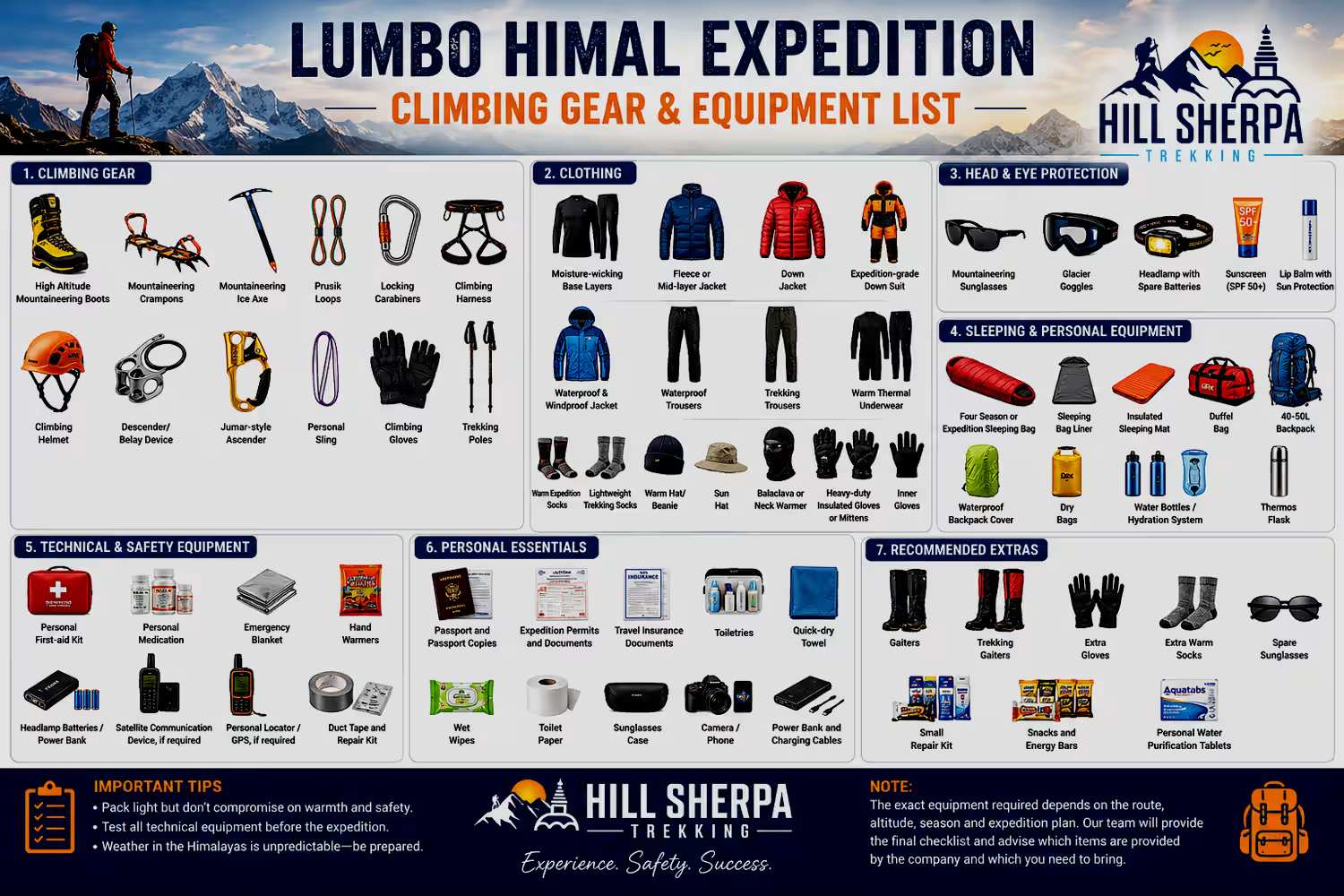 Climbing Gear
- High Altitude Mountaineering Boots
- Mountaineering Crampons
- Mountaineering Ice Axe
- Prusik Loops
- Locking Carabiners
- Climbing Harness
- Climbing Helmet
- Descender/Belay Device
- Jumar-style Ascender
- Personal Sling
- Climbing Gloves
- Trekking Poles
Clothing
- Moisture-wicking base layers
- Fleece or mid-layer jacket
- Down jacket
- Expedition-grade down suit
- Waterproof and windproof jacket
- Waterproof trousers
- Trekking trousers
- Warm thermal underwear
- Warm expedition socks
- Lightweight trekking socks
- Warm hat/beanie
- Sun hat
- Balaclava or neck warmer
- Heavy-duty insulated gloves or mittens
- Inner gloves
Head & Eye Protection
- Mountaineering sunglasses
- Glacier goggles
- Headlamp with spare batteries
- Sunscreen (SPF 50+)
- Lip balm with sun protection
Sleeping & Personal Equipment
- Four season or expedition sleeping bag
- Sleeping bag liner
- Insulated sleeping mat
- Duffel bag
- 40-50L backpack
- Waterproof backpack cover
- Dry bags
- Water bottles/hydration system
- Thermos flask
Technical & Safety Equipment
- Personal first-aid kit
- Personal medication
- Emergency blanket
- Hand warmers
- Headlamp batteries/power bank
- Satellite communication device, if required
- Personal locator / GPS, if required
- Duct tape and repair kit
Personal Essentials
- Passport and passport copies
- Expedition permits and documents
- Travel insurance documents
- Toiletries
- Quick-dry towel
- Wet wipes
- Toilet paper
- Sunglasses case
- Camera/phone
- Power bank and charging cables
Recommended Extras
- Gaiters
- Trekking gaiters
- Extra gloves
- Extra warm socks
- Spare sunglasses
- Small repair kit
- Snacks and energy bars
- Personal water purification tablets
Note: The planned equipment for the Lumbo Himal Expedition will be specific to the climbing route, altitude, season, technical sections of the plan, and the overall expedition plan.
Our team will give the final equipment checklist before we leave. We will inform climbers which equipment the company provides and which equipment climbers need to bring on their own.
Permits
There are many officially sanctioned forms of permission required to begin climbing expeditions to Lumbo Himal. As with most of the remote Himalaya, some of these will also include a trekking permit to a Conservancy or National Park, a fee for entry into a local municipality, and a fee for entry into a Rural Municipality. Considering the varying degree of remoteness of the expedition route, some forms of a Regional Permit may also be required. Normally, these permits will be obtained in advance of the expedition by the expedition operators so that climbers are only focused on the climb.
Typically, you will be expected to submit your permits on demand during the expedition. There are multiple permit checkpoints along the trekking route.
Altitude Chart of Lumbo Himal Expedition 18 Days
Frequently Asked Questions
 General
Is Lumbo Himal a new expedition?
Yes. Lumbo Himal is a brand new expedition opportunity in the Manaslu region of Nepal, and it gives climbers the chance to explore an under-crowded peak in the Himalayas.
What is Lumbo Himal Expedition?
Lumbo Himal Expedition is an attractive peak in the Manaslu region of Nepal where travellers will enjoy the beauty of the Himalayan mountains.
Where is Lumbo Himal located?
Lumbo Himal is on the Manaslu Circuit trek in the Budi Gandaki Valley route of Nepal.
Why trek to Lumbo Himal?
With Lumbo Himal, you can enjoy amazing mountain views, beautiful yet serene landscapes of the Himalayas, and remote Himalayan villages. You will also be able to trek in one of the unspoiled regions of Nepal, the Manaslu Circuit.
 Preparation & Fitness
How difficult is the Lumbo Himal trek?
The expedition requires a high degree of physical fitness and prior experience with mountaineering and high-altitude climbing. The difficulty is subject to the route and the weather.
 Permits
Do I need permits for Lumbo Himal?
Yes. The necessary permits differ based on the specific trekking route, but our team is able to prepare the permits in advance of the trek.
Is Lumbo Himal suitable for beginners?
Depending on the itinerary and route chosen, many beginners with good fitness can plan to take a trek after the necessary preparations and with a guide.
 Weather & Seasons
When is the best time to visit Lumbo Himal?
Climbing in Nepal is best during the spring (March-May) and autumn (September–November) months.
 Transportation & Flight
How do I reach the Lumbo Himal trekking area?
The journey normally begins with ground transportation from Kathmandu toward the Manaslu region before starting the trek.
Reviews on Lumbo Himal Expedition 18 Days







✖
Free Travel Guide
Get Expert Guidance from Experienced Sherpas