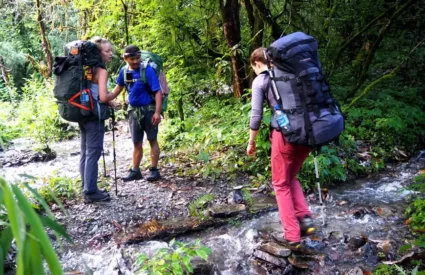
Trek to Dhaulagiri: Your Ultimate Guide to Trekking the Dhaulagiri Circuit Trek 2026 and 2027
Dhaulagiri Circuit Trek is one of the ultimate, unspoiled and difficult treks to be found in the Himalayas. Climb high passes and traverse through remote valleys, forests, glaciers, and the beautiful massif of the Dhaulagiri Himal. This remote trek brings you close to the seventh highest mountain in the world, Mt. Dhaulagiri (8167m). This ambitious trek brings you away from existing trekking routes of the Everest and Annapurna Region, where you can truly explore the wild Himalaya.
Dhaulagiri Circuit Trek is a challenge with high altitude treks coupled with incredibly beautiful scenery. Starting in the Myagdi Valley, the path goes through traditional villages on the hills and forests with many rivers. The Himalayan scenery starts to take your breath away as you gain elevation, where the path goes through a more remote, alpine environment. This path reaches Base Camp of Dhaulagiri before going across the French Pass to the Hidden Valley.
Unlike more frequently traveled routes, much of the Dhaulagiri Circuit Trek is camping. Your trekking crew must carry food, supplies, fuel, and even the cooking equipment. Your trek’s expedition style is what gives it such a wild appeal, but it also brings much more difficulty than is usually associated with a lodge-based trek.
Journeys venture north of Jomsom across French Pass and Dhampus Pass, both over 5,200 meters, to descend to the Kali Gandaki Valley and the beautiful Thakali village of Marpha. The uniqueness of the Dhaulagiri Circuit is the mix of high remote landscapes and traditional lowland settlements.
Planning the Dhaulagiri Circuit Trek 2026 involves more than booking a walking holiday. Trekkers need to be aware of how remote and high the trek is and also how unpredictable the weather can be. Long days and cold nights when camping add to the challenge, as do the pass crossings. Trekkers need good physical fitness, cold camping experience, and good trekking skills, all of which can be gained from using an experienced local trekking team.
Dhaulagiri Circuit Trek 2026 at a Glance
Dhaulagiri Circuit Trek 2026 and 2027 is approximately 16 to 21 days trek, depending on the selected itinerary and the availability of transport, acclimatization time, weather, and contingency days. It is better to take more time than to make an itinerary that is too short, considering how long this trek is and how remote it is.
The trek begins in or near the town of Darbang, in the Myagdi region, and follows the Myagdi Khola to the Dhaulagiri massif. After visiting Italian Base Camp and Glacier Camp, trekkers arrive at Dhaulagiri Base Camp. From there, the trek continues to French Pass, goes through the Hidden Valley, crosses the Dhampus Pass, and descends to the Kali Gandaki Valley and the town of Marpha.
French Pass is the highest point of the classic route at 5,360 meters, and Dhampus Pass is about 5,200 meters. Both of these high passes are the most difficult and treacherous part of the trek. Proper acclimatization and suitable weather conditions are both essential.
This trek is classified as a very difficult, high-altitude wilderness trek. It is a combination of basic local lodges in the lower parts and remote camping in the upper regions. The spring and autumn seasons are the most recommended seasons for this trek, due to the improved weather and visibility.
Highlights of the Trek to Dhaulagiri
With endless views of mountain peaks and glaciers that paint the background of deep green valleys and rugged terrain, the Dhaulagiri trek stands out from the variety of trekking routes in Nepal, which are renowned for tourism. The route offers something special to each group of hikers.
The hiking route starts along a lower altitude, but slowly works its way into the mountains and starts traversing through the more remote areas of the Myagdi region. Some villages make a good stopping point along the route, and it is great to see people carrying on their ancient way of mountain life. Along the trek, you find an abundance of forest and farms, waterways, and even a few rushing streams. Cross several suspension bridges to make your way through the stunning scenery.
The steep trek culminates at the first base camp. Your time there is sure to be well worth the trek. As you get closer to base camp, you begin to see some of the majestic mountain terrain that will surround you. The camp is set among towering ice-covered peaks. The approach to base camp brings you into the mountain environment.
One memorable stop is the French Pass. The 5,360 m high pass brings you to some amazing views of the mountains before a steep descent into the Hidden Valley. The Hidden Valley is an intimate view of a remote part of the trek that is breathtaking.
Another major stop is on the trek to Dhampus Pass. After crossing the pass, the gently sloping route starts bringing you to a lower elevation and into the Kali Gandaki Valley. After spending time hiking in the high mountain country, it is a pleasant surprise to arrive at Marpha and see some stone houses along the narrow village lanes and some orchards, which is unlike any of the other villages where the people are the Thakalis.
Dhaulagiri Circuit Trek Itinerary
Day 01: Arrival in Kathmandu & transfer to your hotel
One of our staff members will be waiting for you at Tribhuvan International Airport. They will drive you to your hotel for the time that you will spend in this city. You will have a briefing prior to the Dhaulagiri Trek. The briefing will cover the Trek path, safety measures, provision of equipment and supplies, etc.
Accommodation: Hotel| Meal: Welcome dinner
Day 02: Drive from Kathmandu to Phedi
After breakfast, you will head to Phedi and begin the scenic journey through the Nepali countryside. Once you leave the city, you will begin enjoying the peace and quietness of the area. You will gain some amazing views of the Nepali countryside, like rural villages with terraced fields, farmland, and rivers.
Accommodation: Local tea house | Meals: BLD
Day 03: Drive to Hille Pokhari
The Hille Pokhari drive will be along mountain roads with forests and rural settlements. After resting, be ready for the first trekking segment of the journey.
Accommodation: Local tea house | Meals: BLD
Day 04: Trek to Jukepani from Hille Pokhari
Your introduction to the Dhaulagiri region starts with a trek to Jukepani. The trek is through hilly forests. During this portion of the trip, you will start to become accustomed to daily trekking.
Accommodation: Local tea house | Meals: BLD
Day 05: Trek to Bagar from Jukepani
This trek to Bagar traverses forests and rugged mountains and valleys. You will be following a river and be surrounded by the Dhaulagiri wilderness. The trek is remote and rugged.
Accommodation: Local tea house | Meals: BLD
Day 06: Trek to Dovan from Bagar
Trail to Dovan goes through forested hill sections, rocky sections, streams, and steep mountain slopes. The dramatic sections will continue to unfold as you gain elevation and move away from the settlements.
Accommodation: Local tea house | Meals: BLD
Day 07: Trek to Sallaghari from Dovan
Trek to Sallaghari through a remote Himalayan valley. The vegetation starts to change along with the elevation. The mountains will become ever so prominent. Relish this remote wilderness before the higher regions of the alpine beckon.
Accommodation: Local tea house | Meals: BLD
Day 08: Trek to Italian Base Camp from Salladhari
Continue the ascent to the Italian Base Camp. The forests will give way to the rugged alpine. The mountains will become even more impressive, and the Dhaulagiri massif will be the great ruler of the horizon.
Accommodation: Local tea house | Meals: BLD
Day 09: Rest and Acclimatization Day
Acclimatize to the altitude at the Italian Base Camp for the day. Enjoy the mountains and the remarkable views surrounding the camp and take short hikes while your guide monitors your altitude and health.
Accommodation: Local tea house | Meals: BLD
Day 10: Trek to Japanese Base Camp from Italian Base Camp
Acclimatization done, trek to Japanese Base Camp begins. The terrain becomes more rugged and alpine. The views transform as the terrain changes to moraines and rocky alpine terrain. Always practice a slow trek.
Accommodation: Camping | Meals: BLD
Day 11: Trek to Dhaulagiri Base Camp from Japanese Base Camp
The trek to Dhaulagiri Base Camp offers more breathtaking landscapes and features like moraines and more glaciers. This is an important landmark on the trek and offers stunning views of the Dhaulagiri Massif.
Accommodation: Camping | Meals: BLD
Day 12: Trek to Hidden Valley via French Pass from Dhaulagiri Base Camp
It is no easy feat to reach French Pass at 5,360 m, where you will enjoy the views that the pass has to offer before descending into the Hidden Valley. You may be met with snow and other treacherous trail conditions depending on the season you are trekking.
Accommodation: Camping | Meals: BLD
Highest Point: French Pass 5,360 m
Day 13: Trek to Yak Kharka from Hidden Valley
Descend Hidden Valley and make your way to Yak Kharka. The elevation change is a relief following your trek across the high-altitude pass and is an enjoyable change in landscape from the alpine terrain.
Accommodation: Camping/lodge | Meals: BLD
Day 14: Trek from Yak Kharka to Marpha
More descending is the name of the game as we trek to the lovely Thakali village in the Kali Gandaki Valley, which is lined with orchards and framed by the valley. After the days of trekking, the lovely village is a welcome change from the wilderness.
Experience another beautiful breakfast before heading to Pokhara from Marpha in your private vehicle. Enjoy the scenery along the Kali Gandaki Valley, and watch the rugged, dramatic peaks transform into the gentle, rolling greens of Pokhara. Make your way to Phewa Lake for a relaxing evening.
Accommodation: 3 star Hotel breakfast
Day 16: Drive from Pokhara to Kathmandu
Enjoy your domestic flight from Pokhara to Kathmandu. Depending on the weather, enjoy views of the amazing hills and Himalayas. Upon landing, your private shuttle will be waiting to take you to your hotel. You choose how you want to spend your day, we recommend some shopping and exploring!
Accommodation: 3 star hotel with Breakfast
Day 17: Drop you off at the airport and goodbye Kathmandu
It’s time to say goodbye. Our journey to the Dhaulagiri region comes to an end. Depending on your flight schedule, enjoy your last moments in Kathmandu as we take you to Tribhuvan International Airport for your flight.
Accommodation: Excluded | Meals: Breakfast
Important Note
The Dhaulagiri Circuit Trek is an adventure like no other. Because of the nature of the trek, the itinerary is subject to change depending on weather and snow conditions and the health and acclimatization needs of the group. Your safety is our number one concern, especially during the crossings of French Pass and the Hidden Valley.
Dhaulagiri Circuit Trek Route
One of the most diverse trekking routes in Nepal is the Dhaulagiri Circuit Trek. This route crosses many different geographical zones.
From the lower Myagdi Valley, this route takes you on a journey to some of the remote regions of the Himalayas. One of the main routes follows the path of Darbang, Muri, Bagar, Dobang, the Italian Base Camp, Glacier Camp, Dhaulagiri Base Camp, French Pass, Hidden Valley, Dhampus Pass, Yak Kharka, and Marpha.
Early on in the route, you see green hilltops and farm terraces, forests, rivers, and even traditional settlements. As you go higher, the terrain becomes rocky and alpine, and vegetation is very sparse.
The most challenging portion of the trek is the high camps, French Pass, and the Hidden Valley. After passing Dhampus Pass, the terrain becomes greener and more settled again as you approach Kali Gandaki Valley from the other side.
The Dhaulagiri Circuit Trek differs from other trekking routes in that there is a great diversity of geography within the one trek, from forests and settlements to high passes and barren valleys.
Dhaulagiri Circuit Trek Altitude
Knowledge of the elevations gained on the Dhaulagiri Circuit Trek is important because altitude is a major factor that increases the difficulty of the trek.
The trek starts at a moderately low elevation at Darbang and gradually ascends to higher elevations at the mountain camps. Italian Base Camp 3700 meters, whereas Glacier Camp 4000 meters. Dhaulagiri Base Camp sits at 4750 meters.
The route peaks at French Pass at roughly 5,360 meters. Hidden Valley 5,000 meters. Dhampus Pass exceeds 5,200 meters.
As the trek remains at high elevation for multiple days, acclimatization cannot be ignored. A good itinerary ensures your body gradually receives the time it needs to adjust while the guide is able to check your status.
Dhaulagiri Base Camp Trek
Dhaulagiri Base Camp Trek leads trekkers to the base camp, whereas the full Dhaulagiri Circuit includes French Pass, the Hidden Valley, the crossing at the Dhampus Pass, and Marpha.
Dhaulagiri Base Camp offers trekkers the opportunity to enjoy the camp set amongst glaciers and BIG mountains. Lower valley environments are dramatically different from what you will experience here. It is very remote, with no lodges or settlements, and trekkers must camp.
The base camp helps trekkers get acclimatized to prepare them for the French Pass Crossing, which is the highest and most difficult portion of the entire trek.
French Pass Dhaulagiri
French Pass Dhaulagiri is situated at an elevation of about 5,360 meters and is the highest point of the Classic Dhaulagiri Circuit.
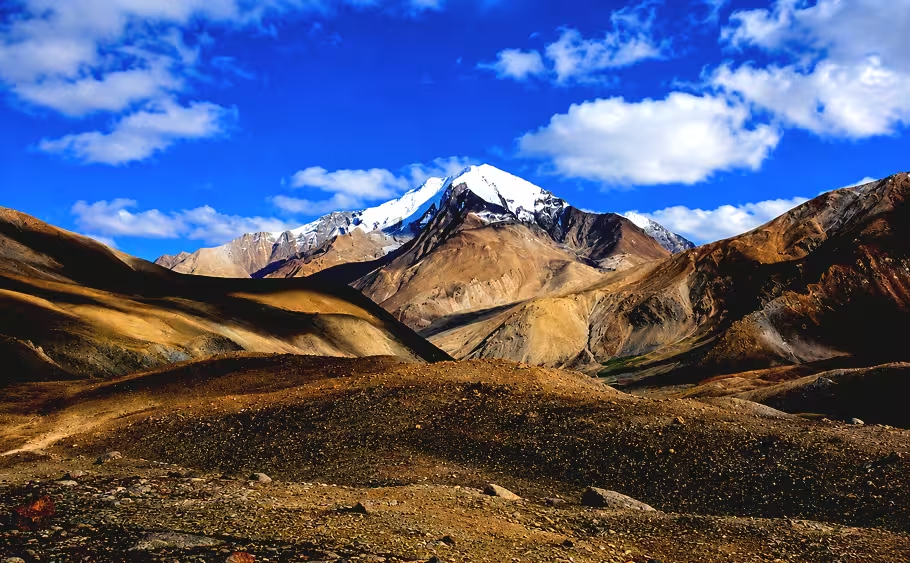
The way up to the French Pass can be taxing even for the most seasoned trekkers. The altitude can be challenging, and most of the pass can be covered with snow, varying even depending on the season. Weather on the Pass can be erratic. Exposure at high elevations can be tough, even dangerous, with high winds and low visibility.
The Pass is best climbed early in the morning, when the weather on the Pass is typically favorable. Your guide will determine the departure time based on the weather.
Reaching French Pass is a huge sense of accomplishment. From the top, trekkers can look around the high mountain landscape in the distance and begin their crossing into Hidden Valley.
Hidden Valley Dhaulagiri
Hidden Valley Dhaulagiri is as remote as it gets on the whole trek.
The valley is situated at approximately 5,000 m high and is sandwiched between steep mountains. The trail from the French Pass brings trekkers to this secluded area where they camp.
This part of the trek has a stark and fragile beauty and is largely undeveloped. Visitors begin to grasp the area’s remoteness from the rest of the world.
Camping in this area can be cold. Bring extra warm clothes.
Dhampus Pass Trek
This part of the Dhaulagiri Circuit was called the Dhampus Pass Trek. After Hidden Valley, this trek takes visitors closer and closer to the Dampus Pass at more than 5,200 meters.
You need a moderate amount of fitness to walk to the summit and to pace yourself appropriately. Because of the very high altitude, a climb that is normally of very low difficulty can become difficult to complete.
The pass is the highest point of this trek, and from the other side the trail heads down to lower altitudes. From there, the trek continues along the Kali Gandaki Valley to Marpha.
Dhaulagiri Circuit Trek difficulty is far greater than commonplace teahouse trekking routes in Nepal. The main obstacles include altitude, remote areas, long days, camping, rough trails, high passes, and unforgiving weather and conditions.
Trekking newcomers should hold out until they are better prepared. Trekkers need to be able to trek several hours with a daypack. The trek’s difficulty increases during the approach to Base Camp, crossing French Pass, the Hidden Valley, and crossing Dhampus Pass.
Solid experience trekking at altitude is necessary.
Trekking the Dhaulagiri Circuit requires trekkers to have a “wilderness” mindset and prepare for the best and worst conditions.
Dhaulagiri Circuit Trek Best Time
Spring and Autumn are the suggested seasons to do the Dhaulagiri Circuit Trek.
Spring, particularly April and May, will provide trekkers with the opportunity to see clear views of the surrounding mountains. During spring, trekkers will experience milder temperatures and there will be an abundance of flowers.
Autumn, from October to November, is another quality trekking season. From Autumn’s perspective, the monsoon season will have cleared most of the atmosphere, and trekkers will have clear mountain views and stable trekking conditions.
Winter will create high passes with deep snow. Lower valleys will experience rain, landslides, and difficult transportation conditions.
A circuit trek in the mountains depends greatly on what season is chosen.
Dhaulagiri Circuit Trek Permits
Travelers must obtain trekking permits for the Dhaulagiri Circuit Trek before the trek begins. Permit prices and requirements may vary, therefore, those planning to take the trek in 2026 must contact their agency to see what they will need to bring.
Since the trekking route is in the Annapurna Conservation Area, trekkers are required by law to obtain the required trekking and conservation permits, respectively.
Dhaulagiri Circuit Trek is a remote and logistically difficult trek, and therefore, the majority of international travelers use a trekking agency. Trekking agencies arrange permits, guides, transport, camping, and other logistical support.
The permits required to trek change frequently, so the latest requirements must be verified before the trek.
Cost of the Dhaulagiri Circuit Trek
The price for the Dhaulagiri Circuit Trek is dependent on the duration, size of group, the transportation arrangements, permits, staff arrangements, camping, food, trekking equipment, and the services included.
Compared to the popular trekking routes of Nepal, the Dhaulagiri Circuit Trek is a more difficult and remote trek. The logistical support for the trek is likely to be more comprehensive than other treks. Support for the trek may include the transportation of tents, camping equipment, and fuel, as well as food and sleeping equipment.
Other expenses may include the cost of accommodation in Kathmandu and Pokhara, arrangement of guide and porter services, permits, camping equipment, meals, transportation and emergency support.
It is important to look beyond the displayed cost of a package for the Dhaulagiri Circuit Trek. A very low price may indicate that certain services are not included or support will be poor in remote areas.
A good trekking package will provide a detailed breakdown of exactly what you get with the package prior to booking.
A reliable trekking package should clearly explain what is included and excluded before you make a booking.
A reliable package will provide a breakdown of what you get prior to booking.
Accommodation, Food, and Camping
The Dhaulagiri Circuit has elements unlike other treks that employ teahouses along the way. Much of the Circuit requires camping, especially in the upper regions.
Even though the lower regions have some basic lodge accommodation, trekking camps become necessary beyond the Italian Base Camp and other remote sections.
In most cases, your trekking crew sets up your tents and cooking facilities. The crew is also responsible for bringing food and water to the camp.
The food provided on the trek contains high amounts of carbohydrates to help trekkers with the energy needed to complete lengthy trekking days. Camp meals may include rice, noodles, lentils, potatoes, pasta, soup, bread and porridge, fruits and vegetables, and a variety of hot drinks.
Expect more simplistic accommodation and food compared to treks in Nepal that utilize teahouse trekking.
Transportation
As the trailhead to the Dhaulagiri Circuit is located deep in western Nepal, understanding transportation logistics is an important part of planning the trek.
The first part of the journey will include a drive from Kathmandu to Pokhara and then to Beni and Darbang, and Hille Pokhari
The road conditions to Beni and Darbang will be based on the monsoon. It is likely to be a rough and difficult drive.
After the trek ends, you will have the option to take the road or flight to Pokhara.
Due to the nature of mountain flights, a delay is likely. For this reason, it is recommended that you have flexible travel dates.
Preparation and Training
Physical preparation is a key element to a successful trip to Dhaulagiri.
Start your preparation well in advance of your departure. Hiking is probably the best preparation you can do because it prepares your body for what is to come. Going uphill and downhill are important because of the nature of the trail.
Running, cycling, swimming, and even using the stairs are all exercises that improve cardiovascular endurance. There are certain exercises and activities that build leg strength and core stability as well, which can help on your journey.
Training while carrying a backpack is also a good idea because you will be carrying some of your personal equipment for the duration of the trip.
Good physical shape does not eliminate the risk of altitude sickness. Altitude sickness can easily ruin even the most fit and prepared trekker’s journey as well.
Altitude Sickness and Safety
The Dhaulagiri Circuit has altitude sickness as its key concern.
As you make your way above 3000 meters, you must let your body get accustomed to lower oxygen levels. The risk increases when going to Glacier Camp, Dhaulagiri Base Camp, Hidden Valley, French Pass, and Dhampus Pass.
Headache, lack of energy, dizziness, nausea, loss of appetite, and difficulty resting are all signs and symptoms your body can experience while altitude sickness is occurring.
Instruct your guide as soon as you experience the onset of any symptom. Do not try to climb higher, as this can be life-threatening.
The safest way is to, once again, acclimatize and rest, stay well hydrated, and descend lower as soon as symptoms get more severe.
Insurance should also cover everything associated with trekking and evacuation at high altitude.
Is Dhaulagiri Circuit Trek Beginner-Friendly?
Generally, Dhaulagiri Circuit is not recommended for novice high-altitude trekkers.
There are long walking days, camping in remote areas, high-pass crossings, and unpredictable weather and mountain conditions.
A beginner with good fitness may still consider this trek, but it is increasingly challenging without altitude experience beyond 4,000 meters.
Previous trekking experience along demanding routes of Manaslu Circuit, Annapurna Circuit, Everest Base Camp, and other high-altitude treks serves as preparation, but all treks have their own challenges.
Good physical preparation, along with patience and flexibility, is truly appreciated at high altitudes.
Why Trek to Dhaulagiri with Hill Sherpa Trekking?
For such a remote and challenging expedition as the Dhaulagiri Circuit, selecting a reputable local Himalayan trekking company is imperative.
Hill Sherpa Trekking has local Himalayan knowledge and can address the many logistics to arrange permits, transport, trekking staff, camping gear, supplies, and safety arrangements.
The guides have the ability and knowledge to ensure safe and flexible group travel and will monitor conditions to determine itinerary changes due to weather and trails.
For such a remote and challenging trek as Dhaulagiri, the goal should not be to strictly follow an itinerary; the goal should be the safety and well-being of the trekking group.
Frequently Asked Questions
How difficult is the Dhaulagiri Circuit Trek?
The Dhaulagiri Circuit trek consists of challenging high-altitude wilderness trekking. It has rough terrain, high altitude conditions, multiple long walking days, remote camping, and passes exceeding 5,200 meters with two major passes.
How many days does the Dhaulagiri Circuit Trek take?
Depending on itinerary, weather, and contingency days, transportation and acclimatization needs, a complete Dhaulagiri Circuit requires about 16 to 21 days.
What is the highest point of the Dhaulagiri Circuit?
French Pass is the highest point of the classic Dhaulagiri Circuit, at approximately 5,360 meters.
How high is Dhaulagiri Base Camp?
Dhaulagiri Base Camp is at approximately 4,750 meters above sea level. The elevation may be slightly different depending on mapping sources and campsite.
What is the best time for the Dhaulagiri Circuit Trek?
Spring or fall are the best seasons for travelling. April, May, October, and November are the most sought after months due to their good weather and visibility of the mountains.
Is Dhaulagiri a camping trek?
Yes. While some lower level settlements may provide basic accommodation, the higher level settlements can only be accessed by camping.
Do I need previous trekking experience?
Previous high-altitude trekking experience is strongly recommended. The Dhaulagiri Circuit is not generally considered a beginner level trek.
How much does the Dhaulagiri Circuit Trek cost?
The price varies depending on the number of travelers, the transportation, permits, guides, porters, camping logistics, food, and other services. A comprehensive package should include all the details of what is included as well as what is excluded.
What permits are required?
Permit requirements vary on a case by case basis based on the rules for the selected routes. Travelers should always consult with their chosen trekking agency to verify the 2026 requirements and permits, and more specifically, the latest costs.
Can I do the trek without camping?
Not for the classic full circuit. The upper Dhaulagiri route has limited accommodation, so organized camping is an essential part of the traditional circuit.
Is Dhaulagiri Base Camp Trek and trek to dhaulagiri different?
A Dhaulagiri Base Camp itinerary focuses primarily on reaching the base camp and returning through a suitable route. The full circuit continues beyond base camp and crosses French Pass, enters Hidden Valley, crosses Dhampus Pass and descends toward Marpha.
Therefore, the full circuit is significantly more demanding and requires greater logistical support, more camping days, and stronger preparation.
If your goal is to experience the remote Dhaulagiri wilderness and challenge yourself with high mountain passes, the full circuit offers the more complete adventure.
What Makes the Trek to Dhaulagiri Special?
What makes the Trek to Dhaulagiri special is the combination of isolation, altitude, dramatic scenery, and genuine wilderness.
There are no large crowds around Dhaulagiri Base Camp. There are no continuous lines of teahouses through the high passes. Instead, you walk through an environment where mountains, glaciers, snow, rock, wind, and silence dominate the landscape.
The journey also offers remarkable cultural diversity. The lower sections pass through traditional communities, while the final descent toward Marpha introduces trekkers to the distinctive culture and architecture of the Kali Gandaki region.
For experienced trekkers looking beyond Nepal’s busiest Himalayan trails, this combination of physical challenge and remote mountain scenery makes Dhaulagiri an exceptional choice.
Conclusion
Trek to Dhaulagiri takes trekkers into the heart of the Himalayas on an expedition that sprawls beyond the usual trekking boundaries. From the Myagdi valleys and villages to the high glaciers of Dhaulagiri Base Camp, each stage of the trip shows new landscapes and new obstacles to be faced.
The crossing of the French Pass, Hidden Valley, and the Dhampus Pass are the signature sections of the circuit, while the rest of the journey, especially the trek to Marpha, brings trekkers from high altitude to low altitude to experience the transition from the wilderness to the traditional cultures of the Himalayan region.
Because of its remoteness, altitude, camping, lots of trekking, and tough terrain, the long Dhaulagiri Circuit demands good preparation from trekkers. It is important to choose the right season, acclimatize properly, take the right gear and hire an experienced trekking company.
Dhaulagiri Circuit trek is, without a doubt, one of the most rewarding mountain trips in Nepal and is an excellent option for trekkers who want to go off the beaten path.
Hill Sherpa Trekking Company operates Dhaulagiri Circuit treks, led by Sherpa guides, and will assist you in planning your trip.
I am the Founder and Owner of Hill Sherpa Trekking Pvt. Ltd. With more than 15 years of experience in the Himalayan tourism and mountaineering industry, I established the company with a passion for mountain adventures and a commitment to responsible tourism. Since then, I have dedicated my career to creating safe, authentic, and unforgettable trekking and climbing experiences throughout the Himalayas.





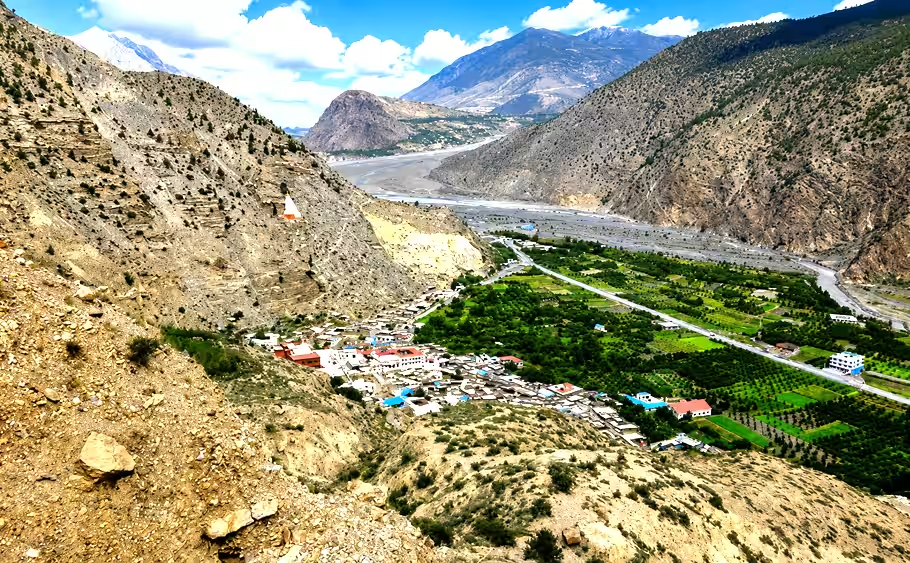 Planning the Dhaulagiri Circuit Trek 2026 involves more than booking a walking holiday. Trekkers need to be aware of how remote and high the trek is and also how unpredictable the weather can be. Long days and cold nights when camping add to the challenge, as do the pass crossings. Trekkers need good physical fitness, cold camping experience, and good trekking skills, all of which can be gained from using an experienced local trekking team.
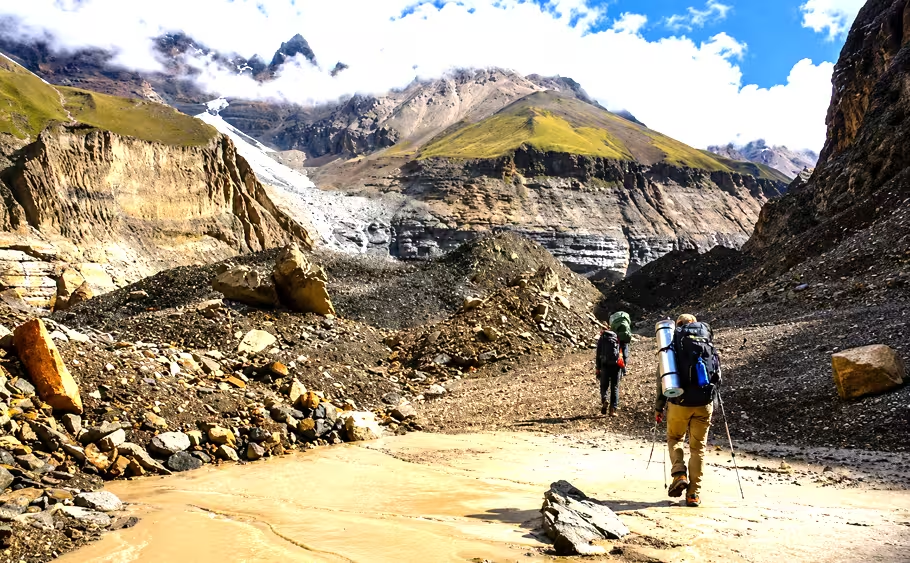 Dhaulagiri Circuit Trek 2026 and 2027 is approximately 16 to 21 days trek, depending on the selected itinerary and the availability of transport, acclimatization time, weather, and contingency days. It is better to take more time than to make an itinerary that is too short, considering how long this trek is and how remote it is.
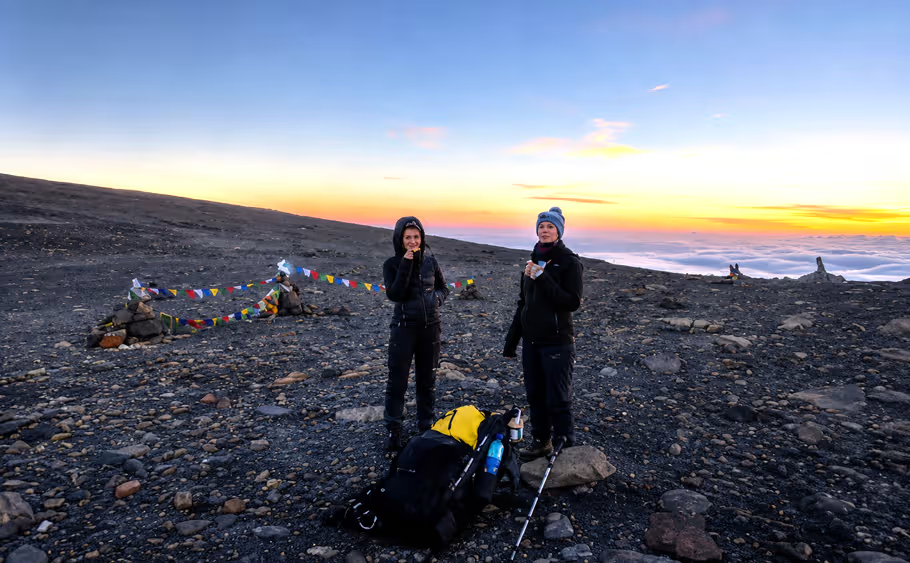 French Pass Dhaulagiri is situated at an elevation of about 5,360 meters and is the highest point of the Classic Dhaulagiri Circuit.
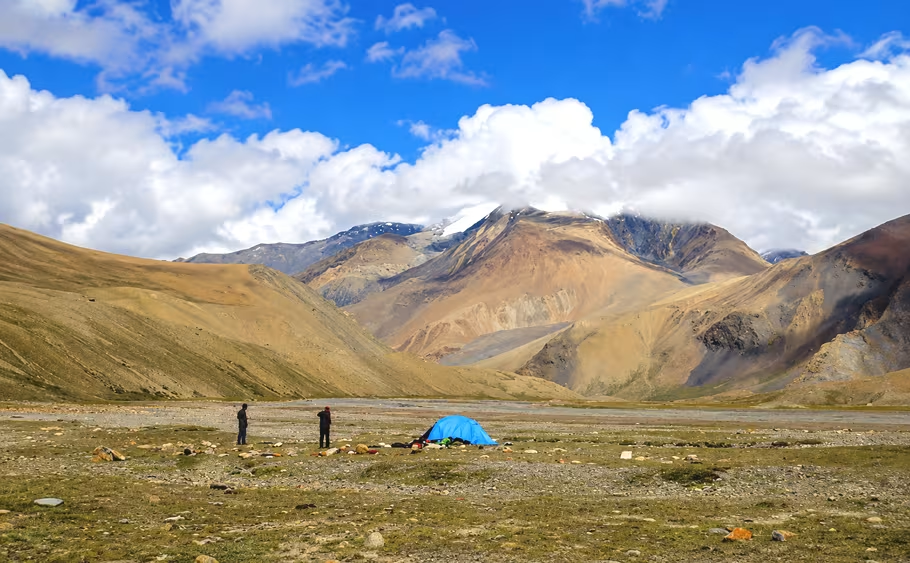 Hidden Valley Dhaulagiri is as remote as it gets on the whole trek.