Govt. Tourism License 3195/080/81





Manaslu Annapurna Circuit Trek 20 Days


- Best Price Guarantee
- Secure Online Booking
- Flexible booking dates
- Owner operated company
- Decades of experience
- Dedicated sherpa team
- 100% success rate
- 5/5 ratings by travelers


Highlights of Manaslu Annapurna Circuit Trek 20 Days
- Explore the remote and beautiful Manaslu region.
- Trek through the Manaslu Conservation Area.
- Walk alongside the Budhi Gandaki River.
- Visit traditional villages such as Jagat, Namrung, Lho and Sama Gaun.
- Enjoy spectacular views of Manaslu surrounding peaks.
- Spend an acclimatization day in Sama Gaun.
- Hike to Manaslu Base Camp or Pungyen Gompa.
- Experience the Tibetan-influenced culture around Samdo.
- Take a challenging day hike toward the Tibetan border.
- Cross the dramatic Larkya La Pass.
- Descend into the beautiful Bimthang Valley.
- Continue from the Manaslu region into the Annapurna Circuit.
- Explore Chame, Upper Pisang and Manang.
- Spend an important acclimatization day in Manang.
- Walk through the high-altitude landscape toward Thorong Phedi.
- Cross Thorong La Pass, one of the highest trekking passes in the world.
- Visiting sacred pilgrimage site of Muktinath village.
- Finish the journey with a scenic drive to Pokhara from Muktinath.
Trip Overview
This 20 Days Manaslu Annapurna Circuit Trek combines two of Nepal’s beautiful Himalayan treks. Starting with a drive to Machha Khola, you hike the remote Manaslu Circuit from the river valleys and passing traditional settlements and villages to the more remote settlements and the Larkya La Pass. From here, the trek moves to the Annapurna Circuit, taking you through Chame, Upper Pisang, and Manang before you cross the famous Thorong La Pass to reach Muktinath.
What makes this circuit great is the variety of vegetation, landscapes, and cultures. Manaslu region greets you with lush vegetation, rivers, waterfalls, and green valleys. As you move higher, parts of the region are famous for their glacial and dry valleys filled with Himalayan peaks. Near Samdo and Sama Gaun, you see the influence of Tibetan Buddhism, and the views of Manaslu along with an array of peaks are breathtaking. Larkya La Pass takes you to an entirely different region with the dry landscapes of the Annapurna region, and you enjoy the views of Annapurna II and III with many other Himalayan peaks.
The itinerary has many planned rest days to help you adjust to high altitude. Rest days are planned at key stops including Sama Gaun, where you can do a side trek to Base Camp or Pungyen Gompa, and at Samdo for a trek along the border to Tibet. An additional rest day is planned at Manang before hiking to Thorong Phedi and crossing the Thorong La Pass. Rest days are essential when trekking above 5000 meters and for the two long and tiring pass crossings.
The two most notable sections on the trek are Larkya La Pass and Thorong La Pass. Trekking across Larkya La Pass is a memorable experience of the Manaslu Circuit and Thorong La Pass is the most challenging and memorable part of the Annapurna Circuit. Both passes require good preparation and a great deal of determination, but the experience is rewarding.
A moderate level of fitness and the ability to walk for extended periods of time over highly variable terrain is essential for this trek. The route includes some long trekking days, steep ascents and descents, altitude, and remote sections with minimal infrastructure. Prior trekking experience at high altitude is beneficial; however, with the right support, this trek can be undertaken by determined individuals.
With Hill Sherpa Trekking, our local guides and porters provide support on all treks. They understand the geography, the elevation, and the local tribes. We prepare the necessary permits, transportation, accommodation and trekking logistics. We work toward a high level of safety and proper acclimatization. As a locally owned and Sherpa-led company, we desire for our guests to enjoy the treks while encountering the beauty and adventures of the mountains and cultures.
This 20 days Manaslu and Annapurna Circuit Trek offers trekkers a journey full of adventure mixed with beautiful scenery, culturally diverse experiences, and incredible trekking in the Himalayas. It takes you through the remote valleys of Manaslu, over the Annapurna Circuit high passes and to the pilgrimage site of Muktinath, so are you ready to explore together in 2026 and 2027?
Manaslu Annapurna Circuit Trek 20 Days Itinerary
01
Day 01: Drive to Machha Khola from Kathmandu
Our Manaslu and Annapurna Circuit trek adventure begins with 8 to 9 hours long scenic drive from Kathmandu toward Machha Khola. The journey takes you away from the busy Kathmandu city in Nepal and into the green hills and river valleys of central Nepal. Along the way, you will pass through many villages, terraced farmland, forests and mountain landscapes.
The journey towards the Manaslu area becomes more rural and rural over the motor road. Depending on road and weather conditions, after arriving at Machha Khola village, you will spend the night at a local teahouse.

Duration
8-9 hours
Max Altitude
930 M / 3,051 ft
Activity
Driving
Meals
Breakfast, Lunch, Dinner
Accommodation
Local Teahouse
02
Day 02: Trek from Machhakhola to Jagat
It is the start of your trekking adventure. You pass through a lovely valley to the Budhi Gandaki River with suspension bridges, and pass through small towns with green hills.
Some ups and downs on the trail as it winds through forests, waterfalls and riverside scenery. The valley narrows and steepens gradually, with the mountains rising.
Jagat is a beautiful traditional town and a key resting point on the Manaslu trekking route. Jagat is the last place to stay and visit the village.
Duration
5 to 6 hours
Max Altitude
1,340 M / 4,396 ft
Activity
Trekking
Meals
Breakfast, Lunch, Dinner
Accommodation
Local Teahouse
03
Day 03: Trek from Jaget to Deng
After a delicious breakfast at Deng, you will continue your walk to Deng village along the Budhi Gandaki valley. You will walk through forests and traditional villages and the mountains around you grow even more spectacular.
You will walk through narrow parts of the valley and walk across several suspension bridges. As you go higher, you will notice that the landscape is changing with fewer subtropical plants and more Himalayan vegetation.
Deng is a small mountain settlement surrounded by impressive cliffs and hills, you will spend a peaceful overnight in Deng village before continuing to trek to Namrung village.
Duration
5 to 6 hours
Max Altitude
1860 m / 6,037 ft
Activity
Trekking
Meals
Breakfast, Lunch, Dinner
Accommodation
Local Teahouse
04
Day 04: Trek from Deng to Namrung
Today, you will walk from Deng to Namrung, it takes you further into the Manaslu region. The trail follows the Budhi Gandaki River and slowly ascends.
As you go up higher, the scenery changes a lot. Pine and fir forests become more common the surrounding mountains are larger and more dramatic. You also start to see more Tibetan cultural influences in the villages and monasteries.
Namrung is one of the most attractive settlements on the Manaslu Circuit. Here, enjoy the beautiful mountain views and prepare for the higher part of the trek.
Duration
5 to 6 hours
Max Altitude
2630 M / 8,629 ft
Activity
Trekking
Meals
Breakfast, Lunch, Dinner
Accommodation
Local Teahouse
05
Day 05: Trek from Namrung to Syala village
Today is day five hike, you will continue walking from Namrung to Syala Village, passing through beautiful pine and rhododendron forests and traditional mountain settlements. As you gain altitude, the views of Mount Manaslu, Himalchuli and other Himalayan peaks become more impressive. Syala is a peaceful mountain village surrounded by open landscapes and excellent mountain views and 360-dgees. Staying here also helps with gradual acclimatization before reaching Sama Gaun.
Duration
5 to 6 hours
Max Altitude
3,500 M / 11,484 ft
Activity
Trekking
Meals
Breakfast, Lunch, Dinner
Accommodation
Local Teahouse
06
Day 06: Trek to Samagoun via pungen gumpa visit
After eating breakfast, you will trek from Syala to Pungyen Gompa, where there is 4,018 meters elevation a peaceful and one of the oldest Buddhist monasteries in the Manaslu region. You have to ascend for around 3 hours of uphill walking with beautiful mountain scenery and a chance to experience the local Tibetan Buddhist culture. After visiting Pungyen Gompa, you will continue descending to Sama Gaun 3,530 meters, one of the most central villages on the Manaslu Circuit, which is surrounded by views of Mount Manaslu.
Duration
5 to 6 hours
Max Altitude
4,018 M / 13,184 ft
Activity
Trekking
Meals
Breakfast, Lunch, Dinner
Accommodation
Local Teahouse
07
Day 07: Hike to Manaslu base camp
Today is an important acclimatization day in Sama Gaun (3,530m). Rather than spending the whole day resting, we do a day hike to Manaslu Base Camp and gain altitude before returning to Sama Gaun to sleep for the night.
This hike offers a wonderful high altitude trek through a picturesque backdrop of some of the most spectacular peaks of the Himalayas, such as Mount Manaslu and the glaciers in the area. The trail gradually ascends towards Manaslu Base Camp at 4,800 m. This hike is a good warm up for what your body will experience in the coming days towards Samdo and Larkya La Pass.
Of course, you will have a number of opportunities to take in the views and then we return to Sama Gaun for the day. It is a long and tiring day, but the views and the Manaslu Base Camp experience are surely worth it. You will experience the best combination of acclimatization and view rounds.
Duration
5 to 7 hours
Max Altitude
4,800 M
Activity
Hiking
Meals
Breakfast, Lunch, Dinner
Accommodation
Local Teahouse
08
Day 08: Trek to Samdo village
After breakfast, you continue on your journey through Sama Gaun towards Samdo. Although short, this trekking day will continue to get you all acclimated by allowing gradual altitude gain.
The trek keeps moving along the upper Budhi Gandaki Valley, giving you dramatic mountain views along the way as the barren and dry landscapes take over.
Samdo is a great example of the influence of Tibetan culture on the region, as you’ll see with the stone buildings and the overall peaceful nature of the land. There is a lot of time to explore and relax that this short walk day allows.
Duration
2 to 3 hours
Max Altitude
3,865 M
Activity
Trekking
Meals
Breakfast, Lunch, Dinner
Accommodation
Local Teahouse
09
Day 09: Trek to Dharmashala
Continuing toward Dharmasala or Larkya Phedi, you encounter a path that climbs through the increasingly barren yet beautiful and dramatic landscape that characterizes the Himalayas.
You will have some of the most breathtaking views of mountains and glaciers as you reach the base of the Pass. Dharmasala is a settlement to prepare yourself for the overnight stay before crossing the major pass.
The next day will be the most difficult and longest part of the journey. Food and water are extra important today.
I’m a creative writer and editor with a demonstrated history of working in the writing and editing industry.
Duration
3 hours
Max Altitude
4,460 M
Activity
Trekking
Meals
Breakfast, Lunch, Dinner
Accommodation
Local Teahouse
10
Day 10: Trek from Dharmasala to Bimthang (3,720 M) via Larkya La Pass 5,106 M
One of the most difficult, but most rewarding, days of the Manaslu Circuit is crossing Larkya La Pass. It is important to leave camp as early as possible in the morning, as the afternoon weather begins to deteriorate rapidly.
The trail can seem endless and dreary on your way up to the pass, but steady, methodical progress will eventually take you there. The last part of the ascent requires significant determination and willpower due to the difficult conditions related to both the altitude and the cold.
The views of the mountains from the top of Larkya La Pass are some of the most spectacular of the entire trek. You may even want to take the traditional photo of you holding a sign that reads Crossed the Pass. After this, you will have a long but beautiful descent to Bimthang.
The terrain will begin to change on the descent as you will see the upper valleys give way to more greenery.
Duration
9 to 10 hours
Max Altitude
5,106 M
Activity
High pass trek
Meals
Breakfast, Lunch, Dinner
Accommodation
Local Teahouse
11
Day 11: Trek to Dharapani from Bhimthang
Following Larkya La, you will be radiating downhill paths through the forests and valleys of the mountains today.
Pathways through pine and rhododendron forests will greet you and will take you down the Dudh Khola valley. Compared to the high altitude areas of the previous days, it will be easy on the eyes and your comfort.
After crossing Larkya La, you will reach Dharapani, where the Manaslu and Annapurna trails meet. This is the last point of Manaslu and the first of Annapurna for you in the journey.
Duration
6 to 7 hours
Max Altitude
1860 M
Activity
Trekking
Meals
Breakfast, Lunch, Dinner
Accommodation
Local Teahouse
12
Day 12: Trek to Chame village
Today you hike to Chame, the headquarters of Manang District. The path meanders along the Marsyangdi River through forests, hamlets and steep mountain valleys.
The scenery alters as you penetrate more of the Annapurna region, and you get to see some fantastic snow peaked mountains along the route, along with some traditional mountain settlements.
Chame has some of the better amenities of the smaller settlements you have passed, so you will find it a good place to rest and prepare yourself for the higher Manang region.
Duration
6 to 7 hours
Max Altitude
2710 M
Activity
Trekking
Meals
Breakfast, Lunch, Dinner
Accommodation
Local Teahouse
13
Day 13: Trek to Upper Pisang
Hiking from Chame to Upper Pisang continues your journey through Manang’s dry and scenic highlands.
Your hike begins to gain elevation and the scenery becomes more mountainous as the vegetation disappears. Peaks of Annapurna II and others become prominent on the horizon.
Upper Pisang is a traditional Himalayan village with stone houses and Buddhist influence. It is also a great place to begin your mountain enjoyment.
Duration
4 to 5 hours
Max Altitude
3300 M
Activity
Trekking
Meals
Breakfast, Lunch, Dinner
Accommodation
Local Teahouse
14
Day 14: Trek to Manang village
Today is probably one of the most beautiful days of your Annapurna Circuit. Your trail takes you along the Upper Marsyangdi Valley towards Manang.
The trail rewards you with great views of Annapurna II and Annapurna III, Gangapurna and more. Trekkers endure hot and dry Barren landscapes as a result of the rain shadow effect of Annapurna all the way to Manang.
Upon reaching Manang, you can take some well deserved rest.
You can take time to check out everything Manang has to offer. Manang is a very popular Himalayan destination of choice.
Duration
6 to 7 hours
Max Altitude
3540 M
Activity
Trekking
Meals
Breakfast, Lunch, Dinner
Accommodation
Local Teahouse
15
Day 15: Acclimatization / Hike to Ice Lake
Today is an important acclimatization day in Manang (3540m). A better use of the day than complete rest is to do the Ice Lake (4620m) day hike, one of the best and most rewarding day hikes in the Manang Valley.
With wide views of Annapurna II, III, Gangapurna and Pisang Peak, and others, the trail follows a gradual ascent and takes you to Ice Lake, at a higher altitude, for the day. This is an excellent opportunity to return to Manang for an overnight stay.
The ascent to Ice Lake is steep, making the hike challenging, and is a good warm up for the acclimatization trek to Yak Kharka, Thorong Phedi and crossing the Thorong La Pass (5416m). After enjoying the views from Ice Lake, we return to Manang for the day of rest.
Duration
6 to 7 hours
Max Altitude
4620 M
Activity
Hiking
Meals
Breakfast, Lunch, Dinner
Accommodation
Local Teahouse
16
Day 16: Trek to Yak Kharka
After breakfast, we will trek to Yak Kharka (4,020 m) from Manang (3,540 m). Along this stretch of trail, we will begin to see really fantastic views of Annapurna II, III, Gangapurna and all the peaks in that general area.
The trail is somewhat Barren and gallery like in nature and good for viewing. It is short, but at this altitude and with the thinning air, it takes time to adjust, so it is good to have this cut in the day’s journey. At Yak Kharka, we will rest and elaborate on the preparations we will need for the day ahead to Thorong Phedi.
Duration
4 to 5 hours
Max Altitude
4020 M
Activity
Trekking
Meals
Breakfast, Lunch, Dinner
Accommodation
Local Teahouse
17
Day 17: Trek to Thorang Phedi
We walk from Yak Kharka (4,020 m) to Thorong Phedi (4,620 m) today. The walk takes us along the upper Annapurna Region through a dry and rugged landscape. We walk with great views of the mountains.
As we ascend, the walk becomes more demanding and we take the walk at a slower pace to take many breaks. We reach Thorong Phedi to rest and prepare for crossing the Thorong La Pass (5,416 m) at first light in the morning.
Duration
3 to 4 hours
Max Altitude
4,620
Activity
Trekking
Meals
Breakfast, Lunch, Dinner
Accommodation
Local Teahouse
18
Day 18: Trek from Thorong Phedi to Muktinath via Thorong La Pass
This is likely the most difficult but perhaps the most gratifying day of this trip. We will start early in the morning from Thorong Phedi (4,620 m) and climb toward the Thorong La Pass (5,416 m), the highest point of the Annapurna Circuit. The steep and challenging trail is then made more difficult by high altitude and so we climb slowly, stopping often.
The reward for this challenging climb is the stunning panoramic views of the Himalaya as you cross the Thorong La Pass. After this, we begin the long trek down to Muktinath (3,800 m), a celebrated pilgrimage site by Hindus and Buddhists.
The views change drastically as we trek from the pass to the valleys of Mustang. After a well deserved break at Muktinath, we rest before settling in for the night.
Duration
9 to 10 hours
Max Altitude
5,416 M
Activity
Trekking
Meals
Breakfast, Lunch, Dinner
Accommodation
Local Teahouse
19
Day 19: Drive from Muktinath to Pokhara
Your final day will start with a drive on a very scenic route from Muktinath to Pokhara. This drive takes you through the beautiful Kali Gandaki Valley. This road goes through a variety of landscapes, further changing the view.
The dry highlands of Mustang give way to green hills and lower elevations. Trekkers will pass through lower elevations for the last time and get to experience the majesty of the high Himalayas.
The trek finally comes to an end after the more than 19 day journey in Pokhara.
Duration
8 to 9 hours
Max Altitude
830 M
Activity
Driving
Meals
Breakfast, Lunch
Accommodation
3-Star Hotel
20
Day 20: Drive or Flight to kathmandu
We can arrange your transport from Pokhara to Kathmandu upon completion of your trek if needed. The drive can either be by tourist bus with various stops along the way or by a private car, however, a flight takes less time and is more comfortable.
Your preferred options (time, cost, convenience, etc.) will determine the arrangement we make for your transport to Kathmandu.
Duration
7 to 8 hrs Drive / 25 Minutes flight
Max Altitude
1300 M
Activity
Drive/flight
Meals
Breakfast
Accommodation
3-Star HotelIncludes & Excludes
What is included?
- Free airport pick up/drop off by Private Car
- Accommodation, 3 star hotel, twin-sharing room (2 Nights in Kathmandu with breakfast)
- Full board meals during the trek (Breakfast, Lunch, Dinner), one item chosen from the menu
- Transportation from Kathmandu to Machha Khola by sharing a local bus (private required)
- Transportation from muktinath to pokhara. (optional flight/private jeep)
- Dharapani to Besi Shahar by Local jeep, then drive to Kathmandu by local bus
- Accommodation during the trek, tea house twin-sharing room
- Manaslu Conservation Area Project (MCAP)
- Gorkha Manaslu Special Permit
- Annapurna Conservation Area Permit (ACAP)
- Tourist Information Management System (TIMS)
- Government-licensed holder, Good speaking English, with best experience guide
- All staff wages, food, drinks, accommodations, transportation and insurance
- One strong sherpa helper for carrying your baggage & 1 porter for 2 trekkers
- A normal first aid kit carried by a Guide
- Helicopter service will be covered by your travel insurance in case of an Emergency
- All Government taxes and official expenses & ground transportation
- Oxygen meter for checking pulse, level (AMS) Acute Mountain Sickness
- Successful trip certificate provided by Hill Sherpa Trekking
- Down jackets, duffel bags, sleeping bags, and trekking poles are provided by Hill Sherpa Trekking but should be returned after the trek (if you need them)
What is excluded?
- International airfare tickets
- Nepal entry visa fee, visa obtained on arrival at the international airport in Kathmandu)
- Additional accommodations, food, and drinks in Kathmandu (if stays extra day)
- Your personal medical & travel insurance
- Dessert, sweet items like chocolate, cake, pie, pudding, and any kind of tea or coffee during the trek.
- Excess baggage weight is 10-15 kg maximum.
- During the trek like, hot showers, Mobile, Camera, Power bank, any Batteries charging, Wi-Fi Internet,
- Kathmandu Sightseeing entrance fees 25-30 USD per person), minimum group size of 4.
- Personal first aid kit for travel.
- Tips for guide & porter. (Tipping is expected)
Note:
We also operate private trips.
Trip Information of Manaslu Annapurna Circuit Trek 20 Days
Larkya La and Thorong La Pass
The opportunity to cross two famous Himalayan passes is possibly the best feature of this extended hiking trail. Larkya La Pass is the highest point of the Manaslu Circuit. Starting from Dharmasala, this part of the trail can be cold and snowy and can be physically challenging, depending on the season.
Thorong La Pass is the highest point of the Annapurna Circuit and at 5,416 meters, is another challenging pass to cross. Acclimatization is vital for this pass. Both passes are challenging due to the altitude. Good fitness, gradual acclimatization, an early start and a consistent walking pace are essential for both passes.
Altitude and Acclimatization
Manaslu and Annapurna Circuit Trek involve large changes in elevation. The itinerary includes several days of gradual elevation change with stops at Sama Gaun, Samdo, and Manang to facilitate acclimatization.
When you get to Sama Gaun, you will do a day hike to 3,530 m and night one. At Samdo, you can go on a high altitude trek towards the border of Tibet. The last day of acclimatization is at Manang before trekking to Thorong La.
Walking slowly and drinking and eating accordingly are key to adjusting to altitude. Headaches, dizziness, nausea, and sleeplessness are signs of altitude sickness. All of the symptoms can progress to vomiting and loss of consciousness. The best thing to do is descend to a lower elevation.
Manaslu and Annapurna Circuit Trek Difficulty
Manaslu and Annapurna Circuit Trek spans 18 days and has long trekking days. Trekkers also cross two high mountain passes. All these elements can be challenging. While some days involve only a few hours of trekking, others involve 10 hours or more.
The crossing of Larkya La and Thorong La are the most difficult sections of the trek. While this trek is not technically difficult other than day walks, mountain trails can be long and tiring. Some trekking experience is beneficial, but a first-time trekker can be successful if they have a lot of preparation and the right support.
Can a beginner join this trek?
20 Days Manaslu and Annapurna Circuit Trek is best suited for intermediate to advanced trekkers, not for first timers. This trek is most challenging due to the high altitude, long walking days and crossing both Larkya La and Thorong La passes.
At Hill Sherpa Trekking, we recommend this trek for travelers with past hiking or trekking experience that include good fitness levels. Beginners may join depending on their fitness levels, but we would advise you to contact our team to discuss your experience before confirming the booking.
Best Times for Manaslu and Annapurna Circuit Treks
The best seasons for the trek are spring and autumn. In spring, trekking from March to May is pleasant. The views of the mountains are clearer and the forests at lower elevations have rhododendron trees. April and May are the months when most people take the trek.
In autumn, from September to November, trekking is good after the monsoon. Marsyangdi should be crossed before it gets cloudy. In October and November, trekking is done by a lot of people.
In winter, a lot of snow makes the passes, especially Larkya La and Thorong La, difficult to trek. In the monsoon, lower sections of the trek become muddy, with rain, landslides and poor roads.
Transportation for Manaslu and Annapurna Circuit Trek
We organize transportation as per the route, current road conditions on the roads and what you require. On this trek, you take a drive from Kathmandu to Machchakhola and after crossing the Manaslu and Annapurna regions, you can take a drive from Muktinath to Pokhara.
To take a more comfortable route and time efficient, option Hills Sherpa Trekking can arrange flights from Jomsom to Pokhara. From Pokhara, we can arrange to fly back to Kathmandu. This is a good option for trekkers who do not want to take the long drive from the Mustang region to Pokhara.
Depending on your itinerary and preference, you have the option of arranging bus, private vehicle, or flight transport. Arrangements can be made by our team, considering the situation of the roads and flights at the time of your trek.
Accommodation
The trek will give you the opportunity to stay in local teahouses and mountain lodges. Rooms will have basic amenities. Facilities will be more basic as you go higher. Most teahouses have twin-sharing rooms and dining rooms that act as common facilities for trekkers.
Basic accommodation with limited facilities is expected at Dharmasala and Thorong Phedi. During the peak season, you have to plan your trip in advance since these places tend to run out of rooms quickly.
Food and Drinking Water
Teahouses along the route provide a variety of meals suitable for trekkers. Common choices include dal bhat, noodles, pasta, rice, potatoes, soups, Tibetan bread, momos and simple Western-style meals.
Dal bhat is especially popular because it provides a filling combination of rice, lentils and vegetables.
Tea, coffee and other hot drinks are available at most stops. At higher elevations, food supplies may be more limited because they are transported from lower areas.
Make sure you drink lots of water throughout your adventure. Depending on location, you may find bottled water, filtered water, or boiled water. You can also go the old-fashioned route and carry your water in a reusable water bottle and bring a water purification method with you.
Permits Required
Manaslu and Annapurna Circuit Trek passes through protected and regulated areas, so the required permits must be arranged before entering the trekking areas.
Depending on the current regulations and exact route, the trek generally requires the Manaslu Restricted Area Permit, Manaslu Conservation Area Permit (MCAP) and Annapurna Conservation Area Permit (ACAP). Local government or municipality fees may also apply.
Hill Sherpa Trekking manages the permits and fees required for each trek according to the current rules. These can change, so we do this before your trek.
Trekking Guide and Porter
Having a local guide is essential for an extended, remote trek such as this. The right guide will help manage the logistics of navigation, accommodations, permits, and daily pacing while also helping to communicate with local communities, something that will be particularly useful on this trek.
Using a porter is the much smarter option for carrying bulky luggage. You will be much more comfortable with just a daypack to carry while enjoying the scenery on your trek with a steady pace.
Our guide and porter have many years of experience helping hundreds of clients safely travel to remote places while ensuring they have proper acclimation and support designed specifically around their individual needs.
Internet, Wi-Fi and Charging
Connectivity along the route is varied in both internet and mobile. Lower-lying villages may get better mobile coverage, while most remote areas of the Manaslu region will have little to no reliable connection.
Wi-Fi connection may be available in some of the teahouses for a charge. Most lodges will have charging facilities, but there may be a lack of power in really remote areas.
It is safe to bring a good power bank and ensure your devices are protected against cold and wet weather.
Manaslu and Annapurna Circuit Trek Packing List
Proper clothing and equipment are required because this trek goes above 5,000 meters.
Essential items include
- High quality trekking boots
- Warm down jacket
- Waterproof jacket and pants
- Thermals
- Fleece or warm midlayer
- Trekking pants
- Warm gloves
- Wool or thermal socks
- Warm hat and sun hat
- Sunglasses
- Sunscreen and lip balm
- Trekking poles
- Sleeping bag
- Battery powered Light
- Water bottles
- Water purification Tablets or Filter
- Medicine
- First aid kit
- Charging bank
- Small day pack
- Duffel bag for main luggage
Your packing list will need to be season specific.
Travel Insurance and Emergency Support
All treks in this series require high altitude travel insurance that covers trek evacuation. Your policy must cover high altitude trekking and evacuation to over 5,000 meters.
Maximum altitude coverage and emergency medical treatment should be checked prior to departure. Helicopter evacuation may be necessary depending on the situation and medical assessment.
Throughout the trek and in an emergency situation, Hill Sherpa Trekking advises and arranges all necessary support. The cost of evacuation and medical treatment, however, is to be borne by the traveler under the travel insurance policy.
Personal Expenses During the Trek
There will be some items and a range of services that are not included in the package that you will have to pay for yourself.
Some examples of additional costs include
- Hot water showers
- Wi-Fi
- Battery charging
- Boiled and bottled water
- Soft drinks
- Snacks, chocolate
- Coffee and other specialty drinks
- Laundry
- Personal shopping
- Tips for guides and porters
- Emergency transport
It helps to carry some of the local currency (Nepalese rupees) in smaller notes, especially in the more remote locations, as it is less likely that credit cards are accepted.
Why Trek with Hill Sherpa Trekking?
Hill Sherpa Trekking is a 100% Nepali, locally owned and Sherpa-led trekking company with experience operating Himalayan trekking and peak-climbing journeys.
When it comes to the Manaslu and Annapurna Circuit Treks, our team offers safety and comfort with proper acclimatization. We arrange all needed permits, transport, and accommodation, as well as experienced local guides and porters.
We acknowledge that all travelers have different needs. Thus, treks can be done at your own pace with an appropriate travel group size and private custom travel arrangements.
Local knowledge of the area and a team that can explain the local communities and villages that line the trekking paths help explain and show you that the journey is not just about the final destinations.
Manaslu and Annapurna Circuit Trek Cost
There are many elements that ultimately determine the total cost of the trek, such as group size, transportation, accommodation during the trek, guide and porter services, permits and other related factors.
A package normally includes
- Transportation from Kathmandu to Machha Khola
- Transportation from Muktinath to Pokhara
- An experienced trekking guide
- Porter service
- Teahouse accommodations
- Trekking permits
- Conservation area permits
- Restricted-area permits
- Guide and porter insurance
- Meals included in chosen package
- Transport required locally
- Government and local fees
International flights, travel insurance, drinks, Wi-Fi, charging, hot showers, tips, purchases, etc. are usually not included in the cost unless otherwise stated.
For private trips, the cost can be customized as per the group size and services required.
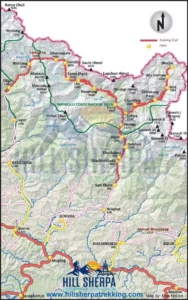
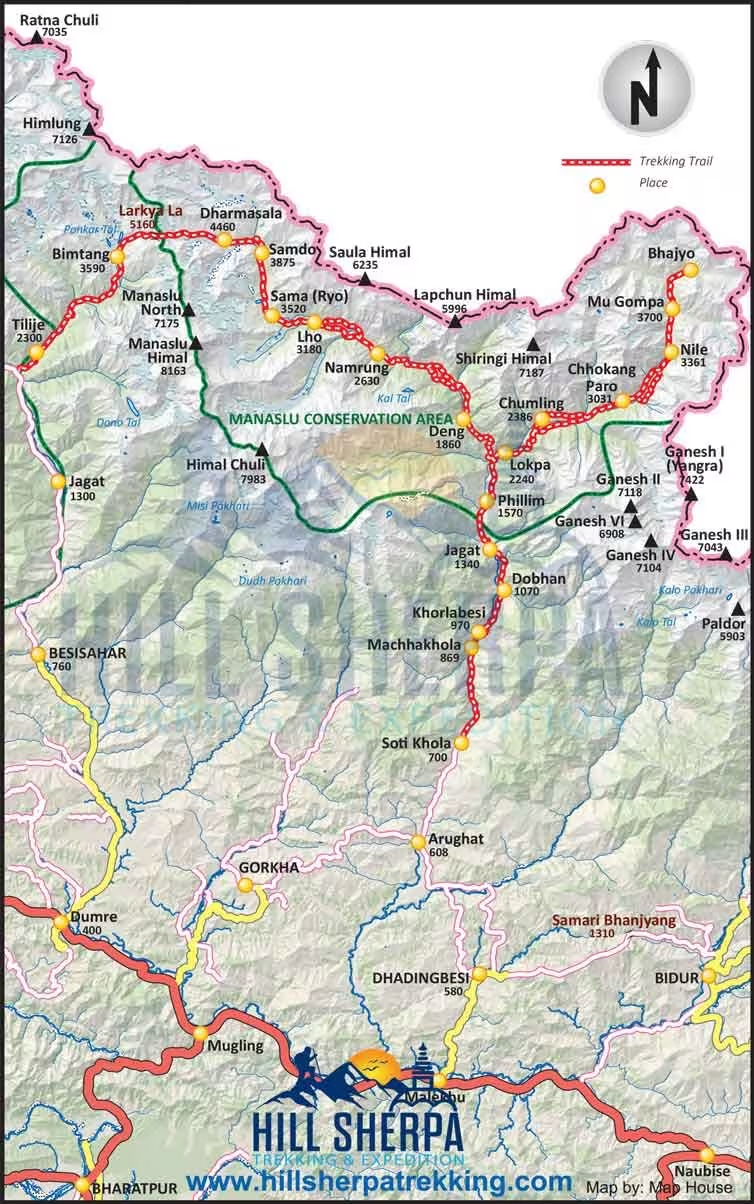
Trip Map of Manaslu Annapurna Circuit Trek 20 Days
Altitude Chart of Manaslu Annapurna Circuit Trek 20 Days
Equipment List

General Information
- The company provides a feather sleeping bag, but it should be refunded after the trek.
- Feather down jacket, but it should be refunded after the trek.
- Hill Sherpa Trekking provides a duffle bag during the trek, but it should be refunded after the trek.
- Mostly recommended for morning and evening: the windproof and waterproof thin layered jacket above 3450m.
- Mostly recommended for a daypack bag 35- 45 L.
- Headlamp & extra batteries during the trek

Daily Use Essentials
- A Sun Black Cap & warm hat
- Sunglasses with 100% UV protection
- A muffler (full-cover mask)
- Sunscreen (30+ to 60 SPF depends on age)
- A pair of thin & warm gloves
- A pair of trekking poles
- Water bottle & filter
- Water purification tablets
- lips guard

Upper Body Essentials
- Fleece hat
- A pair of T-shirts
- Thermal tops
- Sports bras for ladies
- Windproof & fleece jacket
- waterproof jacket
- lower-body

All Lower Body
- waterproof trouser
- warmer & fleece trouser
- A pair of Comfortable trekking pants
- Extra comfortable sports pants
- A pair of sports shoes
- Thermal underwear
- A pair of comfortable waterproof trekking boots
- A pair of light sandals
- Some Thick (woolen) socks
- Sock liners
- Light shoes

Personal Medical and First Aid Kits
- Diamox (125mg to 250mg tablets for AMS)
- Adhesive bandages and pocket masks
- Non-stick pad W/ Adhesive
- ibuprofen & paracetamol tablets IP
- Some Assorted adhesive bandages
- Wraps, splints, and wound coverings, butterfly bandage
- Blister treatment cream or similar
- Insect / anti-itch ointment
- Moves in case of sprain, any body
- pain-relief medication
- Sinex & Eye Drops, etc.
- Gauze sponge
- Saline solution

Important Things
- Passport-size photos with an original passport copy
- Flight details (to pick you up & transfer you to the hotel)
- Travel and medical insurance

Extra Essential Things
- Energy gel or dry foods (that’s your preference)
- A power bank is the most important backup device (if you have one)
- Camera, chargers, extra batteries, memory card, etc)
- Most important: ladies essentials things (if you are a lady)
Frequently Asked Questions
 General
Can a beginner do this trek?
A complete beginner will want to avoid treating this trek as easy, however, an average level first time trekker in good shape who is used to high altitudes should be able to complete this trek after proper preparation and with acclimatization and on/with a professional guide.
What is the highest altitude of the trek?
The Samdo Ri acclimatization hike has an elevation of around 5,000 meters. The two major passes both measure at least 5,100m, the first being Larkya La and the second being Thorong La at 5,416m.
Can I customize the itinerary?
Yes. Depending on your walking pace, time availability, preferences for transport, and your requirement for time to adjust to the altitude, Hill Sherpa Trekking arranges private and customized trips.
 Preparation & Fitness
How difficult is the Manaslu and Annapurna Circuit Trek?
The journey combines two of the longest trekking routes in the Himalayas and includes the high altitude passes of Larkya La and Thorong La. You need fitness and preparation for the long days of trekking and the constant high altitude of 5,000 meters and above.
 Permits
What permits are required?
You will typically need the Manaslu Restricted Area Permit, Manaslu Conservation Area Permit, and Annapurna Conservation Area Permit, as well as the applicable local fees. Check your permits, as regulations can change.
 Guides & Support Staff
Do I need a guide for the Manaslu and Annapurna Circuit Trek?
Yes. Manaslu is a permit and guide regulated trekking area. A trek in an area with these restrictions should be done with an experienced guide to assist with navigation, safety, overnight stays, and high altitude support.
 Accommodation and Facilities
Is accommodation available throughout the route?
Yes, accommodation is available in teahouses and lodges along the standard route. Facilities become simpler at higher elevations, especially around Dharamshala and Thorong Phedi.
Is Wi-Fi available during the trek?
Wi-Fi is available at some villages and teahouses, but connectivity is not reliable throughout the entire route. Remote sections of Manaslu can have limited communication.
 Weather & Seasons
When is the best season for this trek?
Spring and autumn are generally the best seasons. March to May and September to November usually offer the most favourable conditions for trekking and crossing the high passes.
Reviews on Manaslu Annapurna Circuit Trek 20 Days







✖
Free Travel Guide
Get Expert Guidance from Experienced Sherpas