Govt. Tourism License 3195/080/81





Dudh Kunda Lake Trek


- Best Price Guarantee
- Secure Online Booking
- Flexible booking dates
- Owner operated company
- Decades of experience
- Dedicated sherpa team
- 100% success rate
- 5/5 ratings by travelers


Highlights of Dudh Kunda Lake Trek
- Travel to Salleri or Junbesi from Kathmandu with no flights needed.
- Visit the ancient monasteries of Thubten Chholing, Phugmoche and Serlo.
- Junbesi is the place to experience real Sherpa culture.
- You will trek through beautiful forests and alpine valleys.
- You’ll camp beside Dudh Kunda Lake, which is a sacred lake at 4,560 m.
- Chho Mik is a secret, unglaciated, and sacred lake.
- Aakhaya Pokhari and Cho Karma lakes are beautiful to visit.
- You will enjoy Dudh Kunda Inn, which has organic food and Wi-Fi for a nice stay.
- You will see breathtaking views of the sunrise and sunset of Everest from Kamo Danda.
- This trek is one of the most remote and least busy in the Everest region.
Trip Overview
Dudh Kunda Lake Trek is still unexplored, which offers you the opportunity to reach the peaceful Solu region of the Everest Himalayas. Dudh Kunda Trek, away from the Everest Base Camp trek congestion, is an ideal trek for travellers in search of the opportunity to explore remote mountains, ancient Sherpa villages, Sacred Monasteries, hidden alpine lakes, and beautiful Buddhist viewpoints away from the tourism congestion.
Trekking to Dudh Kunda does not have the mad rush of the EBC Trek. Instead, you are welcomed to the scenic beauty of the countryside and picturesque landscape as you drive from Kathmandu to Salleri or Junbesi. No need to take a costly domestic flight to see the amazing Sherpa villages.
JUNBESI village is an ancient village inhabited by the Sherpa, and completing this trek gets you a nice, long visit to this beautiful village. Rich with Buddhist culture and traditions, this ancient village is home to a few monasteries. You have the opportunity to visit the three monasteries where colourful prayer flags and centuries-old murals help to preserve the culture. These sacred places allow you to view the daily customs and practices of the Sherpas, while simultaneously encouraging and promoting their culture and traditions.
As you advance along the pathway, leaving the villages behind, the pathway begins to ascend gradually through various forests that contain Pine, Fir, Rhododendron, and Juniper trees. The pathway widens as you approach the Yak pastures. The Yaks roam freely along the verdant green ground, while the snowy peaks watch over them. The trek continues to reach KAMo DANDA, where the first local tea house settlement (Everest Inn) is located, from where we can see 360 degree views of Everest 8,848.86 meters, a settlement that welcomes trekkers to begin their journey to Dudh Kunda Lake.
The second hotel, Saharsa Bheni offers adequate lodging through the Dudh Kunda Inn when compared to other remote trekking paths. Both hotels offer trekkers the comfort of clean rooms, home-cooked organic locally-grown meals, internet access, mobile phone charging, and warm Sherpa hospitality, before they enter the vast and untamed wilderness.
A definite highlight of this trek is the sacred Dudh Kunda Lake (4,560 m / 14,961 ft). This glacial lake lies beneath the towering peak of Mount Numbur (6,959 m). Mount Numbur is worshipped by the local Sherpa community as the guardian of the Solu region. Camping along the shores of a lake this crystal-clear would otherwise be a rare opportunity to experience the beauty of the Everest region; Sherpa hospitality has made this possible. As darkness descends, the serene, peaceful surroundings, brilliant night skies, and reflecting snow-clad peaks combine to create an atmosphere that is magical.
Beyond Dudh Kunda lies one of the hidden gems of the Himalayas, the mysterious Chho Mik (Tsho Mik). Many Sherpa locals believe this area consists of 108 sacred glacial lakes and ponds. In the Sherpa language, “Tsho” means lake and “Mik” means eye, so Tsho Mik translates to “Eyes of the Lakes” or “Eyes of the Sacred Ponds.” Many of these lakes and ponds remain crystal clear, unmapped, and unnamed, known to locals for generations. Exploring the lake systems in the Dudh Kunda region is a once-in-a-lifetime opportunity to experience a pristine and beautiful part of the Himalayas untainted by the hand of man.
Unlike most itineraries that visit Dudh Kunda and travel back, this trek has been designed to maximize the amount of time spent in the wild alpine terrain surrounding Dudh Kunda. From Saharsa Bheni, hikers will be able to traverse the serene landscapes of the (Tsho Mik) “Aakhaya Pokhari” as well as the extraordinary Cho Karma, which features glacial lakes, scenic meadows, and hidden viewpoints of the Himalayas that are uncommon to see on popular treks. The extra days spent exploring this area on foot are a great way to appreciate the beauty of nature and the untouched wilderness, and the significance this area holds.
The trek continues to Kamo Danda. This trek is a favourite location of viewpoint enthusiasts. The Everest View Hotel provides amazing views of Everest, Lhotse, Makalu, Numbur, Karnilung, and other giants of the Himalayas. The views of the Sherpa villages, the hills, and the peaceful mountain setting make Kamo Danda one of the best locations of the trek.
The trek will lead us along the ridges of Taksindu Danda, Camjiya Danda, and Ratnang Danda, with views of beautiful rhododendrons along the trek that bloom in the colours red, pink, and white in the spring. The ridges offer views of the Everest, Rolwaling, and Mahalangur ranges of the Himalayas, and offer great opportunities to enjoy nature and capture beautiful views, before making our way back down to Salleri.
This trek is perfect for those seeking solitude and wilderness, camping, and genuine Sherpa culture. This will be a trek off the beaten path and allows for exploration of the hidden highlands of Everest with the option for more adventures by crossing other high passes to Khumbu and Everest Base Camp.
The Dudh Kunda Lake Trek is a full exploration of the hidden Solu Himalayas. On this trek, you will find ancient monasteries, cozy Sherpa villages, remote alpine camping, comfortable mountain lodges, sacred lakes, unobstructed views of Mt. Everest, untouched rhododendron forests, and the mystical Chho Mik (108 sacred lakes). Dudh Kund Lake Trek is one of the best authentic experiences you can partake in while visiting Nepal. It is a great trek for people who want peace, cultural immersion, and solitude while exploring the Everest region.
Dudh Kunda Lake Trek Itinerary
01
Day 01: Arrival in Kathmandu
On arrival at Tribhuvan International Airport, Kathmandu, we will be delighted to welcome you and will arrange your hotel accommodation. Once you are in, it’s time to unwind and recuperate from your travels, or to head into the bustling streets of Thamel, Kathmandu’s popular tourist area, where you can find local markets, trekking shops, and cafes and restaurants.
In the evening, you will meet your trekking guide and brief you on the trip, give you some key trekking information, and check your equipment. This is also a good time to clarify any questions you may have before your adventure.

Max Altitude
1,350 M
Activity
Transfer to Hotel
Meals
Excluded
Accommodation
3-Star Hotel
02
Day 02: Drive from Kathmandu to Salleri or Junbesi
Your adventure begins with an early morning drive from Kathmandu towards the beautiful Solu region. Travelling along the BP Highway, you will view the countryside of rolling hills, terraced farmland, rivers, waterfalls, and traditional villages on your way to Salleri. Depending on the condition of the roads and your arrival time, you may drive to the historic Sherpa village of Junbesi, one of the oldest villages in the Everest region. Once you arrive, relax in the peaceful mountain village.

Duration
9 to 10 hours
Max Altitude
2,690 M
Activity
Drive
Meals
Breakfast, Lunch, Dinner
Accommodation
Local Teahouse
03
Day 03: Visit Phugmoche Monastery, Thubten Chholing Monastery & Serlo Monastery. Back to Junbesi for the night
Today will be dedicated to the cultural and spiritual sights of the Solu region. After breakfast, hike to Phugmoche (Pogbucha) Monastery, which is set above Junbesi and has spectacular valley views. Next, visit Thubten Chholing Monastery, which is one of the largest Tibetan Buddhist monasteries in Nepal and has hundreds of monks and nuns. After, visit Serlo Monastery before heading back to Junbesi. On your way back, enjoy the views of traditional Sherpa village, prayer flags and the local hospitality.
Max Altitude
2,690 M
Activity
Exploring
Meals
Breakfast, Lunch, Dinner
Accommodation
Local Teahouse
04
Day 04: Trek from Junbesi to Yak Kharka
The trek from Junbesi starts gradually ascending through the beautiful forests of rhododendron, pine, and juniper. As the trek gains elevation, the landscape shifts from cultivated farmland to more peaceful alpine meadows where yaks spend the summer months. After soaking in the beautiful mountain views and Himalayan air, Yak Kharka’s beautiful pasture offers a perfect camping spot for the night.
Duration
Camping
Max Altitude
3,795 m
Activity
Trekking
Meals
Breakfast, Lunch, Dinner
Accommodation
Local Teahouse
05
Day 05: Trek from Yak Kharka to Saharsa Bheni
Start the day with breakfast at Yak Kharka, then head on your way to Saharsa Bheni, the last village settlement before reaching the holy Dudh Kunda lake. There are no tea houses/restaurants on our route today. Therefore, our team will pack a lunch for us to eat on the way.
Trek through isolated, remote, alpine, yak-grazing pastures and rocky terrains. The views of Mount Numbur, along with the surrounding and other pristine untouched Himalayan landscapes, are breathtaking. The dramatic wilderness and lack of civilisation make this section one of the most beautiful of the entire trek.
When you reach Saharsa Bheni, check into the very welcoming Dudh Kunda Inn, one of the only lodges around. Once there, enjoy a warm meal and the surprisingly nice and abundant lodge facilities. They include the comforts of a nice bed, organically made local food, Wi-Fi, and chargers. This will help you prepare for the sacred Dudh Kunda Lake visit tomorrow.
Duration
5 to 6 hours
Max Altitude
4,100 M
Activity
Trekking
Meals
Breakfast, Lunch, Dinner
Accommodation
Local Teahouse
06
Day 06: Trek from Saharsa Bheni to Dudh Kunda Lake (4,560 m) Overnight at Camp
The sacred Dudh Kunda Lake, one of the most holy alpine lakes of Nepal, is the destination for today’s trek and one of the major highlights of this trip. After breakfast, depart the lodge and begin the gradual, steady ascent to the lake. This is the most dramatic of all the rugged and rocky, glacial, alpine, valley lake treks. Enjoy all the views of the surrounding majestic Himalayan peaks as well as Mount Numbur (6,959 m).
At Dudh Kunda Lake, you can take in the pristine turquoise water, enjoy the tranquillity, and take many photos. For Hindus and Buddhists, Dudh Kunda Lake is a highly revered lake with healing powers. Dudh Kunda Lake is an annual pilgrimage site for over a thousand visitors during the Janai Purnima festival.
Since Dudh Kunda has no permanent facilities or lodges, you will be camping right next to the lake. Our crew will set up tents, prepare a fully cooked meal, and provide a safe and comfortable camp to enjoy for the night. Experiencing the sunset and an uninterrupted star filled sky over the lake is an experience you will remember forever.
Duration
5 to 6 hours
Max Altitude
4,560 M
Activity
Trekking
Meals
Breakfast, Lunch, Dinner
Accommodation
Tented Camp
07
Day 07: Trek from Dudh Kunda Lake to Saharsa Bheni - Explore Chho Mik (Aakhaya Pokhari)
You will wake early to see the sunrise and start your trek back to Saharsa Bheni. You will enjoy the beautiful mountain scenery on your trek back. This beauty will help ease any discomfort you may be feeling as a result of the trek.
After lunch at Dudh Kunda Inn and a little rest, set off on the afternoon trip to Aakhaya Pokhari, which is called Chho Mik, or “eyes of the lakes” in Sherpa. This quiet alpine zone holds several charming glacial ponds as well as hidden lakes, which are closely linked to the sacred 108 lakes surrounding Dudh Kunda. Many of these lakes are unnamed and primarily known to the local Sherpa people, making this truly one of a kind and off-the-beaten-track experience. After your time in this area, which is full of peace and thoughtful calm, return to Saharsa Bheni for another congenial overnight stay.
Duration
5 to 6 hours
Max Altitude
4,100 M
Activity
Trekking
Meals
Breakfast, Lunch, Dinner
Accommodation
Local Teahouse
08
Day 08: Trek from Cho Karma to Kamo Danda
After the delicious breakfast at Dudh Kunda Inn, then the trail goes through magnificent hills and forests toward beautiful Kamo Danda at its end. The Everest View Point Hotel shows you lovely views of the Everest Himalayas. The Everest View Point Hotel also shows you peaks like Numbur, Makalu, Karyolung, Lhotse and others. If you are lucky and the village has a good climate, you will get to see an amazing sunset over the Himalayas before you spend the night in the nice village.
Duration
4 to 5 hours
Max Altitude
4,090 M
Activity
Trekking
Meals
Breakfast, Lunch, Dinner
Accommodation
Local Teahouse
09
Day 09: Trek from Kamo Danda to Taksindu Danda
Trekking can resume after watching the sunrise over the Himalayas. Trekking to Taksindu Danda goes along ridgelines and winds through serene forests, Sherpa towns, and open hills and also offers views of snow-capped peaks and beautiful valleys. On this stretch of the trek, you will observe the lifestyle of the Solu people and have the best ridge walk of the trek. When you reach Taksindu, take the opportunity to relax and enjoy the views.
Duration
5 to 6 hours
Max Altitude
2,900 M
Activity
Trekking
Meals
Breakfast, Lunch, Dinner
Accommodation
Local Teahouse
10
Day 10: Trek from Taksindu Danda to Salleri
The ridge walk from Taksindu Danda to Salleri is one of the best walks in the Solu Region and passes through Camjiya Danda and Ratnang Danda. There are many viewpoints along the trail to enjoy views of the Everest, Numbur, and Rolwaling ranges as well as the abundant blooms of rhododendrons, pines, and oaks. When you reach Salleri, enjoy a well-deserved sleep at Hill View Lodge & Restaurant.
Duration
5 to 6 hours
Max Altitude
2,340 M
Activity
Trekking
Meals
Breakfast, Lunch, Dinner
Accommodation
Local Teahouse
11
Day 11: Drive from Salleri to Kathmandu
Start the day with a hearty breakfast. Drive to Kathmandu and appreciate the scenery from the vehicle. See river valleys, rolling hills, traditional villages, and terraced farming. This is the last day to appreciate the scenery of the Nepali countryside. Check into a hotel in Kathmandu. Take the evening to relax after the demanding Dudh Kunda Lake Trek.
Duration
8 to 9 hours
Max Altitude
1,350 M
Activity
Drive
Meals
Breakfast, Lunch
Accommodation
3-Star Hotel
12
Day 12: Departure
After breakfast, the trek team will escort you to the airport well in advance of your international departure flight. We hope you carry the memories of exploring hidden valleys and sacred lakes with the Sherpa people of the Solu region in your hearts. We also hope to see you for more Himalayan treks in the future.
Max Altitude
1,350 M
Activity
Transfer to airport
Meals
Breakfast
Accommodation
ExcludedIncludes & Excludes
What is included?
- Airport pick-up and drop-off by private car
- Tourist standard hotel twin-sharing room accommodation (2 N in Kathmandu with breakfast)
- Kathmandu to Junbesi by sharing a local jeep.
- Salleri to Kathmandu by sharing a local jeep.
- Full board meals during the trek, breakfast, lunch, and dinner
- Hill Sherpa Trekking’s first aid kit by the guide
- Nepal government tax and the company’s official charge
- All necessary permit fees
- Accommodation, local tea house, homestay
- Provides daily fresh fruit after dinner
- 2 nights camping (if required), all meals, tents what necessary.
- Government-licensed holder, speaking English, and experienced guide
- One strong sherpa helper for carrying your baggage (1 porter for 2 clients)
- All staff wages, food, drinks, accommodations, transportation, and insurance
- Helicopter service will be covered by your travel insurance in the event of an emergency.
- An oxygen meter to check your pulse and oxygen level (AMS) (acute mountain sickness)
- Provides assistant guides (if groups are larger than 6 people).
- Hill Sherpa Trekking provides trip certificates (after completing the trip).
- Down jackets, duffel bags, sleeping bags, and trekking poles are provided by Hill Sherpa Trekking but should be returned after the trek (if you need them).
What is excluded?
- International airfare tickets
- The Nepal entry visa fee and visa will be obtained on arrival at the international airport in Kathmandu.
- Additional accommodations, food, and drinks in Kathmandu (if staying an extra day)
- Any kind of additional items like dessert, sweet items, chocolate, cake, tea/coffee, pie, pudding, mineral water, bar bills, or any extra personal expenses
- During the trek, hot showers, mobile, camera, power bank, any battery charging, Wi-Fi Internet,
- Kathmandu sightseeing, entrance fees
- Your personal medical and travel insurance
- Personal first aid kit
- Maximum baggage weight of more than 15 kg, including hand carry
- Tips for guides and porter
Departure Dates
Departure Date
Trip Duration
Availability
Price
2026-10-16
12 Days
2
US$ 1399
Note:
We also operate private trips.
Trip Information of Dudh Kunda Lake Trek
Can a beginner do this Trek?
Trekking to Dudh Kunda Lake is a viable option for beginners with decent fitness levels. The pathway is not particularly technical and does not require any form of climbing, nor does it require trekking experience. The only requirement is preparation for high-altitude treks, as this one reaches a staggering 4,560 m. It is a 5 to 7 hours daily trek ideal for beginners who love to hike and want to take on a new hiking challenge.
Best time for Dudh Kunda Lake Trek
Spring from March to May and Autumn from September to November are the best seasons to trek Dudh Kunda Lake. During these times, there are nice temperatures for trekking and excellent clarity in the sky for viewing the mountains. In the spring, the Rhododendron trees are in bloom. Other times of the year are not as pleasant for trekking. The winter and the monsoon season provide tough conditions for trekking, especially for those with little experience.
Difficulty Level
The Dudh Kunda Lake Trek is classified as a moderately difficult trek. Trekkers spend 5-7 hours daily walking on trails that pass through alpine forests and meadows. While the trails do not present any technical challenges, the high altitude coupled with a lot of continuous ascent requires a high level of fitness and good endurance.
Preparation and Training
Preparation for this trek increases the chances of enjoying the trek. Being physically active through hiking, running, cycling, stair climbing, or other cardio for 4-6 weeks prior will improve endurance. Training with a light backpack will also be beneficial. Focus should be given to core and leg strength.
Altitude Sickness
The maximum elevation of this trek is 4,560 meters. The chances of suffering altitude sickness increase at this point. The best way to prevent altitude sickness is to ascend slowly. Along with good hydration, avoiding alcohol and eating healthy will also aid altitude acclimatization. Headaches, nausea, and lethargy are the main symptoms of altitude sickness. Your guide will keep monitoring your condition and may change the itinerary to maintain good health and safety.
Transportation
The trek begins with an 8-10 hour scenic private jeep journey from Kathmandu to Salleri or Junbesi. This drive is a better option as the Lukla flights are very uncertain. This drive also enables you to enjoy the beauties of rural Nepal. After the trekking, you will take the jeep back to Kathmandu.
Communication, Gadget Charging, and Internet/Wi-Fi
Cell connections are pretty much guaranteed in most villages, and will further deteriorate with increasing elevation. Wi-Fi and charging are available in many lodges, such as Dudh Kunda Inn in Saharsa Bheni. It is a good idea to bring a power bank if you plan to camp by Dudh Kunda Lake to keep your devices powered.
Alternative Trek Routes
Those who seek a longer trek can combine the Dudh Kunda Trek with other treks that offer remote high passes, other alpine lakes, or even connections to the Everest region. It can also be combined with treks through the Solu region for a more complete experience in the Himalayas.
Elevation and Distance
The Dudh Kunda Trek starts in Phaplu, which is at an elevation of about 2,400 m, and finishes at Dudh Kunda Lake, which is at 4,560m. The distance for the main trek is about 90-110 km, though this will vary with the side trips to other lakes and viewpoints.
Minimum/Maximum Walk Per Day
Daily walking times typically range from 5-7 hours. The shortest walking days are around 4-5 hours, while the longest walking days are about 7-8 hours. The longest days are due to the condition of the trails and the site exploration of nearby lakes and viewpoints.
What to Expect during the Dudh Kunda Trek
The Dudh Kunda Trek offers exclusive cultural and spiritual experiences, along with glacial lakes and stunning mountain viewpoints. Trekking on the trails of one of the least visited regions of Nepal, you will see authentic Sherpa villages, ancient monasteries, forests of rhododendrons, and pastures for yaks, as well as stunning views of the Himalayas. It is an alpine camp trek. It is a trek that you will love for cultural exploration.
Accommodation & Food
Accommodation on this trek consists of comfortable tea houses, local lodges, and camping at designated sites. You will stay at family-run lodges along the trek and camp at Yak Kharka and Dudh Kunda Lake. Located at Kamo Danda Everest Inn and Saharsa Bheni, Dudh Kunda Inn has comfortable rooms, organic local meals, Wi-Fi and charging, along with warm Sherpa hospitality. Our meals usually consist of Dal Bhat, noodles, soups, fried rice, potatoes, eggs, and teas and coffees with seasonal vegetables. And mostly other places have all facilities, but not like the Everest Base Camp trek, Annapurna Base Camp trek or Manaslu Circuit trek.
Packing & Preparation
Pack light, warm clothing that can adapt to the changing weather. Wear and pack waterproof trekking boots, an insulated jacket, along with thermal layers (including gloves and hats), and trekking poles. Sunglasses and sunscreen are essential, along with a sleeping bag, trekking poles, water bottles, your personal medications, and a power bank. If you take the time to pack appropriately, you will be comfortable along the trek.
Why Travel Insurance?
Given the geography of the Dudh Kunda Lake Trek, we advise obtaining travel insurance. At a minimum, we recommend coverage that extends to trekking up to 5,000 m, emergency medical treatment, trip cancellations and helicopter evacuations. Comprehensive travel insurance means that you are covered and will be offered assistance in the case of an emergency situation. Enjoy your trek, worry free.
Why Dudh Kunda Lake Trek?
The Dudh Kunda Lake trek makes a great substitute for the Everest Base Camp trek, as opposed to the plush trek that follows the Sherpa paths. This spectacular trek has thrilling wild areas, beautiful alpine lakes, and ancient Buddhist monasteries. You will get to see Junbesi, have a chance to camp by Dudh Kunda Lake, and explore Chho Mik (108 sacred lakes). With wonderful Sherpa giant views including Everest and Makalu, this trek has the perfect combination of nature, culture, and adventure with charming lodges.
Kathmandu to Phaplu – A Scenic Drive
The trek begins with a magnificent 8 to 10 hours drive to Phaplu, through the Solu region. This drive introduces rural Nepal with its rolling hills, terraced farms, rivers, waterfalls, and traditional villages. Most of the road is paved, but the final section winds through the mountains, making a private 4WD the most comfortable option. The drive to Phaplu has become the preferred option to avoid the delays that accompany the flight to Lukla, reduce travel costs, and extend the opportunity to enjoy the striking countryside of Nepal before starting the trek.
Where is Dudh Kunda Lake?
Dudh Kunda Lake can be found at 4,560 m (14,961 ft) in the more secluded Solu area of the Solukhumbu District, right below the holy Mount Numbur (6,959 m). While part of the greater Everest region, Dudh Kunda is far more elusive, being an excellent hidden gem of the entire stretch of the Himalayas. Compared to Everest Base Camp, Dudh Kunda Lake sees far less traffic, so it is regarded as one of the most secret places of the greater Himalayas. It is surrounded by meadows, a glacial landscape, and the Chamchung Valley, which is home to one of the 108 sacred lakes.
Dudh Kunda Lake is a site of pilgrimage to both Hindus and Buddhists. It is reached from Phaplu and Junbesi by trekking along a peaceful trail through Sherpa villages and verdant forests.
Exploring Phaplu – Gateway to Solu
At an elevation of approximately 2,413 meters (7,917 ft), Phaplu is the administrative and tourism center of the Solu region and serves as the ancient gateway to the lower Everest region. Before Lukla Airport was built, Phaplu was the Principal start point for trekkers and mountaineering expeditions to Everest. Phaplu is a quiet mountain town having lesser number of visitors and which provides an ideal start point for the Dudh Kunda Lake Trek.
Phaplu is beautifully surrounded by rolling hills, green and speckled with pines and traditional Sherpa villages. Visitors can trek at their own pace, visiting local shops and monasteries, and enjoying Sherpa hospitality before venturing into the remoteness of the High Himalayas.
Discovering Junbesi – Cultural Center of Solu
At 2,700 meters (8,858 ft), Junbesi is one of the ancient and really beautiful Sherpa villages of Nepal. It is rich in culture and Buddhist traditions. The village has long been an important Sherpa settlement on ancient trade routes. Modern tourism has hardly touched the ancient Himalayas, which are alive in Junbesi thanks to the traditional stone houses, terraced farming, prayer wheels, mani walls, and colourful prayer flags. Unlike the Khumbu, visitors to Junbesi can experience the daily life of a Sherpa, talk to the local families, and enjoy the tranquillity of the Solu Himalayas. Warmth, hospitality, and mountain views mean Junbesi is one of the best villages on the Dudh Kunda Lake Trek.
Junbesi Monastery (Thubten Chholing and Local Monasteries)
There are several important monasteries in Junbesi that support the Sherpa people’s spirituality. The largest and most important of these monasteries is the Thubten Chholing Monastery. Founded by the highly revered Nepalese meditation master, Trulsik Rinpoche, this monastery is of great importance to the developing scene of Tibetan Buddhist monasteries in Nepal. Hundreds of monks and nuns practice and study Buddhism here. Guests are able to see monks participating in the ceremonies and see the beautiful statues, murals, and spinning prayer wheels that decorate the monastery, as well as the amazing views of the mountains.
There are other monasteries, such as Serlo, that are also helpful to Buddhist culture and practice in the region, and offer places to reflect.
Phungmoche Monastery – A Hidden Spiritual Treasure
Monastery of Phungmoche (Pogbucha) is situated above Junbesi. It is a hidden, spiritual gem and part of the treasure of the Solu region. It is a beautiful view, as the monastery is perched above the Junbesi valley and surrounded by great forests. This monastery is an excellent place to learn about the customs and traditions of Buddhism in the area. It is much quieter than the other monasteries of the Everest region, and, for that reason, it is a great place to see Sherpa arts. The ancient artefacts of the Buddhist faith add to the beauty of this monastery as a cultural destination on the trek.
Wildlife and Nature Along the Trail
The Dudh Kunda Lake Trek showcases many of the naturally varying landscapes of the Everest region. After leaving the dense forests behind, you find alpine meadows, rocky terrain, and grazing pastures. Rhododendrons bloom brightly along the trail during the spring. The area is rich in wildlife and it is common to see Himalayan monals, musk deer, Himalayan thar, and many other birds and pheasants. If you are lucky, you might even see a red panda. The wilderness along the trail is untouched and a joy for every nature lover.
Dudh Kunda Lake – The Sacred Milk Lake
Dudh Kunda Lake is located at 4,560 meters (14,961 ft) and begins to show you the heart of the journey. Dudh Kunda is located under Mount Numbur (6,959 m) and is famous for its beautiful glacial waters that are crystal clear and milky turquoise. The name of the Lake is fitting because it translates to “Milk Lake.” Every year, Hindus and Buddhists alike believe the waters to be sacred and partake in a pilgrimage to the Lake during Janai Purnima. The Lake is a spiritual stop and one of the many beautiful locations of Nepal.
The Mystery of Chho Mik – The Sacred 108 Hidden Lakes
Chho Mik (Tsho Mik) lies beyond Dudh Kunda and is one of the greatest hidden treasures of the Everest region. In Sherpa, “Chho” is lake and “Mik” is eye. Countless small glacial lakes and ponds resemble the sparkling eyes of a highland denizen. The remarkable lake system remains largely unknown outside the Sherpa in Nepal, making it one of the most fascinating and unexplored natural mysteries of Nepal.
The Sacred 108 Lakes Around Dudh Kunda
The Dudh Kunda region, according to the Sherpa, has about 108 sacred lakes and ponds, most of which are small and are of a seasonal nature. Although these lakes and ponds are small and many are seasonal, together they form a very beautiful alpine landscape. Most trekkers exploring the world have not been able to see this landscape. In this itinerary, you have the chance to visit areas such as Aakhaya Pokhari and Cho Karma, which have some of the hidden lakes set in peaceful mountain landscapes.
Why Are These Lakes Undiscovered?
The lakes that surround Dudh Kunda are largely unknown, despite their enchanting beauty. This is largely due to the fact that the lakes surround a trekking route that is far less popular than the Everest Base Camp route. Because of this, many of the lakes are still unmapped, and the vast majority of them are without official names. Their presence has been maintained through oral history and the tradition of the local Sherpas. The area still remains largely free of the clutches of mass tourism due to the lakes’ remote location, the lack of infrastructure, and a lack of promotional work.
Cultural Importance
For the Sherpa people, Dudh Kunda and the lakes surrounding it have become eternal representations of the spiritual realm because of their proximity to Mount Numbur. For the people of the Solu region, Numbur is thought to be a protective deity. The lakes serve as a site for the Sherpa people to offer prayers and as a pilgrimage destination for those seeking personal blessings. The Janai Purnima festival sees many devotees offer prayers, partake in cleansing rituals in the lakes, and believe that they have purified their body and soul.
Perfect Place for Photography and Exploration
Landscape and nature photography is made easy in Dudh Kunda. The combination of many elements of the area, such as the pristine alpine lakes, snow-covered peaks, Sherpa villages, monasteries, and vast rhododendron forests, makes it a photography utopia. The sacred lakes of the area can be the site of magical photography during the golden hours. Photography can also yield truly spectacular Himalayan views when the sky is clear during the autumn. The opportunities for discovery and the perfect photography continue in the unspoiled alpine meadows and unglaciated lakes that remain unexplored when trekkers diverge from the beaten path.
Views of the Mountains on the Trek
The Dudh Kunda Lake Trek presents an opportunity for trekkers to enjoy spectacular views of the Himalayas from start to finish. Trekking this route will allow you to take in a variety of views of the peaks of Mount Everest (8,848.86 m), Lhotse (8,516 m), Makalu (8,485 m), Numbur (6,959 m), Karyolung (6,511 m), Thamserku (6,608 m) and other peaks of the Mahalangur and Rolwaling ranges. The alpine ridges near Dudh Kunda and Kamo Danda and Ratnang Danda offer some of the best sunrise and sunset sightseeing in the lower Everest region.
Sherpa Culture in Solu
The Solu region is the cultural heartland of the Sherpa and is a place where traditions are centuries old and still remain strong. Trekking on this route, you will be able to see stone villages that have been built using local materials and are adorned with prayer flags, mani walls, chortens, and monasteries. These reflect the Sherpa’s Buddhist religious beliefs. The local families still practice yaks and shepherding and farming in the hills and practise their age-old trade of hospitality.
These practices include sharing a meal with the family, observing the monastery rituals, and talking to the local folks, not only providing the trekkers a respite from the rigours of trekking for a few days in the Himalayas, but also allowing a peek into a rich and vibrant culture. The hospitality of the Solu Sherpa is legendary and the trek is as culturally rich as it is scenically stunning.
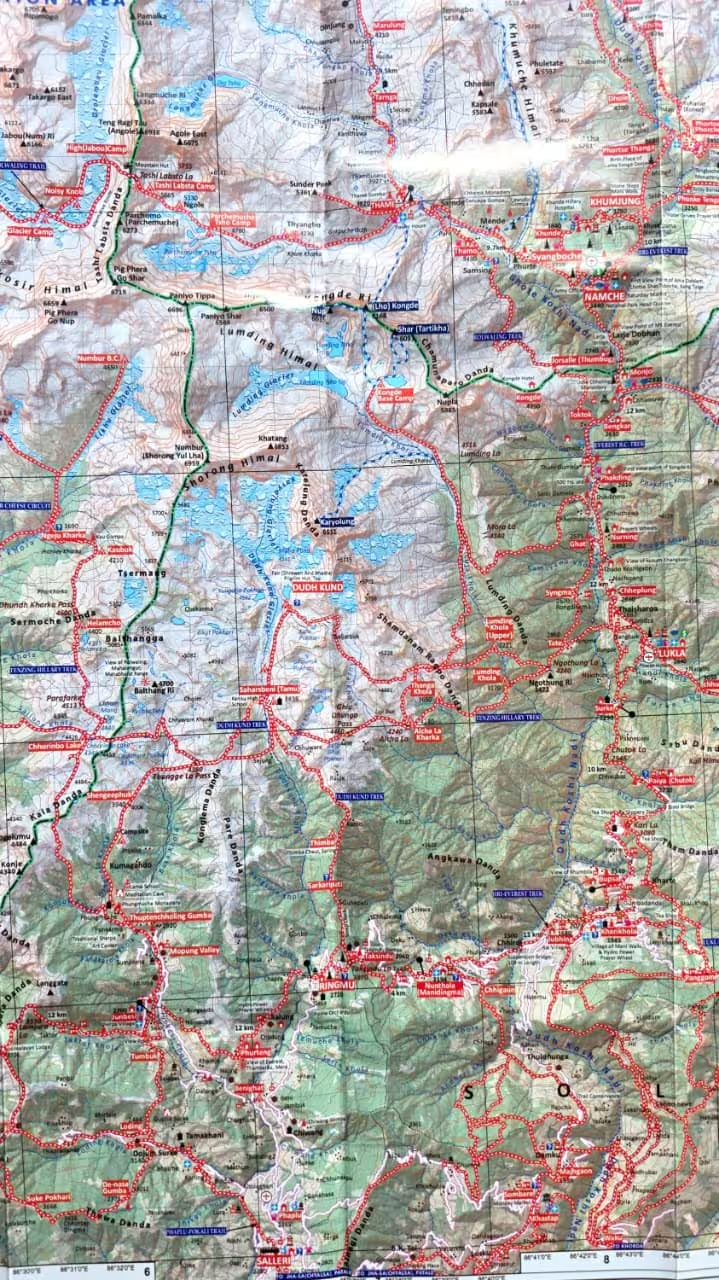
Trip Map of Dudh Kunda Lake Trek
Altitude Chart of Dudh Kunda Lake Trek
Equipment List

General Information
- The company provides a feather sleeping bag and a feather down Jacket, but they should be refunded after the trek.
- Hill Sherpa Trekking provides a duffle bag during the trek, but it should be refunded after the trek.
- We mostly recommend a windproof and waterproof thin-layered jacket above 3450m.
- We mostly recommend for Daypack bag of 35-45 Ltr.
- Headlamp & extra batteries during the trek

Daily Use Essentials
- A Sun Block Cap & Fleece hat
- Sunglasses with 100% snow UV protection
- A muffler (full cover mask)
- Sunscreen (30+ to 60 SPF, depending on age)
- A pair of thin & warm gloves
- A pair of Trekking poles
- Water bottle & filter
- Water purification tablets
- lips guard

Upper Body Essentials
- Warm hat
- A pair of T-shirts
- Thermal tops
- Sports bras for ladies
- Windproof & fleece jacket
- waterproof jacket

All Lower Body
- waterproof trouser
- Warmer & fleece trousers
- A pair of Comfortable trekking pants
- Extra comfortable sports pants
- A pair of sports shoes
- Thermal underwear
- A pair of comfortable waterproof trekking boots
- Pair of light sandals
- Some Thick (woollen) socks
- Sock liners
- Light shoes

Personal Medical and First Aid Kits
- Diamox (125mg to 250mg tablets for AMS)
- Adhesive bandages and pocket masks
- Non-stick pad W/ Adhesive
- Ibuprofen & paracetamol tablets IP
- Some Assorted adhesive bandages
- Wounds Warps, splints, and wound coverings, butterfly bandage
- Blister treatment cream or similar
- Insect / anti-itch ointment
- Moves in case of a sprain anywhere
- pain-relief medication
- Sinex & Eye Drops, etc.
- Gauze sponge
- Saline solution

Important Things
- Passport-size photos with original passport scan copy
- Travel and medical insurance
- Flight details (to pick you up & transfer to hotel)

Extra Essential Things
- Energy gel or dry foods (that’s your desire)
- A power bank is most important for a backup device (if you have one)
- Camera, chargers, extra batteries, memory card)
- Most important for ladies’ essential things (if you are a lady)
Frequently Asked Questions
 General
Why choose Hill Sherpa Trekking for the Dudh Kunda Lake Trek?
Hill Sherpa Trekking is a locally owned Sherpa company with experienced trekking guides who know the Solu region very well. Our services include true cultural experiences, flexible itineraries, quality camping gear, professional service, and a dedicated focus on safety, comfort, and an unparalleled Himalayan adventure.
Is camping required during the trek?
Camping is optional. There are two options
Day Hike to Dudh Kunda Lake and return to Saharsa Bheni staying in a comfortable lodge (recommended).
One night camping by the side of Dudh Kunda Lake for a unique experience of the wilderness in the Himalayas.
What does Chho Mik (Tsho Mik) mean?
Tsho Mik means “Eyes of the Lakes” in the Sherpa language. It is a sacred network of approximately 108 glacial lakes and ponds around Dudh Kunda, many of which are yet to be named and are not widely known to outsiders.
Where is the Dudh Kunda Lake?
Dudh Kunda Lake rests on the lap of Mt. Numbur (6,959m), at an altitude of 4,560m (14,961 ft) in the remote part of the Solu region in Solukhumbu District. One of the holiest lakes in the Everest region.
How long is the Dudh Kunda Lake Trek?
Our tour is 14 days long, which includes arrival and departure in Kathmandu, allowing you to see the hidden lakes, monasteries and viewpoints of Solu.
What mountains can I see during the trek?
During the day, you can see Mount Everest, Lhotse, Makalu, Numbur, Karyolung, Thamserku and other peaks in the Himalayas from Kamo Danda (Everest Viewpoint) on clear days.
 Preparation & Fitness
Can beginners join the Dudh Kunda Lake Trek?
Yes. It is suitable for beginners of all levels of physical fitness and positive attitudes. Dudhkunda Lake route is gradual, which makes it favourable for beginners in the Himalayas.
How difficult is the Dudh Kunda Lake Trek?
The walk is deemed of a moderate level. The trekking path is 5-7 hours a day on a mountain path at a max height of 4560 m. A good level of fitness is recommended.
Is this trek suitable for photographers?
Absolutely. This trek offers the best opportunities for taking stunning photographs of Sherpa villages, old monasteries, rhododendron forests, sacred lakes, Himalayan sunrises and marvellous mountain landscapes.
 Permits
What permits are required?
Trekking permits for the Solu region will be required. Hill Sherpa Trekking will arrange all required permits prior to the trek.
 Accommodation and Facilities
Are there tea houses along the trail?
Yes. Overnight stay in local tea houses/lodges is most often the case. You will be staying at Dudh Kunda Inn at Saharsa Bheni, which has comfortable rooms, Wi-Fi, charging facilities and organic food. Only an overnight stay at Dudh Kunda Lake requires camping.
Is Wi-Fi and mobile network available?
In most villages, mobile phone coverage is available, but at high elevations, coverage is reduced. Many lodges offer charging facilities and Wi-Fi, such as Dudh Kunda Inn in Saharsa Bheni.
 Food and Drinks
What type of food is available?
In the tea houses, you can find different types of food, such as Dal Bhat, noodles, fried rice, pasta, potatoes, eggs, soups, pancakes, tea, coffee and seasonal vegetables etc. Organic local food is available at Dudh Kunda Inn.
 Weather & Seasons
When is the best time for Dudh Kunda Lake trek?
The ideal months for trekking are the spring (March to May) and autumn (September to November) months when the weather is stable, the mountain is visible, and the weather is ideal.
 Health & Safety
Is altitude sickness possible during Dudh Kunda trek?
Yes. The trek goes up to 4,560 m, so there is a chance of altitude sickness. Our route is an ascending one and your guide will keep an eye on your health during the hike.
Reviews on Dudh Kunda Lake Trek







✖
Free Travel Guide
Get Expert Guidance from Experienced Sherpas