| Feature |
Everest Base Camp Group Join Trek |
Private Everest Base Camp Trek |
| Cost |
More affordable |
Higher overall cost |
| Departure Dates |
Fixed departures |
Flexible dates |
| Itinerary |
Fixed schedule |
Fully customizable |
| Guide |
Shared professional guide |
Dedicated private guide |
| Porter |
Shared arrangements |
Private porter available |
| Group Size |
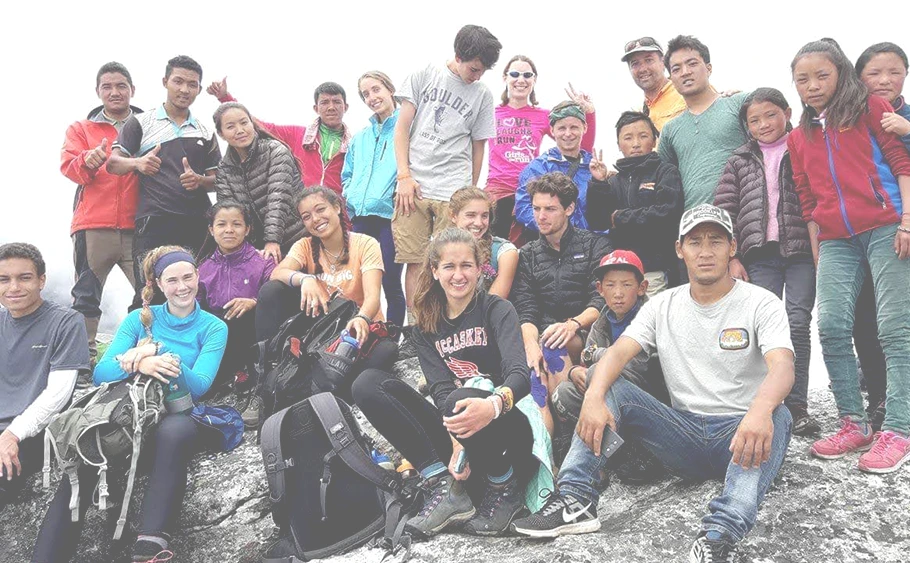
Usually 1 to 16 trekkers |
Only your own group |
| Social Experience |
Excellent |
Limited |
| Flexibility |
Moderate |
Maximum |
| Pace |
Group pace |
Personalized pace |
| Best For |
Solo travellers, couples, budget travellers |
Families, photographers, luxury travellers |
14 Days Everest Base Camp Group Joint Trek Itinerary
An important element of a successful Everest Base Camp trek is the itinerary. Gradual increase in altitude is coupled with acclimatization days, which help trekkers adjust to new elevations. This average 14 days trek considers the elevation and the distance trekked on a daily basis. The trek also requires a healthy level of hydration combined with patience.
Day 1: Arrive in Kathmandu (1,300 m)
You will be picked up from Tribhuvan International Airport by a representative of the trekking company. You will be driven and checked into a hotel, which allows you free time in the most famous tourist district of Kathmandu, Thamel.
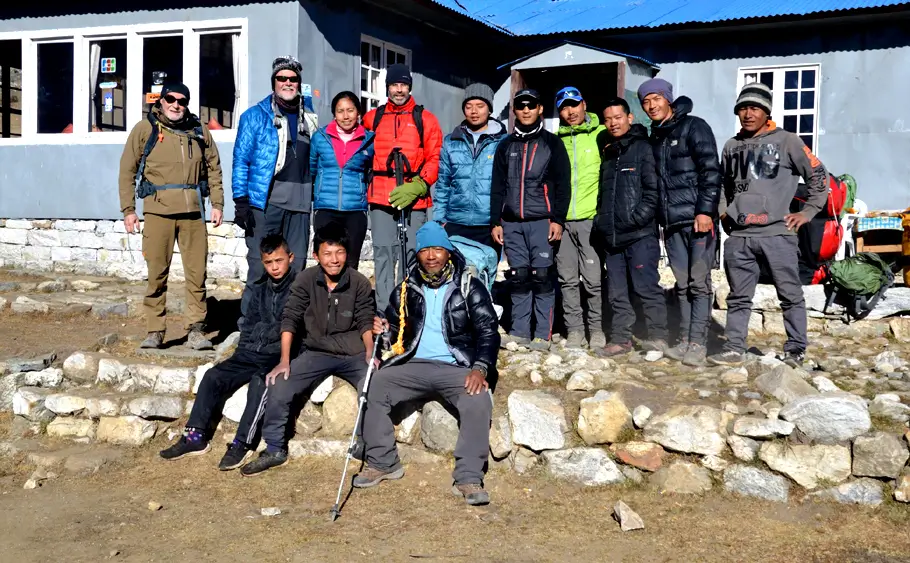
Afterwards, the trekking company briefs you and your fellow trekkers, whom you will get to meet. The guide reviews the itinerary for the trek and does an equipment check. You will get to ask your guide questions and receive helpful tips for the trek.
Day 2: Fly to Lukla (2,800 m) & Trek to Phakding (2,610 m)
- Time for Walking: 3-4 hours
Your first experience of the breathtaking views of the Himalayas will be during the 30-35 minute flight to Lukla. This flight lands at the famous Tenzing-Hillary Airport.
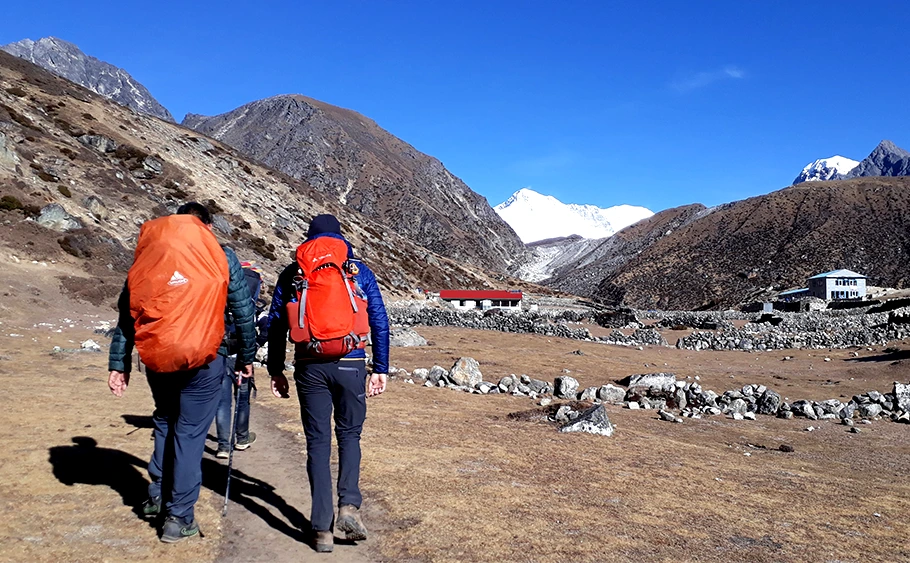
After meeting the porters and organizing the luggage, you start the descent to Phakding through the Sherpa villages and pine forests on the first of many suspension bridges, which marks the beginning of the trek. This first day is a very easy introduction to the daily trekking, or at least that is the idea.
Day 3: Walk from Phakding to Namche Bazaar (3,440 m)
- Time for Walking: 6-7 hours
The trek for today is among the most thrilling and difficult parts of the adventure. Following the Dudh Koshi River, travellers cross several suspension bridges adorned with prayer flags. After the last of these bridges, trekkers enter Sagarmatha National Park.
The hike to the entrance of Namche Bazaar is steep. Hopefully, on the day we are fortunate to have a clear view, travellers can be rewarded with their first sight of Everest.
The entrance to Namche Bazaar is a large, bustling town with stunning views and is full of shops and cafes.
Day 4: Namche Bazaar Acclimatization Day
- Time for Walking: 3-4 hours
The plan for today is to hike, not to rest. The idea is to help the body adapt to the new higher altitudes by continuing to descend today. Options include a hike to the Everest View Hotel, Khumjung Village, or the Sherpa Museum.
The hotel provides a stunning view of Everest, along with Lhotse, Ama Dablam, Nuptse, and Thamserku. An amazing view for the effort made that morning!
The plan for the afternoon is to do whatever you want. A good plan is to discover the shops of Namche, to have a coffee with other trekkers you will meet again on the trail, and to prepare for the challenges to come at the higher altitudes.
Day 5: Trek from Namche Bazaar to Tengboche (3,860 m)
- Walking Distance: 10 km (6.2 miles)
- Walking Time: 5 – 6 hours
- Overnight: Tea House in Tengboche
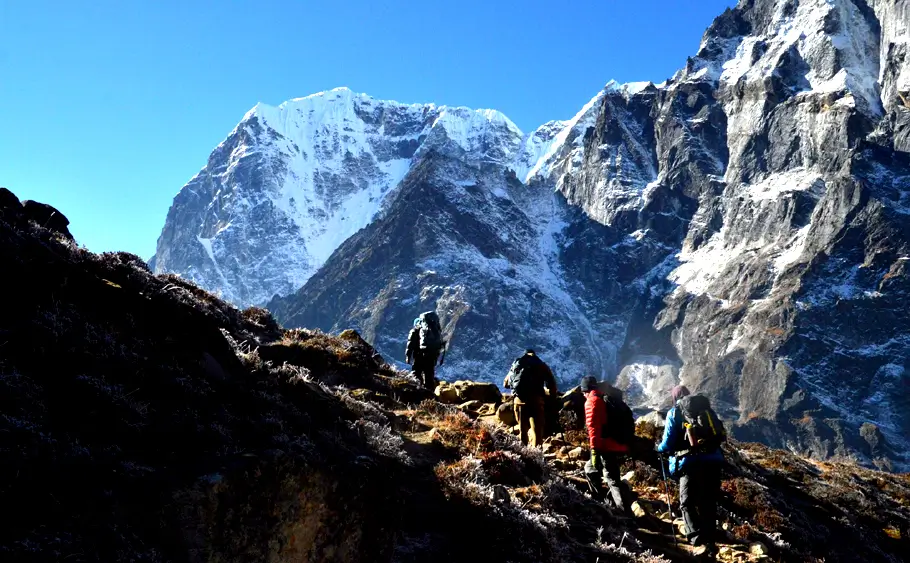
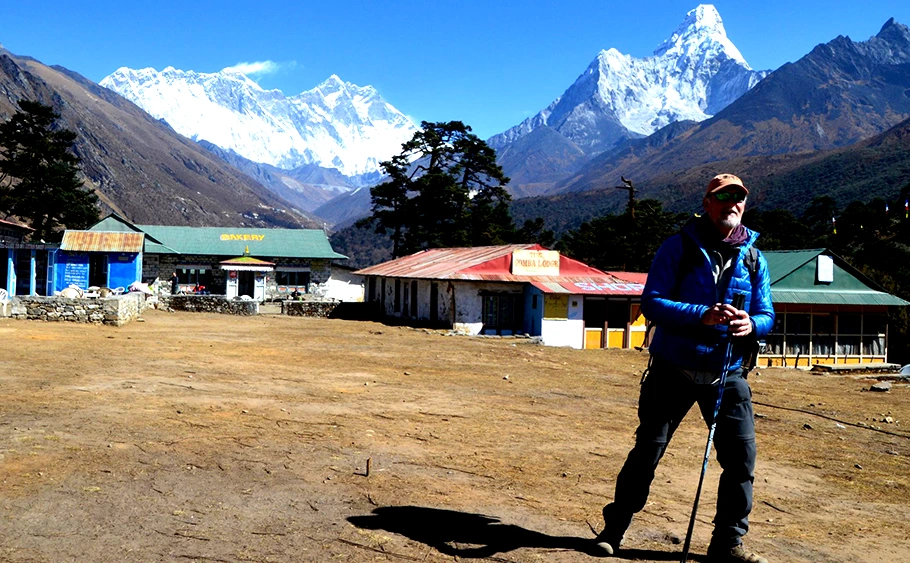
The trek starts steadily ascending from Namche Bazaar to a trail that follows a ridge overlooking Everest, Lhotse, Nuptse, Ama Dablam, and Thamserku, providing a stunning panoramic view of the mountains. This section of the trek is often rated as one of the most scenic on the Everest Base Camp Trek.
The trail continues to descend to the small village of Phunki Tenga, located next to the Dudh Koshi River and a popular spot to grab lunch for trekkers. The trail crosses a suspension bridge and ascends steeply through beautiful forests to Tengboche.
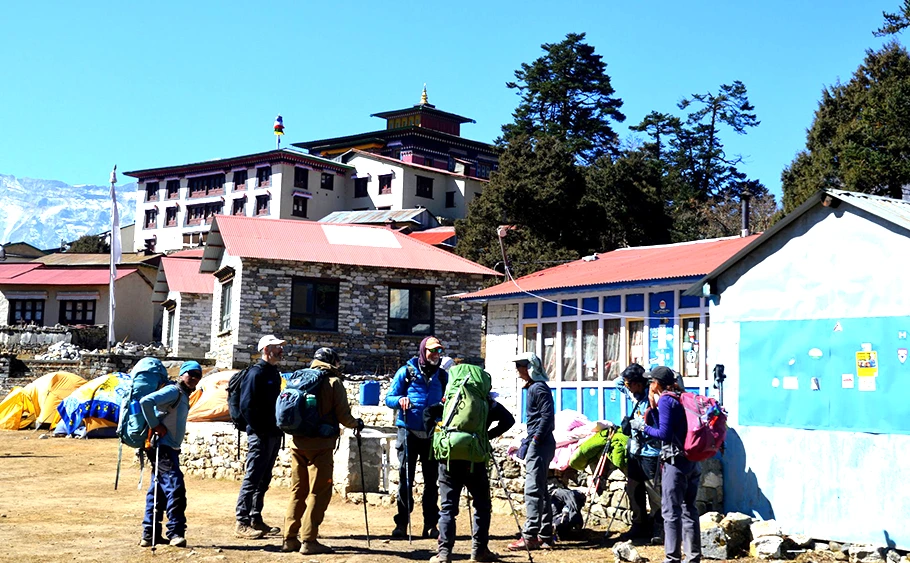
After settling into the tea house, you will visit the Tengboche Monastery and if you are lucky, you will have the opportunity to witness afternoon prayers. This monastery is the largest and most significant monastery in the Buddhist Khumbu region and attending the prayers will help set a peaceful and spiritual atmosphere in the midst of the towering Himalayas.
One of the many highlights of this trek is the view of a glowing Ama Dablam at sunset.
Day 6: Trek from Tengboche to Dingboche (4,410 m)
- Distance: 11 km (6.8 miles)
- Duration: 5-6 hours
- Accommodation: Tea House in Dingboche
Start the day with a gentle descent through forests, crossing a suspension bridge over the Imja Khola River. The trail continues to ascend through the Sherpa villages of Deboche, Pangboche, and Somare.
Pangboche offers great insight into Sherpa culture as well as views of Ama Dablam. The views of this mountain get better on each subsequent section of trail.
As you hike, the forest gradually thins out and the rocky, snow-capped, treeless elevations surround you. The air gets thinner as you get closer to Dingboche and you should take note to walk at a relatively slower and steadier pace.
Dingboche is an inviting village with fields enclosed by stone walls that protect crops from winds. There are unhindered views of Lhotse, Island Peak, Ama Dablam, and the other mountains.
Day 7: Dingboche: Acclimatization Day
- Walking Time: 3-5 hours (optional acclimatization hike)
- Nagarjung view: 5,200 m
This is the second of the important acclimatization days, and helps your body better cope with altitude prior to the hike to Everest Base Camp.
Your guide will be leading an acclimatization hike rather than a full day of rest, so expect to hike to a peak of approximately 5,100 m and enjoy the great but taxing hike, as it boasts one of the best views in Khumbu.
The view includes an impressive sight of Makalu, the 5th highest mountain in the world, as well as Lhotse, Ama Dablam, Island Peak, Cholatse, Taboche, and other peaks.
You will descend back to Dingboche and spend the afternoon relaxing and continuing to rehydrate in preparation for the highest sections yet of the trek.
Day 8: Trek Dingboche to Lobuche (4,910 m)
- Walking Distance: 8 km (5 miles) approx.
- Walking Time: 5-6 hours
- Overnight: Tea House Lobuche
With each passing day, the hike becomes more strenuous as the altitude increases. Along this stretch, the distance is not the longest, but the air is thin, so you can feel it more with each step that goes up.
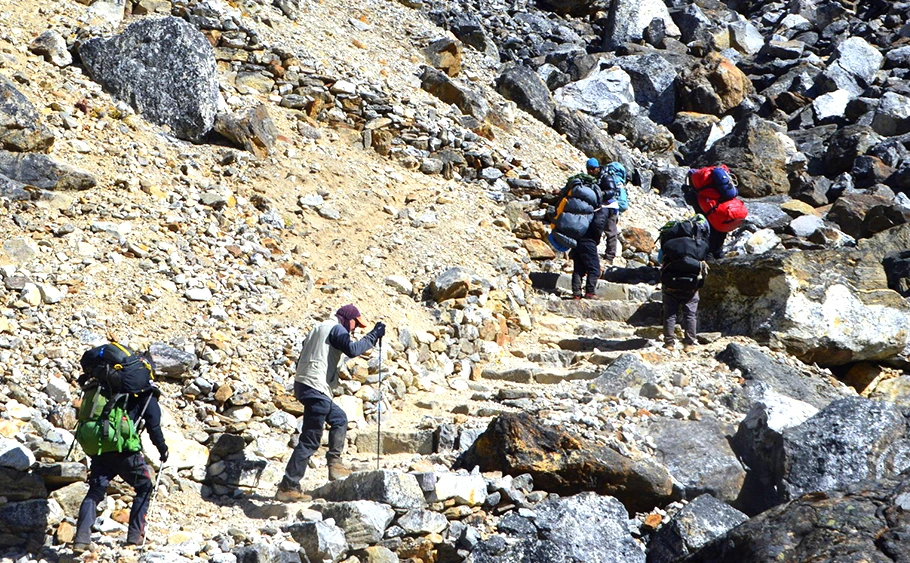
The trail first leads you to Thukla (Dughla) and then to a steep ridge that descends to the moving Everest Memorial. Here, a cluster of memorials commemorates climbers and Sherpas who died on Everest and other peaks in the Himalayas.
This stop serves to remind trekkers of the beauty and the peril that the Himalayas offer.
After the memorial, the trek continues across the rugged and barren glacial valley towards Lobuche. On this stretch, you are afforded some of the best views of Nuptse, Pumori, Lobuche Peak, and the Khumbu Glacier.
As the sun sets and the temperatures drop, the need to layer clothing increases.
Day 9: Trek Gorak Shep and Everest Base Camp (5,364 m)
- Distance: about 15 km
- Estimated Time: 7-8 hours
- Elevation: 5,364 m
- Accommodation: Tea House in Gorak Shep
This day is one of the most rewarding of the entire trek.
After breakfast, the trek leaves Lobuche and continues onto the rocky path that hugs the side of the Khumbu Glacier and leads to Gorak Shep, the final permanent settlement on the path to Everest Base Camp.
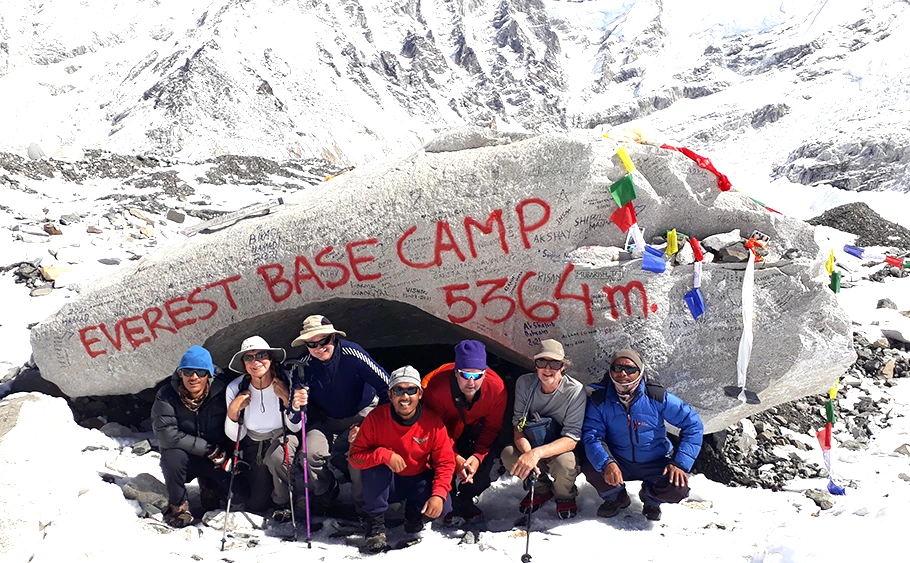
After you check in to the tea house, you will have some lunch and then the trek continues on over the glacial moraines to the famous Everest Base Camp.
Being at Everest Base Camp is a once in a lifetime opportunity. The Base Camp is a bustling sight during the spring mountaineering season, filled with colourful tents set up by the numerous logistical teams. The surrounding landscapes do not lack beauty during the rest of the year. The ice and the surrounding mountains are equally captivating.
As you can imagine, you can’t see the summit of Everest from Base Camp. But it is still a rewarding experience to be at the foot of the world’s tallest mountain.
After you take some time to fully appreciate your surroundings, you will likely return to Gorak Shep for the evening.
Day 10: Sunrise at Kala Patthar (5,545 m) Trek to Pheriche
- Walking Distance: About 13 km (8 miles)
- Walking Time: 7 – 8 Hours
You wake up early again to do the trek to Kala Patthar, which is the highest you can go on a standard trek to Everest Base Camp. The climb is steep and cold, but you gain the highest view in the region of Everest, which is a remarkable sight. The view becomes even more spectacular as the sun rises and illuminates not only Everest, but the rest of the Himalayan giants.
From Kala Patthar, you have a much clearer view of Everest’s summit. Sunrise is the most popular time for photographs, making it one of the most famous viewpoints in all of Nepal. After you have soaked in the scene and taken your photographs, you will descend to Gorak Shep for breakfast and continue to Pheriche.
You will descend to the lower elevation, which is a relief after spending so long above the 4,000 m mark.
Day 11: Trek from Pheriche to Namche Bazaar
- Walking Time: 6 – 7 Hours
- Elevation: 3,440 m
- Accommodation: Tea house/lodge
Today’s trek takes us past the familiar sights of Pangboche, then Tengboche, before arriving in Namche Bazaar.
Once we start descending, the trek gets easier and you start feeling the effects of more oxygen and the increased energy that comes with it. Trekkers start feeling hungrier again after spending a few days in the higher parts of the range.
The evening in Namche Bazaar is much deserved after the trek, with plenty of bakeries and cafes to munch and celebrate a little before heading back.
Day 12: Trek from Namche Bazar to Lukla via Monjo and Phakding and all the way back to Lukla.
- Walking Time: 6 – 7 Hours
- Day 12: Namche Bazaar – Lukla
- Elevation: 2,800 m
- Accommodation: Tea house/lodge
Today’s trek is tiring and there are plenty of uphill sections, but the excitement from completing the Himalayan trek makes it worth it. Back in Lukla, guides, porters, and trekkers have a celebratory farewell dinner.
It’s the perfect opportunity to show your guide and porter your appreciation for their hard work and for making this journey possible.
Day 13: Flight from Lukla to Kathmandu
- Flight time: 35-40 minutes
- Distance: 135-140 KM
- Drive: 20 minutes to transfer to the hotel
A very early flight gets you back to Kathmandu with a private transfer to your hotel.
Your day is free to relax, enjoy a hot shower, and explore the local markets for souvenirs. You can also celebrate your achievement there with friends.
If time allows, many trekkers opt to explore Boudhanath Stupa, Swayambhunath (Monkey Temple), or Kathmandu Durbar Square, which are all UNESCO World Heritage Sites.
Day 14: Last Day
Your trekking company will take you to Tribhuvan International Airport based on your flight schedule.
Your Everest Base Camp trek group join has finished, but for many of you, the memories of walking below the world’s highest peaks, the Sherpa people and their way of life, and the friends you have made along the way are just the beginning of many adventures to come.
Highlights of the Everest Base Camp Group Join Trek
Reaching your bucket list destination is only one of the many reasons people embark on the trek to Everest Base Camp. Unforgettable views, new cultures, and awe-inspiring mountain scenery make the trek to Everest Base Camp one of the premier global trekking destinations.
Experience One of the World’s Most Scenic Mountain Flights
The trek starts with a famous flight to Lukla. Get amazing views of hills and mountains from the plane and land at one of the most thrilling mountain airports in the world.
Trek Through Sagarmatha National Park
Sagarmatha National Park is a UNESCO protected site. This park provides a great variety of ecosystems, including famous wildlife and stunning mountain geography. Common fauna along the trek includes Himalayan tahr, deer, pheasants, and perhaps, if you’re very lucky, a snow leopard.
Discover Sherpa Culture
The trekking route leads to beautiful and ancient Sherpa villages and Buddhist monasteries. You can appreciate high Himalayan life along the paths of prayer flags and through the spinning prayer wheels.
Visit Namche Bazaar
Namche Bazaar, the gateway to Everest, is the largest Sherpa village in the Khumbu region. It is home to the best views and has the best shops, eateries, and relaxation spots in the Khumbu, including a mountain café, bakery, and a museum.
Explore Tengboche Monastery
Tengboche Monastery is positioned below the astonishing Ama Dablam. It provides the best cultural opportunity in the entire Himalayan region. It has a unique combination of mountain vistas that can only be developed by the merging of the spiritual traditions and the landscape of the mountains.
Stand at Everest Base Camp
The ultimate highlight of the adventure is the achievement of reaching Base Camp, located at a towering 5,364 meters. Trekking travellers from all around the world will agree that standing next to the Khumbu Glacier and gazing up at the pinnacle of the planet is an epic moment of a lifetime.
Witness Sunrise from Kala Patthar
Seeing the golden rays of the sun shine upon the spectacular range of the Himalayas, including the Everest, is the ultimate Nepal experience. The illuminating light will transform the gargantuan mountain range and of course, the highest mountain in the world and is a moment that will last a lifetime.
Best Time to Book an Everest Base Camp Trek Group Join
Everest Base Camp trek group join options are available year round. However, picking your season strategically can impact your overall experience. Weather, visibility of the mountains, trail conditions, and the number of trekkers can all vary at different times of the year. Although all seasons have their charm, spring (March to May) and autumn (September to November) are believed to be the best times to embark on a group trek to Everest Base Camp. The largest number of guaranteed departures is scheduled during these months, making it most convenient for individuals, couples, and small groups to be a part of an organized trek.
Spring Season (March to May)
Spring is one of the most popular times to embark on an Everest Base Camp trek group join, pulling trekkers from all over the world. With the winter snows melted, the trails are vibrant with blooming forests of rhododendron among many other wildflowers, and green hills as well as crystal clear views of the mountains. The daytime temperatures grow more pleasant for walking, but the nights still remain on the cold side.
Spring offers perhaps the most favourable conditions to trekkers, and that is the stability of the weather. With stable weather, the visibility of Everest, Lhotse, Ama Dablam, and Nuptse and many of the other giants of the Himalaya is at its best. As this is the climbing season to Everest, trekkers reaching Everest Base Camp are often treated to the sight of various expeditions camping at Base Camp preparing to launch summit attempts. This provides an added level of excitement to the trek.
Spring sees the highest number of group departures for the Everest Base Camp trek. Trekking organizations operate many more scheduled departures. This creates ample opportunities for a solo traveller to find and join a group.
Spring is a busy trekking season. Therefore, the larger villages, like Namche Bazaar, Dingboche and Tengboche, become crowded. Tea Houses fill quickly, so it is highly recommended to book your group trek as early as possible.
Spring Advantages
- Rhododendrons are at full bloom
- Good visibility and stable weather
- Comfortable daytime trekking
- Ease of photography
- Climbing expeditions to Everest can be observed
- Good group trekking opportunities
Spring Disadvantages
- Crowded Trekking paths
- Crowded and quickly booked Tea Houses
- Increased competition for trekking opportunities
Autumn (September to November)
For many experienced trekkers, autumn is the best season to trek in Nepal. The rainfall of the summer monsoons is clear and nature is at its best. Pollutants are minimal in the atmosphere, allowing for clear trekking. Views of the mountains are unparalleled.
Autumn is comfortably trekking season. Dry paths make trekking much easier and safer than in the rainy season.
However, autumn is the busiest season to trek in Nepal. Scheduled Group join treks to Everest Base Camp abound. The Tea Houses are full of life and it is a great opportunity to converse with an exciting and international group of fellow travellers.
For trekkers, Autumn is one of the best seasons to visit Nepal. Autumn trekking also allows people to experience the vibrant culture of Nepal because many important Nepalese festivals, such as Dashain and Tihar, take place during this season.
The autumn advantages and disadvantages of trekking in Nepal are listed below.
Advantages
- Autumn skies provide shimmering vistas of the mountains
- The trails are dry and in excellent condition
- The temperature is comfortable for trekking
- There are numerous scheduled group treks
- The trails are full of lively trekkers
- There are excellent opportunities for photography
Disadvantages
- There are many trekkers, and the trails are crowded
- Flights and accommodation are in demand
- Advance reservations are required
Winter Season (December to February)
The Everest region becomes a winter fairyland, a beautiful winter escape. A snow blanket provides a beautiful backdrop and a dramatic change for the trekkers who are busy on the trails at other times of the year. For trekkers who crave peace in the winter with beautiful snowscapes, this fairyland of winter in Nepal is an ideal time to visit.
The main difficulty will be the cold. Higher elevations will plunge well below freezing, especially at night and in the early morning. Heavy snow can disrupt flights to Lukla and block sections of the trail.
Despite the cold and heavy snow, many determined trekkers embark on the journey. Some trekking companies continue to operate Everest Base Camp group join treks, although departure dates are less frequent than during spring and autumn.
Benefits of Winter
- Peaceful tea houses and hiking trails
- Beautiful landscapes
- Clear views
- Less crowded
- Drawbacks
- Very cold
- Delayed flights
- Fewer tour groups
- Less daylight
Monsoon Season (June to August)
During monsoon season, there is heavy rain in much of Nepal. Everest also has less rain than areas of lower elevation, but the weather is frequently cloudy with low visibility in the mountains. Flights to Lukla are more likely to get delayed or cancelled due to poor weather.
Lower trails become muddy and slippery, and leeches start to appear in the forests below Namche Bazaar. Because of this, fewer trekkers are making the journey during monsoon season.
However, the monsoon season is a great time for trekking. The countryside is green, tea houses see less business and the weather can provide for a peaceful trekking experience.
Benefits of Monsoon
- Calm trekking
- Less business for tea houses
- Green countryside
- Lower trails
- Costs of Monsoon
- Rainy season
- Low visibility
- Frequent flight trouble to Lukla
- Slippery trails






 One of the questions that is most commonly asked is whether you should book a seat for the group tour or hire a private tour for your group. The journey you take on the trek to Everest remains beautiful and beyond your imagination, but the most important part of this decision is determining your priorities and your budget.