Everest Green Boots are the most famous boots made of Everest in the history of the mountain
Mount Everest is the tallest mountain on Earth, standing at 8,848.86 meters. Every year, hundreds of climbers travel to Mount Everest to fulfil their dreams of being on top of the world. Though there are successful climbers, many of them die on Mount Everest due to its extreme weather and conditions that challenge even the most experienced climbers.
Everest Green Boots is one of the most well- known stories about Mount Everest. The name “Green Boots” has been mentioned in climbing reports and documentaries, and is one of the most discussed landmarks on Mount Everest. Green Boots was never purposely meant to be a landmark on Mount Everest. In fact, it stands as a reminder of the dangers of climbing above 8,000 meters.
Everest Green Boots is the story of one climber, but the rest is the reality of mountaineering and the importance of preparation, the elements, people and the challenges of decision-making, and the ethics of what to do if someone dies on the mountain. There are many ethical dilemmas that come into play when discussing body removals from the highest mountain on Earth.
To understand the Everest green boots, we need to understand a combination of Everest’s climbing history as well as the conditions of the highest section of Everest, known as the Death Zone. Above about 8,000 meters, or about 26,247 feet, the air has about a third of the oxygen that air has at sea level. Each movement is painstaking. The temperature can drop below -30°C or -22°F, and the situation can be exacerbated by treacherous, sudden storms.
Even highly skilled climbers sometimes encounter situations where they cannot continue the climb due to illness or the dangerous weather makes descending too difficult. It is extremely dangerous to attempt rescue efforts at those elevations. Carrying or aiding a climber in that situation requires numerous people, an adequate supply of supplemental oxygen, and a viable weather situation.
There are climbers who are known to have died at the highest elevations on Everest, and an unfortunate number of these climbers remain where they fell. Some of these climbers, because of their demise, have become known climbing reference points. The most famously known of the reference points is Green Boots, and he is especially known by climbers who approach the Everest climb through the north side in Tibet. The site at which Green Boots is known to have lain is marked by his distinctive green boots, allowing climbers to easily identify the site.
This topic demands a respectful attitude. Beyond the nickname was a person who had a family, friends, a career, and an ambition of climbing Mount Everest. While much of the talk gravitates toward the enigma of the identity of the climber, or the location itself, the story alludes to the fatality as one of the most critical challenges of mountaineering in the world.
In the past, there have been many stories, books, and accounts written and told about the expeditions and attempts to find out who Green Boots was and to report about the climber who died near the limestone cave along Mt. Everest’s Northeast Ridge. Some of the accounts have become common knowledge, but many still remain unknown. Good reporting differentiates facts from the unknown.
The story of Everest Green Boots is a case study for climbers and adventure seekers who wish to undertake a high-altitude expedition on Mt. Everest. It should not be considered a curiosity, but a reminder of the importance of planning, preparation, and the ability to reverse an expedition if things go awry.
In this guide, you will learn the full story of Everest Green Boots, where Green Boots was, the challenges of recovering him, what we know of the climber to be, how the site became a key site on Everest, and what lessons we have learned about safety from his story.
Who Is Everest Green Boots?
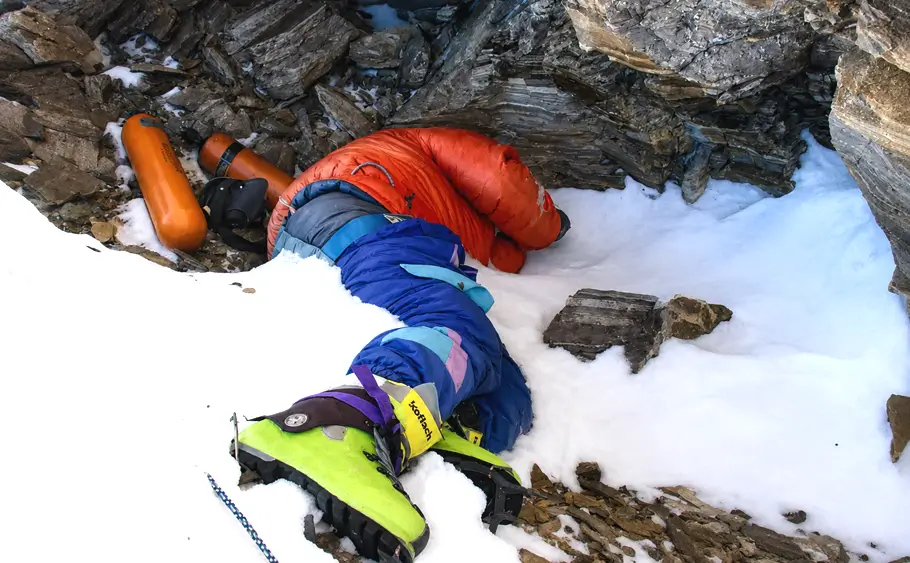
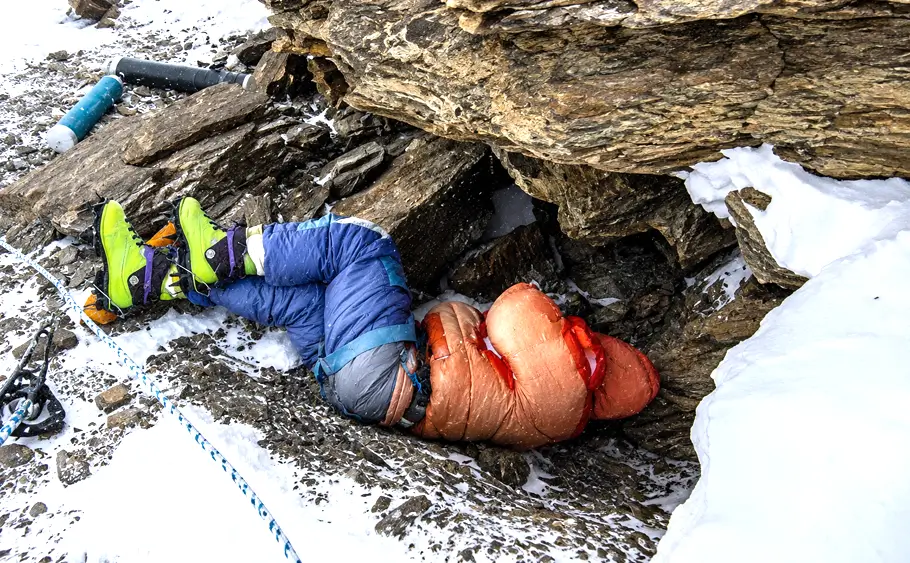
Everest Green Boots is the name of an anonymous climber who died along the Northeast Ridge of Everest. Ever since the climber’s body was left on the mountain, climbers have called the climber “Everest Green Boots” due to the bright green boots the deceased climber wore. Over the years, “Green Boots” became a landmark on Everest and a representation of the dangers the mountain brings.
Different from other famous landmarks on the mountain, Green Boots was never an official name. However, climbers became accustomed to using the deceased body’s location as a reference for climbing the north side of Everest from Tibet. The body of Green Boots also became a familiar site to expedition crews for over twenty years. This is because thousands of climbers passed the small limestone cave where Green Boots’ body rested.
Why Was the Climber Called “Green Boots”?
The name “Green Boots” became a simple and easy descriptor for the climber. The deceased climber was clad in bright green Koflach mountaineering boots. Being green, the boots readily stood in contrast to the white and grey snow and rock. Additionally, the body of the climber was never identified for years, so mountaineers and mountaineering guides began calling the deceased climber “Green Boots”.
The name “Green Boots” became well-known as it was referenced in several mountaineering communities. The name was also referred to in preparatory guides, documentaries, and expedition reports. Today, the majority of searches for Everest Green Boots are in reference to the mountain’sNortheast Ridge landmark.
What is the identity of Green Boots?
The identity of Green Boots was a mystery for years. Many possibilities were offered in the climbing community. Now, the popular belief is that the identity was Tsewang Paljor, an Indian climber and member of the May 1996 ITBP Everest expedition.
He was part of a summit team of three, and as was the case with all of the climbers, the unfortunate events of the 1996 climbing disaster befell the team as they attempted to begin their descent in the face of increasingly harsher weather. Unfortunately, the blizzard that descended upon the mountain claimed his life as well as the lives of many other climbers in that year’s tragic Everest climbing season.
While many historians and climbers who have devoted their lives to studying Mount Everest are in agreement that Green Boots is actually Tsewang Paljor, an official forensic identification has never been made. For that reason, many of the most credible sources on the subject refer to this case as the most popular theory, as opposed to a confirmed fact.
What was Green Boots location?
Green Boots was found sitting inside a limestone cave on the northeast ridge climbing route at an elevation of roughly 8,500 meters (27,899 feet) above sea level.
This cave provided slight relief from the ever-persistent and furious wind, and was a prominent area along the route for climbers making their way to the summit. Nearly all expeditions that traversed the North Col route passed the cave, making it, along with Green Boots, one of the most prominent features of the Death Zone.
Because of its location, many climbers often regard the cave as a mental pick-me-up to help climbers keep track of where they are on the climb to the top. However, most professional guides would advise people never to treat it as a last stop or a last sight to see. This cave, as a high-altitude attraction, has quickly become an area of paying tribute to the realities of the harsh conditions of altitude, the ever-changing conditions of the weather, and the fatigue that the body experiences.
What Gave Green Boots World-Wide Fame?
There are multiple reasons why Green Boots became world-famous.
The dying body was left in sight of climbers for more than 20 years.
It was located along one of Everest’s most frequented climbing routes.
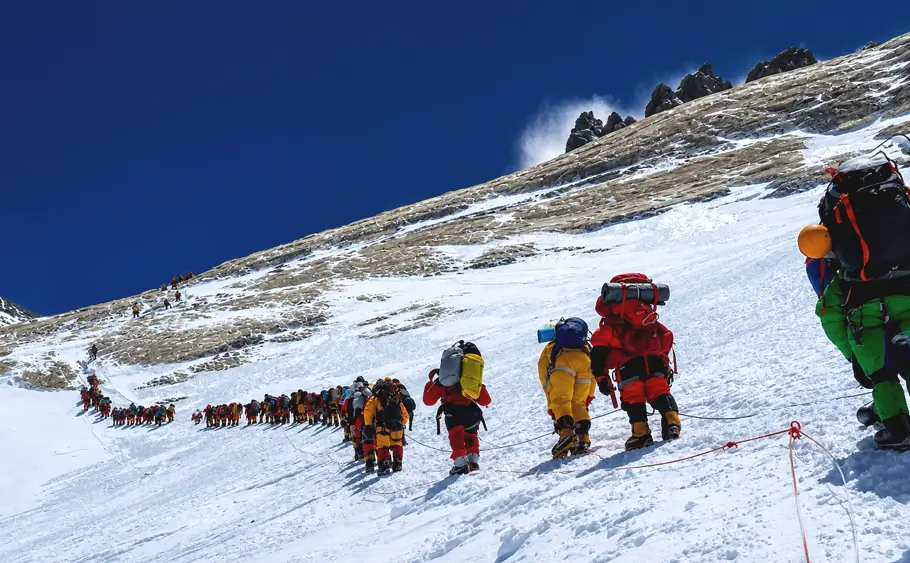
During that period, thousands of climbers and guides passed by.
Many written accounts, documentaries and photos of the climbing expeditions mentioned Green Boots.
The story was also linked with the unfortunate events of the climbing season of Everest 1996.
The nickname spread rapidly and was memorable
As Everest became more documented and accessible, Green Boots became a highly disseminated symbol of the danger posed by high-altitude climbing.
The Story is a Real Tragedy
It is easy to remember the nickname “Green Boots”, and it is popular, but it is not referencing a tourist attraction or a story from a book, but a real human who was a climber and who had aspirations.
Everest Green Boots is not a story that many climbers are curious about, and that is how Green Boots is remembered by climbers. Respect for all climbers who have died on Everest is the legacy of that tragic story.
Knowing who Green Boots was is important in understanding the other tragic stories of climbing seasons on Everest.
History of Everest Green Boots
The darkest side of Mount Everest’s climbing history involves the events of May 1996. The spring climbing season of that year resulted in many deaths on the mountain due to a confluence of delayed ascent, negative weather, and overcrowding on the mountain, combined with the effects of high altitude.
While the 1996 Everest disaster is largely characterised by the commercial expeditions of Rob Hall and Scott Fischer, more tragedy occurred on the North side in Tibet. It is there that the climber, who later became known as Everest Green Boots, is thought to have perished.
The 1996 Everest Climbing Season
In the spring of 1996, a large number of climbers attempted to scale Everest. The combination of improved logistics, interest in commercial expeditions, and conducive pre-season weather combined to allow many teams to make the attempt.
The weather and climbing conditions on Everest can change drastically and quickly. Many climbers on the day they attempted to reach the summit experienced long delays on sections of the route that are technical. This consumed the time they had to descend before the arrival of adverse weather.
On the afternoon and evening of the 10th of May, 1996, a storm of high intensity and low temperatures combined with near whiteout conditions and winds of hurricane force struck Everest. Many climbers became high on the mountain, and many others became lost and were unable to locate their way to base camp.
By the end of the climbing season, 12 climbers had died, making 1996 the deadliest year for Everest at that time. The tragedy instigated worldwide talks for expedition planning, risk management, and weather forecasting for decision-making at high altitudes.
The Indo-Tibetan Border Police Expedition
An expedition organized by the Indo-Tibetan Border Police (ITBP) was also attempting to reach the summit using the northern route of Mount Everest.
The summit team was made up of
Tsewang Paljor
Tsewang Smanla
Dorje Morup
The three climbers made their summit attempt on the 10th of May, 1996, and according to reports of the expedition and other accounts, they reached a very high point on the mountain, but the precise details and timing of their summit remain a point of debate for historians.
The descent was made increasingly difficult due to the extreme conditions of the weather and the altitude above 8,000 meters.
The storm worsened and made visibility and communication difficult, and the temperature continued to drop.
Unfortunately, the three climbers never returned to their high camp.
How Green Boots Became Known
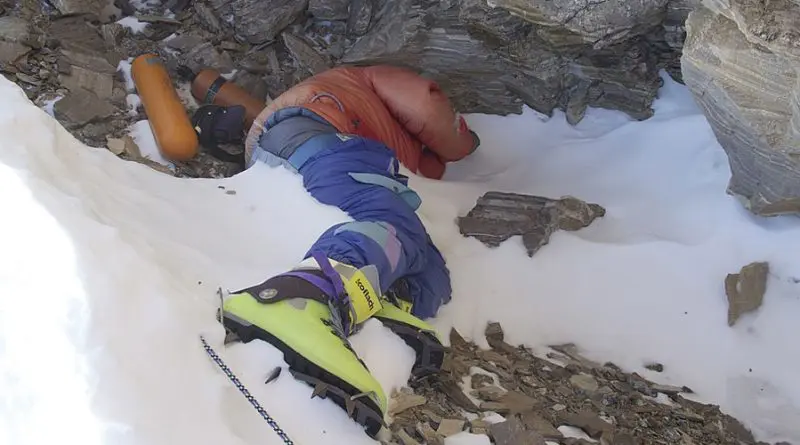
In the years that followed the disaster, climbers summiting Mount Everest via the Northeast Ridge routinely passed a body that lay in a small limestone cave, approximately 8,500 meters (27,890 feet) high.
The location was easy to identify due to the bright green mountaineering boots of the body.
Since the identity of the climber was not confirmed for a long time, the body was referred to as “Green Boots.”
During subsequent expeditions, the cave was used as a reference point for the summit. Many climbing reports consisted of the phrases passing Green Boots (during the ascent or descent), and the name was integrated into the lexicon of climbing on Mount Everest.
Identifying Green Boots
The mystery of Green Boots’ identity was sustained for a long time. Reports would suggest different names, and the speculation was the subject of various documentaries, book series, and forums.
Other than his reported sightings, testimony revealed that the deceased was most likely Tsewang Paljor, one of the ITBP climbers who went missing in the 1996 expedition. Several Everest historians and veteran climbers reached the same conclusion.
This conclusion was drawn from multiple expedition accounts and research conducted after the fact. Several leading authorities attribute the identification to evidence provided, and therefore, they state it was accepted rather than established.
When mentioning Everest Green Boots in literature, responsible climbing authors strive to distinguish evidence from conjecture.
What Caused the International Spread of Interest in Green Boots?
There are multiple reasons why the international community was fascinated by the Green Boots case.
First, due to the frequent climbing traffic on Everest, for over 20 years the body remained in view. It was seen by thousands of climbers, guides, and Sherpas, and was a frequent landmark on climbing expeditions.
Secondly, the 1996 Everest tragedy inspired a plethora of literary and film works, and as a result, Everest was introduced to the climbing community and to the general public. While much of the entertainment focused on the southern side of the climb, it inspired interest in the other events from the same climbing season.
Finally, it made known the sad truth of high-altitude climbing that makes Green Boots a climber in the closed vault of Everest: the body of a deceased climber that remains on Everest.
A Lasting Legacy
Ever since the disappearance of the Everest Green Boots, sensationalism has not been the driving factor in creating this history. Everest Green Boots have allowed us to understand the risks personal to every climber who attempts to climb Mount Everest.
Their disappearance has shown us that achieving the summit is never the end of the journey. Having the summit as your goal is not wrong, but is instead counterbalanced by making the right decisions to reach it.
The right decisions come from proper training and acclimatization, as well as teamwork and flexibility to respect the conditions and elements. Knowing when to turn back is just as important.
The legacy of Everest Green Boots will always remain ingrained in first-time climbers and experienced climbers as the most important lesson that Mount Everest has to offer: the summit of Everest is not a priority. What’s most important is that every climber makes it back from the journey alive.
Where Were Green Boots Located on Mount Everest?
Where the Green Boots of Everest were found is one of the common questions asked, and why this location is one of the most famous among the climbing community. It served as an unofficial landmark for travellers coming down Everest’s northern face from Tibet for over 20 years. While the location was never meant to be a landmark, it was one of the most notable sites on the mountain, as nearly all the northern face expeditions travelled past this point.
Where Green Boots was found adds context to the prominence of the story in relation to the history of Everest Green Boots and the ongoing conversations in the climbing community about it.
Where was Green Boots Found?
Green Boots was on Everest’s Northeast Ridge. This is one of the two main climbing routes on Everest.
There are two main routes on Everest
Northeast Ridge (Tibet): This is the Northern route that begins in Tibet (China), travelling past the North Col and along the Northeast Ridge and the well-known First, Second and Third Steps on the way to the summit.
Southeast Ridge (Nepal): This is the most popular route. The trail begins at Everest Base Camp (Nepal), proceeding through the Khumbu Icefall, the Western Cwm, Lhotse Face, South Col, and the Southeast Ridge.
The Green Boots site was on the northern route, which is often favoured by those climbers who are more experienced and looking for a less popular route on Everest.
The Limestone Cave
The body known as Green Boots rested at an elevation of about 8,500 meters (27,890 feet) in a small natural limestone cave.
There are strong winds that travel across the Northeast Ridge. The Death Zone is known for unpredictable weather. The small overhang likely offers partial protection from the elements. There are small shelters on the rock face. The Natural Limestone Cave is one of the shelters. It provides partial protection from the strong winds that travel across the Northeast Ridge.
Because the winds travel into the cave, the site remained easily recognised by the passing expeditions.
Why Did Every Climber Pass This Spot?
The cave is in the path of expeditions travelling up the main route from the North Col to the summit.
The Northeast Ridge is narrow, and climbers must use the same path. Other points on the mountain allow for climbers to spread out, but the Northeast Ridge is not one of those points. Most climbers travel along the main path between the camps and the summit.
Because of this, expedition leaders used this point as an informal landmark. The expeditions would know that they reached this point on the mountain without having to rely on their altimeters or other navigation devices.
There are other landmarks that the summit expeditions are familiar with, but the cave is not one of those landmarks. The cave should not be considered a point of interest.
Elevation and the Death Zone
At approximately 8,500 meters, Green Boots is located in the Death Zone of Mount Everest. This zone defines elevations above 8,000 meters (26,247 feet) and where the human body begins to die as it is unable to acclimatise.
The conditions of this zone are some of the most extreme on the planet
The air (and therefore oxygen) is approximately 1/3 as dense as that at sea level.
The ambient temperature is often below -30°C (-22°F).
The winds of the jet stream can reach over 100 km/h (62 mph) and carry fierce gusts.
The air’s moisture content is so low that the body rapidly becomes dehydrated.
Going one step further requires an extraordinary amount of energy.
Climbers, even those who are very experienced, often take several breaths between each step. The Tuberculosis-level altitude is not only painful but exposes the victim to an extreme risk of injury, severe frostbite, and the illness of altitude.
These factors, in addition to the Death Zone, are why even the greatest and most advanced mountaineering teams find it almost impossible to recover the bodies of the deceased above 8,000 meters.
A Landmark Created by Circumstance
In contrast to memorials at Everest Base Camp, Camp IV, the Hillary Step, or the Balcony, Green Boots was never a memorial featured on climbing maps.
Green Boots gained popularity simply because
The body was not covered and the ice did not obscure it.
The location was directly on the most famous and popular route.
The location was passed by thousands of climbers during their ascent.
Reports of the expeditions pointed to the cave easily.
The distinctive green boots made the location easy to recognize.
Slowly, the name cemented itself into the history of climbing in Everest and was referenced in thousands of publications, novels, documentaries, and personal expedition journals.
Has the Location Changed?
Climbers have noted several changes at the Green Boots site over the years. Some expeditions reported that the body was becoming obscured and, in some cases, that the body was relocated.
Eyewitness accounts have been inconsistent due to the seasonally shifting appearance of the mountain from snow and ice, in addition to the changing conditions. Some expeditions also have to take different paths along the Northeast Ridge due to the conditions of the climbing route.
Because of these reasons, modern climbers can expect fundamentally different experiences based on the conditions of the climbing route established by the expedition teams and on the season.
A Place That Commands Respect
The Green Boots Cave has become one of the more respected and solemn tourist stops on Mount Everest.
This site helps climbers appreciate the paradox of Everest: its beauty vs. its danger. It helps climbers appreciate the value of teamwork, respect for the mountain and the importance of careful planning and good decisions.
The site of Green Boots on Everest has become part of the climbing history of Everest, not because of its geography, but because of the climbing lessons it has to offer.
Why weren’t Green Boots Removed From Mount Everest?
Many people ask about Green Boots’ corpse’s inability to leave Mount Everest for many years. For people who do not know about high-altitude mountaineering, this may be surprising. The truth is, there is no body recovery. Between 8,000 meters, or 26,000 feet, is Mount Everest’s body recovery zone, where mountaineering (and high-altitude mountaineering, for that matter) is at its most dangerous.
In order to understand the history of Everest Green Boots, you must understand the challenges at that particular height. At the “death zone,” moving a body or yourself requires a significant amount of effort. Because of that, a single decision or movement could mean a climber’s life.
Extreme Conditions in the Death Zone
Green Boots was located at about 8,500 meters, or about 27,890 feet, in the Death Zone of Mount Everest.
In this zone
The air is about one-third as dense as at sea level.
Temperatures can reach -30 degrees Celsius, or lower, factoring in the wind chill.
Heavy, strong wind and snow can create a storm out of nowhere.
Many climbers must use supplemental oxygen just to move.
Cognitive and physical functions deteriorate.
Even the best, most experienced climbers can have a hard time performing simple tasks like clipping into a rope or changing cylinders. Adding weight is a hindrance at these heights.
Recovering a Body at High Altitudes
Mountaineering body recovery at high altitudes is trickier than you might think.
A climber outfitted with boots, clothing, climbing gear, and frozen gear can weigh over 100 kg (220 lbs). Compared to others, moving this weight at sea level can be done with relative ease, but at the harrowing 8,500 meters, oxygen is scarce, and the effort for each step takes a toll on the body.
A recovery team would be expected to
Travel into the Death Zone.
Carry the needed oxygen and equipment for the operations.
Secure the body to prevent a slip from the steep incline.
Safely transport the body over the varying terrain of snow and ice to exposed rock.
Get back to base camp before the weather turns or the oxygen depletes.
All of these factors considered, these operations pose a huge personal risk even with the strenuous planning, favourable weather, and high level of skill from those involved.
Safety of the Living Comes First
Most expeditions on Everest unanimously agree that the safety of all living people comes first.
No recovery mission should bring more climbers, Sherpas, or rescue personnel into more avoidable danger. Everyone involved in the recovery mission faces the same threats the original climber faced, including the risk of avalanches, altitude sickness, frostbite, exhaustion, severe weather, and many more.
Due to all these threats, expedition leaders have to evaluate the feasibility of a recovery mission. Often the threats balance out the recovery mission’s possibility for success.
The Cost and Complexity of Recovery
On Everest, body recovery is physically exhausting and also highly complex from a logistical and financial standpoint.
A high-altitude recovery can demand all of these things
A highly skilled Sherpa and climber recovery crew
Technical climbing apparatus
All crew members have to have oxygen
Days of advanced planning
Good weather
Government approvals for the recovery and expedition support
Costs for recovery missions can be tens of thousands of dollars for the support crew alone, and some have even had a cost of USD 70,000 to USD 150,000.
Recovery is not always possible, even with all these constraints.
Why Some Bodies Remain on Everest
More than 300 people have died on Mount Everest, and many of those bodies have been recovered, especially those at lower elevations. However, many others still remain on the mountain because the risks of recovery would be extremely dangerous for the would-be rescuers.
There are many things to consider in an attempt at recovery
The steepness of the terrain.
The elevation at which the climber died.
Factors affecting the decision to attempt recovery include:
Weather (snow and ice conditions).
Manpower and equipment.
Safety of recovery staff.
Recovery of climbers who die in the Death Zone is one of the most challenging aspects of mountaineering.
Respect for the Dead
Everest Green Boots represents the death of a climber who died trying to achieve a dream in a very extreme environment.
Among climbers, the topic of Green Boots is generally treated with respect as opposed to curiosity. Many climbers see the location as a reminder of the significance of the extreme altitude and the challenges associated with carrying out recovery.
The Green Boots story also represents the tremendous courage of the Sherpas and recovery teams who for decades have done extremely challenging body recovery tasks on Everest.
Lessons for Climbers of the Future
The Green Boots story serves many lessons for climbers, including
Acclimatize.
Carefully analyse weather to guide summit decisions.
Deteriorating conditions require turning back.
Use oxygen wisely.
Descent requires conservation of energy.
Climb very carefully as it is the more dangerous of the two tasks.
Being able to reach the summit of Everest safely requires the ability to return as well.
A Lasting Reminder
Everest Green Boots is more than a tale about the unclaimed body left on the top of Mount Everest. It is a journey that shows the reality of our world. The most dangerous thing about mountaineering is the constraints set by the environment.
It is important to know the constraints of the environment to truly understand the history behind Everest Green Boots. With this understanding, there is a greater appreciation for consideration, preparedness, and conscientiousness of the community of Everest. The most valuable lesson which the mountain teaches the climbers is that the most important achievement of the climber is not the one at the peak, but the journey that leads them back to the safety of the ground.
Frequently Asked Questions
Who was Green Boots?
Green Boots is believed to be Tsewang Paljor, an Indian climber who tragically lost his life during the disastrous 1996 Everest expedition.
Why is the body significant to climbers?
The body is a stark reminder of the dangers of high-altitude climbing, marking a key location on the Northeast Ridge route and reminding climbers of the respect and caution Everest demands.
What does Green Boots teach us about mountaineering ethics and safety?
Green Boots highlights the critical importance of ethical decision-making in mountaineering, underscoring the need for adherence to safety protocols and the moral considerations of climbing in areas where climbers have perished.
Why are the green boots so distinctive?
The green boots are distinctive because they are an unusual and noticeable feature on a climber’s body, making them a notable landmark on Everest’s landscape.
How did the nickname "Green Boots" originate?
It originated from the vivid green mountaineering boots Tsewang Paljor wore, which remained visible to climbers passing his resting place.
What happened to the body after it was found?
After its discovery, the body remained in the exact location and became a well-known waypoint for climbers navigating the death zone.
How do climbers typically react when they see Green Boots?
Climbers often respond with solemnity and reflection, recognizing the site as a somber reminder of the risks of summiting Everest.
Are there other landmarks on Everest similar to Green Boots?
Yes, there are other landmarks on Everest, such as the Rainbow Valley, adorned with the brightly colored gear of fallen climbers, and other specific locations where climbers have perished and are similarly remembered.
Why is Green Boots famous?
Green Boots became famous as a poignant symbol of the perilous nature of high-altitude climbing and as one of the most identifiable markers on the route to Everest’s summit.
Why are bodies left on Everest?
Bodies are often left on Everest because retrieving them from the harsh, high-altitude environment is extremely difficult and risky.
Where is Green Boots now?
As of the last reports, the location known as Green Boots still exists on the Northeast Ridge route, though it has changed over the years due to shifting ice and occasional efforts to cover or move bodies.
What can climbers learn from his story?
Climbers can learn the vital importance of preparation, respect for the mountain, and the need to prioritize safety over summiting, taking to heart the lessons taught by those who have come before.





 This topic demands a respectful attitude. Beyond the nickname was a person who had a family, friends, a career, and an ambition of
  Everest Green Boots is the name of an anonymous climber who died along the Northeast Ridge of Everest. Ever since the climber’s body was left on the mountain, climbers have called the climber “Everest Green Boots” due to the bright green boots the deceased climber wore. Over the years, “Green Boots” became a landmark on Everest and a representation of the dangers the mountain brings.
 In the years that followed the disaster, climbers summiting Mount Everest via the Northeast Ridge routinely passed a body that lay in a small limestone cave, approximately 8,500 meters (27,890 feet) high.
 This conclusion was drawn from multiple expedition accounts and research conducted after the fact. Several leading authorities attribute the identification to evidence provided, and therefore, they state it was accepted rather than established.
 At approximately 8,500 meters, Green Boots is located in the Death Zone of Mount Everest. This zone defines elevations above 8,000 meters (26,247 feet) and where the human body begins to die as it is unable to acclimatise.